Cofounder

Elise Hutchinson, PhD

Elise is a cofounder of foodfacts.org, she has a PhD in cognitive linguistics and focuses on fighting misinformation & creating meaningful debate.

About Elise Hutchinson, PhD

Elise is one of the founders of foodfacts.org. She is a linguistics professional who was awarded Summa Cum Laude for her PhD thesis, which focused on the cognitive and discursive mechanisms behind effective persuasion, particularly in the long term. She is passionate about finding ways to fight against the spread of misinformation and disinformation, and to generate meaningful, constructive debates.

She is Director of Research and Co-Editor in Chief at foodfacts.org. Her responsibilities include:

  • Conducting research into misinformation, its mechanisms and evidence-based methods to fight it effectively
  • Training all of our volunteer fact-checkers
  • Overseeing the fact-checking process, from selecting claims to fact-checks, writing fact-checks to editing final drafts
  • Content creation

Elise earned her PhD at the Université de Neuchâtel and currently lives in England.

Articles featuring  

Elise Hutchinson, PhD

FACT CHECK
Opinion
Health

Matcha may affect iron absorption, but you shouldn't really worry about it

Matcha has increased in popularity of the last few years, but with it, so have rumous about potential harms. We unpack the evidence in this fact check.
FACT CHECK
Opinion
Nutrition

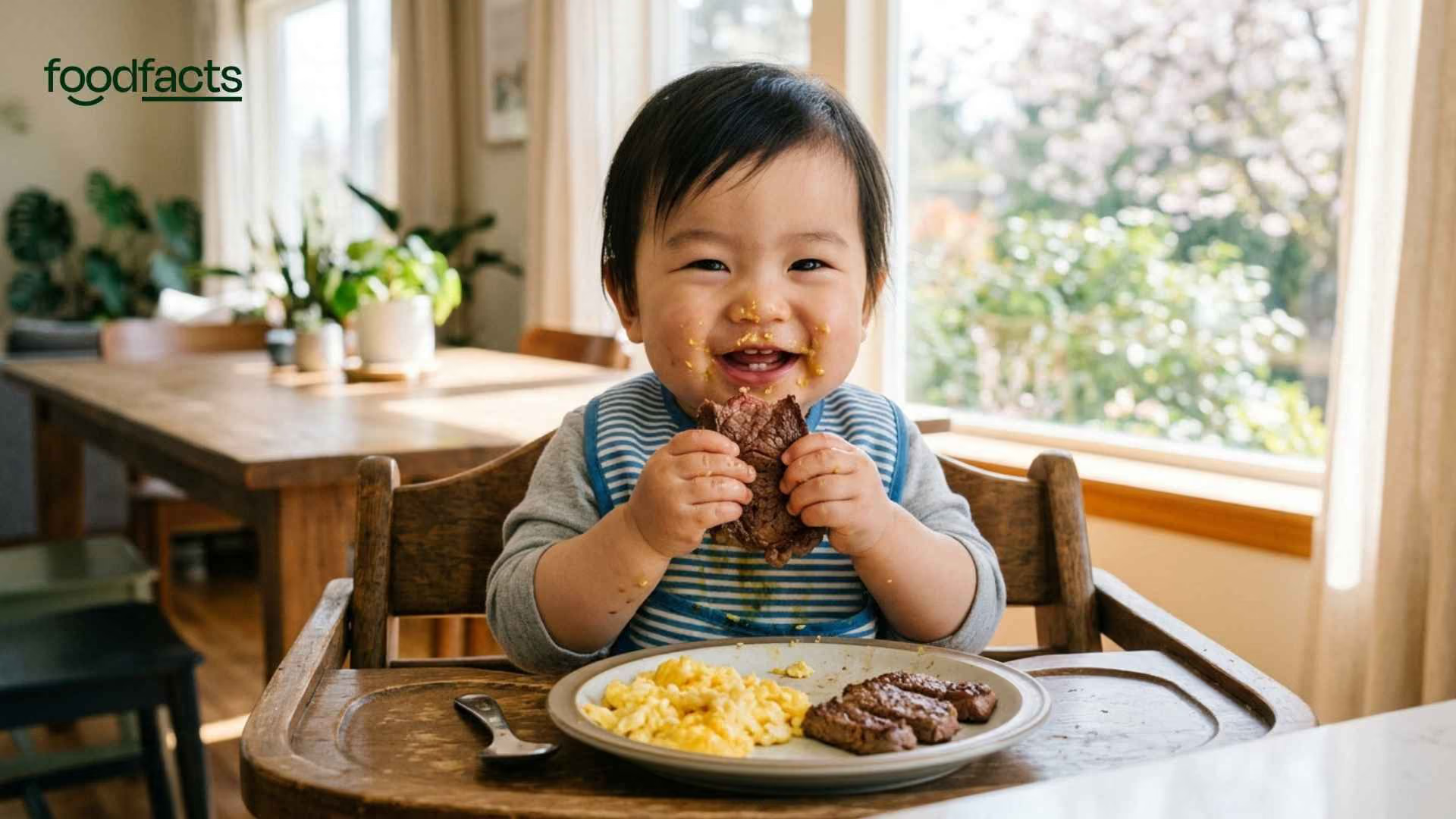
Fact-checking whether carnivore diet babies are “super babies”?

Some influencers are claiming that babies on a carnivore diet become "super babies" - but what does the evidence say?
FACT CHECK
Opinion
Health

Does eating croissants really raise cancer risk? Fact-checking France’s cadmium warning and what it means for the UK

France’s cadmium warning is real, but croissants aren’t uniquely “cancerous” – the risk comes from lifelong exposure to cadmium in many staples.
FACT CHECK
Opinion
Health

Can a cup of lemon balm tea really melt fat overnight?

Lemon tea and magnesium may help you unwind, but current studies don’t show a bedtime drink can melt belly fat by “lowering cortisol” or hacking your...
FACT CHECK
Opinion
Media Literacy

Exposing misinformation: how influencers twist the truth on social media

Misinformation Detractors: How Social Media Influencers Deflect Accountability in Nutrition Conversations
A spread of high-fibre foods including oats, beans, vegetables and wholegrain bread
FACT CHECK
Opinion
Nutrition

Fibre under fire: debunking Eddie Abbew's claims that humans don’t need it

We fact-check recent claims by Eddie Abbew that fibre isn't essential, reviewing the science on its role in digestion, immunity, and long-term disease…
Prenatal vitamin capsules spilling from a plain amber bottle beside folate-rich foods — spinach, lentils, orange and asparagus
FACT CHECK
Opinion
Health

Paul Saladino’s anti-folic acid advice for pregnant women is not just wrong: it could be dangerous

Folic acid in pregnancy: evidence-based guidance vs. viral claims. We explain what Paul Saladino’s claims show, and don’t show, plus red flag checks.
A spread of soy foods including tempeh, tofu, edamame, soy milk and miso
FACT CHECK
Opinion
Nutrition

“Not real food”? Says Eddie Abbew. A closer look at claims about tempeh, soy, and men’s health.

Eddie Abbew dismisses tempeh as fake food — but it's one of the most nutrient-dense plant proteins available. Here's what the nutritional evidence shows.
A pile of raw potatoes of different varieties on rustic wood
FACT CHECK
Opinion
Nutrition

Are potatoes really not ‘human food’? We checked the history and science

Candi Frazier claims potatoes aren't natural human food — but solanine levels in modern potatoes are safe and humans have eaten them for over 10,000 years.
FACT CHECK
Opinion
Health

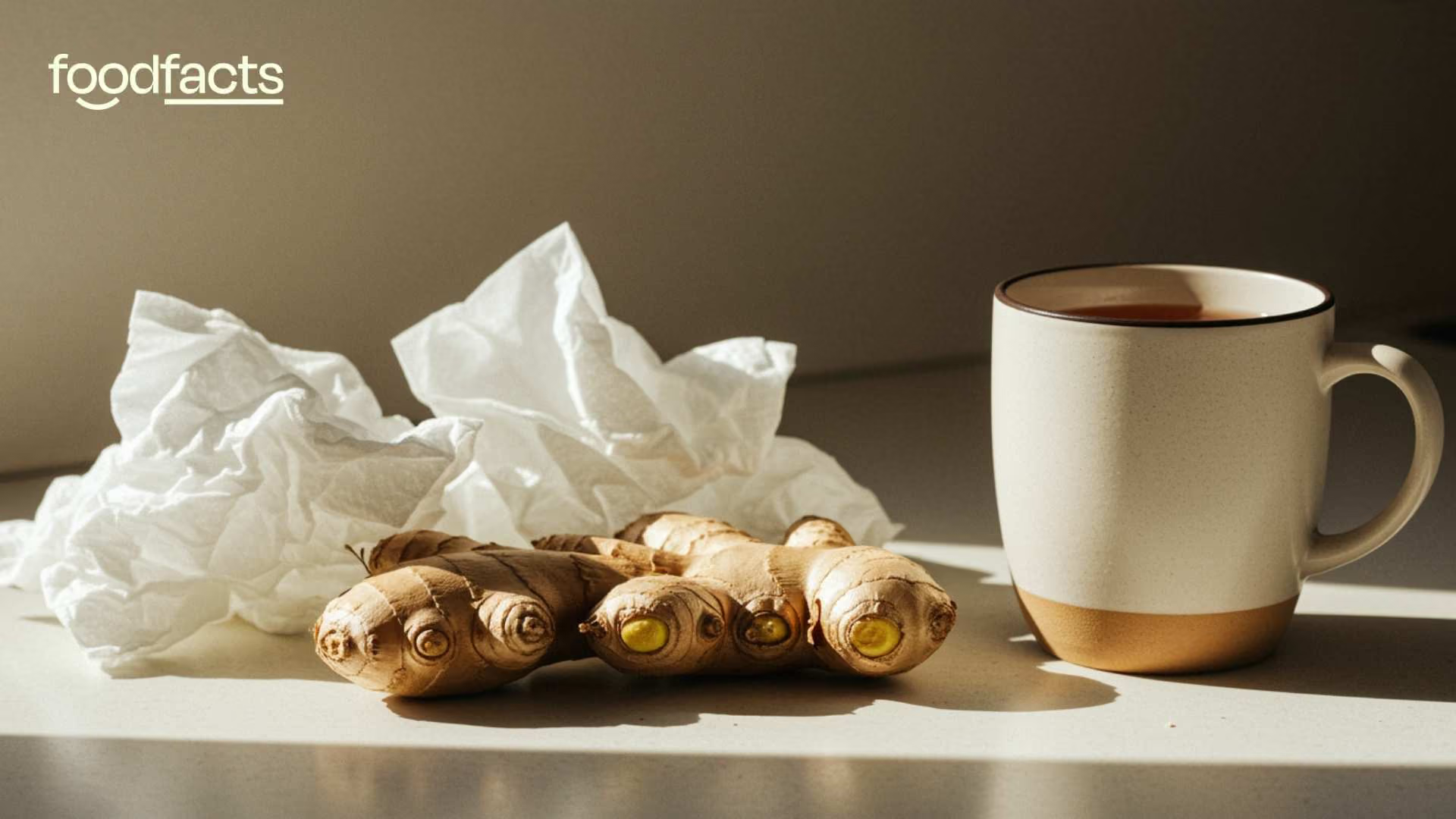
Is ginger good for you? Or are the benefits of this "superfood" overstated?

Many people eat ginger when they're feeling unwell, but are ginger's health benefits anecdotal or based in evidence? We find out in this fact-check!
FACT CHECK
Opinion
Media Literacy

Exposing misinformation: how influencers twist the truth on social media

Misinformation Detractors: How Social Media Influencers Deflect Accountability in Nutrition Conversations