
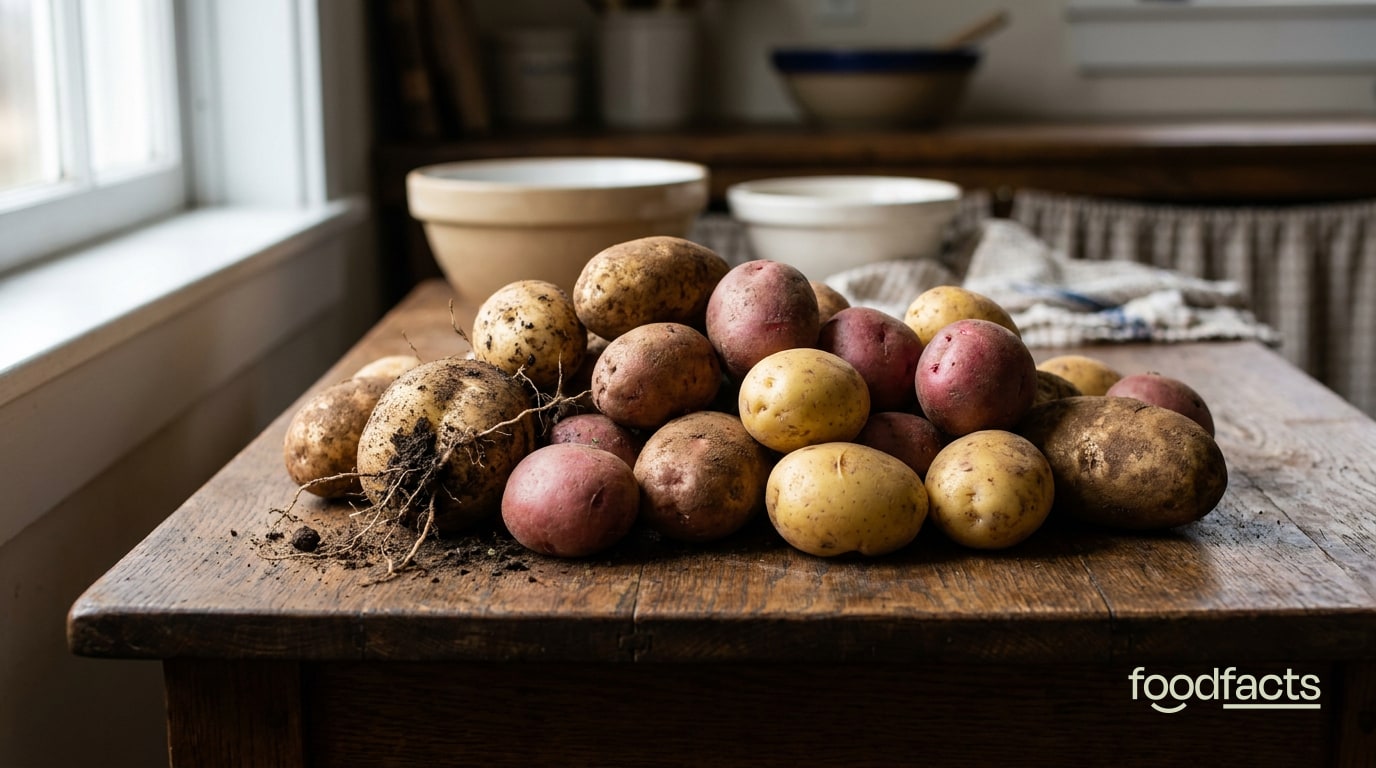




Are potatoes really not 'human food'? We fact-checked the history and the science


In a recent video on social media, influencer Candi Frazier, known on Instagram as PrimalBod, suggests that potatoes are merely peasant food by telling a dramatic story: that potatoes were once banned, that rulers had to trick starving peasants into eating them, and that although we can eat them “and not die,” they aren’t truly our food.
This fact check breaks down those claims point by point, looking at both the history and the science behind them.
Full Claim: “Potatoes were banned in France, for a long time. They thought that potatoes gave everyone leprosy. Frederick the Great, the King of Prussia at the time, he was trying to get his people to eat potatoes because somebody from Spain had brought over this hybrid potato that they had bred out, the solanine, the toxic poison that's in potatoes. And he's like, try these. These can feed your people. And so he's trying to feed them to the people and the people weren't eating them. They're like, we're not eating those. The dogs won't even eat them. So what he did was he constructed this wall.
He started planting potatoes behind this wall and then he put guards out front because he wanted to trick the peasants into eating the potatoes and it worked. And at the time, he had prisoners of war. And one of the prisoners of war was a pharmacist and he worked with the French parliaments at the time.
And so when he became freed, he went back and started giving starving people in France potatoes and he showed that it could keep them alive. And so the parliament decided to release the law and now potatoes are everywhere, you know, French fries. The reason they had to eat those foods is because they were starving. That was all that was available. Carnivores can eat plants. We do it to our animals. Our cats and dogs that are carnivores, there's sweet potato, corn, green beans, alfalfa, oats in their dog food. And we feed it to them regularly and they don't die. So, yes, we can eat them and not die. But it's not our food. Our food is meat.”



The claim is based on real historical events: yes, potatoes were distrusted for a time, and yes, there were clever campaigns to boost their popularity. But the idea that this means potatoes “aren’t our food” ignores both the historical reasons behind those campaigns and how human nutrition works. Humans are omnivores whose diets have always evolved, and potatoes have long been part of that story.
Stories like this are compelling and dramatic. Plots involving bans and trickery are catchy and so get shared more easily, regardless of whether they are historically or scientifically accurate. If we don’t pause to check the evidence, we risk throwing out healthy, practical foods for no good reason.


This fact check breaks down three main claims: claims 1 and 2 tackle the historical background behind potatoes’ popularity; claim 3 then examines in more detail the argument that consuming potatoes isn’t conducive to optimal health.
Claim 1: “The reason they had to eat those foods was because they were starving. That was all that was available.”
Fact-Check: The implication of this claim is that potatoes are ‘peasant food’, fit for survival, but not for optimal health. This implication is made clearer by one of theprimalbod’s comments on the video:
“If you want to eat food to survive go ahead. Climb the wall, be a peasant. I don't want [to] just survive, I want to dominate. I'll eat what the fucking kings and queens ate... the fucking meat!”
While potatoes have certainly been useful in hard times, they are not just desperation food. Let’s contextualise the whole story as recounted by Candi to see why it might in fact be just the opposite:
Potatoes were banned for a time… based on unfounded beliefs
In 1748, growing potatoes was banned by the French parliament, fearing they might spread leprosy. There was no scientific basis for this: leprosy is caused by bacteria, not potatoes, and is primarily spread through respiratory means (source, source). But medical understanding at the time was limited.
The Parmentier “guard trick” really happened… but tells only part of the story
A couple of decades later, Antoine-Augustin Parmentier, a French pharmacist and potato champion, did famously arrange for soldiers to guard potato fields during the day but not at night, essentially encouraging theft to make potatoes appear desirable. And it worked!
So yes, potatoes faced a bit of a PR challenge. But their success story is not a sign of dubious trickery. In fact it might be seen as an example of how societies overcome food myths to improve the health of the general population.
Potatoes at the heart of a new perspective on the links between food, health, and state wealth
In a paper published in the journal Eighteenth-Century Studies, food historian Professor Rebecca Earle urges for the contextualisation of accounts of potatoes’ history. She explains that one of the main reasons behind this push towards the adoption of the potato as a food staple was a realisation that nutritious food was conducive to good health; and that a large, healthful population was an asset to the state.
This goes completely against the implications of Candi’s claims: it suggests that people didn’t eat potatoes just because they had no choice. Rather potatoes were valued for keeping workers healthy and strong.

So, were potatoes just ‘poor people’s food’? Not really. People had been eating potatoes long before Parmentier’s stunts (he even gave potato bouquets to the French King and Queen). Rich households and armies ate potatoes, too. Indeed, reports from this time period allude to potatoes being consumed for pleasure by the wealthy (source).
They weren’t forced on people: they spread because they were cheap, filling, and a good source of nutrients.
More than just ‘survival food’
Potatoes are a rich source of carbohydrates, fibre (especially with the skin), potassium, and some B vitamins. Potatoes also contain small amounts of Vitamin C. In places like the UK where people tend to eat a lot of potatoes, they can be a good source of Vitamin C. Potatoes are also low in fat and highly satiating, making them a practical and nutritious part of many balanced diets.
Claim 2: A hybrid potato from Spain was bred to eliminate solanine, the “toxic poison that’s in potatoes.”
Fact-Check: This seems to be the point where Candi’s storytelling diverges from available historical accounts. Let’s start by explaining what solanine is, before moving onto the claim that it was bred out of potatoes before they became a popular food choice.
What is solanine?
Solanine is a type of glycoalkaloid (a naturally occurring chemical compound found in plants) most commonly associated with the nightshade family of plants. This includes potatoes as well as tomatoes, peppers and aubergine (source).
Plants produce glycoalkaloids like solanine as a natural defence mechanism against pests and diseases. But this doesn’t mean they’re unsafe to eat. In healthy, properly stored potatoes levels are generally low, especially in the tuber. However certain conditions can lead to increased solanine production. These include mechanical damage, light exposure, improper storage and sprouting. Other factors such as variety, genetic makeup, and growing or climate conditions can also affect solanine content (source). Such cases can often be detected by a green colour and bitter flavour (source).
Is solanine dangerous?
In large amounts solanine is indeed toxic to humans, however, poisoning is rare and usually only occurs after eating green, sprouted, or improperly stored potatoes. Additionally, ingested solanine is poorly absorbed and rapidly excreted by the human body (source).
Harriet Hall, MD, who was also known as The SkepDoc, wrote about this topic in Science-Based Medicine and brings a much-needed reality check:
‘It is estimated that it would take 2–5mg per kilogram of body weight to produce toxic symptoms. A large potato weighs about 300g and has a solanine content of less than 0.2mg/gm That works out to around 0.03mg per kilogram for an adult, a hundredth of the toxic dose; I figure a murderous wife would have to feed something like 67 large potatoes to her husband in a single meal to poison him’ (source).
For most people, the nutritional benefits of potatoes far outweigh the minimal risk. Only vulnerable groups like young children may be at risk with extreme exposure (source).
Were potatoes imported as hybrid potatoes?
Candi’s claim suggests that potatoes were brought over from Spain as hybrid potatoes, bred to have solanine removed, making them safer for consumption. To evaluate this claim, we need to consider the historical context and the state of breeding knowledge at the time.
While it’s likely that people recognised that green or bitter potatoes could cause illness, the chemical identity and biosynthesis of solanine were not understood until much later. Modern efforts to eliminate solanine (such as using CRISPR to knock out key genes like St16DOX) are 21st-century innovations that allow precise removal of solanine production pathways (source).
In the 18th century, people practiced selective cultivation, favouring tubers that were safer or tasted better, but without any understanding of solanine or plant genetics. Therefore, the suggestion that potatoes brought from Spain were deliberately “bred” to remove solanine is implausible. Rather, safer varieties likely became more common over time through informal selection.
Claim 3: “Carnivores can eat plants… we can eat them and not die [...] But it’s not our food. Our food is meat.”
Fact-Check: Candi’s argument is based on the assumption that humans are carnivores. She compares humans eating plants to obligate carnivores, like cats, eating plants.
This comparison is misleading as unlike obligate carnivores that depend on nutrients found in animal tissue and must eat meat to survive, humans are omnivores so are adapted to eat a varied diet of both plant and animal foods. This is reflected in the structure of our teeth, which includes molars for grinding, and our digestive system which is suited for both animal and plant foods (source). Evolutionary biology suggests that being omnivores gave humans a survival advantage by allowing dietary flexibility, supporting adaptation to diverse environments (source).
Moreover, there is no strong evidence that eating plants is bad for humans or that plants should be avoided. On the contrary most research suggests that diets rich in plant foods can have several health benefits.
Many studies have shown that an increased consumption of plants such as fruits, vegetables, nuts and whole grains is linked with lower risk of chronic diseases. One umbrella review found that higher fruit and vegetable intake was associated with reduced risk of cardiovascular disease, certain cancers and overall mortality (source).
It is true that meat can be a valuable part of a balanced diet. Lean, unprocessed meat, in particular, can be a good source of high-quality protein and essential nutrients like iron, zinc, and B12. However, diets based solely or predominantly on meat often lack fibre and essential nutrients, and are typically high in saturated fat.
It is also important to note that high consumption of red and processed meat has been consistently linked to an increased risk of several chronic diseases, including colorectal cancer, type 2 diabetes, and cardiovascular disease (source) (source).
Overall Candi’s claim is imbalanced because it ignores the scientific consensus that humans are omnivores. Rather than dismissing plants altogether, we should instead aim for a balanced diet with a variety of nutrient-dense foods, from both plant and animal sources, to support long-term health.
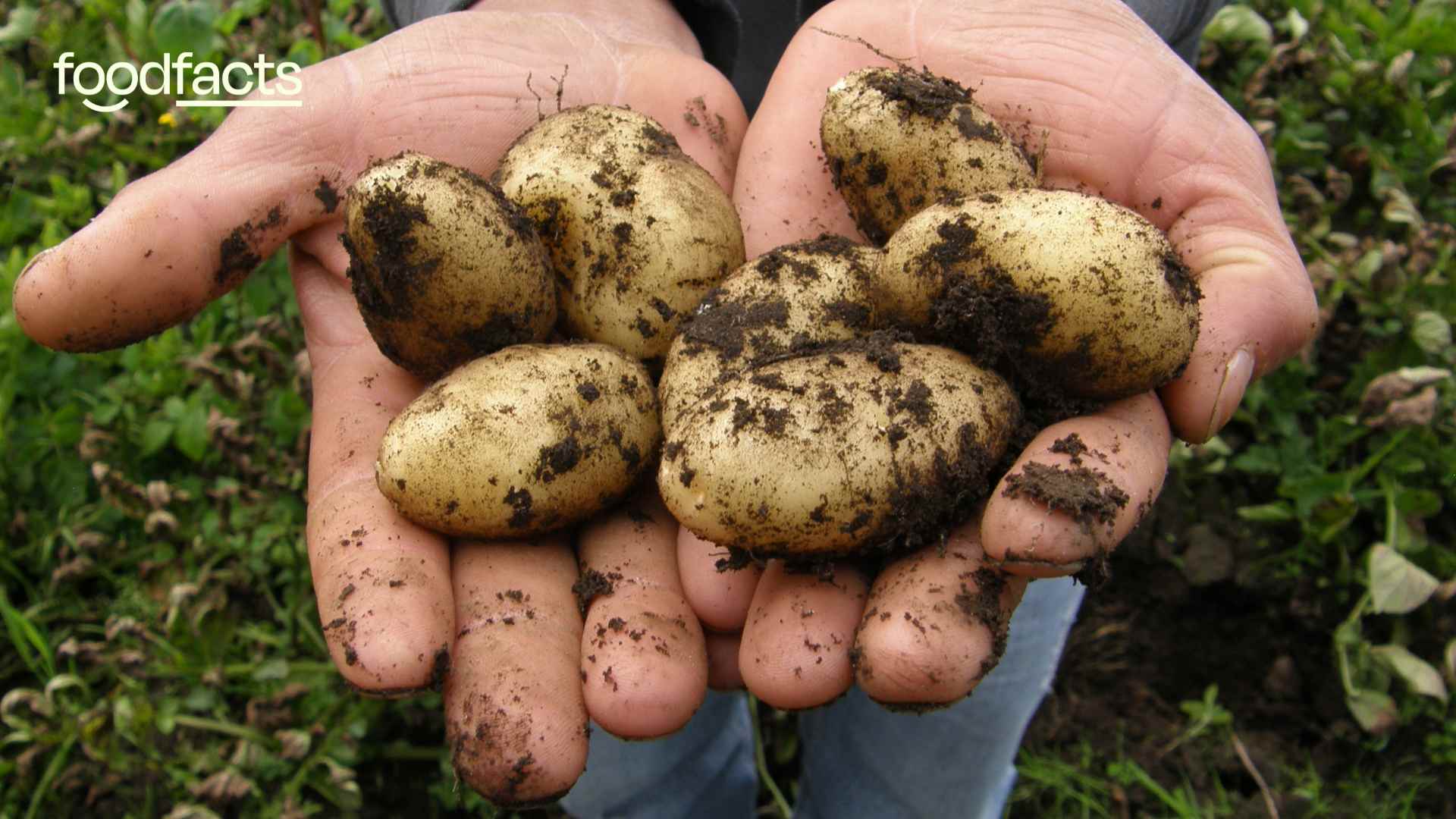
Deep dive into: the power of storytelling
The video suggests that while plants can be eaten, their consumption doesn’t lead to optimal health. The argument is not supported by scientific evidence, but rather by a story. So what is it that makes storytelling so powerful, and why is it problematic when it comes to understanding nutrition?
One way social media has changed how we discuss nutrition is the popularisation of stories to explain nutrition questions.
Take a rather straightforward question: are potatoes a nutritious food? To answer this, or indeed any nutrition question, science rarely says just ‘yes’ or ‘no’. The scientific process involves asking more questions. The answer might be yes in one context, but not necessarily in another.
Stories are compelling, not just because they’re easy to listen to and to process, but because in a story, everything appears to be linked: there’s a reason for everything. This makes stories easier to accept. Once we’ve accepted a story, it then also becomes easier to dismiss contradictory information. That’s why fact-checking claims like this means not only looking at the science and history, but also unpacking the story that holds the above claims together.
So what’s the logic behind those claims?
The argument seems to rest on the idea that some foods are truly designed for humans, and others aren’t. The so-called ‘human foods’ are usually described as the ones our ancestors ate, or the foods people rely on in the wild, without any form of processing. In this reasoning, anything that has been modified in any way can be framed as bad: whether it is by causing disease, making you fat, or leaving you with non-optimal energy.
So, all of our society’s ailments can get pinned on ‘modern’ food. This idea feels relatable: people are tired, people struggle with weight loss, people try to eat ‘the right foods’ and still feel worse. This narrative gives a clear reason for those feelings of frustration: of course it doesn’t work, in fact it cannot work, because it wasn’t designed for us.
Think of the hunter-gatherer image people hold up in contrast: you might imagine a lean, active human chasing meat in the wild. No processed foods, no mystery ingredients… no diabetes? This picture is not necessarily accurate (source, source), but the claim and its logic are intuitive: stick to ancestral foods, and you’ll feel better.
And so the picture builds up. The story starts to make sense. Claims about the superiority of that way of life can get lots of attention on social media. In some of these narratives, certain foods, including ordinary crops like potatoes, can be cast as a ‘con’: marketed as healthy when they’re not.
But the story leaves a lot out
This narrative skips over some important facts and contains several flaws. As it gets repeated over time and gets accepted, it can end up distorting the picture of how nutrition actually works.
Firstly, restrictive diets, if not planned properly, can lead to nutritional deficiencies, and this is often not mentioned.
Secondly, not only do humans adapt to food, we also adapt food to us. The assumption that there’s a single ‘correct’ ancestral diet ignores the fact that what we eat has changed dramatically over time and continues to do so. And that is not a bad thing.
Farming, cooking, and breeding crops have also reshaped what we eat and how we digest food, allowing us not only to survive but to grow.
What does this tell us about human nutrition?
It tells us our diets and bodies are shaped by evolution. And that flexibility is not a flaw, it’s our species’ survival strength.
Final Take Away
What we have then is a tweaked tale to tell a compelling story. Yes there was a campaign to get working people to embrace potatoes, but not because that was “all that was available.” Yes potatoes were brought over from Spain, but not as a hybrid potato with solanine removed. Why do those details matter? Because the premise is that the story being sold explains why eating potatoes is not conducive to optimal health; why they’re not “our food” and were never meant to be.
That is not how evolution or nutrition work. Our diets evolve, our bodies evolve. Potatoes are very much our food: they’ve played a great role in supporting our growing population.
To imply from this story that humans should principally be eating meat and avoid plants is unsupported by evidence, and misleading. Consumption of plants is a vital part of a healthy and balanced diet. Given that current intakes of fruits and vegetables are already low, advice that we should avoid plants for optimal health can discourage people from adopting evidence-based strategies for better health and may risk promoting harmful dietary choices.
We have contacted Candi Frazier and are awaiting a response.
Disclaimer
This fact-check is intended to provide information based on available scientific evidence. It should not be considered as medical advice. For personalised health guidance, consult with a qualified healthcare professional.
Independent fact-checking, funded by readers like you.
Misinformation is a growing threat to our health and planet. At foodfacts.org, we're dedicated to exposing the truth behind misleading food narratives. But we can't do it without your support.
Sources + Further Reading
Bhandari, J. et al. (2023). “Leprosy”
WHO (2025). “Leprosy”
Clément, J.P. (1995). “[Parmentier, potatoes and American pots].”
Earle, R. (2017). “Promoting Potatoes in Eighteenth-Century Europe.”
Earle, R. (2018). “Potatoes and the Hispanic Enlightenment.”
NHS (2023). “Starchy foods and carbohydrates.”
Radmila, S. (2015). “Potato and solanine toxicity.”
Jadhav, S.J. et al. (2008). “Naturally Occurring Toxic Alkaloids in Foods.”
Dalvi, R. & Bowie, W. (1983). “Toxicology of solanine: an overview.”
Hall, H. (2012). “Killer Tomatoes and Poisonous Potatoes?”
Han, S. et al. (2025). “Deterministic and probabilistic health risk assessment of α-chaconine and α-solanine in potato products consumed in Korea.”
Nakayasu, M. et al. (2018). “Generation of α-solanine-free hairy roots of potato by CRISPR/Cas9 mediated genome editing of the St16DOX gene.”
Katz, D.L. (2019). “Plant-Based Diets for Reversing Disease and Saving the Planet: Past, Present, and Future.”
Leonard, W.R. (2002). “Food for thought. Dietary change was a driving force in human evolution.”
Wallace, T.C. et al. (2019). “Fruits, vegetables, and health: A comprehensive narrative, umbrella review of the science and recommendations for enhanced public policy to improve intake.”
Wong, K. (2024). “What Did Humans Evolve to Eat?: Nutrition influencers say we should embrace meat-heavy diets like our ancient ancestors did. But our ancestors didn't actually eat that way.”
Devlin, H. (2024). “Hunter-gatherers were mostly gatherers, says archaeologist.”



foodfacts.org is an independent non-profit fact-checking platform dedicated to exposing misinformation in the food industry. We provide transparent, science-based insights on nutrition, health, and environmental impacts, empowering consumers to make informed choices for a healthier society and planet.








.svg)


.svg)

