
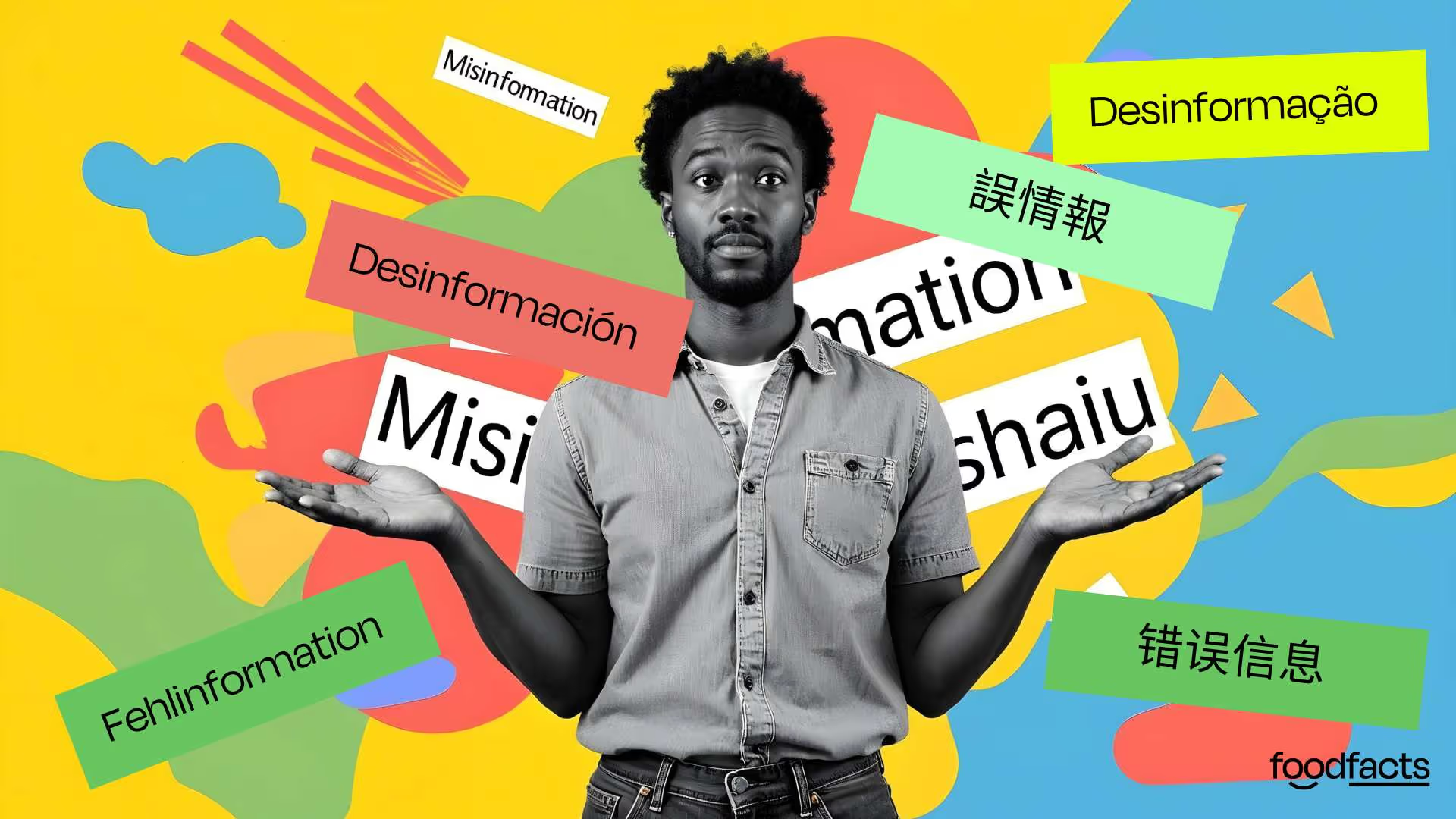




How health influencers use deflection tactics to spread misinformation — and how to protect yourself


In today’s digital landscape, misinformation proliferates swiftly, intertwining partial truths with emotional narratives to seem credible. A troubling trend involves health influencers employing misinformation as a deflection tactic to evade accountability, undermining social media accountability and promoting online deception.



To combat this, nutrition expert Danielle Shine emphasizes the importance of following qualified professionals, verifying claims through evidence, and avoiding oversimplified narratives. Consumers can resist these tactics by fostering critical thinking and seeking out evidence-based information. Addressing misinformation is about more than fact-checking—it’s about safeguarding trust, accountability, and informed decision-making in the nutrition space.
Because misinformation isn’t harmless—it shapes what you eat, who you trust, and how you make decisions. Learn how to spot deflection tactics, protect yourself from harmful advice, and take back control of your nutrition choices.


In today’s digital world, misinformation is a word that carries weight. Yet, as Danielle Shine, a registered dietitian and nutrition researcher, explains, some individuals are now twisting its meaning to deflect criticism. This tactic undermines accountability and creates confusion, leaving consumers unsure of whom to trust.
What Is Misinformation and Why Should You Care?
Misinformation—the unintentional dissemination of false or misleading information—often originates from well-meaning individuals, yet contributes to online deception and challenges in social media accountability.
However, research shows it spreads faster than factual content because it blends elements of truth with emotionally charged narratives. Claims about the food system, for instance, may tap into widespread discontent, making them feel relatable even when inaccurate.|
At Foodfacts.org, we emphasize that misinformation isn’t harmless. Its rapid spread can damage trust, distort consumer choices, and even harm long-term health relationships. Combating misinformation and promoting evidence-based information is critical to helping consumers make informed food choices.
But what happens when even the term misinformation becomes a tool for manipulation?

Redefining Misinformation: A Deflection Tactic
Danielle Shine has observed a worrying trend: certain health influencers in the wellness industry now weaponize the term “misinformation.” When their claims are questioned, they pivot the conversation to accusations of censorship or bias, rather than addressing the validity of their statements.
This tactic distracts from the real issue—whether their claims are accurate—and instead triggers debates about freedom of speech. Audiences become confused, focusing on victim narratives rather than factual evidence.
The term ‘misinformation’ isn’t about silencing differing opinions; it’s about identifying information that is factually incorrect or harmful. Misleading narratives around nutrition can jeopardize both human and planetary health. It’s not just about a difference of opinion, and suggesting otherwise removes accountability and makes the pursuit of knowledge no more important than storytelling.

Classic Deflection Strategies
Shine highlights a common example: exaggerated health claims, like a detox tea “curing diseases” or a diet promising rapid weight loss. When challenged for lack of evidence, influencers often frame themselves as victims, blaming “Big Pharma” or government conspiracies. By portraying the word “misinformation” as a tool of oppression, these influencers weaken public trust in science, amplifying pseudoscience instead.
Such tactics align with conspiracy narratives, reinforcing echo chambers where misinformation thrives.
Social Media’s Role in Amplification
Social media platforms like Instagram, TikTok, and Facebook accelerate misinformation. Self-proclaimed “health experts”—often without qualifications—present content as “educational” while spreading unverified claims. When debunked, they deflect by claiming suppression from “mainstream agendas.”
Oversimplified narratives on social media create an ‘us versus them’ dynamic. Influencers claim they represent the people, while health professionals are painted as profit-driven. This resonates with those disillusioned by authority, making false claims appear more trustworthy.
Echo chambers exacerbate this effect, exposing users to similar content repeatedly, which creates the illusion of broad support for fringe ideas.
How to Recognize and Combat Deflection Tactics
Understanding deflection is essential to navigating health advice online. Danielle Shine recommends these strategies:
- Check Qualifications: Follow qualified professionals like registered dietitians and nutritionists. Nutrition science is complex, and expertise matters.
- Verify Claims: Ask for evidence. Do they cite peer-reviewed studies, or do they link to blogs and sponsored content? If no evidence exists, the claim can be dismissed, as per Hitchen’s Law: “What can be asserted without evidence can be dismissed without evidence.”
- Avoid Oversimplified Narratives: Be wary of emotionally charged claims that rely on “us versus them” language.
- Consult Experts: For tailored advice, consult a registered dietitian—your most reliable source for evidence-based nutrition.
The Broader Implications
The misuse of “misinformation” erodes trust in reliable sources, making society more vulnerable to exploitative marketing and harmful pseudoscience. Shine underscores the importance of protecting these terms so they remain tools for accountability.
A Call to Action for Informed Consumers
The fight against misinformation isn’t just about fact-checking—it’s about safeguarding trust. As consumers, you can resist deflection tactics by fostering critical thinking and prioritizing evidence-based information. By supporting credible experts and asking tough questions, you help uphold integrity and accountability in nutrition discourse.
Together, we can create a food system grounded in trust, knowledge, and informed choices.
To protect against nutrition misinformation, always check to make sure the people you follow for nutrition information are appropriately qualified. Nutrition science is complex and constantly evolving. Without a solid foundation of evidence-based nutrition knowledge and expertise, it's impossible to fully understand or accurately communicate the complexities of food and health.
When someone makes a claim about food, nutrition, or health, be sure to look for the evidence they provide to support it. Do they share websites with advertisements, blogs, or best-selling nutrition books? These are not considered credible sources of evidence-based nutrition information. If no evidence is provided, then, as per Hitchen’s Law: 'What can be asserted without evidence can also be dismissed without evidence.'
Ultimately, the safest and most effective way to learn about nutrition online is to follow qualified nutrition professionals, such as degree-qualified registered dietitians and nutritionists. You can also verify nutrition claims on social media and determine whether they’re relevant to you and your dietary needs by consulting one-on-one with a registered dietitian, the most qualified food and nutrition expert available to you.
Independent fact-checking, funded by readers like you.
Misinformation is a growing threat to our health and planet. At foodfacts.org, we're dedicated to exposing the truth behind misleading food narratives. But we can't do it without your support.
Sources
Shine, Danielle (2024). Instagram Posts on Nutrition Misinformation and Health Fraud.
Vosoughi, Soroush et al. (2018). “The spread of true and false news.” DOI:10.1126/science.aap9559
Changing Markets Foundation (2024). “Truth, Lies, and Culture Wars Report.” https://changingmarkets.org
World Health Organization (WHO). https://www.who.int
Centers for Disease Control and Prevention (CDC). https://www.cdc.gov
PubMed. https://pubmed.ncbi.nlm.nih.gov



foodfacts.org is an independent non-profit fact-checking platform dedicated to exposing misinformation in the food industry. We provide transparent, science-based insights on nutrition, health, and environmental impacts, empowering consumers to make informed choices for a healthier society and planet.






.svg)


.svg)

