




France's cadmium warning fact-checked: what chronic exposure to heavy metals in staple foods actually means for your health.


The Daily Mail recently ran a headline along the lines of: "Eating croissants and baguettes 'raises cancer risk' due to toxic heavy metal, French health chiefs warn", paired with an image caption reading "Croissants could be exposing millions to a cancer-linked toxic metal."
This fact-check focuses primarily on that headline and caption, not on the article as a whole, which is largely accurate. Headlines are where perception is shaped: research shows a lot of people share headlines without reading beyond them, which means the framing and implications of those few words carry significant weight (source, source). We also examine one specific line from within the article: the claim that France’s higher cadmium levels do not mean the UK is “risk-free”, a statement likely to prompt questions from a UK audience. Let’s check whether those concerns align with the scientific evidence.



When it comes to communicating official health warnings, accuracy, context and nuance all matter. The real issue here is long-term, cumulative exposure to cadmium from a wide range of everyday staple foods, driven by contaminated soils and fertiliser policy: that is where urgent action is needed. For the consumer, ANSES’ recommendations focus on dietary diversification. As for the UK: cadmium is present at significantly lower levels; however heavy metals’ contamination is not a new issue and dietary diversification remains sensible.
Headlines that say “X food raises cancer risk” are now so common that people may end up dismissing them or feeling paralysed about what to eat. There is even a link beneath The Daily Mail article to a previous piece warning about yet another supposed carcinogen in food. Frequent sensational headlines thus make it harder to distinguish between genuine, systemic concerns (like heavy metals in staples) and exaggerated claims to drive clicks, and to understand how consumers are affected.
Cadmium in food is not a brand‑new issue. What is new here is evolving data on low‑level chronic exposure: large national surveys and meta‑analyses now show that even relatively low doses, over decades, can increase the risk of kidney and bone problems and may modestly raise the risk of certain cancers in some groups. That is why French authorities are pushing for action, and why it is important to explain clearly what is known, what remains uncertain, and what people can realistically do.


Claim 1: “Eating croissants and baguettes ‘raises cancer risk’” / “Croissants could be exposing millions to a cancer-linked toxic metal”
Fact-check: The concern about cadmium is real and comes from ANSES, the French Agency for Food, Environmental and Occupational Health & Safety which reports that many people may have cadmium levels high enough to raise concerns about long term kidney and bone effects. While cadmium is classified as a human carcinogen, the headline implies that croissants and baguettes are inherently “cancer‑raising” foods. However, cadmium’s best‑established effects at current dietary exposures are on kidneys and bones, and the risk comes from total lifetime exposure across many everyday foods, such as cereals and not from croissants alone.
What cadmium is and how it behaves
Cadmium is a naturally occurring toxic heavy metal that ends up in soils mainly through phosphate fertilisers and some industrial activities. Plants grown on contaminated soils absorb cadmium, so low levels are found in many plant foods, especially cereals, potatoes and some vegetables.
Exposure to cadmium primarily occurs through ingestion (food) and inhalation (tobacco smoke and industrial dust). Inhalation is a much more efficient route for cadmium to enter your system compared to ingestion (source).
For non‑smokers, diet provides almost all cadmium exposure (source).
Once ingested, cadmium:
- accumulates mainly in the kidneys and liver.
- is excreted very slowly, with a biological half‑life of roughly 10–30 years.
The long half-life and the way cadmium builds up in the kidney and livers is why researchers are assessing the impact of chronic, low-level exposure.
Two distinct questions: “what does cadmium do?” and “at what exposure?”
It helps to separate:
- Established toxicity at higher or long‑term exposures:
Long‑term cadmium exposure can damage kidney tubules and lead to reduced kidney function. It is also linked to bone demineralisation, osteoporosis and fractures. These kidney and bone effects have clear dose–response relationships and are the primary basis for current tolerable intake values (source, source, source). Cadmium is also recognised as carcinogenic to lungs in the workplace (source). - Chronic low‑level exposure in the general population:
In France, biomonitoring (the Esteban study) shows that almost half of adults have urinary cadmium above 0.5 µg per gram of creatinine — a level associated with a higher probability of early kidney and bone changes over time. “ANSES stresses that long-term adverse effects are likely for a growing proportion of the population if no measures are taken to reduce exposure to cadmium.”
Croissants, baguettes and other wheat‑based products are part of that exposure picture because the wheat they are made from is grown on cadmium‑contaminated soils and because they are eaten regularly. But they are not uniquely problematic: breakfast cereals, bread, pasta, cakes, biscuits and potatoes are all identified as significant contributors in ANSES’ modelling, and some (like cereals and pasta) are eaten more consistently than pastries.
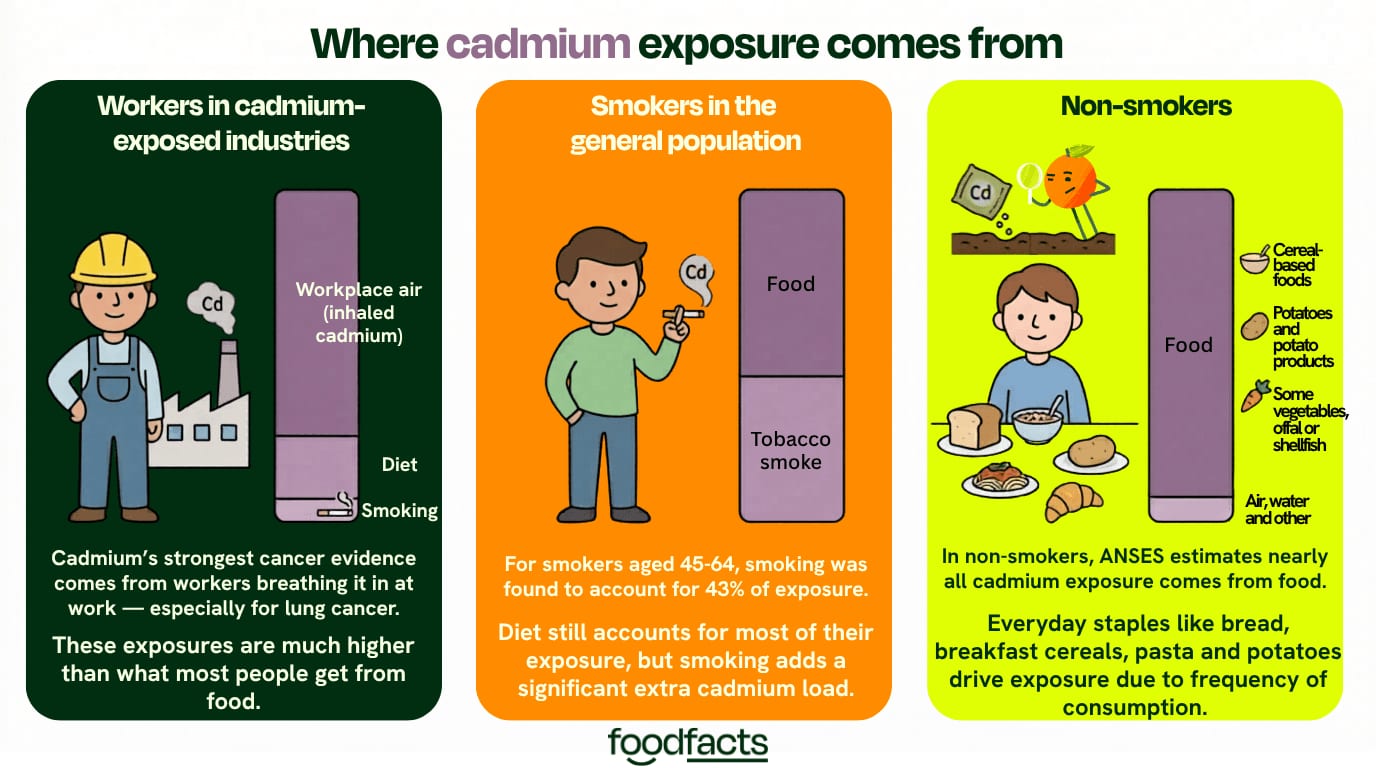
ANSES’2026 cadmium assessment only looked at the general population (last two panels) and found that a significant cadmium load was added for smokers; for non-smokers, 98% of exposure comes from food.
So, should we stop eating croissants?
Understanding the context of chronic exposure from many staples helps to clarify such questions. As croissants are not ‘necessary’ foods, if you consume them regularly then cutting down on pastries, biscuits, cakes, etc. is recommended. Sugary breakfast cereals are another staple which possibly contributes to significant exposure especially for children, and are thus recommended to limit.

An important recommendation is to diversify sources and to consider your overall diet, rather than isolating specific foods. Dark chocolate for example is regularly the focus of warnings on social media platforms, because it contains more cadmium, but the ANSES report found it only contributed to less than 3% of the French population’s exposure, regardless of age (source). That is because it is consumed less regularly, therefore focusing on diversifying staples is more impactful. The advice includes adding more legumes to your diet, so as to rely less regularly on staples like pasta or rice.
What about cancer?
So far we’ve mentioned health effects mainly on kidneys and bones, but the headline focuses on cancer. It is true that cadmium is classified as a Group 1 carcinogen by the World Health Organization’s International Agency for Research on Cancer meaning there is sufficient evidence that it can cause cancer in humans. That classification rests mainly on:
- Strong evidence from workers in cadmium‑related industries (such as smelting and battery manufacturing), where long‑term inhalation of high cadmium levels is consistently associated with an increased risk of lung cancer.
For the general population, exposed mostly via food and at much lower levels, the picture is more mixed, but associations with increased cancer risk are suggested (source, source):
- Meta‑analyses of dietary cadmium intake and total cancer risk do not consistently show a clear, statistically significant increase overall. Some analyses however suggest a small increase for certain hormone‑related cancers (such as endometrial cancer), but results are inconsistent and sensitive to study design (source). An updated meta-analysis noted that those findings should be seen as hypothesis-generating rather than conclusive, and more research is needed (source).
- Studies using urinary cadmium (a better marker of long‑term body burden) have reported stronger associations with some cancers, such as breast cancer, with roughly two‑fold higher risk in the highest vs lowest exposure groups in some analyses. These findings are based on a limited number of studies and need confirmation (source).
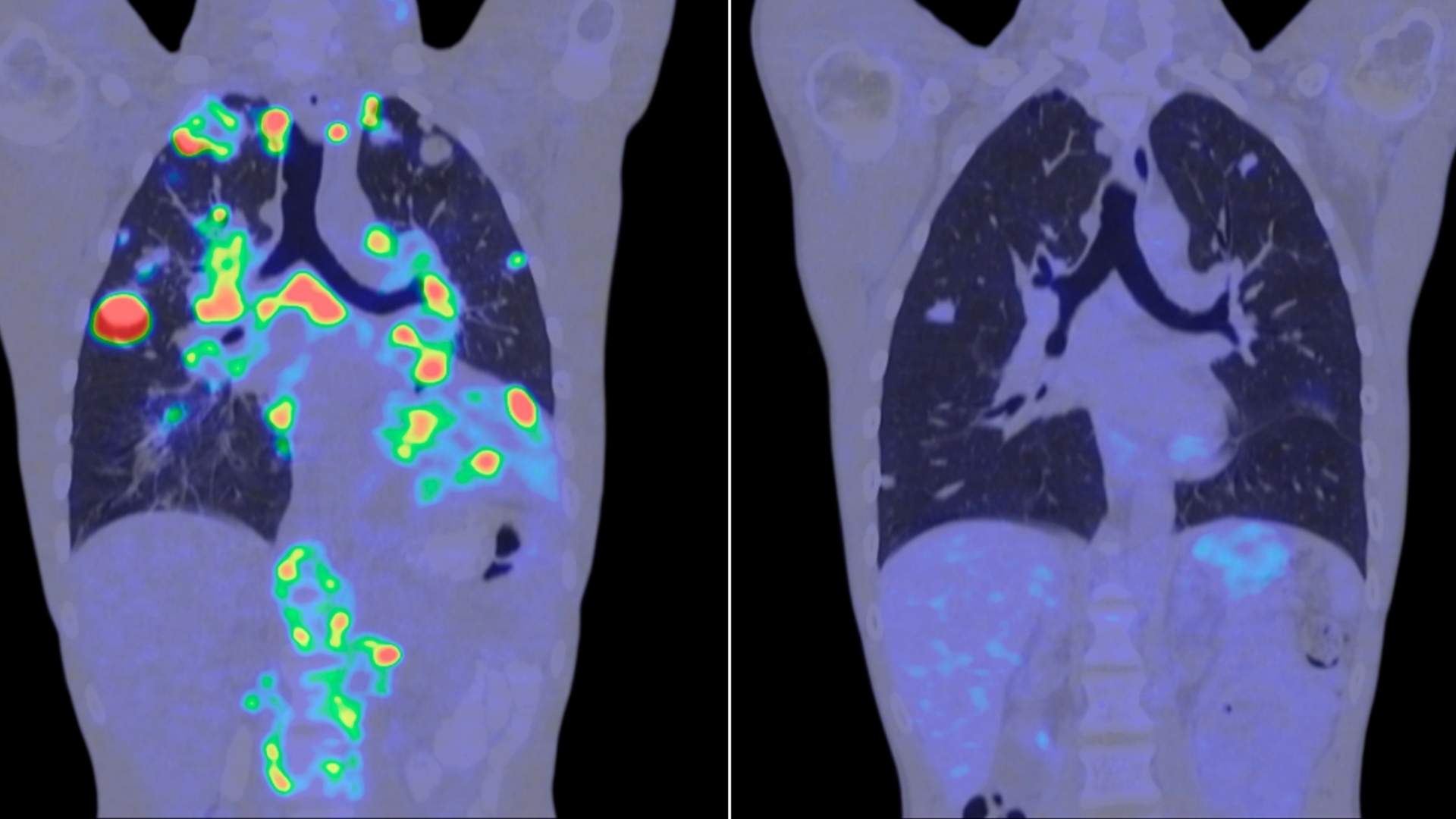
So the evidence supports the following:
- Cadmium is plausibly linked to increased risks of several cancers, with the strongest evidence in heavily exposed workers and lung cancer, and still‑developing evidence in the general population through chronic low-level exposure.
- At the levels currently seen in diet alone, the most robust concerns are kidney and bone effects; cancer risks may be slightly elevated in some groups but are harder to quantify and less consistent across studies.
From that standpoint, it is fair to say that cadmium is associated with an increased cancer risk, and that monitoring is required. As chronic growing exposure is the issue, France’s call for urgent action aims at lowering this exposure primarily by reducing the metal at its source: the agricultural soil.
Claim 2: “While levels recorded in France are said to be up to three or four times higher than those in England, experts warn this does not mean the UK is risk-free”
Fact-check: Cadmium exposures and food concentrations do appear significantly higher in France than in other European countries (source), and it is correct that this does not make the UK “risk-free.” However, the article is vague about who the cited “experts” are, and it provides little context for what the actual risk level for people in the UK is.
Why are levels higher in France?
Several interconnected factors explain the gap:
- Fertiliser history and limits. France has historically sourced phosphate fertilisers primarily from Moroccan rock deposits, which can contain higher cadmium levels. France’s own fertiliser limit also currently stands at 90 mg/kg: this is more than the current EU-wide standard of 60 mg/kg, and more than four times the 20 mg/kg threshold that ANSES has been recommending to effectively diminish levels.
- Soil and crops. Decades of using cadmium‑rich fertilisers have raised cadmium levels in agricultural soils, increasing cadmium uptake by crops such as wheat and potatoes (source).
- Dietary patterns. High consumption of wheat‑based products (bread, pasta, pastries, breakfast cereals) amplifies exposure when soil levels are elevated (source).

Is any country “risk-free”?
The statement that the UK is not risk-free is broadly reasonable. Cadmium is present in soils and foods worldwide at varying levels, and some data suggest that levels in some U.K agricultural settings may be higher in the UK than in some regions of North America, for example (source).
Certain groups may be closer to guidance thresholds even at lower average exposure levels: high consumers of particular foods, smokers (for whom tobacco adds substantially to cadmium burden), people with existing kidney disease, and young children (who have a higher food-to-bodyweight ratio).
However, the article does not specify which experts made this statement, and it gives readers little basis for assessing what the actual cadmium risk in the UK looks like relative to France. The UK Food Standards Agency monitors cadmium in cereals and other foods. That context would have been useful for a UK readership. We have reached out to The Daily Mail for comment and are awaiting a response.
It is also worth looking at the bigger picture. Dr Thibault Fiolet, who has conducted research in the impact of environmental contaminants, stresses that the issue with cadmium is of a similar nature to that of other heavy metals, such as mercury in fish or arsenic in rice. That is why the advice to diversify staples is particularly relevant (including in the UK), and not unique to cadmium.
Bottom line
- Cadmium in the French food supply is a genuine public‑health concern.
- The best‑established impacts of cadmium at these exposures are on kidneys and bones. Cadmium is also recognised as a human carcinogen, with strong evidence from highly exposed workers and more modest, sometimes inconsistent evidence for certain cancers at typical dietary levels.
- Croissants and baguettes do contain cadmium and contribute to exposure, but they are just one part of a wider problem driven by contaminated soils, fertiliser policy and high reliance on wheat‑based staples.
- Focusing on croissants alone risks oversimplifying both the cause and the solution. While the rest of The Daily Mail’s article clearly discusses the broader issue (and reminds readers that occasional consumption is not problematic), headlines alone have the potential to shape risk perception, so this narrow focus is worth noting.
- For consumers, the most practical step is not to fear a single food, but to diversify: avoid relying on the same cereal products every day, include more legumes and a mix of grains, and follow general nutrition guidance. For governments, the priority is to reduce cadmium at its source in fertilisers and soils and tighten limits in the main contributing foods.
This fact-check is intended to provide information based on available scientific evidence. It should not be considered as medical advice. For personalised health guidance, consult with a qualified healthcare professional.
Disclaimer
This fact-check is intended to provide information based on available scientific evidence. It should not be considered as medical advice. For personalised health guidance, consult with a qualified healthcare professional.
Independent fact-checking, funded by readers like you.
Misinformation is a growing threat to our health and planet. At foodfacts.org, we're dedicated to exposing the truth behind misleading food narratives. But we can't do it without your support.
Sources
- Gabielkov, M. et al. (2016). “Social Clicks: What and Who Gets Read on Twitter?”
- Mousoulidou, M. et al. (2024). “Social Media News Headlines and Their Influence on Well-Being: Emotional States, Emotion Regulation, and Resilience.”
- ANSES (2026). “What is cadmium and what are the health risks?”
- Fatima, G., et al. (2019). “Cadmium in Human Diseases: It's More than Just a Mere Metal.”
- UK Health Security Agency (2024). “Cadmium: toxicological overview”
- WHO (2019). “PREVENTING DISEASE THROUGH HEALTHY ENVIRONMENTS EXPOSURE TO CADMIUM: A MAJOR PUBLIC HEALTH CONCERN.”
- Thomas, L. D., et al. (2009). “Early kidney damage in a population exposed to cadmium and other heavy metals.”
- Oleko, A., et al. (2024). “Exposure of the general French population to metals and metalloids in 2014-2016: Results from the Esteban study.”
- ANSES (2026). “Le cadmium Priorisation des leviers d’action pour réduire l’imprégnation de la population française selon une approche d’exposition agrégée Connaître, évaluer, protéger Avis de l’Anses Rapport d’expertise collective.”
- IARC Working Group on the Evaluation of Carcinogenic Risks to Humans (2012). “CADMIUM AND CADMIUM COMPOUNDS.”
- García-Esquinas, E., et al. (2014). “Cadmium exposure and cancer mortality in a prospective cohort: the strong heart study.”
- Huff, J., et al. (2007). “Cadmium-induced cancers in animals and in humans.”
- Cho, Y. A., et al. (2013). “Dietary cadmium intake and the risk of cancer: a meta-analysis.”
- Zheng, S., et al. (2026). “The Association Between Cadmium Exposure and Endometrial Cancer Risk: Evidence from a Comprehensive Updated Meta-Analysis.”
- Florez-Garcia, V.A. et al. (2022). “Cadmium exposure and risk of breast cancer: A meta-analysis.”
- Tratnik, J.S. et al. (2022). “Cadmium exposure in adults across Europe: Results from the HBM4EU Aligned Studies survey 2014–2020.”
- European Parliament (2018). “Fertilisers/cadmium: Parliament and Council negotiators reach provisional deal.”
- Yeganeh, M. et al. (2026). “Risk assessment of dietary exposure to cadmium and lead through wheat and rice consumption in Iran.”
- Li, Y. et al. (2025). “Wheat tends to accumulate higher levels of cadmium in the grains than rice under a wide range of soil pH and Cd concentrations: A field study on rice-wheat rotation farmland.”
- AHDB (1998). “Cadmium and lead in British wheat and barley.”
- Food Standards Agency (2019). “Total diet study: metals and other elements.”
- Dr Thibault Fiolet’s Instagram



foodfacts.org is an independent non-profit fact-checking platform dedicated to exposing misinformation in the food industry. We provide transparent, science-based insights on nutrition, health, and environmental impacts, empowering consumers to make informed choices for a healthier society and planet.








.svg)


.svg)

