foodfacts logo
  • Articles
    
    Latest
    arrow pointing right
    All Fact Checks
    arrow pointing right
    Guides
    arrow pointing right
    Features
    arrow pointing right
    Opinion Pieces
    arrow pointing right
    Topics
    The Climate Crisis
    Politics Of Food
    Health
    Food Systems
    Media Literacy
    Popular Media
    Ethics
    Environment
    Nutrition
    Trending Tags
    Food Storage
    Metabolic Health
    ApoB
    LDL
    Crime
    Studies
    Fact Checking
    Cortisol
    Ultra Processed Animals (UPA)
    Zoonotic Diseases
    Lab-Grown Meat
    (UPF) Ultra Processed Foods
    Chemophobia
    Precision Livestock Farming (PLF)
    Glossary
    arrow pointing right
    Fact Checks
    Do tomatoes, bread, and ginger turn toxic in the fridge?
    Dark chocolate, cocoa beans and laboratory glassware on slate, illustrating lab-grown chocolate
    Why you shouldn't be scared of "poisonous" lab-grown chocolate
    Bowl of high-fibre foods including rolled oats, chia seeds, raspberries, broccoli and crackers next to a glass of water containing visible coloured microplastic particles
    Can fibre help your body excrete microplastics?
  • Take Action
  • About
    
    • About
    • The Team
    • Our Experts
    • Fact Checking Policies
    • Funding/Disclosures
    • Advisory Board
    • Media Mentions
    • FAQs
  • Food Database
  • Misinfo Watchlist
Report MisinfoDonate
Home
/
Articles
/
Sugar

Sugar

Explore Categories

The Climate Crisis
Politics Of Food
Health
Food Systems
Media Literacy
Popular Media
Ethics
Environment
Nutrition

Explore evidence-based articles on Sugar, including nutrition science, health claims, dietary context and common myths. From Food Facts.

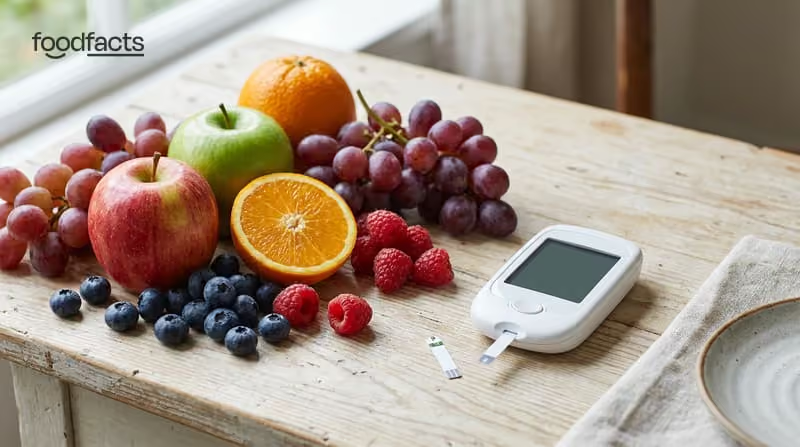
A woman holds a piece of fruit in her hand, looking suspicious. She is suspicious due to the varying information about blood glucose spikes, which this article explores.
FACT CHECK
OPINION
Health

The surprising reality about blood sugar spikes (it’s not what you think)

While some online influencers argue we should carefully monitor our blood glucose to flatten every spike, others say sharper spikes are beneficial.
Read more
A child is sat at a table that has whole grain foods on it. This highlights the fact that whole grains can contribute to a healthy diet.
FACT CHECK
OPINION
Nutrition

No, you don’t need to avoid feeding your kids whole grains.

Whole grains have been consistently linked with positive health outcomes and can play an important part in health-promoting, sustainable diets.
Read more
A close-up of a person holding a small jar of honey, surrounded by a soft, glowing background that highlights the golden hue of the honey. This image aligns with the article "Honey Spikes Blood Sugar," which explains how despite its natural origins, honey can cause blood sugar levels to spike, particularly for individuals with conditions like diabetes. The article also delves into the complex relationship between honey and its effects on glucose metabolism, emphasizing the need for careful consumption.
FACT CHECK
OPINION
Nutrition

No, honey isn’t unhealthy because it spikes your blood sugar, but why does this influencer say the opposite?

Honey raises blood sugar — but so does everything sweet. The evidence shows honey's glycaemic response is more nuanced than most influencer claims suggest.
Read more
A person stands on a colorful digital scale, reflecting the idea of weight tracking. This visual relates to the article "Eddie Abbew Claims Calorie Deficit Concern Fat Loss," which explores the importance of understanding calorie deficits for successful fat loss. The image aligns with the discussion on how people often track their weight to assess progress in weight management or fat loss plans.
FACT CHECK
OPINION
Nutrition

Eddie Abbew claims calorie deficit should not be the main concern with fat loss. What does the data say?

Eddie Abbew questions the calorie deficit model—but this article explains why fat loss still depends on it, with some key context
Read more
Previous
More
See all articles

Ready to take action?

You have the power to make a difference 3 times a day.

Get Inspired Today!
Get the latest articles
You're all set! We've added you to our newsletter.
Oops! Something went wrong while submitting the form.
Follow Us
youtube [#168] Created with Sketch.
Food misinformation threatens public and planetary health. We're fighting back against misinformation, fostering healthy communities, honest food, and a thriving planet

ai powered chat bot experience provided by Elevenlabs
Article

Top Myths

Latest

The Climate Crisis
Politics Of Food
Health
Food Systems
Media Literacy
Popular Media
Ethics
Environment
Nutrition
Take Action
Partner Organisations
About
Fact Checking PoliciesOur Funding/DisclosuresThe TeamOrganisational StructureIndependence & TransparencyAi Usage PolicyAdvisory BoardMedia MentionsFAQsGlossaryXML News Feed
Contact
Report Mis/DisinformationContact Us / PressProvide Feedback
Privacy Policy  
Terms & Conditions © 2024
The Worlds First Food Fact-Check Platform.
foodfacts.org is a non-profit organisation. (no. 15414442) limited by guarantee and registered in England and Wales.
‍
© Copyright 2024-2026 foodfacts.org  Launched in 2025. 🇬🇧 Grown in the United Kingdom.