





Modern fruit vs ancestral apples: how the "not natural" claim stacks up against health outcomes


A recent reel by Jessie Inchauspe, better known as the Glucose Goddess, compares individual glucose responses after eating a “modern apple” versus older/“ancestral-like” varieties and uses that framing to argue that modern fruit is “not natural.” Even though she reassures viewers that apples are “fine” to eat, the practical takeaway is that your everyday supermarket apple may be the “wrong” kind.
This raises several questions:
- What does “not natural” mean, and does it predict health outcomes?
- If apples are “fine,” is there good evidence that variety meaningfully changes health impact for most people?
- What do apples do in health outcome research, rather than single-person glucose response tracking?
Let’s check what the existing scientific evidence says.



The claim overlooks how humans have always shaped foods, how our bodies adapt, and what large studies show: apples of typical modern varieties are low‑GI (Glycemic Index), provide fibre and beneficial bioactive compounds, and are linked with improved cardiometabolic markers and lower type 2 diabetes risk in real‑world populations.
Most people in the UK already don’t meet fruit-and-veg targets (adults average about 3.3–3.7 portions/day), so adding fear around common fruits by implying that they are sweeter than they should be is unhelpful (source). It is yet another thing to think about when shopping for food. Social media can impact how we think about food, and can nudge people away from simple, evidence‑supported habits, like eating more fruit and vegetables, towards overthinking minor differences between varieties.


Before addressing Jessie’s specific claims, it is helpful to start with some contextual information. The issue here is less whether modern apples do differ from wild or older apples (they do), but more how those differences are packaged into a story that implies ‘risk’ (higher glucose spike) without examining outcome-based research.
Context: What “natural” does (and doesn’t) mean
The ‘Appeal to Nature’ is a common shortcut in nutrition content: creators from completely opposed stances regularly use it to justify their approach. As a result, “natural” becomes a slippery, influencer-dependent concept: one creator’s “nature intended” or “naturally derived” can be another creator’s “fake food.” “Natural” isn’t a consistent scientific category; in practice, it can mean anything from “wild” to “unprocessed” to “older varieties,” which makes it an unreliable tool for deciding what is health promoting.
In nutrition science, healthfulness is usually inferred from observable, measurable outcomes—like disease risk in cohorts, or risk markers in trials—not from whether something seems closer to the distant past.
Context: Selective breeding is not new
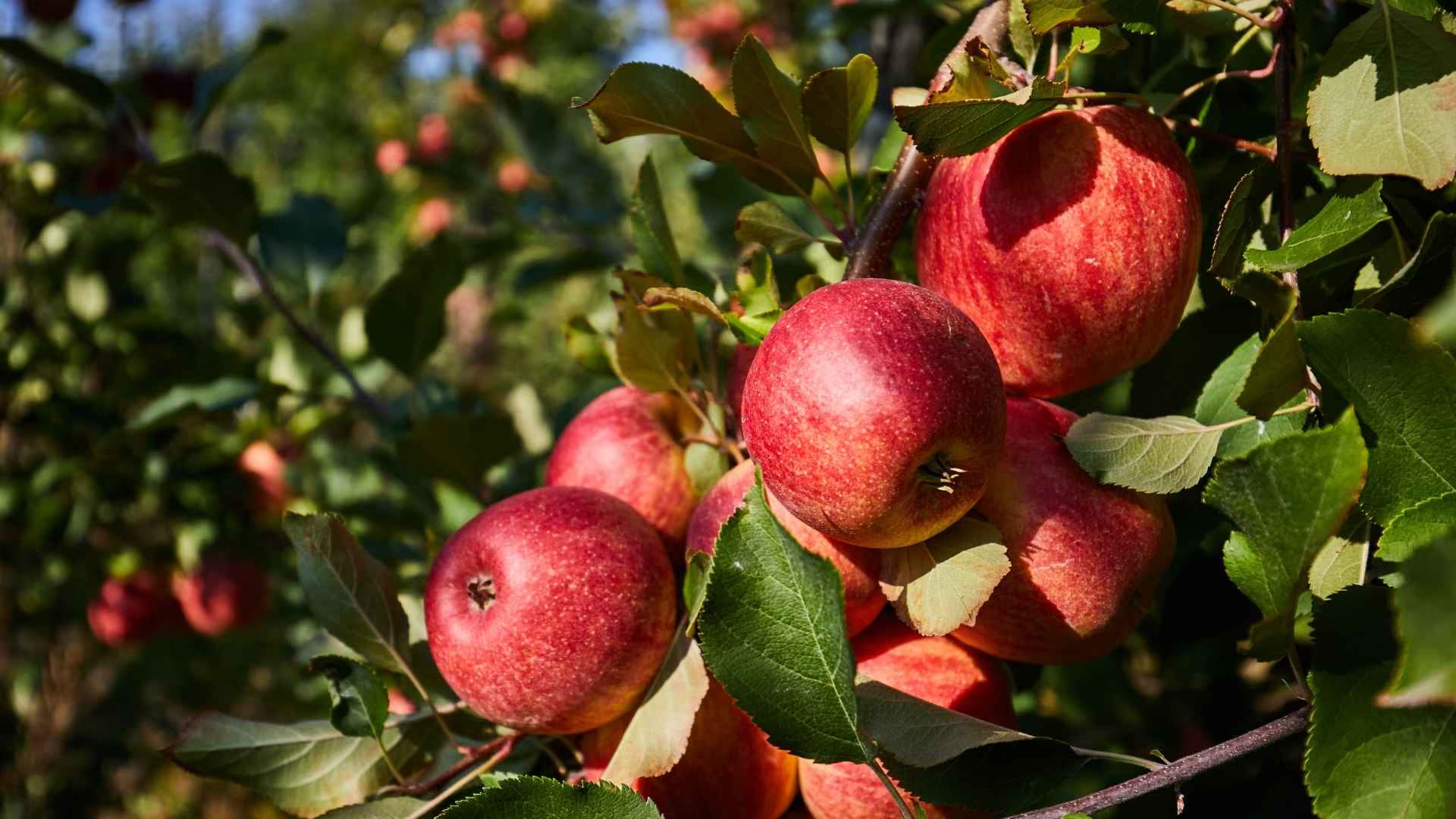
Selective breeding is when humans breed plants or animals for their preferred characteristics. It’s a long-running human practice, and it started with humans long before supermarkets. Describing whole fruits as ‘bred for sugar’ can make it sound as if they’ve been deliberately engineered to be unnaturally sweet, when in reality selective breeding simply means growers have, over many generations, chosen to propagate trees with naturally sweeter, more palatable fruit, alongside other favourable traits.
Humans also adapt: evolution is about surviving across varied environments and food supplies—so “modern” doesn’t automatically equal “metabolically wrong”. Humans living today are also very different from our earliest ancestors, but it doesn’t follow that we aren’t the way that nature intended or that our biology cannot cope with foods that have been selectively bred.
Claim 1: “Modern fruit is not natural.”
Fact-check: This is misleading — “not natural” is a vague label, and the more relevant question is what happens to health when people eat fruit/apples in the real world. ‘Modern’ fruit is a nutrient-rich, whole food.
In a recent review published in Nutrients, researchers concluded that apple consumption - regardless of variety - can be instrumental to combat what they referred to as the “global epidemic” of chronic diseases, which are growing in our modern society. These conditions are “increasingly common due to factors like industrialization, urbanization, fast-paced life, stress, sedentary lifestyle, and unbalanced diet in the 21st century.” They continue to explain: “Preventing these diseases through a nutritious diet is crucial, and scientific studies suggest that appropriate fruit intake, particularly apples, can lower the risk of various health issues. Apples, rich in bioactive compounds, vitamins, minerals, and dietary fibre, offer numerous health benefits.”
Bottom line: While modern diets are in part responsible for this global epidemic, what is highlighted is unbalanced, and increasingly nutrient-poor diets - not sweeter tasting fruits and vegetables.
How do modern apples differ from ancestral varieties?
In her comparison of modern and ancestral apples, Jessie says that “ancestral apples contain less sugar, more acidity and higher levels of polyphenols.” Considering that her platform is centred around the idea of minimising glucose spikes, and that polyphenols are beneficial compounds, the implication is that it is best to favour ancestral varieties when shopping for apples.
A 2022 study on apple domestication helps explain what changed (and why): the researchers compared cultivated apples with wild progenitors, and reported cultivated apples were larger, less acidic, and had 68% lower phenolic content than wild apples. Phenolic compounds are widely described as bioactives linked to health-relevant effects, but they also contribute to bitterness—so selection for less bitter, more palatable apples is a plausible driver of lower phenolics over time. Thomas Davies, one of the study’s lead authors, further explains how these findings might reflect our ancestors’ tastes and in fact, survival efforts:
“Humans of the past likely selected for apples that were heavier, providing more food for more people, and less acidic and phenolic, making them more palatable. A large proportion of these dramatic changes happened as a result of our ancestors choosing which apple varieties to bring along with them as they migrated around the world. Over hundreds of generations, our ancestors selected apples that had traits that suited their needs, effectively conducting a long-term apple improvement experiment.”
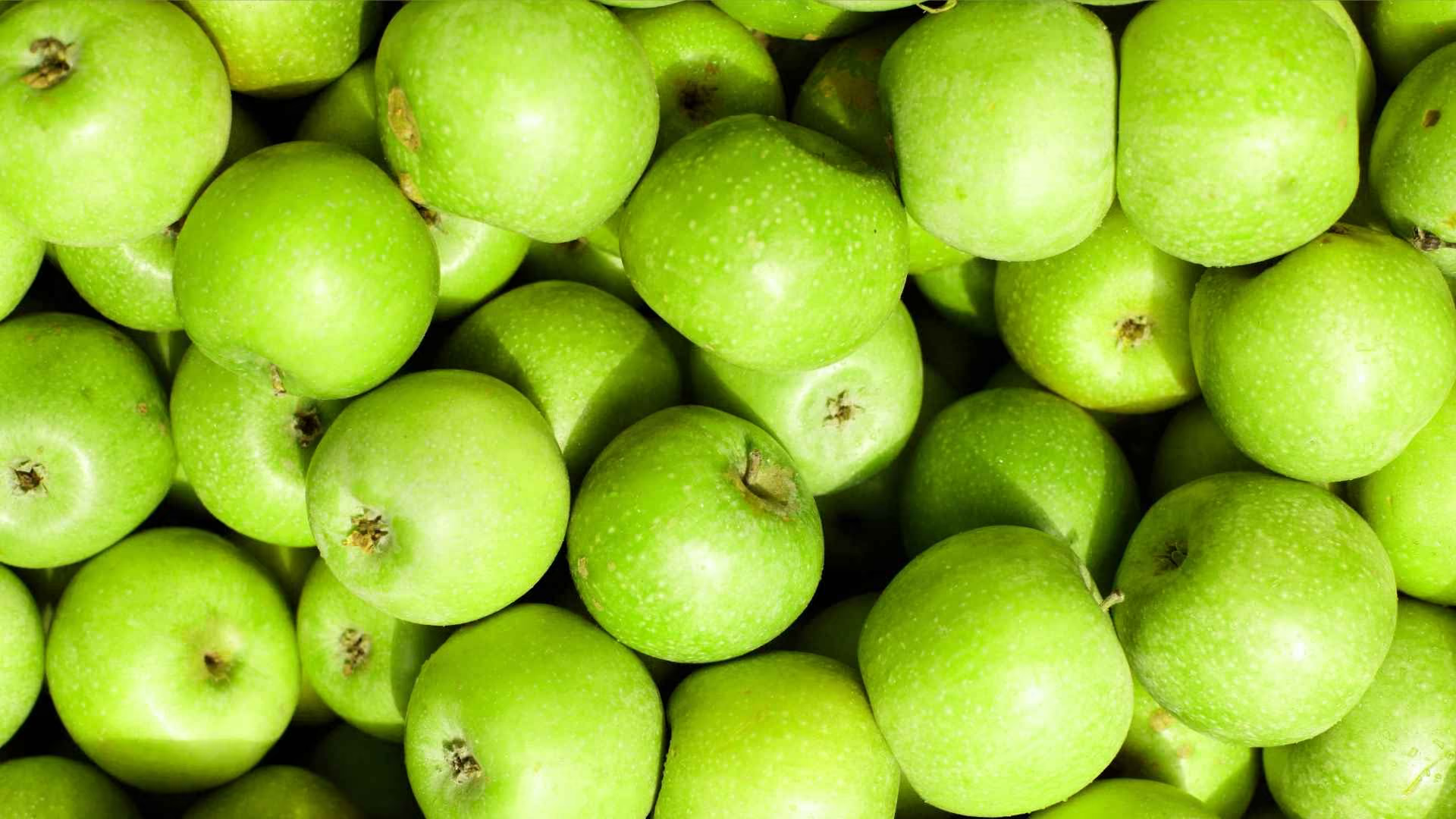
This is the part influencer narratives often skip: if an “ancestral” apple is so bitter that most people won’t eat it, its theoretical advantages don’t translate into real-world health outcomes at population level—especially when fruit intake is already low in the UK.
Finally, modern doesn’t equal bad. For example, biofortification is the process of increasing the nutritional value of crops during plant growth, rather than through processed additives. It has been shown to be highly beneficial in combating deficiencies and global issues like ‘hidden hunger’ (source). The nutritional value of apples can thus be enhanced by increasing their antioxidant capacity (source). Selective breeding is also economically beneficial, and it applies to foods other than fruits and vegetables, as well as animals. That is why the framing of “modern = not natural” is irrelevant and unhelpful: if we follow this logic, pretty much all the food we eat becomes “unnatural.” The classification of whole foods, focusing on nutrient density is thus a lot more helpful for consumers.
Claim 2: “The question is not, ‘is fruit healthy’, it’s always fine to eat apples and any whole fruit. The question is: ‘What kind of fruit are we eating today? And how different is it from what our metabolism our body evolved to deal with?”
Fact-check: This framing is more likely to cause unnecessary anxiety for some consumers and does not reflect scientific consensus on apple/fruit consumption.
In a recent video addressing very similar claims made by Jessie in a previous video, Dr Matthew Nagra explains why this isn’t the right way to think about fruit consumption: “Yes, modern fruit has been selectively bred over time for yield, size, appearance, and taste (less acidity, more sweetness). So what? What actually matters are outcomes, and the fruit we eat today is consistently associated with better long-term health.” Dr Nagra stresses that eating apples is “more than fine”. In the UK, less than 1 in 5 adults meet the 5-a-day recommendation for fruits and vegetables, so fruit consumption should be encouraged.
Worried about sugar content?
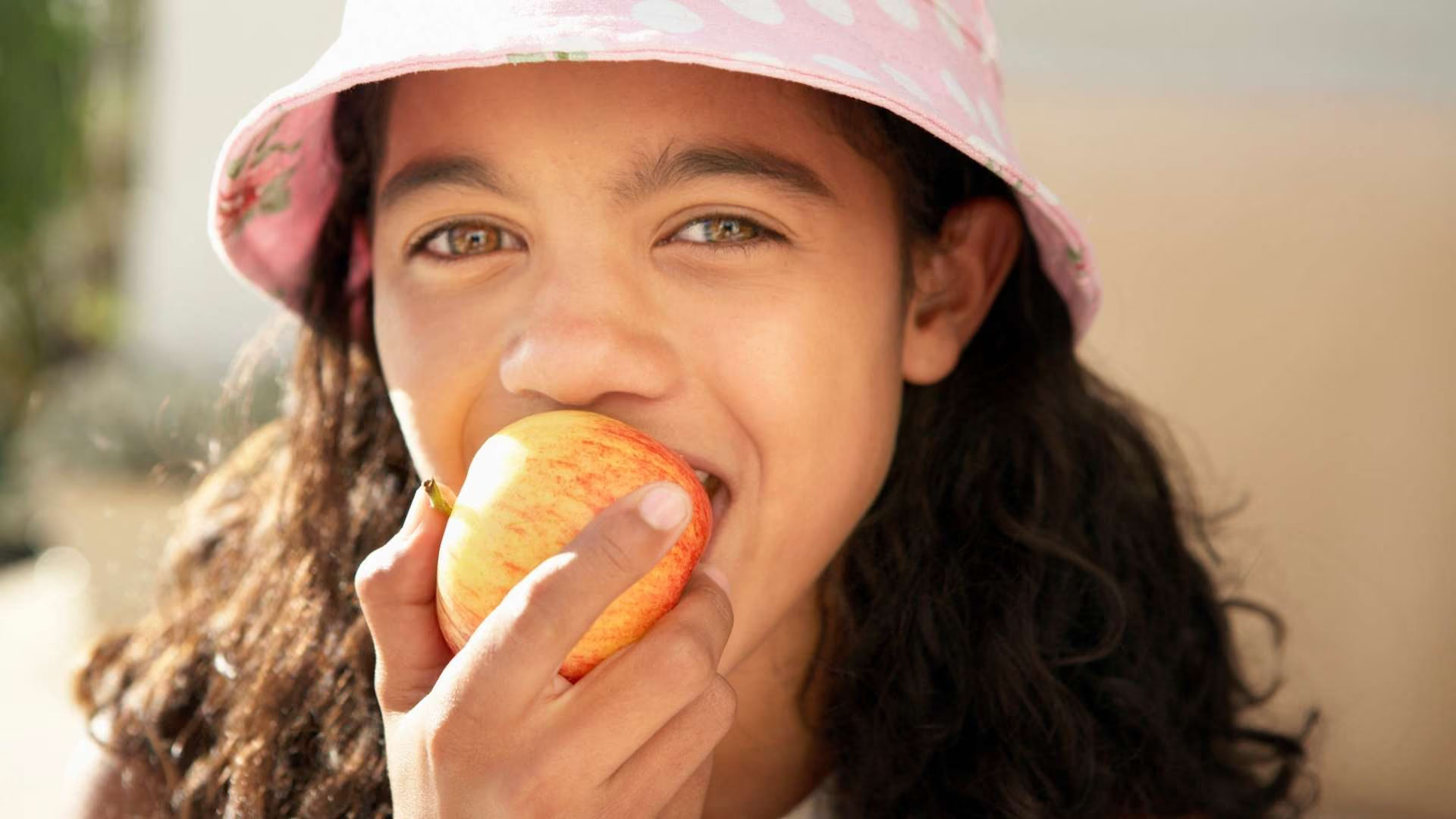
Firstly, although ‘modern apples’ are sweeter, apples are more than just sugar: they provide dietary fibre, vitamins, minerals and a mix of polyphenols. It’s also important to note that this higher sugar content is not added sugar, it is still naturally occurring.
Free sugars should not make up more than 5% of adults’ daily calories, which amounts to 30g/day (source). Free sugars include added sugars (contained in fizzy drinks, sweets, cakes, sweetened yoghurts) as well as naturally occurring sugars in fruit and smoothies.
What does the evidence say about apple consumption and health outcomes?
A 2022 systematic review/meta-analysis of randomized trials found apple and apple-derived product intake reduced total cholesterol and LDL cholesterol in placebo-controlled subgroup analyses, while many other markers (including glucose/insulin in that meta-analysis) were mostly unaffected—suggesting benefits that aren’t captured by a single post-meal glucose peak as shown in Jessie’s post.
Second, when we zoom out to health outcomes: a large BMJ analysis of three prospective cohorts reported that higher consumption of certain whole fruits—including apples/pears—was associated with lower type 2 diabetes risk.
Bottom line: While Jessie specifically states that eating apples is “always fine,” the implications from her video both undermine the positive health benefits associated with fruit consumption and risk adding an unnecessary layer of consideration and anxiety for food shoppers. Availability also matters, and the suggestion that ancestral varieties are a better choice is impractical for many UK shoppers. A quick search for the ancestral varieties suggested by Jessie in a popular UK supermarket shows that those aren’t in fact typically available.
.avif)
Why CGM graphs can mislead
Finally, it’s important to note that the use of individual CGM graphs on social media can be misleading. CGM curves look precise, but they are not a controlled experiment—especially when the reel shows a single person, one day, one apple, and no replication.
CGMs measure glucose in interstitial fluid and have known lag/accuracy limitations. A 2025 randomized crossover trial showed that in some contexts, CGMs were found to overestimate glycemic responses. The researchers discussed the implications of their findings in a press release, noting that “Whole fruit was misclassified as medium or high-GI foods by CGMs, while the finger-prick test showed they were low-GI. This could lead users to mistakenly believe that fruit could cause harmful spikes in blood sugar.”
Jessie herself often points out in her content that individual glycemic responses are affected by multiple factors, from sleep quality to what you ate the day before. This is important, because while those individual graphs look very compelling, there is no clearly available information on how the data was collected, or how/to what extent it might apply to the general population. This is why nutrition science is where you should be looking for answers to questions like: is this food health promoting?
Final take away
- “Modern fruit isn’t natural” is a storytelling framing, not a health endpoint, and it doesn’t say anything about whether fruit is health-promoting or not.
- Selective breeding has been part of human food history for a long time, across plants and animals; using ‘unnatural’ as a catch‑all would dismiss most of the food supply.
- Outcomes-based evidence consistently shows apples/whole fruit are associated with a reduced risk of disease, including type 2 diabetes. These studies are conducted with ‘modern apples,’ not niche varieties.
- In the UK, the majority of the population doesn’t consume enough fruits and vegetables, therefore posts calling modern fruit “not natural” risk increasing confusion and fear, losing sight of what really matters.
We have contacted Jessie Inchauspe and are awaiting a response.
Disclaimer
This fact-check is intended to provide information based on available scientific evidence. It should not be considered as medical advice. For personalised health guidance, consult with a qualified healthcare professional.
Independent fact-checking, funded by readers like you.
Misinformation is a growing threat to our health and planet. At foodfacts.org, we're dedicated to exposing the truth behind misleading food narratives. But we can't do it without your support.



foodfacts.org is an independent non-profit fact-checking platform dedicated to exposing misinformation in the food industry. We provide transparent, science-based insights on nutrition, health, and environmental impacts, empowering consumers to make informed choices for a healthier society and planet.






.svg)


.svg)

