foodfacts logo
  • Articles
    
    Latest
    arrow pointing right
    All Fact Checks
    arrow pointing right
    Guides
    arrow pointing right
    Features
    arrow pointing right
    Opinion Pieces
    arrow pointing right
    Topics
    The Climate Crisis
    Politics Of Food
    Health
    Food Systems
    Media Literacy
    Popular Media
    Ethics
    Environment
    Nutrition
    Trending Tags
    Food Storage
    Metabolic Health
    ApoB
    LDL
    Crime
    Studies
    Fact Checking
    Cortisol
    Ultra Processed Animals (UPA)
    Zoonotic Diseases
    Lab-Grown Meat
    (UPF) Ultra Processed Foods
    Chemophobia
    Precision Livestock Farming (PLF)
    Glossary
    arrow pointing right
    Fact Checks
    Do tomatoes, bread, and ginger turn toxic in the fridge?
    Dark chocolate, cocoa beans and laboratory glassware on slate, illustrating lab-grown chocolate
    Why you shouldn't be scared of "poisonous" lab-grown chocolate
    Bowl of high-fibre foods including rolled oats, chia seeds, raspberries, broccoli and crackers next to a glass of water containing visible coloured microplastic particles
    Can fibre help your body excrete microplastics?
  • Take Action
  • About
    
    • About
    • The Team
    • Our Experts
    • Fact Checking Policies
    • Funding/Disclosures
    • Advisory Board
    • Media Mentions
    • FAQs
  • Food Database
  • Misinfo Watchlist
Report MisinfoDonate
Home
/
Articles
/
Climate Change

Climate Change

Explore Categories

The Climate Crisis
Politics Of Food
Health
Food Systems
Media Literacy
Popular Media
Ethics
Environment
Nutrition

Explore evidence-based articles on climate change and food, covering emissions, agriculture, diets and evidence-based solutions.

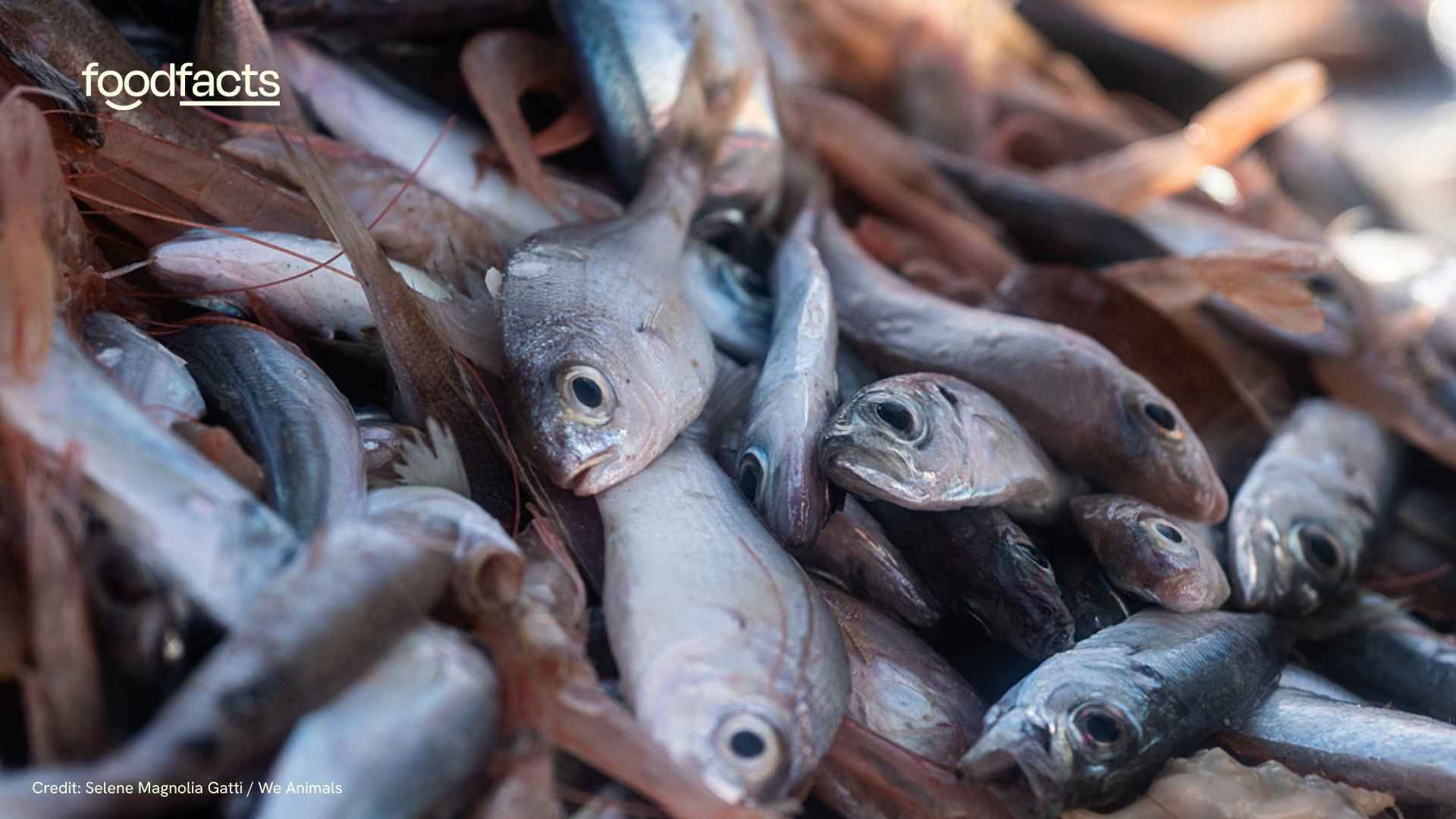
A farmer puts their hand on a cow
FACT CHECK
OPINION
Environment

Cows won’t cool the planet – and saying they can misses the point

Can cows really cool the planet by producing less methane? No, warming something less isn't the same as making something colder.
Read more
A bowl of grains, vegetables, and a small portion of animal protein, representing the dietary recommendations in the Eat Lancet Planetary Health 2.0 diet.
FACT CHECK
OPINION
Food Systems

Why the new EAT-Lancet report matters – and why foodfacts stands behind it

The launch of the latest EAT-Lancet Commission report has the potential to mark a turning point in how we think, talk, and act on the future of food.
Read more
A man holds an avocado in his hands, looking slightly puzzled, unsure as to whether eating avocados destroys the planet
FACT CHECK
OPINION
Environment

Are vegans really destroying the planet with avocados?

Avocados have real environmental costs — but they are far lower than beef. The singling out of vegans for avocado consumption does not hold up to scrutiny.
Read more
A herd of beef cattle stand in a group on a British farm
FACT CHECK
OPINION
Environment

“Net zero beef?” Why sustainability claims need more than headlines

'Net Zero Beef': Is this greenwashing or something that holds validity behind corporate-sponsored sustainability narratives?
Read more
Previous
More
See all articles

Ready to take action?

You have the power to make a difference 3 times a day.

Get Inspired Today!
Get the latest articles
You're all set! We've added you to our newsletter.
Oops! Something went wrong while submitting the form.
Follow Us
youtube [#168] Created with Sketch.
Food misinformation threatens public and planetary health. We're fighting back against misinformation, fostering healthy communities, honest food, and a thriving planet

ai powered chat bot experience provided by Elevenlabs
Article

Top Myths

Latest

The Climate Crisis
Politics Of Food
Health
Food Systems
Media Literacy
Popular Media
Ethics
Environment
Nutrition
Take Action
Partner Organisations
About
Fact Checking PoliciesOur Funding/DisclosuresThe TeamOrganisational StructureIndependence & TransparencyAi Usage PolicyAdvisory BoardMedia MentionsFAQsGlossaryXML News Feed
Contact
Report Mis/DisinformationContact Us / PressProvide Feedback
Privacy Policy  
Terms & Conditions © 2024
The Worlds First Food Fact-Check Platform.
foodfacts.org is a non-profit organisation. (no. 15414442) limited by guarantee and registered in England and Wales.
‍
© Copyright 2024-2026 foodfacts.org  Launched in 2025. 🇬🇧 Grown in the United Kingdom.