
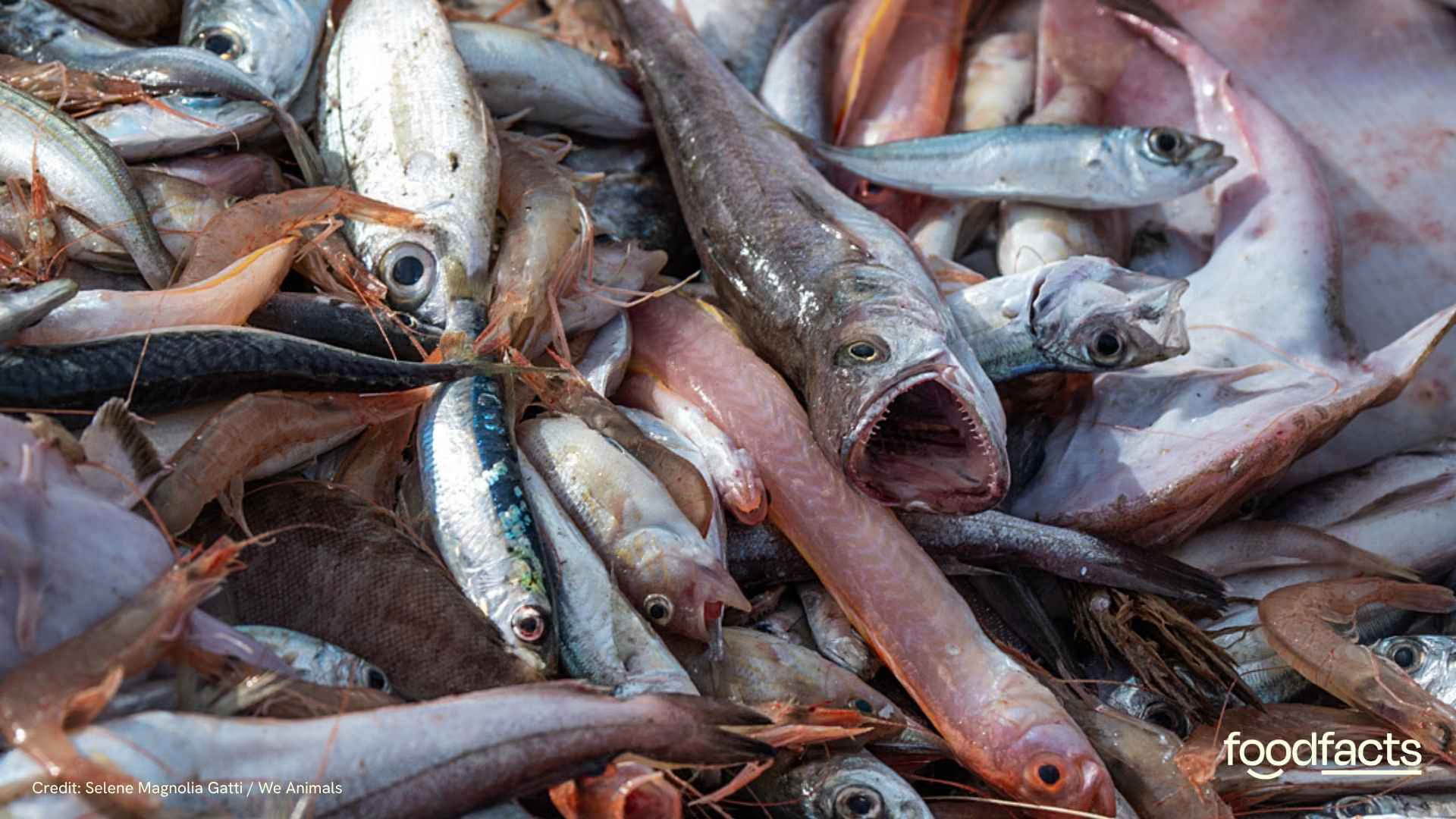




Fish farming and climate change: the myth of sustainable aquaculture




This article is the fourth in a series examining the myths that uphold the image of "sustainable" aquaculture, drawing on the Aquaculture Accountability Project's December 2025 report with Farm Forward, The Myth of "Sustainable" Aquaculture. Earlier articles have shown how aquaculture intensifies overfishing of wild species, how the industry engineered global seafood demand rather than meeting it, and how fish farming breeds disease, parasites, and antibiotic resistance. Here, the focus is on climate: how industrial fish farming carries a heavier carbon burden than commonly understood, and how it actively destroys the natural systems that buffer our planet against warming.
How fish farming sold itself as a climate solution
Industrial aquaculture has been aggressively marketed as a climate solution; a way to feed a growing world with lower emissions than land-based meat. This framing has secured a place for fish farming in climate-oriented food policy, corporate sustainability pledges, and hospital and university procurement guides around the world. The evidence tells a different story. When emissions from feed production, on-farm energy use, and the significant mortality that defines industrial fish farming are properly accounted for, aquaculture emerges as a highly carbon-intensive food sector, and one that simultaneously weakens the natural carbon sinks the planet depends on.
.avif)
Why fish farming's carbon footprint rivals meat
The most widely cited life-cycle analysis (LCA) underpinning food system emissions estimates, a 2018 meta-analysis by Poore and Nemecek covering approximately 38,700 farms across 119 countries and 40 food products, places farmed fish at an average of 13.63 kg CO₂-equivalent (CO₂-eq) per kilogram of food produced. That figure exceeds both poultry and pork, and sits roughly 13 times higher than peas. The same study found that farmed fish require approximately 10 times more freshwater than plant proteins such as beans, peas, and soy, further deepening their environmental footprint. This is not a fringe finding: a 2021 study in Nature by Gephart et al., which assessed the environmental performance of a broad range of "blue foods" using LCA methodology, confirmed that many farmed finfish and crustacean systems perform no better, and in some cases worse, than some terrestrial animal products, while still falling far short of the environmental performance achievable with plant-based foods.
Feed production is the single largest driver of animal aquaculture's greenhouse gas burden. As detailed in previous articles in this series, carnivorous farmed species like salmon depend heavily on fishmeal and fish oil (FMFO) derived from wild-caught small pelagic species. Producing, transporting, and processing these ingredients generates substantial emissions across the supply chain. As aquaculture companies have shifted away from marine ingredients in recent years, substituting crop-based inputs, primarily soy and rapeseed, the emissions pressure has not disappeared. Supply-chain mapping by Trase in 2020 showed that major salmon feed companies, including Cargill, BioMar, and Skretting, were sourcing soybeans from Brazilian regions experiencing active deforestation, effectively transferring emissions from ocean ecosystems to terrestrial ones, with GHG emissions of plant-fed fish more than doubling, and land use increasing by 336% per kilogram of farmed fish. As Dr. Spencer Roberts of the University of Miami observed, this shift represents not an increase in efficiency but a relocation of ecological pressure from the Humboldt Current and the anchoveta populations it supports to the Amazon rainforest and the agricultural frontier pushing into it.
On-farm energy intensity adds a further layer. Recirculating aquaculture systems (RAS), which are increasingly promoted as a cleaner, land-based alternative to open-net pens, are extraordinarily electricity-hungry, requiring continuous water filtration, temperature control, and oxygenation. A 2025 LCA study by Vásquez-Mejía et al. in Agricultural Water Management, examining land-based Atlantic salmon production in Iceland, found that the carbon and water footprints of RAS farming are highly sensitive to the energy source used, and that in settings reliant on fossil fuels, RAS can generate emissions substantially higher than conventional sea-cage farming. A 2024 review in Water Biology and Security by Zhang et al., which surveyed current carbon footprint data for aquaculture globally, further concluded that land-based recirculating systems can generate more than twice the emissions of open net-pen farming—and that standard industry accounting likely understates the true climate toll, as methane and nitrous oxide emissions from aquaculture systems are routinely excluded from lifecycle assessments. According to the authors, industry-proposed fixes tend to displace rather than eliminate environmental harm or are not available at scale.
How on-farm mortality inflates the industry's true climate cost
One of the least visible contributors to aquaculture's climate footprint is on-farm mortality. Industrial fish farming involves the chronic, large-scale deaths of animals before slaughter. Fish who die on farms must be fed and require electricity, oxygenation, and chemical treatments, yet never become food. Norway's Veterinary Institute Fish Health Report 2023 (Fiskehelserapporten 2023), the country's official annual surveillance document for farmed fish health, recorded that 62.8 million farmed salmon died before slaughter in the sea phase in 2023 alone, representing 16.7 percent of all salmon raised in net pens—the highest mortality rate ever documented. These animals consumed feed, the largest source of aquaculture's greenhouse gas emissions, and required ongoing operational resources while generating zero food output.
.avif)
However, this burden is structurally invisible in the way the industry reports its environmental performance. Feed conversion ratios and carbon footprints are almost always expressed per kilogram of harvested fish, meaning the resources consumed by fish who died are folded into the averages reported for survivors. The result is an efficiency profile that cannot show how much feed, energy, and climate impact were spent on animals who never became food, and that obscures to buyers, institutions, and policymakers whether their fish suppliers are haemorrhaging resources to disease and mortality.
How fish farming dismantles the ocean's own climate defense
Industrial aquaculture does not merely add greenhouse gases to the atmosphere; it simultaneously erodes the capacity of natural systems to absorb them. Carbon sinks, ecosystems that take in more carbon than they release, are among the most critical climate buffers the planet has. Aquaculture degrades them on two fronts: by disrupting the ocean's biological carbon pump and by destroying coastal carbon-dense ecosystems.
The open ocean sequesters carbon through a process driven in large part by small pelagic fish—the same anchovies, sardines, menhaden, and herring that reduction fisheries harvest at scale for FMFO. These forage fish produce carbon-rich fecal matter and other particles that aggregate into what scientists call "marine snow," sinking to the deep sea and locking carbon away for centuries. A 2022 study by Cavan and Hill in Global Change Biology, using satellite data to map commercial fishing effort against upper-ocean carbon-export hotspots, found that just 9 percent of the ocean's surface, where 39 percent of global fishing effort is concentrated, accounts for 21 percent of the ocean's carbon sink. Small species used for FMFO dominate catches in precisely these high-impact zones. As the authors warn, intense exploitation of these fish weakens one of the planet's most vital climate-stabilizing mechanisms, a risk that has been "largely ignored" in both climate and fisheries policy.
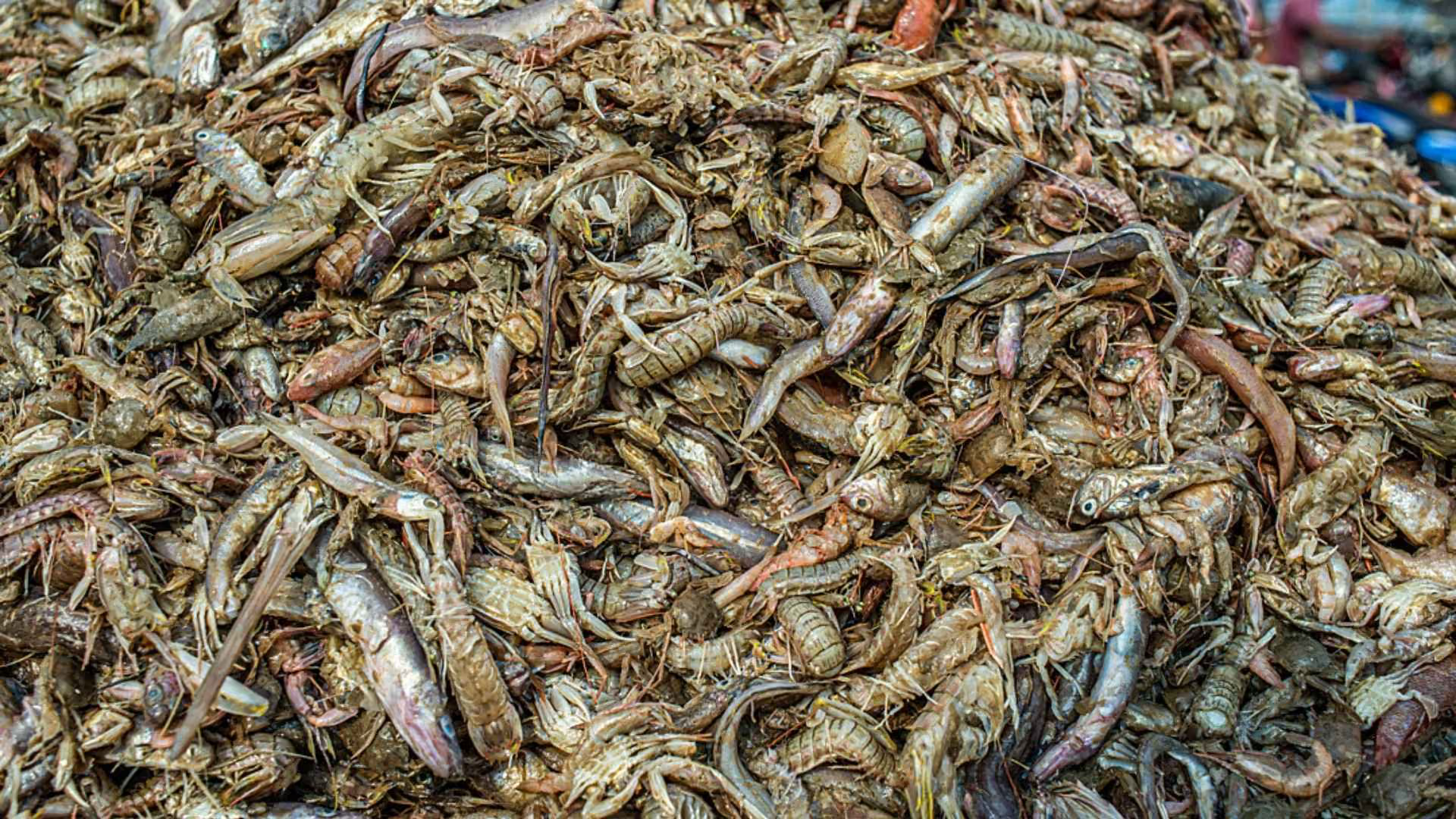
Shrimp aquaculture has driven a parallel and well-documented destruction of mangrove forests. Mangroves are among the most carbon-dense ecosystems on Earth, storing up to five times more carbon per hectare than most tropical forests, primarily in their deep, waterlogged organic soils. A study by Nguyen et al. in Ocean and Coastal Management (2022) calculated that shrimp ponds carved into coastal wetlands have accounted for 38 percent of all mangrove deforestation worldwide since the 1980s, and 54 percent of mangrove loss recorded in Southeast Asia. A 2022 modeling study by Chatting et al. in Frontiers in Marine Science, projecting future mangrove carbon storage under combined pressures of climate change and continued deforestation, concluded that the permanent loss of these forests removes one of the planet's most efficient carbon sinks and transforms coastal ecosystems from net absorbers into net emitters. Together, these dynamics mean that industrial aquaculture contributes to the climate crisis twice over; first through its feed and energy emissions, and again by dismantling the ecosystems that would otherwise offset a portion of those emissions.
Why swapping beef for farmed fish isn't the win it seems
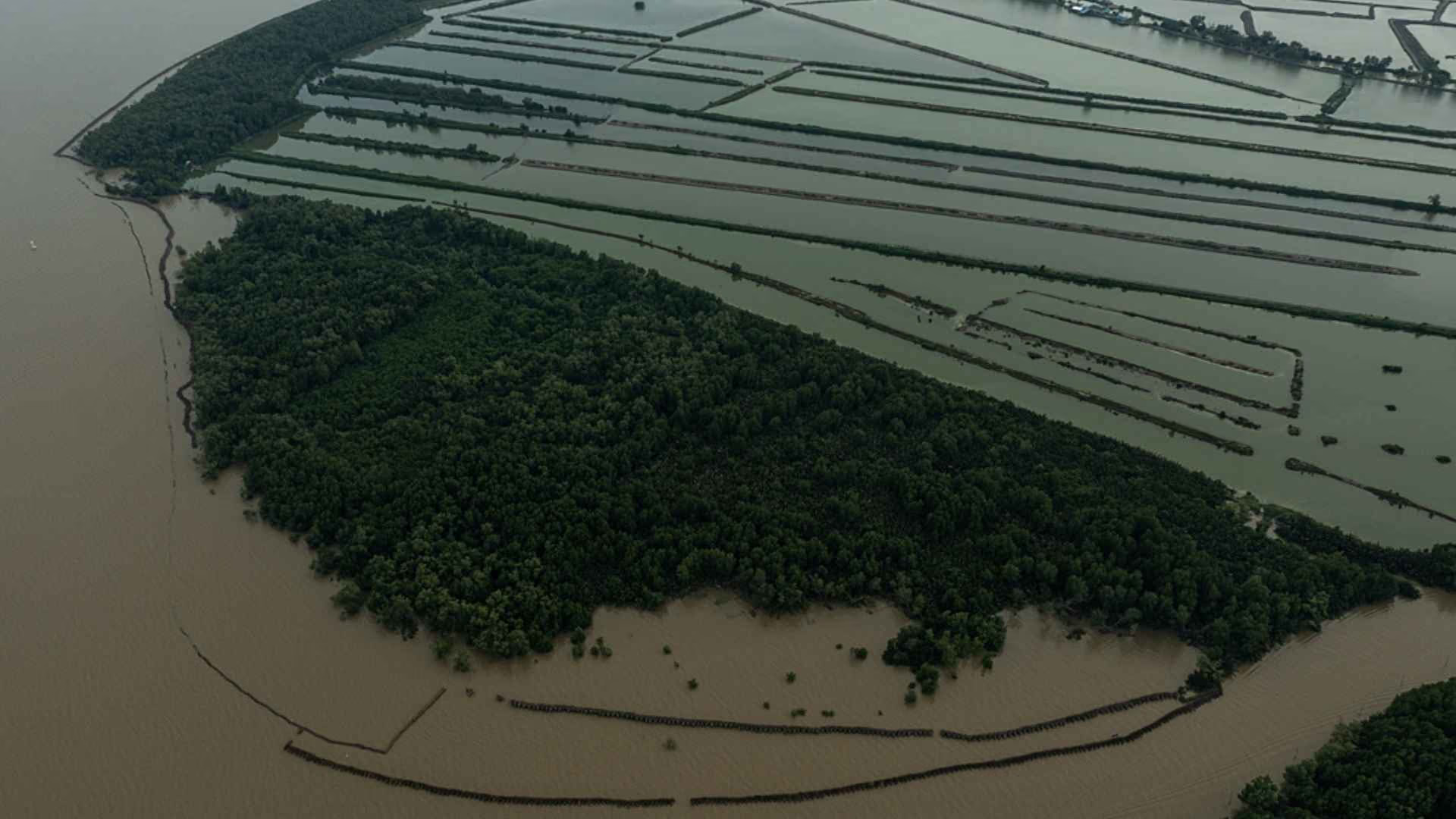
The framing of farmed fish as a "climate-smart" protein gains most of its traction through comparisons with beef and lamb. While farmed fish generally emit less than ruminant livestock, that comparison obscures the relevant alternative. In wealthy nations, where most farmed salmon and shrimp are consumed, the practical dietary choice is not between fish and beef; it is between fish and a range of plant proteins, legumes, grains, and soy products that consistently emit several times less than any farmed fish species. The Poore and Nemecek (2018) Science meta-analysis, the most comprehensive food systems LCA yet conducted, showed that even the least carbon-intensive farmed fish species produce emissions that are multiples of those from peas, tofu, and other legumes on a per-kilogram basis.
This framing also sidesteps the wild-catch alternative. While some wild-caught species have lower per-kilogram emissions than their farmed counterparts, wild fisheries’ emissions vary enormously from approximately 2 to 20 kg CO₂-eq per kilogram, according to Gephart et al. (2021) in Nature, and these figures exclude other ecological costs such as the death of unintended “bycatch” species like sea turtles and sharks, habitat destruction from bottom-trawling, and pressure on fish populations that the Poore and Nemecek analysis confirmed are already exploited at unsustainable levels. The net result, as our recent report concludes, is that whether farmed in cages or hauled from the sea, industrial fish protein carries a substantially heavier environmental burden than plant-based alternatives—without delivering the compensating climate benefits the industry claims.

What the aquaculture industry hides from you
The aquaculture industry's climate narrative relies on selective metrics and incomplete accounting. Per-kilogram emissions figures cannot reveal how much feed, energy, and chemical treatment were consumed by fish who died before harvest. The claim that farms are becoming more efficient by replacing wild fish inputs with crop ingredients omits the terrestrial emissions from deforestation-linked soy. Comparisons with beef, while technically accurate, distract from the fact that the primary low-emissions alternatives to farmed fish are not red meat but plants.
Many consumers and institutional buyers have adopted farmed fish as a climate-conscious choice based on industry-supplied figures and claims that were constructed to minimize the appearance of harm. As with the disease, overfishing, and demand-engineering myths examined in earlier articles in this series, the climate-smart framing of fish farming is a carefully maintained narrative—one that the available peer-reviewed evidence consistently contradicts.

Independent fact-checking, funded by readers like you.
Misinformation is a growing threat to our health and planet. At foodfacts.org, we're dedicated to exposing the truth behind misleading food narratives. But we can't do it without your support.
Sources
- Aquaculture Accountability Project & Farm Forward (December 2025). The Myth of Sustainable Aquaculture
- Aquaculture Accountability Project (4 March 2026). Aquaculture Feed Is Expanding Pressure from Oceans to Land, Says New Study
- Cavan, E. L., & Hill, S. L. (2022). Commercial fishery disturbance of the global ocean biological carbon sink. Global Change Biology, 28, 1212–1221. https://doi.org/10.1111/gcb.16019
- Chatting, M., Al-Maslamani, I., Walton, M., Skov, M. W., Kennedy, H., Husrevoglu, Y. S., & Le Vay, L. (2022). Future mangrove carbon storage under climate change and deforestation. Frontiers in Marine Science, 9. https://doi.org/10.3389/fmars.2022.781876
- Gephart, J. A., Henriksson, P. J. G., Parker, R. W. R., et al. (2021). Environmental performance of blue foods. Nature, 597, 360–365. https://doi.org/10.1038/s41586-021-03889-2
- Jouannais, P., Gibertoni, P.P., Bartoli, M. et al. LCA to evaluate the environmental opportunity cost of biological performances in finfish farming. Int J Life Cycle Assess 28, 1286–1301 (2023). https://doi.org/10.1007/s11367-023-02211-8
- Nguyen, H., Chu, L., Harper, R. J., Dell, B., & Hoang, H. (2022). Mangrove-shrimp farming: A triple-win approach for communities in the Mekong River Delta. Ocean & Coastal Management, 221, 106082. https://doi.org/10.1016/j.ocecoaman.2022.106082
- Norwegian Veterinary Institute (2024). Fiskehelserapporten 2023 [Fish Health Report 2023]. Oslo: Veterinærinstituttet.
- Poore, J., & Nemecek, T. (2018). Reducing food's environmental impacts through producers and consumers. Science, 360(6392), 987–992. https://doi.org/10.1126/science.aaq0216
- Trase (2025). Brazil Soy Supply Chain Dataset, 2004–2022. Updated January 28, 2025. https://trase.earth/explore/supply-chain/brazil/soy?chartType=sankey&year=2022&indicator=volume&dimension=municipality_of_production&dimension=exporter_group&dimension=importer_group&dimension=country_of_first_import&hideDomestic=false
- Vásquez-Mejía, C. M., Gudjónsdóttir, M., Sveinsdóttir, H. I., Smáradóttir, H., Hilmarsdóttir, G. S., Manzardo, A., & Ögmundarson, Ó. (2025). Water scarcity- and carbon footprints of aquafeed: The case of land-based and ocean-based Atlantic salmon (Salmo salar) farming in Iceland. Agricultural Water Management, 314, 109528. https://doi.org/10.1016/j.agwat.2025.109528
- Vox.com (24 October 2024). Fish farming was supposed to be sustainable. But there’s a giant catch.
- Zhang, Z., Liu, H., Jin, J., Zhu, X., Han, D., & Xie, S. (2024). Towards a low-carbon footprint: Current status and prospects for aquaculture. Water Biology and Security, 3(4), 100290. https://doi.org/10.1016/j.watbs.2024.100290



foodfacts.org is an independent non-profit fact-checking platform dedicated to exposing misinformation in the food industry. We provide transparent, science-based insights on nutrition, health, and environmental impacts, empowering consumers to make informed choices for a healthier society and planet.






.svg)


.svg)

