
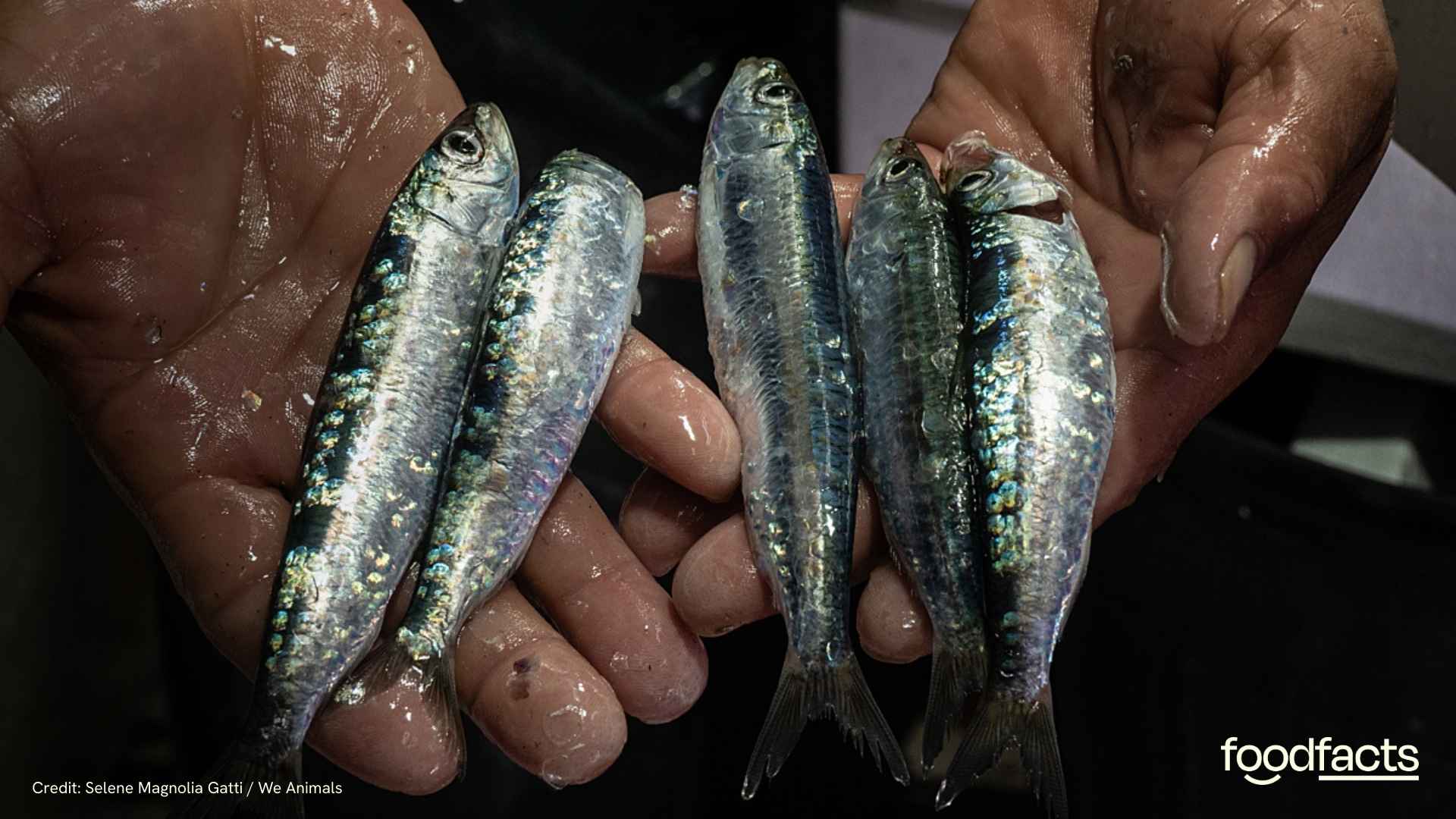




Shrinking fish, growing farms: who pays?




A new study published in Science this month has confirmed what many in the fisheries and aquaculture sectors have long feared: climate change is not just depleting fish stocks, it is fundamentally altering the biology of fish themselves. For those of us working at the intersection of food systems, ocean health, and animal welfare, these findings demand serious attention, not just for what they mean for fishing yields, but for the billions of sentient animals already living inside the farming systems that will be expected to compensate.
The Monash University study: fish are adapting to climate change, but at a cost to yields
The study, led by researchers at Monash University in collaboration with Jagiellonian University in Poland, modelled how fish will evolve in response to warming oceans. Rather than simply suffering in warmer water, fish are adapting: maturing earlier, reproducing sooner, and growing to a smaller maximum size. Fish are surviving, but the fish pulled from the water will be smaller, and yields will fall.
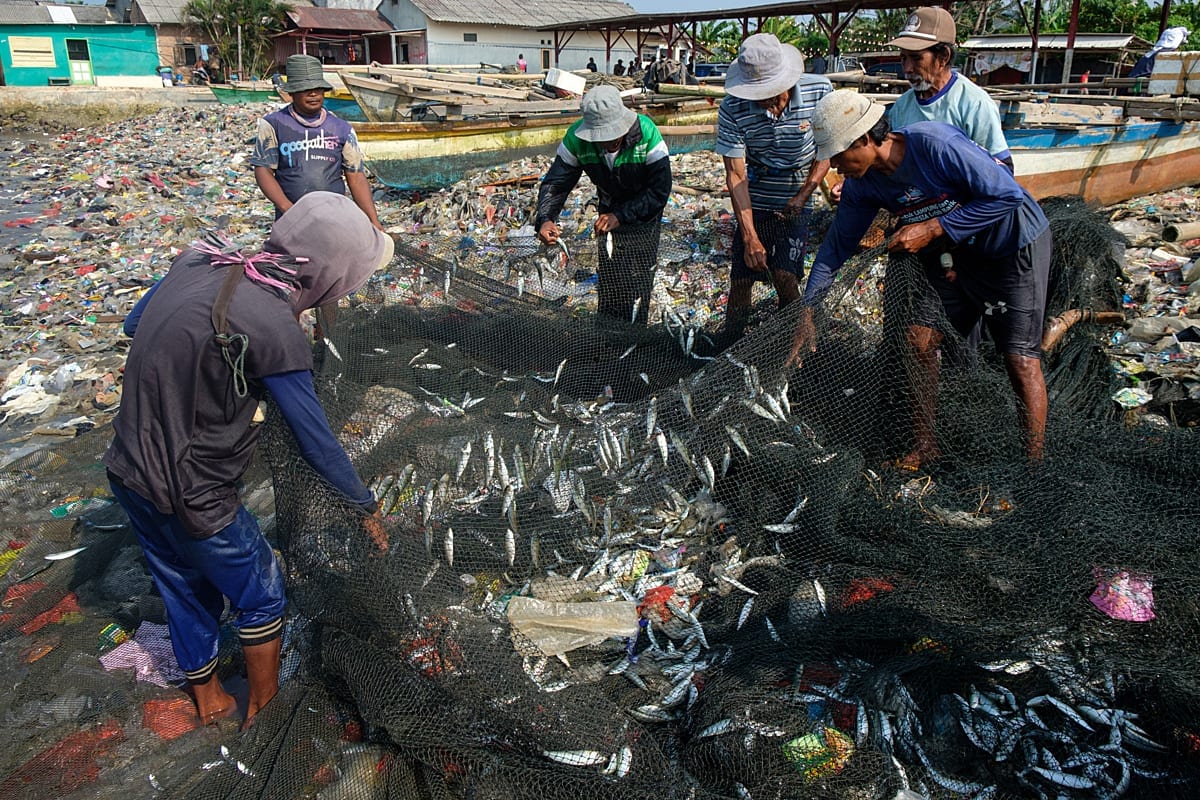
Professor Craig White of Monash University explains: "Evolution negates the impacts of global warming on fish fitness but exacerbates the impact on sustainable harvests." The fish adapt to survive, but become less commercially viable as they do. The modelling predicts that economic and volume losses to the fishing industry will be 50% higher than if fish didn't adapt at all; a finding that underlines just how much more is at stake than conventional climate projections had anticipated.
The research was tested against data on nearly 3,000 fish species, with predicted outcomes for 43 of the world's largest fisheries. The conclusion is unambiguous: without a strong climate policy limiting warming to 1.5°C, millions of tonnes of production will be lost from wild fisheries.
Why declining wild stocks could push fish farming to scale faster than its welfare standards can handle
As wild fisheries become less reliable, the pressure on aquaculture to fill the gap will grow. Governments, investors, and food system planners will look to fish farming as the practical alternative, and that logic is understandable. Aquaculture already produces more fish than wild-capture fisheries worldwide, and expansion may well be part of how we feed a growing global population in a warming world.
But expansion on its own is not a plan. The critical question, one that almost never gets asked in food security discussions, is what it means for the fish.
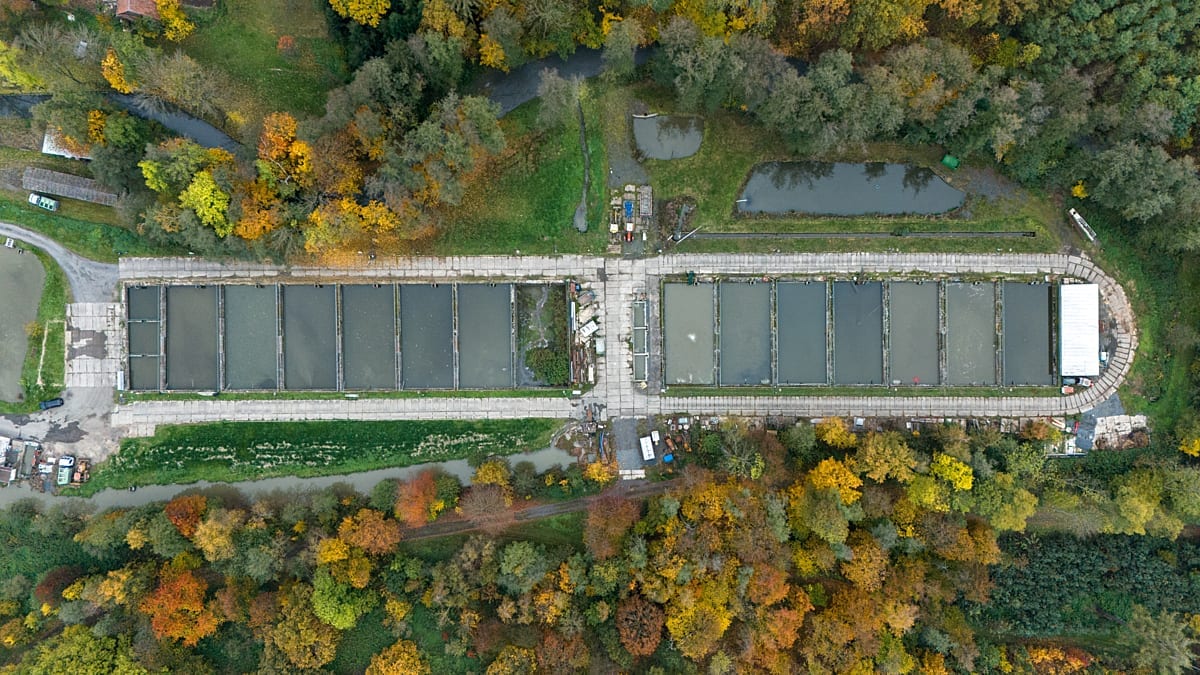
The feed problem: why scaling fish farming without reforming its inputs transfers pressure, not solves it
It's worth being honest about how aquaculture feed works, because the picture is more complex than it's sometimes presented. Many farmed species, including tilapia, carp, and increasingly salmon, are fed on diets that combine fishmeal and fish oil derived from wild-caught species with plant-based ingredients like soy, wheat, and rapeseed meal. This is not a fully efficient system, but it reflects genuine industry efforts to reduce dependence on wild fish over time.
That said, the challenge is real. Reduction fisheries, where species like sardines, anchoveta, and herring are processed into fishmeal and fish oil (FMFO), still account for roughly 25% of the global ocean catch, and the wild fish stocks those fisheries depend on are themselves under increasing climate pressure. Then there is Antarctic krill, a keystone species increasingly harvested for aquaculture feed and omega-3 supplements, whose sea-ice habitat is disappearing as temperatures rise. Industrial krill fishing fleets are scooping up hundreds of thousands of tonnes annually, and krill play a crucial role in locking carbon dioxide into the deep ocean; their depletion is not just an ecological issue, it's a climate one too. Scaling aquaculture without addressing feed supply means transferring pressure from one part of the ocean to another.
.jpeg)
Fish are sentient. So why does welfare barely feature in food security discussions about aquaculture?
Here's what concerns me most. If aquaculture expands as a direct response to declining wild fisheries, we are looking at a significant increase in the number of fish living inside farming systems, potentially billions more individuals across the globe. And right now, the welfare standards governing those animals' lives are inconsistent at best.
Fish are sentient animals. The scientific consensus on this has strengthened considerably over the past decade, and it sits at the core of everything we do at Ethical Seafood Research. Yet welfare conditions across much of the global industry remain inadequate: high stocking densities, poor water quality, stress during handling and slaughter. Stocking densities in some intensive systems can exceed 65 kg per cubic metre, with research showing these conditions measurably impair welfare and affect product quality. This suffering is largely invisible because we've decided, as a society, that fish welfare doesn't warrant the same scrutiny we give to land animals.
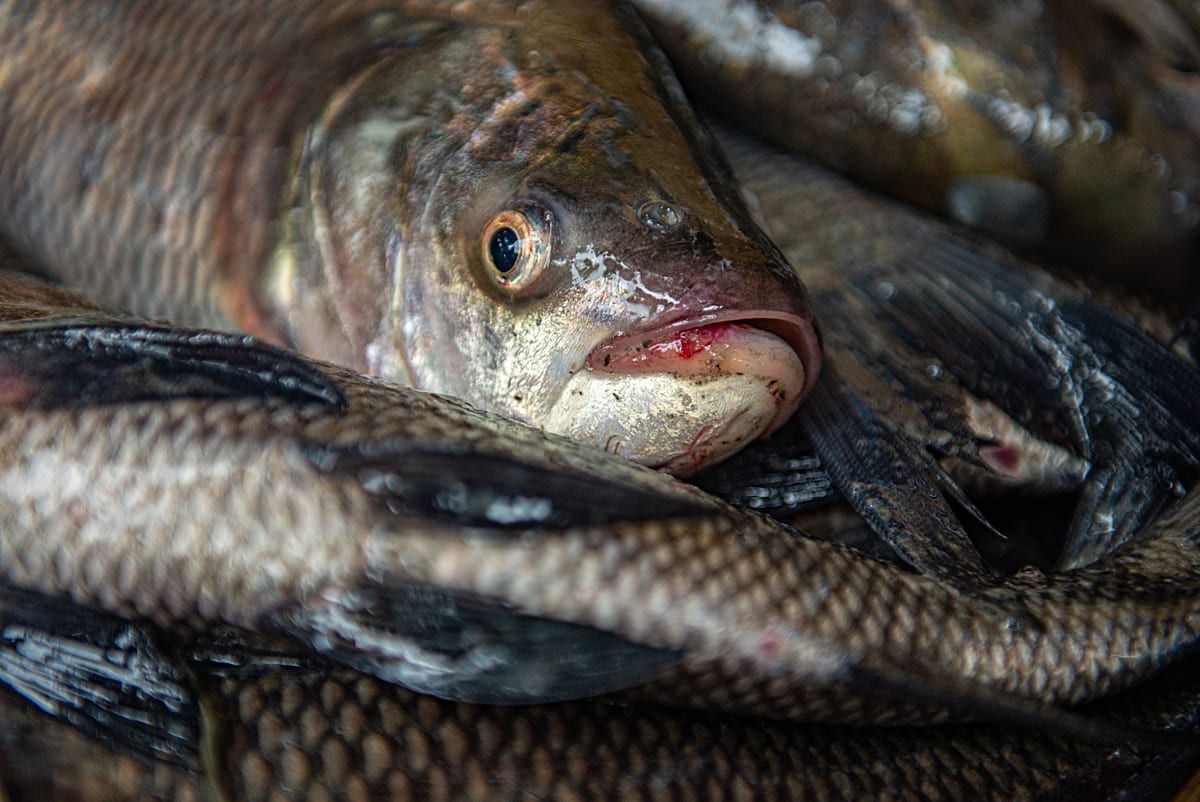
Business as usual cannot be the answer. If fish farming simply scales up to compensate for declining wild catches, without any serious reckoning with welfare, the number of sentient animals experiencing poor conditions doesn't just grow, it grows at pace, driven by climate necessity. This doesn't just create a food security solution, it is a welfare crisis hidden inside one.
The Aquaculture Stewardship Council's new Farm Standard, which for the first time includes a dedicated welfare chapter, mandatory humane slaughter, and welfare-focused feeding requirements, is a meaningful step forward. But it is one standard among many, and uptake is not universal. The EU's developing roadmap for aquaculture fish welfare legislation signals that regulatory frameworks are catching up. The industry and the food system at large should not wait for legislation to act.
This is precisely why organisations like Ethical Seafood Research exist. As aquaculture grows, and grow it will, the work of building the evidence base, advocating for meaningful welfare standards, and ensuring that billions of sentient animals suffer as little as possible becomes more urgent, not less.
Seaweed, algae oils, and herbivorous species: what a lower-impact aquaculture system could look like
Aquaculture doesn't have to mean what it currently looks like at its worst. Investing in algae-derived omega-3 oils, and precision fermentation to replace fishmeal and fish oil is genuinely viable and genuinely urgent. Expanding herbivorous and omnivorous species, such as tilapia, carp, and bivalves, changes the resource equation significantly.
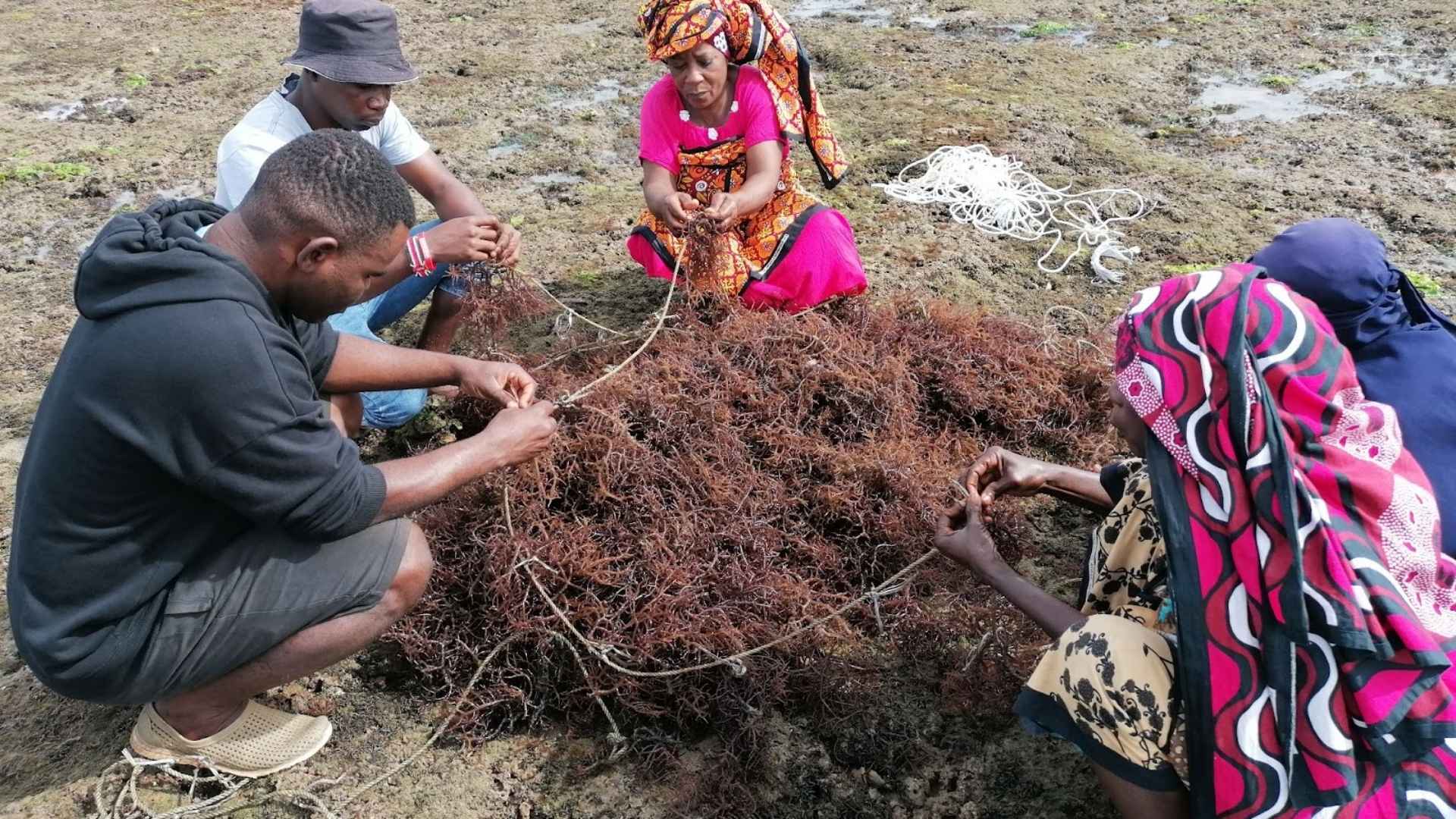
And beyond finfish farming entirely, there are alternatives worth taking seriously. Seaweed farming offers something conventional aquaculture cannot: production without animal suffering. It requires no feed or antibiotics, actively improves water quality by absorbing carbon dioxide and excess nutrients, and creates locally retained economic value in coastal communities, including, as our research has shown, for women-led operations in Kenya and Tanzania that have seen earnings multiply several times over. Seaweed farming isn't a replacement for every fish farming context, but in regions where finfish aquaculture predominantly serves export markets while communities bear the environmental costs, it represents a credible and more ethical alternative path.
Connecting the dots: why fisheries management, feed governance, and climate policy need to be treated as one system
The Monash University study is important because it connects climate science directly to the food systems that will be expected to absorb the shock. The findings make a compelling case for ambitious climate policy; limiting warming to 1.5°C remains the single most effective intervention available. But the downstream consequences for aquaculture require an equally serious response.
- Welfare standards need to be embedded in any expansion from the outset, not retrofitted later, and not treated as optional extras in a food security emergency
- Feed innovation must accelerate: reducing reliance on wild-caught fish and krill is both ecologically necessary and technically achievable
- Alternative models, including seaweed farming and other low- or no-impact aquatic food systems, deserve genuine investment and policy support
- Fisheries management, aquaculture regulation, feed ingredient governance, and climate policy need to be treated as a single connected system, not separate departmental concerns
The fish are adapting. The industry and the policymakers governing it need to do the same, and do so in a way that takes into account the well-being of every non-human animal within it.

Independent fact-checking, funded by readers like you.
Misinformation is a growing threat to our health and planet. At foodfacts.org, we're dedicated to exposing the truth behind misleading food narratives. But we can't do it without your support.
Sources
- Kozłowski, J., Marshall, D. J., & White, C. R. (2026). Evolutionary adaptation to global change reduces sustainable fisheries yields. Science. https://doi.org/aea1341
- Phys.org (13 March 2026). Fish stocks are on the line: Climate change impacts global fishing yields. phys.org
- foodfacts.org (n.d.). tag/aquaculture
- foodfacts.org (9 February 2026). How fish farming created global seafood demand – instead of reducing pressure on wild fish
- foodfacts.org (28 January 2026). Fish farming's hidden truth: How aquaculture actually intensifies overfishing of wild species
- foodfacts.org (5 March 2025). Who's killing Antarctica's ecosystem? The dark side of krill harvesting. foodfacts.org
- Lambert H, Cornish A, Elwin A, D'Cruze N. A Kettle of Fish: A Review of the Scientific Literature for Evidence of Fish Sentience. Animals (Basel). 2022 May 5;12(9):1182. doi: 10.3390/ani12091182. PMID: 35565608; PMCID: PMC9100576.
- Ethical Seafood Research (n.d.) Homepage
- foodfacts.org (2 February 2026). Seaweed farming: The ethical alternative to fish farming for coastal communities. foodfacts.org
- Aquaculture Stewardship Council (n.d.). The ASC Farm Standard
- Mispesces (25 November 2024). EU initiates roadmap for aquaculture fish welfare standards. mispeces.com
- Emam, W., Lambert, H., & Brown, C. (2025). The welfare of farmed Nile tilapia: A review. Frontiers in Veterinary Science, 12, 1567984. https://doi.org/10.3389/fvets.2025.1567984
- foodfacts.org (19 February 2026). How fish farming threatens human health by breeding disease, parasites, and antibiotic resistance



foodfacts.org is an independent non-profit fact-checking platform dedicated to exposing misinformation in the food industry. We provide transparent, science-based insights on nutrition, health, and environmental impacts, empowering consumers to make informed choices for a healthier society and planet.






.svg)


.svg)

