

Can you have too much of a good thing? The truth about Brazil nuts


Dr Sam Watts recently shared an Instagram reel discussing the benefits and potential risks of eating Brazil nuts. In the video, the creator claims that one Brazil nut provides almost all the selenium a person needs each day, whilst warning that eating several could lead to excessive selenium intake.
The creator states that selenium provides “immune benefits and thyroid benefits and hormone benefits”, but argues that eating “three, four, five Brazil nuts a day is clinically wrong”. To explain the risk, the creator describes selenium as “a fat-soluble vitamin” that “will build up in the body quite quickly”. Let's fact-check these claims against the scientific evidence.
Full Claim:
“So, can you have too much of a good thing? Because I'm seeing loads of stuff online about Brazil nuts and how three Brazil nuts a day gives you all the selenium you need to get all the benefits, the immune benefits and thyroid benefits and hormone benefits that you get. Selenium is so important, but one Brazil nut pretty much gives you your entire daily allowance of selenium. That’s 70- 80 micrograms, so the idea that we can be eating, you know three, four, five Brazil nuts a day is clinically wrong, because it will quickly put excess selenium in the body. Selenium is a fat-soluble vitamin, so it will build up in the body quite quickly. So just one Brazil nut a day is enough to give you your daily level of selenium intake.”



Research supports the importance of selenium for normal bodily functions and confirms that excessive intake over time can cause harm. Regularly eating several Brazil nuts can increase the risk of excessive selenium intake, particularly when combined with selenium from other foods or supplements.
However, their selenium content varies considerably, and the video’s explanation of selenium toxicity and categorical one-nut recommendation are not supported by current evidence.
Nutrition advice that combines a genuine health concern (obtaining “immune benefits and thyroid benefits and hormone benefits”) with inaccurate scientific explanations (“one Brazil nut pretty much gives you your entire daily allowance of selenium. That’s 70- 80 micrograms”) can be misleading. Although the caution about excessive selenium intake is broadly sensible, presenting one Brazil nut as a guaranteed or standardised daily selenium dose or suggesting that a specific number is universally unsafe oversimplifies the evidence.
Viewers may become unnecessarily anxious about their Brazil nut consumption, adopt rigid rules limiting consumption, or mistakenly assume that one Brazil nut guarantees adequate selenium intake. Fact-checking the reasoning behind the advice helps people distinguish a sensible caution from a rule that the evidence cannot reliably support.


Be wary of advice that turns a food into a precise dose. The selenium in a Brazil nut depends on the soil the tree grew in, so one nut can contain very little or far more than you need. Rather than counting nuts, look at your overall diet and any supplements you take, and remember that a confident explanation is not always a correct one: selenium is a mineral, not a fat-soluble vitamin.
Claim 1: “all the benefits, the immune benefits and thyroid benefits and hormone benefits that you get. Selenium is so important.”
Fact-check: Selenium is essential for normal immune function and thyroid hormone metabolism, although these roles do not mean that consuming extra selenium will further improve health in someone who is already getting enough.
Selenium is an essential trace mineral, meaning the body needs small amounts to function normally. It is incorporated into specific proteins called ‘selenoproteins’ which help protect cells from damage, support immune function, and regulate thyroid hormone metabolism (source).
The thyroid gland contains a particularly high concentration of selenium. Selenium-containing enzymes help convert thyroxine (T4) into triiodothyronine (T3), a more biologically active thyroid hormone. Selenium also contributes to normal reproductive function (source).
These biological roles are well established. The NHS identifies Brazil nuts, fish, meat and eggs as sources of selenium and explains that most people who eat a varied and balanced diet should obtain enough. UK daily reference nutrient intakes for adults aged 19-64 are 60 micrograms (µg) for women and 75 µg for men (source).
However, a nutrient being essential does not mean that consuming more will provide extra benefits.
A systematic review and meta-analysis (source) examined eight studies investigating Brazil nut consumption and health outcomes. It found Brazil nuts increased selenium concentrations in the blood and increased glutathione peroxidase activity (an indicator of antioxidant function). However, it found no statistically significant effects on the blood lipid measures examined, including total cholesterol and LDL cholesterol.
A change in a biological marker does not automatically mean a food prevents disease or produces a meaningful long-term health benefit. The review included relatively few studies, and its findings cannot establish that Brazil nuts deliver every health benefit associated with selenium.
Dr Watts’ reference to “hormone benefits” may lead viewers to interpret selenium consumption as a way to improve hormone balance generally. Selenium has a recognised role in thyroid hormone metabolism, but this does not establish that eating Brazil nuts treats hormonal conditions or improves fertility in people who already obtain sufficient selenium.
Bottom line: Selenium is essential for normal immune function and thyroid hormone metabolism, but consuming more than you need does not provide extra benefits, and the evidence does not show that Brazil nuts deliver every health benefit associated with selenium.

Claim 2: “one Brazil nut pretty much gives you your entire daily allowance of selenium. That’s 70- 80 micrograms, so the idea that we can be eating, three, four or five Brazil nuts a day is clinically wrong, because it will quickly put excess selenium in the body.”
Fact-check: Some Brazil nuts may contain around 70-80 micrograms, but selenium concentrations vary substantially between individual nuts, batches, and growing regions. One Brazil nut cannot be treated as a reliable daily dose. Regularly eating several Brazil nuts can increase the risk of excessive intake, but describing three to five nuts as universally “clinically wrong” is too absolute.
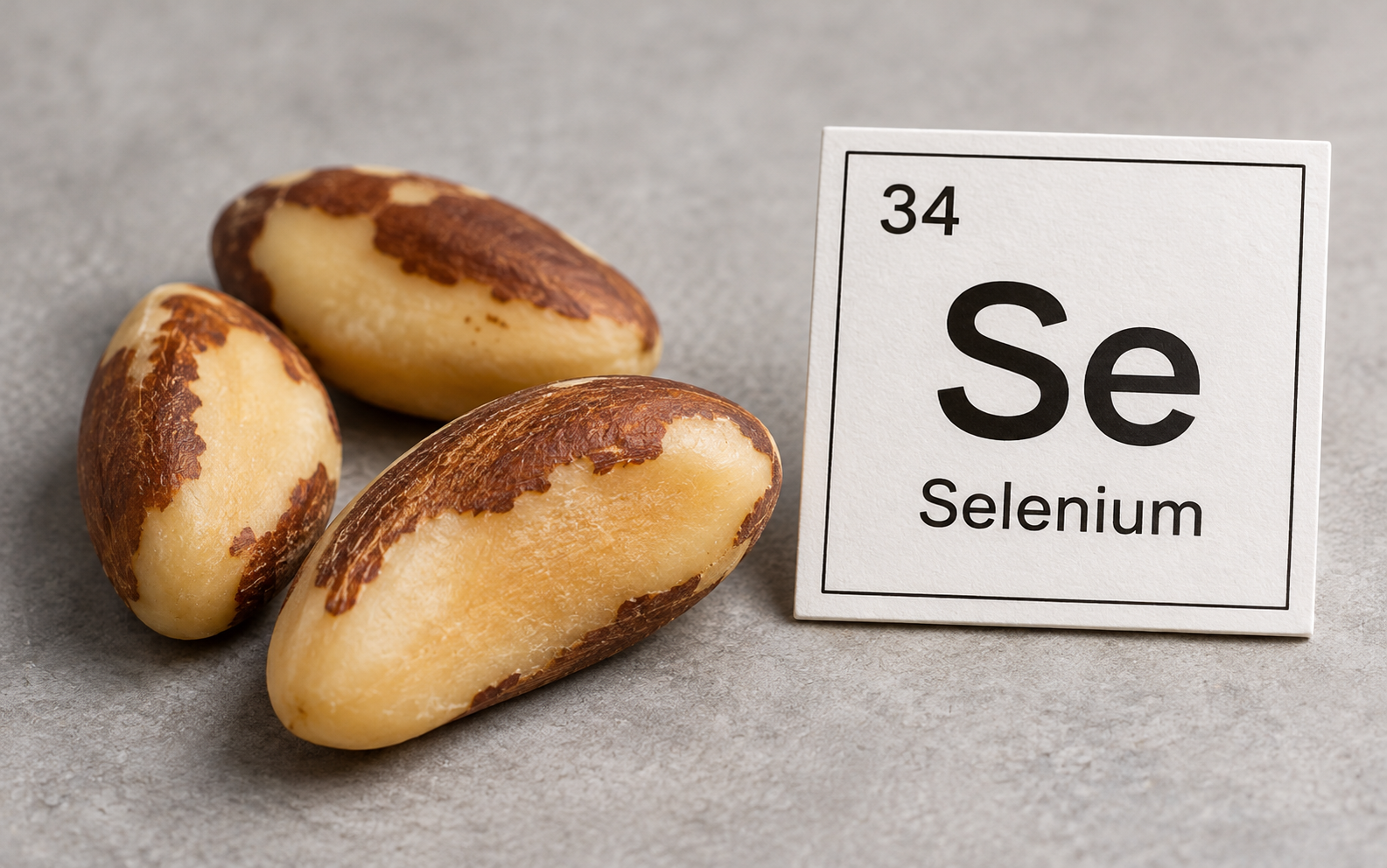
Brazil nuts are among the richest dietary sources of selenium. However, the amount in an individual nut varies and depends partly on where it was grown, as soil composition and environmental factors influence how much selenium the trees absorb (source).
Research examining Brazil nuts and soils from the Amazon region found that, depending on their origin, a single nut could provide approximately 11% to 288% of the daily selenium requirement (source). This illustrates why the claim that every nut provides 70-80 µg is misleading.
One study (source) found that some Brazil nuts expected to provide 100 µg of selenium actually supplied an average of 53 µg, with possible intake ranging from 20 to 84 µg. Although consuming the nuts increased participants’ selenium status, the findings further illustrate the difficulty of estimating intake by simply counting nuts.
Dr Watts’ figure of 70-80 µg may be accurate for some nuts, but it is not a universal value. Presenting it as a consistent dose gives viewers a misleading impression of precision. In practice, people cannot reliably estimate their exact selenium intake simply by counting Brazil nuts.
The same review (source) found that the randomised controlled trials it included generally gave participants 5-20g of Brazil nuts daily, with the interventions increasing selenium status. However, the studies used specific portions and populations; therefore, they do not establish a single universally safe number of nuts applicable to everyone.
It is also important to distinguish between recommended intake and the upper intake level. The NHS reference nutrient intakes for adults are 60 µg for women and 75 µg for men (source), indicating the amount needed to meet nutritional requirements, but they are not the maximum safe dose.
The European Food Safety Authority (EFSA) established a tolerable upper intake level of 255 µg daily for adults aged 18 and over, including those who are pregnant and lactating. This applies to total daily selenium intake from all dietary sources and supplements and is intended to reduce the risk of adverse effects (source).
This risk is particularly relevant to people also taking selenium supplements or multivitamins containing selenium. Sustained excessive intake can cause selenosis, with symptoms including hair loss, brittle or lost nails, nausea, fatigue and a metallic taste. Other signs include gastrointestinal upset and a garlic-like breath odour (source).
Evidence from the SELECT randomised controlled trial found that men taking 200 µg of selenium daily for several years had statistically significant increases in self-reported alopecia and mild-to-moderate dermatitis compared with placebo (source). Importantly, these findings were observed in the selenium-only group, independently of vitamin E supplementation. However, these findings do not establish that eating three to five Brazil nuts inevitably causes toxicity.
Overall, the evidence supports Dr Watts’ underlying caution: regularly eating several Brazil nuts may increase the risk of excessive selenium intake. However, the risk depends on their selenium content, frequency of consumption, and a person's total intake from food and supplements. The EFSA upper intake level is a long-term population-level safety threshold, not a threshold at which everyone will develop toxicity.
Bottom line: Brazil nuts are a rich source of selenium, and regularly eating several per day may be inadvisable for people taking selenium supplements or multivitamins containing selenium. As a rough illustration, if each nut contained 70-80 µg, three nuts would supply 210-240 µg and four nuts 280-320 µg, close to or above EFSA's upper intake level of 255 µg daily before any supplements are counted. Occasional consumption is different from sustained daily intake, and there is no single number of Brazil nuts that reliably guarantees a safe or an adequate selenium intake for everyone.

Claim 3: “Selenium is a fat-soluble vitamin, so it will build up in the body quite quickly.”
Fact-check: This statement is incorrect. Selenium is an essential trace mineral, not a vitamin. Excessive selenium can be harmful, but the explanation given by Dr Watts for why it accumulates is scientifically incorrect. Fat-soluble vitamins include vitamins A, D, E and K. Selenium does not belong to this group. Describing it as a fat-soluble vitamin incorrectly categorises this nutrient and misrepresents how selenium behaves in the body.
The body absorbs selenium and incorporates it into selenoproteins and other compounds. A 2021 review (source) describes how selenium is absorbed, metabolised, and eliminated, primarily through urine and faeces. This provides a more accurate explanation of selenium handling than Dr Watts’ claim that selenium accumulates because it is fat-soluble.
This does not mean selenium cannot be stored in tissue, or that excessive intake is harmless. The body has limits to how much selenium it can safely tolerate, and high or prolonged exposure can lead to toxicity. EFSA’s (source) assessment considered evidence linking excessive intake with adverse effects, including hair loss, when establishing its upper intake level.
However, the fact that excessive selenium can be harmful does not make Dr Watts’ explanation correct. Selenium does not accumulate because it is a fat-soluble vitamin. The underlying warning about excessive intake remains valid, but the scientific mechanism used to explain it is incorrect.
The phrase “quite quickly” lacks important context. Dr Watts does not specify the amount, duration of exposure, or evidence establishing how quickly harmful levels might develop. Without this, viewers may take the warning to mean that eating several Brazil nuts in one sitting will quickly cause toxicity.
Bottom line: Although sustained excessive selenium intake can cause toxicity, selenium is not a fat-soluble vitamin. Its classification and metabolism have been misrepresented, making the scientific explanation incorrect even though the underlying caution about excessive intake is valid.
Final take-away
Dr Watts’ video illustrates how nutrition misinformation can arise when a legitimate health concern is combined with an incorrect explanation and overly precise recommendations.
Selenium is essential for normal immune function and thyroid hormone metabolism, but selenium concentration varies substantially between individual nuts, meaning one Brazil nut cannot be relied upon to provide a precise or consistent daily selenium dose.
The claim that three to five Brazil nuts are universally “clinically wrong” is too absolute, and the explanation that selenium is a fat-soluble vitamin is factually incorrect. Nevertheless, the underlying caution is sensible: regularly eating several Brazil nuts may increase the risk of excessive selenium intake, particularly when combined with selenium from other foods or supplements.
Brazil nuts do not need to be avoided, or treated as a precisely measured selenium supplement. For most people, a varied, balanced diet can provide the selenium they need. Rather than following rigid rules from social media, consider the quality of the evidence, its limitations and your overall intake, including supplements.
We have contacted Dr Sam Watts for comment and are awaiting a response.
Independent fact-checking, funded by readers like you.
Misinformation is a growing threat to our health and planet. At foodfacts.org, we're dedicated to exposing the truth behind misleading food narratives. But we can't do it without your support.
Sources
• Hadrup, N., & Ravn-Haren, G. (2021). “Absorption, distribution, metabolism and excretion (ADME) of oral selenium from organic and inorganic sources: A review.”
• Mojadadi, A., et al. (2021). “Role for selenium in metabolic homeostasis and human reproduction.”
• NHS. “Others.” Available at https://www.nhs.uk/conditions/vitamins-and-minerals/others/
• Godos, J., et al. (2022). “Effect of Brazil nuts on selenium status, blood lipids, and biomarkers of oxidative stress and inflammation: a systematic review and meta-analysis of randomized clinical trials.”
• Huwiler, V. V., et al. (2024). “Selenium supplementation in patients with Hashimoto thyroiditis: a systematic review and meta-analysis of randomized clinical trials.”
• Thiry, C., et al. (2012). “Current knowledge in species-related bioavailability of selenium in food.”
• Junior, E. S., et al. (2017). “Natural variation of selenium in Brazil nuts and soils from the Amazon region.”
• Thomson, C. D., et al. (2008). “Brazil nuts: an effective way to improve selenium status.”
• EFSA Panel on Nutrition, Novel Foods and Food Allergens (NDA)., et al. (2023). “Scientific opinion on the tolerable upper intake level for selenium.”
• Holben, D. H., & Smith, A. M. (1999). “The diverse role of selenium within selenoproteins: a review.”
• Lippman, S. M., et al. (2009). “Effect of selenium and vitamin E on risk of prostate cancer and other cancers: the Selenium and Vitamin E Cancer Prevention Trial (SELECT).”



foodfacts.org is an independent non-profit fact-checking platform dedicated to exposing misinformation in the food industry. We provide transparent, science-based insights on nutrition, health, and environmental impacts, empowering consumers to make informed choices for a healthier society and planet.