
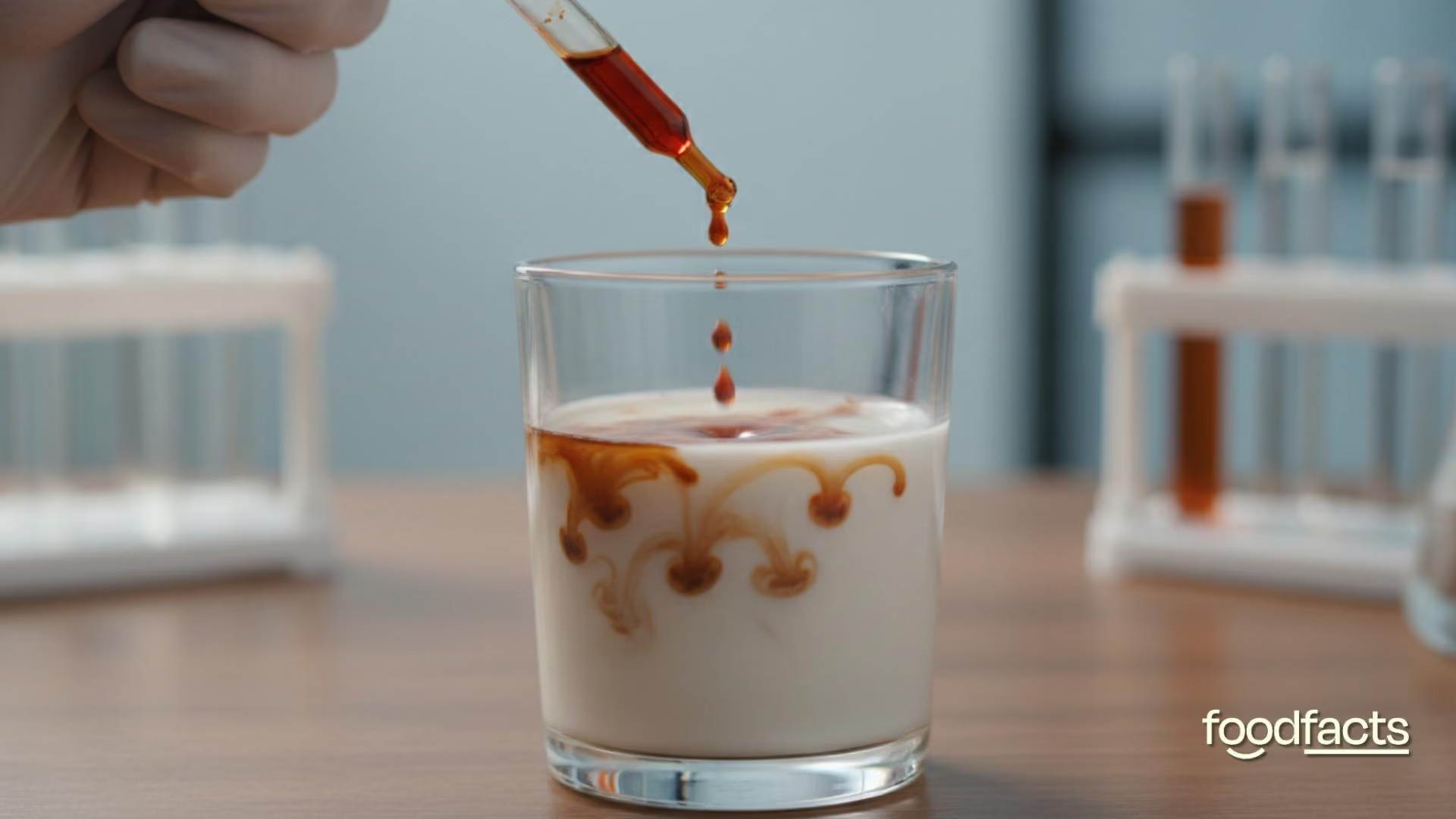




Why dairy isn't the answer to UK iodine deficiency — despite what the Daily Mail claims




When the Daily Mail ran its latest fear-mongering headline linking plant-based milk to lower IQs, the story revealed an all too familiar narrative: blame veganism for a complex public health problem. But when you actually look into why UK iodine levels have dropped, the evidence tells an entirely different story. The problem isn’t caused by people choosing plant-based milks; it’s caused by changes in how we farm, regulate and process cow’s milk. Plant-based milks may, in fact, be part of the solution.
Let's start with what the headlines won't tell you: iodine levels have been falling across the entire UK population, not just among plant-milk consumers. In fact, only around seven per cent of people in the latest National Diet and Nutrition Survey consumed plant-based milk alternatives, with the highest consumption at 10 per cent among women aged 19 to 49 years. If veganism were the driver of falling iodine levels, we'd see a much different pattern.

The real reasons milk's iodine content has declined
The real explanation lies in three overlooked regulatory and farming developments that have quietly undermined dairy's iodine content.
First, there's the 2005 animal feed regulation. The maximum permitted level of iodine in livestock feed was halved that year to prevent human toxicity – too much iodine can be harmful. But the consequence was that milk produced from cattle fed on this reduced-iodine feed contained far less of the nutrient than before. Nobody connected the dots at the time because milk still seemed like a reliable source of iodine. It wasn't until mild iodine deficiency emerged years later that anyone traced the problem back to this policy shift.
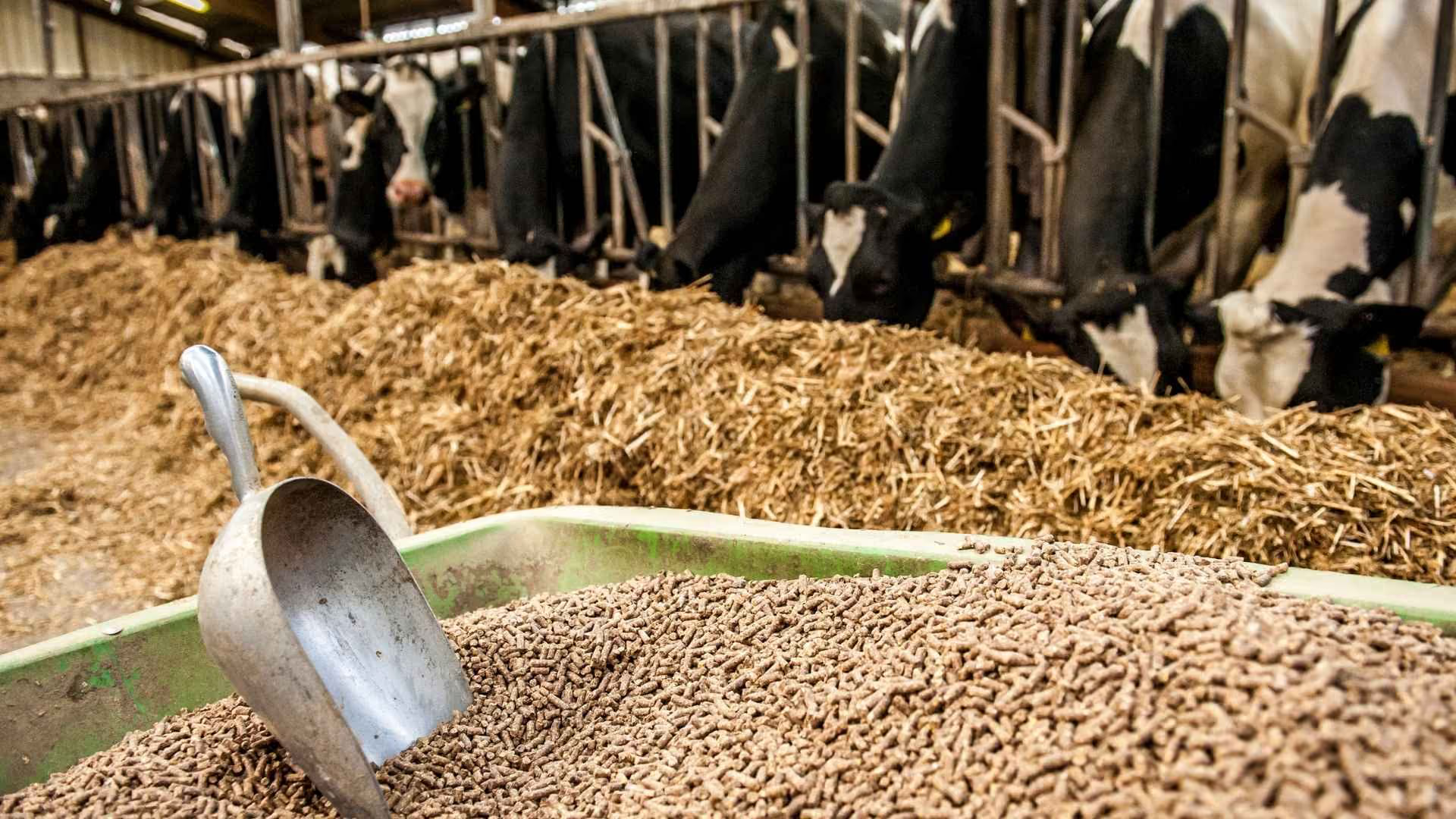
Second, there's the rising popularity of organic milk. Organic standards restrict the use of mineral supplements and often rely on clover pastures, which reduce iodine levels in cattle. Research shows organic milk contains significantly less iodine than conventional milk. This is a textbook case of unintended consequences. Consumers choosing organic for environmental and animal welfare reasons have inadvertently reduced their iodine intake, through no fault of their own and certainly not because of plant-based alternatives.
Third, and perhaps most fascinating, there's the transition away from iodine-based disinfectants. For decades, iodophors (iodine-containing disinfectants) were used routinely in milking parlours as a hygiene measure to kill the bacteria that cause mastitis. This created what you might call 'accidental' iodine fortification; extra iodine entered the milk supply purely as a byproduct of sanitation practices. As these chemicals have been phased out in favour of more modern alternatives, that accidental boost to milk's iodine content has disappeared.
These three factors, a deliberate cut to permitted iodine in feed, a shift towards organic production and the replacement of iodine-based sanitisers, have collectively caused cow’s milk's iodine content to decline. None of them has anything to do with people choosing plant-based milk.

Stop blaming plant-based milk for UK iodine decline
Yet the Daily Mail presents dairy as the inevitable solution, conveniently ignoring these realities of farming. It's particularly dishonest when you consider that many plant-based milks are now fortified with iodine: Oatly, Alpro, ASDA brands and M&S all include it. Choosing iodine-fortified plant milk delivers comparable iodine intake to conventional cow's milk, without relying on animal agriculture.
The real answer isn't a return to reliance on dairy, but a modernisation of UK nutrition policy. Iodised salt, consumed in moderation, remains an effective, evidence-based solution successfully used in over 120 countries. A quarter teaspoon of iodised salt delivers 50 to 80 µg of iodine, comfortably within recommended daily salt limits, while addressing iodine deficiency.
The uncomfortable truth for those pushing the dairy narrative is that UK iodine levels dropped because of farming policy choices and regulatory decisions, not because of a surge in veganism. Acknowledging this would require an honest conversation about agricultural systems and public health infrastructure. Blaming plant-based milk is simpler. It's just not true.

Independent fact-checking, funded by readers like you.
Misinformation is a growing threat to our health and planet. At foodfacts.org, we're dedicated to exposing the truth behind misleading food narratives. But we can't do it without your support.
Sources:
- Agricultural Industries Confederation. 2023. AIC at 20: Working in support of UK dairy farmers and feed businesses on iodine feed limits.
- Bath SC, Button S and Rayman MP. 2012. Iodine concentration of organic and conventional milk: implications for iodine intake. British Journal of Nutrition. 107 (7) 935-40.
- Foodfacts.org (14 January 2026). Do plant milks really harm our IQ?
- Nicol K, Nugent AP, Woodside JV et al. 2024. The impact of replacing milk with plant-based alternatives on iodine intake: A dietary modelling study. European Journal of Nutrition. 63 (2) 599.
- Viva! 2026. Iodine status in the UK deserves our attention, but dairy is not the ‘solution’.


foodfacts.org is an independent non-profit fact-checking platform dedicated to exposing misinformation in the food industry. We provide transparent, science-based insights on nutrition, health, and environmental impacts, empowering consumers to make informed choices for a healthier society and planet.






.svg)


.svg)

