
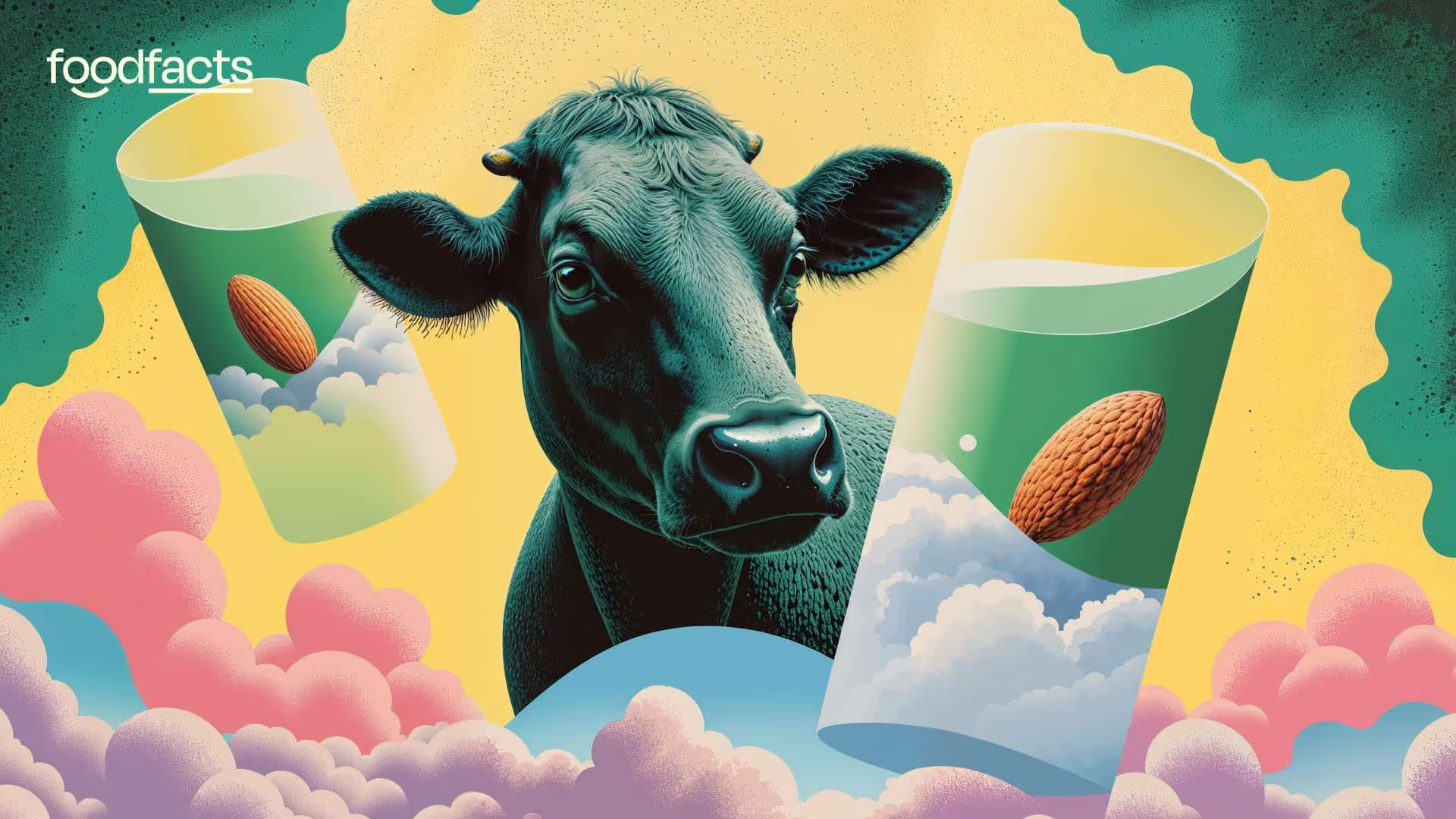

The great milk debate: does the science support recent claims?

Claim 1: Cow’s milk is full of protein and calcium
The article states that a 200 mL glass of milk contains 7 grams of protein and 130 milligrams of calcium. While this is true, these nutrients are not unique to cow’s milk. Soy milk, for instance, contains 6g of protein per 200 mL , with some higher protein varieties containing up to 10g of protein for the same amount. The article correctly points out that other varieties of plant-based milk, like almond or oat, contain much less protein compared with dairy or soy milk.
In terms of calcium, thanks to fortification, most plant-based milks contain almost around the same amount per glass compared with cow’s milk. The exception to this rule are organic products, as organic standards do not allow the addition of synthetic ingredients including vitamins and minerals.
The author did not touch on bioavailability of calcium across various milks, but did you know that most bioavailable sources of calcium are actually certain types of vegetables, including bok choy, brussel sprouts, and broccoli? They may not contain as much calcium as milk per portion, but their high absorption rate makes them worth considering. All the more reason to eat your greens!
The average adult (19+) requires 700mg of calcium and 45-55g of protein a day.
At the end of the day, whether you opt for plant-based or cow’s milk, both varieties can cover your nutritional needs.
Claim 2: Cow’s milk is a great source of B12
B12, which is important for energy metabolism, is almost exclusively found in animal-based foods.
Despite fortification, plant-based milks tend to contain less B12 than cow’s milk, which is a good source of it, as the article correctly states.
Nonetheless, for people who don’t want to reach for dairy drinks, B12 can also be found in nutritional yeast, shiitake mushrooms, algae products, or a variety of affordable supplements.
Claim 3: It boosts serotonin
The article cites a study claiming to link dairy milk consumption to reduced rates of anxiety and depression, however while the study is interesting, as pointed out by their expert, Rob Hobson, it cannot tell is the full story about causality. Click here to read our in-depth fact-check of the study in question.
The article goes on to say that fatty acids in dairy milk can have a protective function in the brain as well as tryptophan, which is associated with serotonin production. There is some research that indicates a potential benefit to brain health from polyunsaturated fatty acids from cow’s milk, but the results remain controversial.
Tryptophan is an amino acid, which is a building block of protein and a precursor of serotonin. As such, it can be found in most sources of protein, including but not limited to milk. Nuts and seeds, for example, are a real powerhouse containing plenty of good fats, as well as tryptophan.
Furthermore, it’s important to note that the majority of the fats in dairy milk are saturated fats, which has been linked to increased cholesterol levels in the blood and can increase the risk of having a heart attack or stroke if consumed in excess. Plant-based alternatives on the other hand, generally contain much less saturated fat, making them a healthier choice for people trying to watch their saturated fat intake.
Claim 4: It helps to lower bowel cancer risk
Lastly, the claim that dairy consumption can reduce bowel cancer risk is true. A large-scale study published in Nature Communications showed that consuming 300mg of calcium daily could lower the risk of bowel cancer by 17%. Scientists concluded that this effect was driven for the most part by the additional calcium consumed, as opposed to specifically dairy products, meaning the same protective effect could also be achieved with calcium from other sources, including plant-based milks.
The ‘best’ choice is individual
When taking nutrition advice from online sources, it is important to remember that the healthiest diet for each person is dependent on personal factors such as age, sex, activity level, food intolerances, or other health factors.
A balanced diet, whether it includes animal-based foods or not, can meet nutritional requirements, and many of the benefits discussed above are not unique to cow’s milk. Whether cow’s milk is ‘best’ for our health, therefore, cannot be said universally.
Dairy milk is a nutritionally interesting food, rich in protein and key micronutrients such as calcium, iodine, and vitamin B12. Its nutrient profile and food matrix may even help mitigate the potential risks associated with its saturated fat content. However, this does not mean it is inherently superior to plant-based alternatives. Today, most plant-based milks (with the exception of organic products) are fortified with essential nutrients that might otherwise be lacking in the diet. While some express concerns over their ultra-processed nature, this argument leans toward the ‘appeal to nature’ fallacy. Current evidence does not show any association between plant-based ultra-processed foods and negative health outcomes. In fact, it may suggest the opposite. When included as part of a balanced diet, plant-based milk alternatives are nutritionally sound.
Does an article only mention the benefits or risks? Good information presents both sides.
A recent article published in the Telegraph compared various sorts of milk to each other and came out in strong favour of cow’s milk, but is it really what's best for our health? Let’s have a look at the claims made.
Nothing the author states is untrue, however, some claims regarding cow’s milk are tentative findings and may require further investigation. Likewise, not all supposed health benefits of cow’s milk are unique to cow’s milk, so at times throughout the article, the reporting is unbalanced.
Nowadays, we have more food choices than ever and are constantly faced with information on what to eat and what not to eat. As such, it is vital to place this information in context to ensure we have the full picture before making decisions.

Are meat-based diets putting our dogs at risk? Exploring healthier, climate-friendly alternatives
We all want our dogs to live long, healthy lives. Yet, rising rates of obesity, cancer, and chronic illness among pets suggest that something in their diet may be working against them. For many, the assumption has always been that dogs need meat to thrive—but emerging research is challenging this belief.
The Link Between Meat-Based Diets and Canine Health Issues
Today’s pet food industry is heavily focused on high-protein, meat-based diets. Marketing phrases like “biologically appropriate” and “ancestral diet” suggest that dogs should be eating like their wolf ancestors. But is this actually the healthiest choice?
Studies indicate that over 50% of dogs in the UK are overweight or obese, significantly increasing their risk for diabetes, arthritis, hypertension, kidney disease, and cancer. Research suggests that high-fat, meat-based diets play a significant role in this health crisis, especially when combined with modern dogs’ lower activity levels.
Cancer, now the leading cause of death in dogs, has also been linked to diet. One of the biggest concerns is bioaccumulation—the buildup of toxins in animals that are then passed along the food chain. When dogs consume meat, they may also be ingesting harmful substances, including preservatives, antibiotics, and environmental pollutants.
Are Dogs Really Carnivores? The Science Says No
One of the biggest myths about dog nutrition is that they are obligate carnivores, like cats. In reality, dogs are omnivores—capable of digesting and thriving on a balanced diet that includes plant-based foods.
Genetic research has revealed that dogs evolved key mutations that allow them to digest starches efficiently, a trait absent in their wolf ancestors. This suggests that dogs have adapted to a diet that includes more plant-based ingredients.
Do Plant-Based Diets Provide Complete Nutrition for Dogs?
A well-formulated, climate-friendly diet can meet all of a dog’s nutritional needs without the risks associated with processed meat-based pet food. Essential nutrients—including protein, amino acids, and vitamins—can all be provided through carefully designed plant-based pet foods. In fact, some studies suggest that dogs on plant-based diets may live longer and suffer from fewer chronic illnesses compared to their meat-fed counterparts.
Hidden Ingredients in Meat-Based Pet Food
Another concern with traditional pet food is the low-quality meat byproducts often used in commercial formulas. These can include:
✅ Rendered animal parts (bones, blood, and fat)
✅ Artificial preservatives and flavor enhancers
✅ Rancid fats, which can contribute to free radical damage linked to cancer
Meanwhile, raw meat diets, often promoted as “natural,” come with the risk of bacterial contamination, such as E. coli and Salmonella, potentially endangering both pets and their owners.
A Shift Towards Sustainable and Healthy Dog Food
The good news? A growing number of companies are creating nutritionally complete, plant-forward dog foods that provide all the necessary nutrients without the risks associated with meat. These foods are designed with lower fat content, higher fiber, and carefully balanced protein sources to support optimal health.
Dog owners who have made the switch often report benefits like:
✅ Healthier weight maintenance
✅ Reduced allergies and skin issues
✅ Increased energy and mobility
Looking Ahead: A Healthier Future for Dogs and the Planet
By reconsidering what we feed our pets, we’re not just making a healthier choice for them—we’re also reducing the environmental impact of pet food production. Meat-heavy pet foods contribute significantly to greenhouse gas emissions, deforestation, and water pollution. Choosing climate-friendly dog food options allows us to align pet care with a more sustainable food system.
As research continues to emerge, one thing is clear: Dogs can thrive on a well-balanced, plant-based diet. With a growing selection of carefully formulated, nutritionally complete options available, now may be the perfect time to explore a healthier, more sustainable way to feed our four-legged companions.
Would you consider transitioning your pet to a plant-forward diet?


Are podcast hosts spreading health misinformation? What the latest studies reveal
Podcasting has become one of the most influential platforms for sharing health and nutrition information. While some hosts take a science-backed approach, others—intentionally or not—spread misinformation that can shape public perception and even influence health decisions. In a recent episode of The Proof podcast, host Simon Hill and guest Drew Harrisberg explored the role of podcast hosts in disseminating health information, analyzing four key studies that highlight the risks of unchecked claims.
The Power and Pitfalls of Podcasting in Health Discourse
Podcasts have become a go-to source for health advice, often featuring engaging discussions with experts, personal anecdotes, and alternative viewpoints. However, as Hill and Harrisberg discuss, the format lacks the rigorous fact-checking mechanisms of peer-reviewed journals or traditional media. Many podcast hosts do not have formal scientific or medical training, which can lead to the spread of misleading or oversimplified health claims.
The conversation underscored a critical issue: misinformation thrives in highly engaging content, especially when presented by charismatic speakers who appear knowledgeable and credible. Listeners often assume that because someone sounds confident or has a large following, their information must be accurate.
What the Research Says: 4 Studies on Health Misinformation
To provide a data-driven perspective, Hill and Harrisberg highlighted four pivotal studies that shed light on how misinformation spreads through podcasts and other digital platforms.
1. Dietary Misinformation and Public Health Confusion
A study analyzed health-related podcast episodes and found that many hosts misrepresent or exaggerate the benefits of specific diets, particularly extreme low-carb or carnivore diets, while demonizing plant-based nutrition. Unverified claims—such as "carbs are inherently harmful" or "meat is essential for optimal health"—can mislead audiences, causing them to make drastic dietary changes without proper evidence.
Key Takeaway: Nutrition misinformation is widespread, and many hosts fail to cite credible sources, leading to public confusion about what constitutes a healthy diet.
2. The Social Media Amplification Effect
Another study explored how social media, often intertwined with podcasts, amplifies misinformation. Clickbait headlines and viral soundbites make misleading claims more shareable, even when they lack scientific validity.
For example, sound clips from popular wellness podcasts often get repurposed into short-form social media content, which strips away nuance and context, making oversimplified or exaggerated claims appear more authoritative.
Key Takeaway: Social media algorithms favor sensationalized content, making it easier for misinformation to spread rapidly.
3. The “Guru Effect” and Audience Trust
Research on the “Guru Effect” highlights how audiences tend to trust confident, charismatic speakers—even when their claims lack evidence. Some podcast hosts rely on personal anecdotes, cherry-picked studies, or pseudoscientific jargon to persuade listeners rather than citing well-established research.
Certain high-profile podcasters have been known to platform guests with fringe views, giving credibility to ideas that lack scientific backing. This leads to the spread of misleading narratives, such as anti-vaccine rhetoric, exaggerated claims about detox diets, and miracle supplement promotions.
Key Takeaway: Listeners must be cautious and verify claims, even if they come from seemingly well-informed podcast hosts.
4. The Danger of False Balance in Health Discussions
A fourth study focused on false balance, a common issue in health media. Some podcasts attempt to present "both sides" of a scientific debate—even when one side is overwhelmingly supported by evidence and the other is fringe or debunked.
For instance, presenting anti-vaccine activists alongside medical experts or allowing climate change deniers to debate climate scientists gives the illusion that both perspectives are equally valid, which distorts public perception.
Key Takeaway: False balance can create doubt about well-established science, leading to public skepticism of credible health guidelines.
How to Identify Reliable Health Information on Podcasts
Given the widespread issue of misinformation, Hill and Harrisberg emphasize the importance of critical thinking when consuming health content. Here are some ways listeners can verify the reliability of podcast information:
✅ Check the sources: Does the host cite peer-reviewed studies, or are they relying on anecdotes?
✅ Look for expert consensus: Do medical and scientific communities support the claim, or is it a fringe theory?
✅ Beware of extreme claims: If something sounds too good (or bad) to be true, it probably is.
✅ Watch out for financial motives: Is the host selling supplements or promoting a specific diet?
Final Thoughts
The rise of health-focused podcasts has made science and wellness more accessible, but it has also opened the door to misinformation. As Hill and Harrisberg discuss, listeners must be proactive in distinguishing credible sources from sensationalized narratives.
At FoodFacts.org, we encourage fact-checking, critical thinking, and reliance on peer-reviewed research to make informed health decisions. The next time you hear a bold claim on a podcast, ask yourself: Is this backed by science, or is it just compelling storytelling?
Stay Informed. Stay Skeptical. Stay Healthy.

Yes, we have long-term data on diets. Here’s the proof you need to know
So… Do We Really Have No Long-Term Data on Diets?
Claim: “We really don’t have any long-term data on any dietary pattern”
In response to Steven Bartlett's question about whether it’s possible to live a long time on the carnivore diet without supplementation, Ede responds with this claim that we don’t have long-term data on any dietary pattern.
This claim is misleading and incorrect. While no studies have followed an individual for their entire lifetime, several major long-term studies record and track dietary patterns and health outcomes over decades.
In fact, several cohort studies were designed to provide long-term information on dietary patterns. These include the Nurses Health Study and the Health Professionals Follow-Up Study, which began in the 1970s and 1980s and have been running ever since, tracking dietary habits and their associations with health outcomes such as heart disease, type 2 diabetes, and cancer risk. This data gets analyzed by very talented and experienced researchers, especially epidemiologists, to provide us with a wealth of information on what dietary patterns can support human health and longevity.
A study published in Nature Food in 2023 used data from the UK Biobank, a large prospective cohort, to analyze the impact of sustained dietary changes on life expectancy. The researchers found that changing from unhealthy dietary patterns to healthier ones, such as those recommended by the Eatwell Guide, could increase life expectancy by up to 8.9 years for 40-year-old males and 8.6 years for females.
But Is This Data Good Quality at All?
Ede, like others, may argue that these types of studies are unreliable and don’t provide long-term quality data, because they mostly use food frequency questionnaires to measure what people eat over time. These questionnaires ask what people ate over a specified time frame, which could be up to a year, so people claim they might not be accurate as it relies of memory.
But it’s not that simple. These methods are widely validated and refined by top nutrition scientists, hence why they are widely used in research, as Dr Matthew Nagra covers in his recent video:
We also have randomised controlled trials, which are a higher-quality type of evidence, that have examined dietary patterns over 4 to 7 years. One of these studies, which looks at the Mediterranean diet, found it to lower cardiovascular risk. “And cardiovascular disease is a chronic disease that develops over a very long period of time” explains Dr Nagra.
While we don’t have long-term data on the carnivore diet, we do have data on the different elements long term, such as excessive processed and red meat consumption increasing the risk of certain cancers, and increased risk of mortality without adequate fruit and vegetable consumption.
🔗 Want to understand this in more depth?
Chris from Viva Longevity explains the reliability of nutrition science in this
We have contacted Steven Bartlett and are awaiting a response.
When evaluating nutrition claims, look for large cohort studies and systematic reviews from reputable sources. Single opinions, particularly from influencers, should not outweigh decades of peer-reviewed research.
"We really don’t have any long-term data on any dietary pattern."
— Dr. Georgia Ede, The Diary of a CEO podcast with Steven Bartlett
In a recent episode of The Diary of a CEO podcast, Dr Georgia Ede claimed that no long-term data exists on any dietary pattern. This statement was made in response to a discussion about the carnivore diet and whether it is possible to follow it long-term without supplementation.
Long-running studies, such as the Nurses' Health Study and Health Professionals Follow-Up Study, provide valuable insights into the long-term impact of different dietary patterns on health. Additionally, randomized controlled trials (RCTs) provide more evidence for the health benefits of well-researched diets like the Mediterranean diet.
Misinformation about nutrition research can lead people to distrust well-established dietary guidelines and adopt extreme or unproven diets.

Steven Bartlett’s podcast and the spread of health misinformation: a doctor’s response
Why It’s Harder to Debunk Misinformation Than to Create It
Dr. Georgia Ede, a Harvard-trained psychiatrist specializing in nutritional and metabolic psychiatry, recently appeared on The Diary of a CEO podcast with Steven Bartlett. She has a new book out, and her credentials are undeniably impressive.
If you know me, you’ll also know that it’s not my style to “call out” other healthcare professionals. I prefer to create positive, uplifting content based on scientific evidence. Outrage might be an easier way to build a following, but I dislike the energy it creates and the divisive atmosphere it fosters. However, some statements are so profoundly misleading that they demand a response.
The Challenge of Debunking Nutrition Misinformation
Have you heard of Brandolini’s Law? It states that refuting false information requires significantly more effort than creating it. In the world of nutrition, this means that misinformation spreads quickly—especially when packaged into catchy soundbites—while debunking it requires detailed explanations, scientific evidence, and nuance.
Given the massive reach of The Diary of a CEO—a podcast that has amassed over a billion listens—it’s clear that some platforms are just too influential to let misinformation slide. So, here we are.
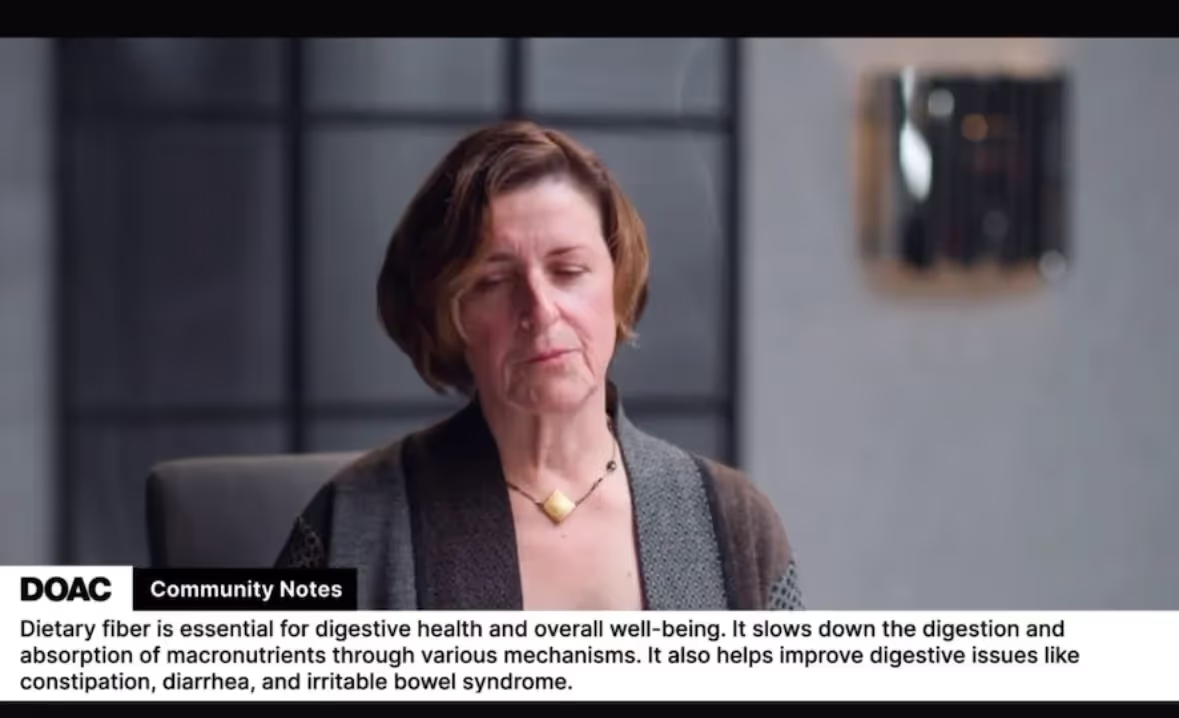
The Misleading Claim: “Fibre Is Not Essential”
One of the more bizarre claims made by Dr. Ede during the podcast was that humans don’t need fibre, calling it “not an essential nutrient.” This statement was so misleading that the podcast’s own fact-checkers felt compelled to debunk it—though this correction only appeared in the YouTube version, not the audio podcast.
This claim contradicts decades of nutritional research. While fibre is technically not classified as an “essential nutrient” (because it’s not a single, specific compound like vitamin C), it plays a critical role in digestion, gut health, and disease prevention.
Fibre comes from plant-based foods—whole grains, vegetables, fruits, and legumes—that have been a dominant part of human diets for millions of years. Even the most ardent advocates of “ancestral diets” fail to acknowledge that early humans consumed over 100 grams of fibre daily from wild plants.
Scientific evidence overwhelmingly supports the benefits of fibre, including:
✔ Increased stool weight and frequency
✔ Improved blood sugar and cholesterol levels
✔ Enhanced gut microbiota diversity
✔ Reduced risk of colorectal cancer and heart disease
So no, fibre isn’t “non-essential”—it’s fundamental to long-term health.
Dismissing Scientific Research: A Dangerous Precedent
Dr. Ede also dismissed much of modern nutrition research, stating that our knowledge of dietary impacts is based on “questionnaire-based guesswork” and “untested theories.” This is not only misleading but also deeply concerning.
Epidemiology—the field that studies population health and disease patterns—has provided invaluable insights into nutrition. Large-scale studies like the Adventist Health Study, Nurses’ Health Study, and Framingham Heart Study have tracked diet-disease relationships for decades. Their findings are not based on “wild guesses” but on statistical models and controlled methodologies.
For instance, epidemiological research has consistently shown that:
🔴 Processed meat consumption is linked to a 6% greater risk of breast cancer, 18% greater risk of colorectal cancer, and 12% greater risk of lung cancer.
🟢 Higher dietary fibre intake is associated with a reduced risk of death from all causes.
Dismissing an entire scientific discipline because its findings contradict a personal dietary preference is not just reckless—it’s dangerous.
Misrepresenting How the Body Burns Fat
Another claim made by Dr. Ede was that you “really cannot burn fat unless you are in ketosis”—suggesting that unless someone follows a ketogenic diet, they cannot efficiently lose fat. This is demonstrably false.
✔ The human body burns fat for energy even when not in ketosis.
✔ Achieving a calorie deficit—through diet and exercise—is the primary driver of fat loss, regardless of ketone levels.
✔ Ketogenic diets, originally developed for treating epilepsy, can be beneficial in certain medical contexts but are not necessary for fat loss.
Metabolic ward studies, including rigorous research from Kevin Hall’s team, have debunked the notion that ketogenic diets are uniquely superior for weight loss. People can and do lose weight on many dietary patterns, including high-carbohydrate, plant-based diets.
Are Vegan Diets “Incompatible with Human Life”?
Dr. Ede made yet another shocking claim—that a vegan diet is “incompatible with human life.” This is, again, a complete misrepresentation of nutritional science.
Well-planned plant-based diets are not only safe but are associated with numerous health benefits, including reduced risks of:
✔ Cardiovascular disease
✔ Type 2 diabetes
✔ Hypertension
✔ Obesity
While any diet—vegan, keto, or omnivorous—requires proper planning, dismissing plant-based diets entirely is absurd. The Academy of Nutrition and Dietetics, the world’s largest organization of food and nutrition professionals, states that:
“Appropriately planned vegetarian, including vegan, diets are healthful, nutritionally adequate, and may provide health benefits in the prevention and treatment of certain diseases.”
The Rise of Fact-Checking in Health Podcasts
The recent BBC investigation into The Diary of a CEO found that, on average, each health-related episode contained 14 harmful health claims contradicting established scientific evidence.
To Steven Bartlett’s credit, he has since introduced fact-check labels on YouTube videos where guests make contentious claims. This is a step in the right direction, but it’s clear that more scrutiny is needed when amplifying health-related messages to millions of people.
What This Means for Public Health
As a doctor, I understand the responsibility of sharing accurate health information. I also understand the allure of simple, compelling narratives—especially in an era where social media rewards sensational claims.
But health misinformation has real-world consequences. It influences public perception, impacts dietary choices, and ultimately affects long-term health outcomes.
That’s why we need to prioritize science over sensationalism, evidence over anecdotes, and long-term health over short-term fads.
Final Thoughts: A Call for Informed Discussion
I think The Diary of a CEO is an incredible podcast. Steven Bartlett has an impressive ability to create engaging, thought-provoking content, and many of his guests—Dr. Tara Swart, Dr. Neal Barnard, Dr. Sarah Berry—have shared valuable insights on health and nutrition.
But I also hope that we continue to move toward higher standards of scientific accuracy when discussing nutrition. Maybe one day, Steven, you’ll invite me on to have a conversation about the importance of evidence-based health advice.
Until then—if you know someone considering a carnivore diet, share this article with them. You just might help prevent a heart attack at the gym.
This article was originally published on Dr Gemma Newmans Substack here.

Plants are good for you, so why do wellness influencers call them toxic?
Conclusion: How Misinformation Can Harm Your Health
The fear-mongering around oxalates is an example of how nutrition misinformation can spread through compelling storytelling rather than evidence-based science. While oxalates can contribute to kidney stones in certain individuals, they are not responsible for the wide array of health conditions claimed by some influencers.
Instead of avoiding oxalate-rich foods entirely, an evidence-based approach to nutrition involves:
✔ Adequate hydration to prevent kidney stone formation.
✔ Consuming sufficient calcium to bind oxalates in the gut.
✔ Maintaining a balanced and diverse diet to ensure overall health.
We have contacted Dave Asprey and are awaiting a response.
Debunking the Narrative That Plants Are Designed to Harm You
Some proponents of low-oxalate diets claim that plants are inherently harmful because they contain ‘natural defence compounds.’ Dave Asprey reinforces this idea by stating:
“Go into the forest, pick something and eat it, and you’ll probably end up in the hospital. Most plants wanna kill you.”
Dr Gil Carvalho, who directs and hosts Nutrition Made Simple!, an evidence-based educational platform designed to help the public navigate nutrition information, puts it like this:
“The question is always the same: do we have evidence that that thing actually causes disease in the natural context? Not purified a thousand times, not in mice, etc.”
While it’s true that some wild plants and mushrooms are toxic, this doesn’t apply to the plant foods people actually eat, like spinach, kale, or almonds. The presence of naturally occurring compounds in these plants does not make them harmful.
The Problem With Reducing Foods to Single Components
A key issue with Asprey’s claim is that it isolates oxalates without considering everything else that plants contain . As Dr. Gil Carvalho explains:
“It's trying to boil down a food to a few of its components, divorced from actual observable health effects in the medium and long term—which is what we all care about.”
Focusing solely on oxalates overlooks the abundance of beneficial nutrients such as fibre, vitamins, and polyphenols found in plant foods, and the protective role plant compounds play in reducing your risk of several diseases.
Social media nutrition claims often go viral when they are sensationalised or overly simplistic. However, mainstream dietary guidelines rarely advocate for the outright elimination of entire food groups. Instead, they promote balance and variety, recognising that nutritional needs vary between individuals. Isolating one compound, such as oxalate, leads to misleading conclusions.
Dave Asprey’s argument focuses on oxalates but ignores extensive research showing the benefits of plant-rich diets. For example, the following studies indicate that increasing plant consumption is linked to:
- Reduced cardiovascular disease risk—a meta-analysis found that vegetarian diets were associated with a 25% lower risk of ischemic heart disease and an 8% lower risk of total cancer incidence.
- Improved longevity—finally, this systematic review found a protective effect of plant-based diets against chronic disease mortality.
Beyond evaluating the claim itself, this fact-check will consider how the argument that “most plants are not good for you” is presented. Misinformation often extends beyond isolated factual inaccuracies; it is shaped by the broader narratives that tie those claims together.
In this case, Dave Asprey does not cite any scientific studies to support his argument that oxalates make most plants unhealthy. Instead, he presents the idea through storytelling, a method that can be compelling but should always be weighed against scientific evidence.
What are oxalates, and where does the claim that oxalate-containing foods should be avoided come from?
The idea that oxalate-rich foods should be avoided was popularised by Sally K. Norton in her book Toxic Superfoods, where she argues that oxalates contribute to a range of health problems. The most commonly shared concern is the risk of developing kidney stones, which Dave Asprey also mentions in this post.
Oxalates are naturally occurring compounds found in many plant foods, including leafy greens, beans, and nuts. They can bind to calcium in the digestive tract, forming calcium oxalate, a major component of kidney stones. Contrary to Dave Asprey’s claim that many plant foods contain oxalates “far in excess of what your body can handle,” in most people, oxalates are safely excreted through urine and stool without causing issues.
Since kidney stones often contain calcium oxalate, it might seem intuitive that avoiding oxalate-rich foods could prevent stone formation. However, research suggests that dietary oxalate is one factor in stone development, and context matters when assessing risk.
For example:
- Calcium intake is important: When consumed together, dietary calcium binds to oxalates in the gut, preventing absorption into the bloodstream. Dr. David Goldfarb recommends consuming dairy or other calcium sources alongside oxalate-containing foods rather than eliminating them.
- Hydration plays a key role: Drinking enough fluids helps dilute oxalates in the urine, reducing the likelihood of kidney stone formation.
- Overall diet matters more than individual compounds: This meta-analysis shows that overall vegetable intake and total fibre intake were consistently linked to a reduced risk of kidney stones. Beyond concerns related to kidney stones, numerous studies indicate that plant-based diets are associated with a lower risk of chronic disease, contradicting the idea that oxalates should be avoided entirely due to inherent harm.
Dave Asprey’s statements don't take into account the fact that plant-based diets can be recommended to reduce the risk of kidney stones. For example, in this review of the available evidence on the role of diet in kidney stone prevention, researchers concluded that “a balanced vegetarian diet with dairy products seems to be the most protective diet for kidney stone patients.”
The argument that oxalate-rich foods should be avoided because of kidney stones is reductive in the sense that it appeals to the cherry-picking fallacy, where only the information which supports the author’s narrative or diet is selected, while contradictory evidence is left out.
For a deeper exploration of the claim that oxalate-containing foods should be avoided because of their association with kidney stones, you can read our full fact-check here.
Oxalates and Brain Health
Dave Asprey also says that oxalates are a common cause of many other health issues, including IBD, PCOS, brain fog, and even brain lesions. “This is oxalate forming through the body, it calcifies you, makes you old, causes brain lesions.”
We have reached out to experts in brain health to discuss this alleged association between oxalates and accelerated ageing:
As board-certified neurologists committed to evidence-based practice, we find these claims both inaccurate and misleading.
Dietary oxalates are naturally present in many fruits and vegetables. In the vast majority of individuals, the body processes and excretes these compounds efficiently. While individuals with specific medical conditions—such as certain kidney disorders—may need to moderate their oxalate intake, there is no credible scientific evidence to suggest that normal consumption of vegetables causes widespread “calcification,” brain lesions, or accelerated aging.
There is no legitimate research linking typical vegetable consumption to brain lesions or significant “brain fog.” Conversely, diets high in antioxidants, vitamins, and minerals—abundant in plant-based foods—are consistently associated with better cognitive function over the lifespan.
We appreciate the enthusiasm of individuals who wish to optimize health; however, we recommend approaching novel or dramatic health claims with skepticism and consulting qualified healthcare providers—or at the very least, published, peer-reviewed research—before making drastic dietary changes.
And in case anyone still wonders about vegetables and brain health, the “miracle cure” for misinformation remains the same as ever: a generous serving of actual evidence.
An extensive body of peer-reviewed research demonstrates that diets rich in vegetables (yes, those containing oxalates!) are associated with better cardiovascular health, improved metabolic markers, and reduced risk of various chronic diseases, including several forms of cancer. The claim that “most plants aren’t good for you” is diametrically opposed to established nutritional science and long-standing public health guidelines.
While it can be enticing to pin a long list of ailments on a single dietary component, oversimplifications often lead to unnecessary fear-mongering. Vegetables (and other plants) are integral to a balanced, health-promoting diet. Claims that demonize them due to oxalates neglect both the complexity of human physiology and the weight of high-quality scientific evidence.
Beware of oversimplified health claims that focus on single food components while ignoring overall dietary context.
In an Instagram reel shared recently through Billy Carson’s account ‘4biddenknowledge’, Dave Asprey suggested that foods such as spinach, kale, almonds, raspberries, and beets are not “good for you” because they are “high oxalate foods,” which he claims exceed what the body can handle.
This fact check examines whether scientific evidence supports the claim that oxalate-rich foods should be avoided.
Oxalates are naturally occurring compounds that, in most cases, are excreted without harm. Kidney stone risk can be managed through proper hydration and calcium intake, and there is no credible evidence linking oxalate consumption to brain lesions, ageing, or widespread toxicity. The benefits of a diet rich in plant foods are well-documented, contradicting the claim that “most plants are not good for you.”
Misinformation about nutrition can cause unnecessary fear and lead people to restrict foods that are actually beneficial. Claims like these, which oversimplify complex health topics, often spread through storytelling rather than science. Understanding how oxalates function in the body helps prevent unnecessary dietary restrictions and ensures people make informed, balanced nutritional choices.
Latest fact-checks, guides & opinion pieces
















.svg)

