
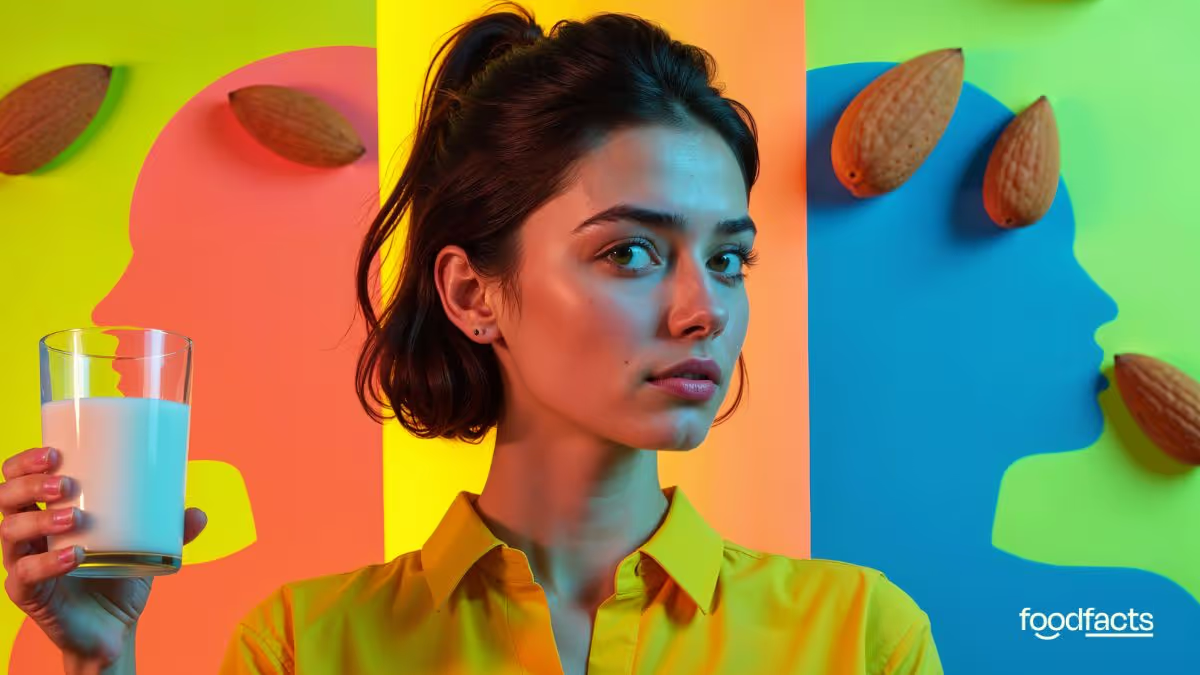




The Telegraph says plant-based milk raises your risk of depression — but do the headlines match the study?


On the 5th of January 2025, The Telegraph published an article claiming that “Vegans are at higher risk of anxiety and depression because they drink plant-based milk,” referencing data from a recent study published in Frontiers in Nutrition. The same headlines were repeated in various media outlets including The Times and The Daily Mail. We look at how well the articles represent the study’s findings, and whether vegans are at risk of depression because of plant-based milks.



The article accurately reports a potential for lower risk of anxiety and depression in those who consumed semi-skimmed milk.
Misleading media headlines risk causing unnecessary anxiety, particularly for individuals who rely on plant-based drinks for dietary reasons.


The study, published in the journal Frontiers in Nutrition, used data from more than 350,000 participants from the UK Biobank. They looked at the type of milk these participants consumed at the start of the study, and whether they developed mental health outcomes such as depression and anxiety later in life. During the average follow-up period of 13.5 years, 13,065 were diagnosed with depression and 13,339 with anxiety. This data was used to look at associations between the type of milk consumed and the risk of developing anxiety or depression. Based on this data, several major claims have been made in the media.
Claim 1: “Vegans could be more likely to be depressed because they drink plant-based milk.”
The researchers found that consuming “other types” of milk was related to an increased risk of depression, which is where this claim stems from. However, the claim that vegans are more likely to be depressed because they drink plant-based milk misrepresents the scope of the study, for several reasons. The study did not specifically measure plant-based milk alternatives, as it did not specify what came under the “other types” of milk category. It broadly categorised milk into different types; full cream, semi-skimmed, skimmed, and other types of milk (including soya milk).
Additionally, the study does not look at vegans, so making any conclusions about the risk in this population is not possible.
“To conclude that a vegan diet increases the risk of anxiety and depression because the study found that “other” types of milk were associated with an increased risk, is an inaccurate and misleading conclusion,” said Dr. Roxanne Becker, Medical Editor and Educator, in an article on plantbasednews.org.
In an article covering the same study, the Daily Mail specifically picked out oat milk in their headline, claiming “Experts issue warning over oat milk,” however the study did not look at sub-types of plant-based milk, so this is also an inaccurate and misleading headline based on the study.
Claim 2: “It found that when age, health and income are taken into account, those who drink semi-skimmed milk are 12 per cent less likely to be depressed and 10 per cent less likely to have anxiety.”
The study does suggest a reduced risk for anxiety and depression with the consumption of semi-skimmed milk. They also used a technique called “Mendelian Randomization” which attempts to strengthen observational data, and the scientists said this helps to show “that semi-skimmed milk had a protective effect on both depression and anxiety.”
In their paper, the authors discuss why semi-skimmed might have shown a protective effect. “The fatty acid profile of semi-skimmed milk might provide greater cerebral protection compared to full cream milk and skimmed milk, thereby potentially reducing the risk of both depression and anxiety” they said.
However, the authors also note that “the protective association of semi-skimmed milk with lower risks of depression and anxiety needs to be further explored” and “the findings must be interpreted cautiously.” The data was self reported at baseline and could be influenced by the follow up period. This means they asked people at the start of the study what milk they consumed, and used that data to look at mental health outcomes over a decade later. However, because health status and dietary habits change over time, the authors note “this could result in measurement errors in assessing milk consumption.”
Conclusion
While the article accurately represents the findings around semi-skimmed milk consumption, the claims made about plant-based drinks are misleading, especially because the study did not mention specific types of plant-based drinks, or include a vegan population. The article shared across the media in outlets including The Telegraph, The Times, Farming UK, and the Daily Mail oversimplifies and sensationalizes the findings by framing plant-based milk and its subtypes as directly harmful. The headlines are misleading based on what can be concluded by the study.
"One detail that is being overlooked is that, when the researchers adjusted for calorie intake, plant milks were NOT significantly associated with risk. This could be explained by some individuals who consume plant milks also struggling with disordered eating patterns, which also be associated with depression. So, it would not be the result of drinking plant milks."

Stand Against Nutrition Misinformation
Misinformation is a growing threat to our health and planet. At foodfacts.org, we're dedicated to exposing the truth behind misleading food narratives. But we can't do it without your support.
📚 Sources
Wu, C. et al., (2024). Association of different types of milk with depression and anxiety: a prospective cohort study and Mendelian randomization analysis. https://doi.org/10.3389/fnut.2024.1435435.



foodfacts.org is an independent non-profit fact-checking platform dedicated to exposing misinformation in the food industry. We provide transparent, science-based insights on nutrition, health, and environmental impacts, empowering consumers to make informed choices for a healthier society and planet.








.svg)


.svg)

