
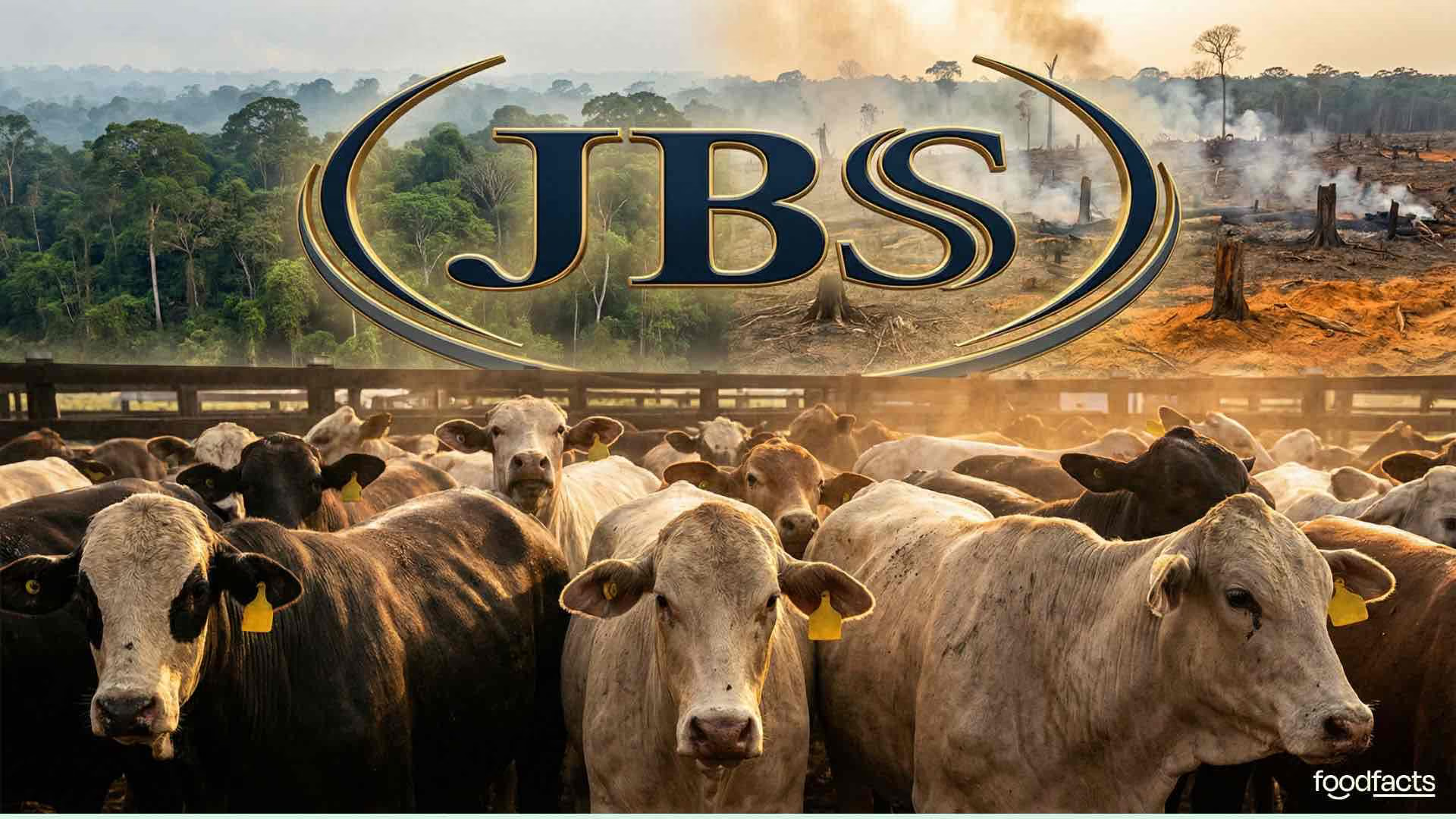




Why illegal beef laundering should matter to every shopper — and what it means for the climate




What's Really Behind the Beef on Your Plate?
Ever stood in a supermarket aisle, wondering if your burger or steak could be linked to rainforest destruction or the extinction of rare animals? While most packaging features rolling green fields and happy cows, the real story behind global beef can be far murkier, and directly connected to the climate and nature crisis facing our planet.
Recent investigations, including into Brazil's Ricardo Franco State Park, reveal how JBS, the world's largest meat company, bought cattle that were "laundered" through a scheme designed to hide their illegal origins in a protected area where the Amazon, Cerrado, and Pantanal meet. Understanding and challenging these hidden supply chain loopholes isn't just for policymakers or activists. It matters for everyone who eats food.
The Case: How JBS Ended Up With Illegal Cattle
Between 2018 and 2024, JBS purchased at least 6,790 cattle from a farm called Barra Mansa, including 790 animals in 2024 alone. But these weren't ordinary cattle. Before reaching Barra Mansa, at least 5,295 cattle had been transferred from Fazenda Paredão, a ranch sitting entirely inside Ricardo Franco State Park, where cattle ranching is illegal and where over 2,000 hectares of forest were illegally cleared.
The cattle were slaughtered at JBS's facility in Pontes e Lacerda, roughly 140 kilometres from the park, a plant authorised to export beef to the European Union, China, and Canada. This means beef from illegally deforested protected areas could have ended up on dinner tables across the globe, including potentially in your local supermarket.

Why Should You Care? The Connection to the Nature and Climate Crisis
Beef and the Earth: More Than Just Food
Forests vs. Feedlots: Rainforests like those in Ricardo Franco function as a major climate-regulating system. They sustain rainfall patterns and stabilise temperatures. When they're cleared for pasture, they release stored carbon, accelerating climate change and leaving wildlife homeless or extinct.
Beef's Outsized Footprint: Animal farming, especially of cattle, is the largest driver of tropical deforestation. Over 16.4 million trees are lost each day due to animal agriculture, and it is responsible for up to 19.6% of global greenhouse gas emissions.
Nature's Crisis Unfolds: Ricardo Franco State Park is home to 473 bird species, one-quarter of all bird species recorded in Brazil, including the rare orange-breasted falcon, plus endangered mammals like the giant otter and giant anteater. When cattle are grazed illegally in such places, these unique animals are pushed closer to extinction.

How Do Cattle Get "Laundered" Into JBS's Supply Chain?
The Trick: Cattle Triangulation
Picture this: A calf is born and raised inside Ricardo Franco State Park, where clearing forest for pasture is totally illegal. But before it's sold, it's moved to a "clean" legal farm outside the park called Barra Mansa, and new paperwork is issued so it appears the animal always came from the compliant property. This is called triangulation for cattle laundering. Here's how it worked in this case:
Illegal ranch (Paredão) → Animals raised inside the protected park on illegally deforested land,
"Clean" pass-through farm (Barra Mansa) → Animals transferred here, new transit papers issued,
JBS slaughterhouse → Company buys cattle from Barra Mansa, a farm that is legal on paper without tracing the cattle’s true origin,
Because JBS relied on paperwork from only the last farm (Barra Mansa), the company missed the potentially illegal origin inside the park. Even more concerning: records show serious gaps between what JBS reported on its own transparency platform and what appeared in government databases, with 2024 purchases showing up only in state records, not on JBS's public portal.

Why "Deforestation-Free" Pledges Aren't Always What They Seem
JBS has made public commitments to eliminate deforestation from its supply chain. Yet, this case shows how easy it is for illegal cattle to slip through when companies check only their direct suppliers and don't trace animals back to where they were born and raised.
Data Gaps Matter: For 2020–2022, no movement records appeared in government systems (though some were on JBS's portal), there were no records at all in 2023, and 2024 movements showed up in state databases but not on JBS/Friboi's transparency platform. These mismatches make it nearly impossible for consumers, regulators, or watchdogs to trust that beef is truly deforestation-free.
Export Markets at Risk: The JBS Pontes e Lacerda plant is approved to ship beef to the European Union, China, and Canada, markets that expect higher environmental standards. Yet, through cattle laundering schemes, there is a risk of laundered cattle from a protected area making it through, showing how weak traceability can undermine even strict-sounding import rules.

"Better" Beef, Less Beef, or Both?
Eating Less Red Meat Matters: Research shows that if everyone cut their meat and beef consumption even a little (such as by 25%), it would make a measurable difference in slowing the climate crisis, protecting rainforests, and reducing species losses.
Eating more plant-based food: Eating more plant-based food can help reduce the demand for meat and reduce emissions. Replacing 50% of meat and milk products with plant-based alternatives by 2050 can reduce agriculture and land use-related greenhouse gas (GHG) emissions by 31%.
Supporting higher-welfare, traceable farming: Nature-friendly farms keep animals in woodland, shrubs, or orchards. These woody plants help capture carbon and offset greenhouse emissions, while providing better welfare for the animals. To buy from such farms, look for the Pasture for Life certification or on individual farm websites. If you’re buying from supermarkets, organic levels are higher welfare options with higher levels of traceability. Remember that the country of origin in the UK only applies to fresh meat, so your ready meals and sandwich meats won’t reveal where your meat might come from.
Making It Personal: What You Can Do As a Consumer
Switch It Up: Try plant-based options and eat less meat. Feed for animals is a key driver of deforestation, so eating less meat is a great solution for the environment. When you do eat meat, swap to higher-welfare meat from nature-friendly farms or your local butcher to shrink your climate and nature impact
Ask Retailers Hard Questions: Does your supermarket know where all its beef came from, back to the birth farm? Are they buying from JBS or other companies with documented traceability gaps? Can they show you independent verification, not just company claims? Demand honest and traceable supply chains.
Support Legal Accountability: In March 2025, Brazil's Supreme Court upheld a freeze of R$38 million in assets tied to illegal deforestation inside the park, with total environmental liabilities reaching R$109.6 million across properties. Consumer pressure can help ensure that companies like JBS face real consequences when laundering schemes are exposed.,
Tell your bank to stop supporting factory farming. The UK’s most popular bank, Barclays, is the biggest funder of JBS. It provided over £5bn in funding to JBS between 2015-2022. You can sign World Animal Protection’s petition to urge Barclays to stop funding JBS Ethical Consumer Magazine World Animal Protection petition.

What's at Stake: Wild Places, Climate, and the Future of Food
The story of Ricardo Franco State Park and JBS isn't just about one company or one park in Brazil. It's about the forests, water, and wildlife that support life everywhere, including the food on our plates and the climate we all share. Since the park's creation in 1997, over 12,000 hectares of native forest have been lost to illegal ranching. The choices we make at the checkout, for school dinners, and even meals in hospitals, ripple out to jungles half a world away. They shape the air our children will breathe and the future of species most of us will never see.
The solution starts with awareness, and keeps growing with every meal we choose.

The Bottom Line
You have more power than you think. The Ricardo Franco JBS case shows that the meat sold in the supermarket, provided in schools or in hospitals, can end up coming from illegal, deforestation-linked beef. Every time you shop, you can help change the story, from one of destruction and "laundered" cattle to one where forests, the climate, and our food system are all protected for the future.
Demand better from JBS, from the banks that fund it, and from policymakers. The planet, and the 473 bird species, giant otters, and countless other lives and ecosystems that depend on places like Ricardo Franco, can't afford business as usual.
All images credited to: Fernando Martinho/World Animal Protection

Independent fact-checking, funded by readers like you.
Misinformation is a growing threat to our health and planet. At foodfacts.org, we're dedicated to exposing the truth behind misleading food narratives. But we can't do it without your support.
Sources
- Climate Council (10 December 2024). Deforestation and Climate Change
- Earth.org (22 February 2024). How Animal Agriculture Is Accelerating Global Deforestation
- Eating Better (27 February 2025). Climate and dietary change: is 2025 the year we connect the dots?
- Ethical Consumer (4 June 2025). Barclays urged to stop investing billions into animal cruelty and deforestation
- FAIRR (15 September 2025). Greenhouse Gases From Intensive Animal Agriculture
- IIASA (12 September 2023). Plant-based food alternatives could support a shift to global sustainability
- The EAT–Lancet Commission on healthy, sustainable, and just food systems. Rockström, Johan et al. The Lancet, Volume 406, Issue 10512, 1625 - 1700
- World Animal Protection (n.d.). Building a Just Transition in UK Farming
- World Animal Protection (2025). CASE STUDY - RICARDO FRANCO STATE PARK



foodfacts.org is an independent non-profit fact-checking platform dedicated to exposing misinformation in the food industry. We provide transparent, science-based insights on nutrition, health, and environmental impacts, empowering consumers to make informed choices for a healthier society and planet.






.svg)


.svg)

