





Is eating two meals a day better for your health? What the evidence says


In an Instagram Reel shared by Big Think, Professor Tim Spector suggests that many adults may do well eating two nutritionally adequate main meals a day, rather than the conventional pattern of three meals plus snacks, provided that the nutritional quality of the diet is maintained. He argues that the three-meals-a-day norm has been shaped in part by the food industry, and recommends a 12–14 hour overnight fasting period. He says this gives the gut time to “rest”, and may support gut-lining function and beneficial gut bacteria, thereby improving digestive health.
Full claim: “Try and give your gut a rest. 20 years ago, and certainly when I was at medical school, was the idea that we should be grazing, not feasting. Things have now changed, and we now realize that constant grazing is what your gut microbiome doesn't like at all. [... Our gut microbes] have a circadian rhythm. They actually go to sleep and they need this time to repair the gut. So if it's eating all the time and you're having late night snacks, early breakfast, they're not getting the natural time they need that our ancestors had for millions of years to clean up our gut, particularly the lining of the gut where the mucosa is. This is really important as an immune barrier. And the healthier that is, the healthier generally our immune responses are. So give your gut 12 to 14 hours to recover overnight and this is the basis of time-restricted eating. Time-restricted eating is a form of intermittent fasting but you're not restricting calories. You're just eating the same food you would normally eat but in a more limited time frame. […] We are moving to the idea that many people can do very well just having two main meals a day, or maybe combining breakfast and lunch. We're realizing that this idea of three big meals and maybe three snacks events has been forced on us by the food industry.”



Research into time-restricted eating and the gut microbiome is still emerging. While fasting periods can influence gut bacteria, there is a lack of robust human evidence which suggests that eating two meals a day reliably repairs the gut lining, replenishes specific “good” bacteria, or improves digestive health. For most people, diet quality, particularly a varied intake of fibre-rich plant foods, is likely to matter more for gut and metabolic health than adhering to any single prescribed meal timing pattern.
Nutrition advice from high-profile figures carries significant weight, and oversimplified messages can push people toward eating behaviours that are unsuitable or unnecessary for them. Many people already struggle to meet fibre and key micronutrient targets; normalising meal skipping without clear safeguards can add confusion and risk, therefore undermining overall diet quality.


Claim 1: “Many people can do very well with only two main meals a day”
Fact-check: This may be true for some adults, but it is not supported as a general rule of “many people”. A person can potentially meet their nutritional needs with two substantial, varied and well-planned meals, particularly if the pattern suits their appetite, routine and health circumstances [source]. However, there is not currently strong evidence that two meals per day is generally better than three meals, or that it will suit “many people” without individual consideration [source].
“Very well” is also relatively undefined; short‑term satiety and functioning do not guarantee adequate long‑term intake of energy, protein, fibre, vitamins and minerals, or healthy weight, metabolic markers, bone health and a sustainable relationship with food [source].
What is time-restricted eating?
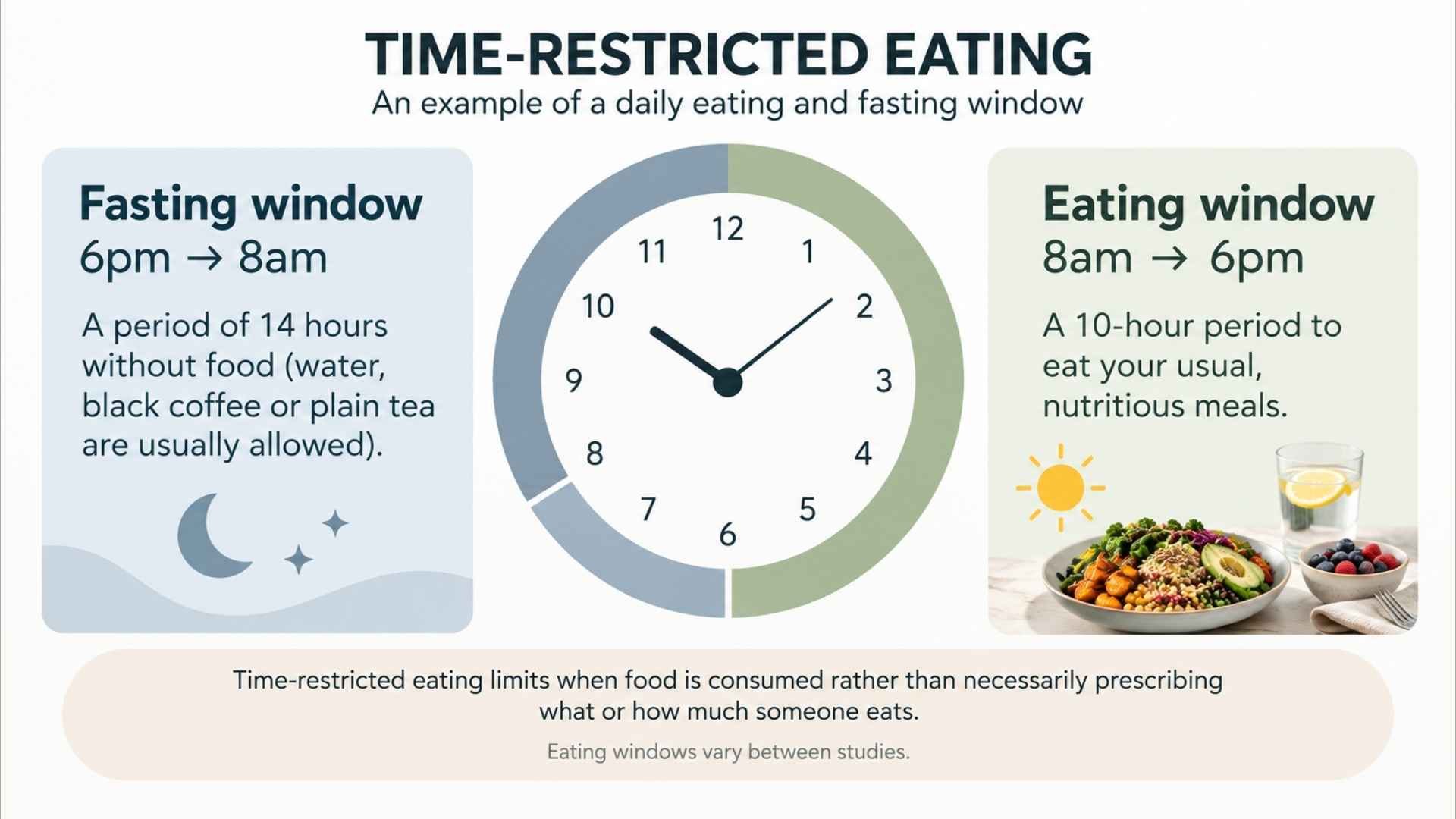
Time-restricted eating (TRE) is a type of intermittent fasting that focuses on when people eat, rather than specifically prescribing what or how much they eat. It involves having all calorie-containing food and drinks within a consistent daily eating window, followed by a longer period overnight and between meals without calorie intake [source].
Some TRE protocols involve reducing the eating window to as low as six or four hours [source].
Nutritional adequacy
The statement is broadly consistent with the idea that adults can tolerate a range of eating patterns, provided that overall energy and nutrient needs are met. Observational and intervention data on intermittent fasting and TRE suggest that compressing intake into an 8-10 hour window may be feasible for some adults, particularly for weight management and metabolic health [source, source, source]. Where energy intake and diet quality are comparable, TRE may be associated with improvements in body weight, waist circumference, blood pressure and some fasting glucose and lipid markers, though it does not consistently outperform other calorie‑matched approaches for weight loss [source, source]. Any weight-loss benefit is likely to arise from reduced energy intake, for example, through fewer eating occasions or less late-night snacking rather than from a uniquely greater fat-burning effect. Some metabolic effects may occur independently of weight loss, but these findings remain less consistent and do not establish that TRE is superior to other approaches.
However, the research on TRE and diet quality is still mixed. One 2025 narrative review reported that several trials of alternate-day fasting and TRE reported lower intakes of several micronutrients such as; calcium, magnesium and potassium, largely driven by lower total energy intake and fewer eating occasions [source]. A secondary analysis of a 7-week randomised control trial in women with overweight or obesity found that a 10-hour TRE window reduced intakes of potassium, magnesium and phosphorus, and increased the proportion of participants at risk of micronutrient inadequacy, compared to control and exercise-only groups [source].

This does not mean that fasting automatically causes nutrient deficiencies. Rather, reducing the time available for eating does not guarantee a nutritionally adequate diet [source, source]. A shorter eating window may reduce total energy intake and the number of opportunities to include nutrient-dense foods, such as dairy or fortified alternatives, fruit, vegetables, whole grains, legumes, nuts and seeds into the diet [source].
Someone eating two substantial, varied and well-planned meals may meet their nutritional needs. Someone eating two small or nutritionally limited meals may not. Two meals a day may work well for some people, but meal number alone does not determine whether a diet is healthy. What matters most is whether the eating pattern consistently provides adequate energy, protein, fibre and micronutrients; supports weight, metabolic and bone health; and is practical and sustainable for that individual [source].
Who may need caution
A two-meal pattern or a longer overnight fasting period is not automatically suitable for everyone. Fasting may be inappropriate or require personalised clinical guidance for:
- People with diabetes who use insulin or medicines that can cause hypoglycaemia should not change meal timing or fast without advice from their diabetes team.
- Pregnant or breastfeeding people.
- Children and adolescents
- People with a current or previous eating disorder, or those at risk of an eating disorder.
- People with medical conditions or medicines for which meal timing needs individual consideration.
This is not a definitive list, but for these groups, fasting should not be treated as a one-size-fits-all dietary strategy. Individual nutritional needs, medical circumstances and, where relevant, medication timing should be considered with an appropriate healthcare professional. For other healthy adults, the key question may not be how many meals they eat, but whether their overall eating pattern reliably provides the energy and nutrients they need.

Claim 2: The idea of three big meals and three snacks is something imposed by the food industry
Fact-check: While modern food marketing and product availability may encourage snacking and more frequent eating, the pattern of three daily meals largely predates today’s food industry. The familiar breakfast-lunch-dinner routine emerged from, and reflects current social and cultural norms, work and school schedules, family routines and the spread of artificial lighting [source, source, source].
Although food marketing can reinforce and commercialise these established eating patterns, the relationship is not one-directional. The growth of ready-to-drink meal replacements, alongside the popularity of flexible eating occasions such as brunch, ‘girl dinner’ and ‘picky bits’, suggests that the food industry may also be responding to, and potentially facilitating, a shift away from rigid meal structures.
Snack products have been successfully marketed by food companies, and can encourage additional eating occasions. However, there is no evidence that snacking was something created by industry. Snacking is also not something which is inherently unnecessary or unhealthy [source], and may help people manage long gaps between meals or meet higher energy requirements [source]. However, frequent snacking may become unhelpful if it regularly leads to eating beyond hunger levels or displaces more nourishing foods. Equally, avoiding snacks can be unhelpful when snacks support nutritional adequacy, energy needs, symptom management or a more regular eating pattern [source].

Guidance from the British Dietetic Association (BDA) echoes these same sentiments and advises that snacks can be a useful contribution to overall nutrition when chosen and portioned appropriately. It advises choosing snacks for a reason, for example hunger, planned physical activity or to help meet nutrient needs, rather than simply because food is available [source].
Additionally, the UK healthy-eating guidance focuses on the overall balance and quality of the diet such as fruit and vegetables, higher-fibre starchy foods, protein foods and appropriate portions rather than prescribing a fixed number of meals and snacks [source].
Claim 3 (Implied): Two meals a day within a 12-14 hour overnight fast is generally better for gut health
Fact-check: This claim overstates early, mixed human evidence. Fasting windows may influence the gut microbiome and some metabolic markers, but there is currently a lack of robust human data which shows that two meals a day, or a 12-14-hour overnight fast reliably “repairs” the gut lining, or is superior to three meals a day for digestive health.
The idea that fewer meals and a longer overnight fast could help the gut is based on early research showing that feeding times influence the gut’s daily rhythms and the types of bacteria present [source, source]. Short fasting periods may give the gut a break from constant digestion and allow normal “cleaning” movements to occur, which in animal and small-scale human studies has been linked to better barrier function and changes in microbes tied to metabolic health [source]. However, these findings are inconsistent and do not yet show clear clinical benefits for gut symptoms or “gut repair” in the general population.
Human studies show that fasting windows can alter the types of bacteria in the gut, sometimes increasing groups of bacteria linked with better metabolic health, but results are inconsistent and depend on the protocol (e.g. 10‑hour vs 16‑hour windows), diet quality, participant characteristics and study length [source]. Most trials are short-term (weeks to a few months) and often focus on adults with overweight, obesity or metabolic risk, which limits how far findings can be generalised to “many people” in the general population [source]. Reviews explicitly note that evidence is still preliminary and short‑term, and that it is not possible to conclude that typical TRE windows reliably improve gut symptoms or “repair” the gut in the general population [source].
For gut health, diet quality, especially fibre diversity and plant‑food variety, remains the strongest, most consistent factor, more so than meal number or fasting window length [source, source, source].

Final Takeaway:
Eating two main meals a day may suit some adults, but there is not yet robust human evidence that it is generally better than three meals for gut or overall health, or that a 12–14 hour overnight fast reliably “repairs” the gut lining. Time‑restricted eating can shift gut microbes and may help some metabolic markers, but findings are mixed, often short‑term, and heavily influenced by diet quality and individual factors. For most people, prioritising a varied, fibre‑rich diet and an eating pattern that supports adequate energy and nutrient intake is more important than adhering to a specific meal count.
Nutrition advice from high‑profile figures carries significant weight, and with that comes a responsibility to distinguish between intriguing early findings and well‑established evidence. Although emerging research can be interesting, it may not yet be fact, and presenting it as such can lead people to adopt eating behaviours that are unsuitable or unnecessary for them. Many already struggle to meet fibre and key micronutrient targets; normalising meal skipping without clear safeguards can add confusion and risk, thereby undermining overall diet quality.
We have contacted Professor Tim Spector and are awaiting a response.
Disclaimer
This fact-check is intended to provide information based on available scientific evidence. It should not be considered as medical advice. For personalised health guidance, consult with a qualified healthcare professional.
Independent fact-checking, funded by readers like you.
Misinformation is a growing threat to our health and planet. At foodfacts.org, we're dedicated to exposing the truth behind misleading food narratives. But we can't do it without your support.
Sources
- Paoli, A., et al. (2019). “The influence of meal frequency and timing on health in humans: the role of fasting.”
- Ezpeleta, M., et al. (2024). “Time-restricted eating: watching the clock to treat obesity.”
- Sukkriang, N., and Buranapin, S. (2024). “Effect of intermittent fasting 16:8 and 14:10 compared with control group on weight reduction and metabolic outcomes in obesity with type 2 diabetes patients: A randomised control trial.”
- Wilkinson, M.J., et al. (2020). “Ten-hour time restricted eating reduces weight, blood pressure, and atherogenic lipids in patients with metabolic syndrome.”
- Steger, F.L., et al. (2022). “Early time-restricted eating affects weight, metabolic health, mood and sleep in adherent completers: A secondary analysis.”
- Wong, P., et al. (2025). “Effect of 8-hour time-restricted eating (16/8 TRE) on glucose metabolism and lipid profile in adults: A systematic review and meta-analysis.”
- Liu, D., et al. (2022). “Calorie restriction with or without time restricted eating in weight loss.”
- Wallerer, S., and Schwingshackl, L. (2025). “Impact of intermittent fasting on micronutrient intake.”
- Haganes, K.L., et al. (2025). “Impact of time-restricted eating and high intensity exercise on nutrient intake in women with overweight/obesity: Secondary analysis of a randomised controlled trial.”
- FoodFacts (2026). “Does intermittent fasting beat regular dieting? What a major new review of the evidence found.”
- Steger, F.L., et al. (2022). “Impact of early time-restricted eating on diet quality, meal frequency, appetite, and eating behaviours: A randomised trial.”
- British Nutrition Foundation (2026). “A healthy, balanced diet.”
- Dietitians Australia (2022). “Intermittent fasting.”
- Leech, R., et al. (2015). “Understanding meal patterns: definitions, methodology and impact on nutrient intake and diet quality.”
- Science Insights (2026). “Why do we eat three meals a day: History & Science.”
- BBC (2012). “Breakfast, lunch and dinner: Have we always eaten them?”
- National Health Service (2022). “The Eatwell Guide.”
- British Dietetic Association (2022). “Healthy Snacks.”
- Hess, J.M., Jonnalagadda, S.S., and Slavin, J.L. (2016). “What is a snack, why do we snack, how can we choose better snacks? Review of the definitions of snacking, motivations to snack, contributions to dietary intake, and recommendations for improvement.”
- Kaczmarek, J.L., Thompson, S.V., and Holscher, H.D. (2017). “Complex interactions of circadian rhythms, eating behaviours, and the gastrointestinal microbiota and their potential impact on health.”
- Paukkonen, I., et al. (2024). “The impact of intermittent fasting on gut microbiota: a review of human studies.”
- Piecynska-Zajac, J.M., et al. (2023). “The effects of time-restricted eating and Ramadan fasting on gut microbiota composition: a systematic review of human studies.”
- Yi, X., et al. (2025). “Effects of time-restricted eating without calorie restriction on blood pressure and cardiometabolic profile in non-diabetic adults: a systematic review and meta-analysis of randomised controlled trials."
- Panagiotou, K., et al. (2024). The effects of time-restricted eating on cardiometabolic factors: a systematic review and meta-analysis.”
- Zhang, P (2022). “Influence of food and nutrition on the gut microbiome and implications for intestinal health.”
- Fackelmann, G., et al. (2025). “Gut microbiome signatures of vegan, vegetarian and omnivore diets and associated health outcomes across 21,561 individuals."
- Ratiner, K., et al. (2022). “Time-limited diets and the gut microbiota in cardiometabolic disease.”
- Rotenberg, R. (1981). “The impact of industrialization on meal patterns in Vienna, Austria.”
- Chiva, M. (1997). “Cultural aspects of meals and meal frequency.”




foodfacts.org is an independent non-profit fact-checking platform dedicated to exposing misinformation in the food industry. We provide transparent, science-based insights on nutrition, health, and environmental impacts, empowering consumers to make informed choices for a healthier society and planet.








.svg)


.svg)

