
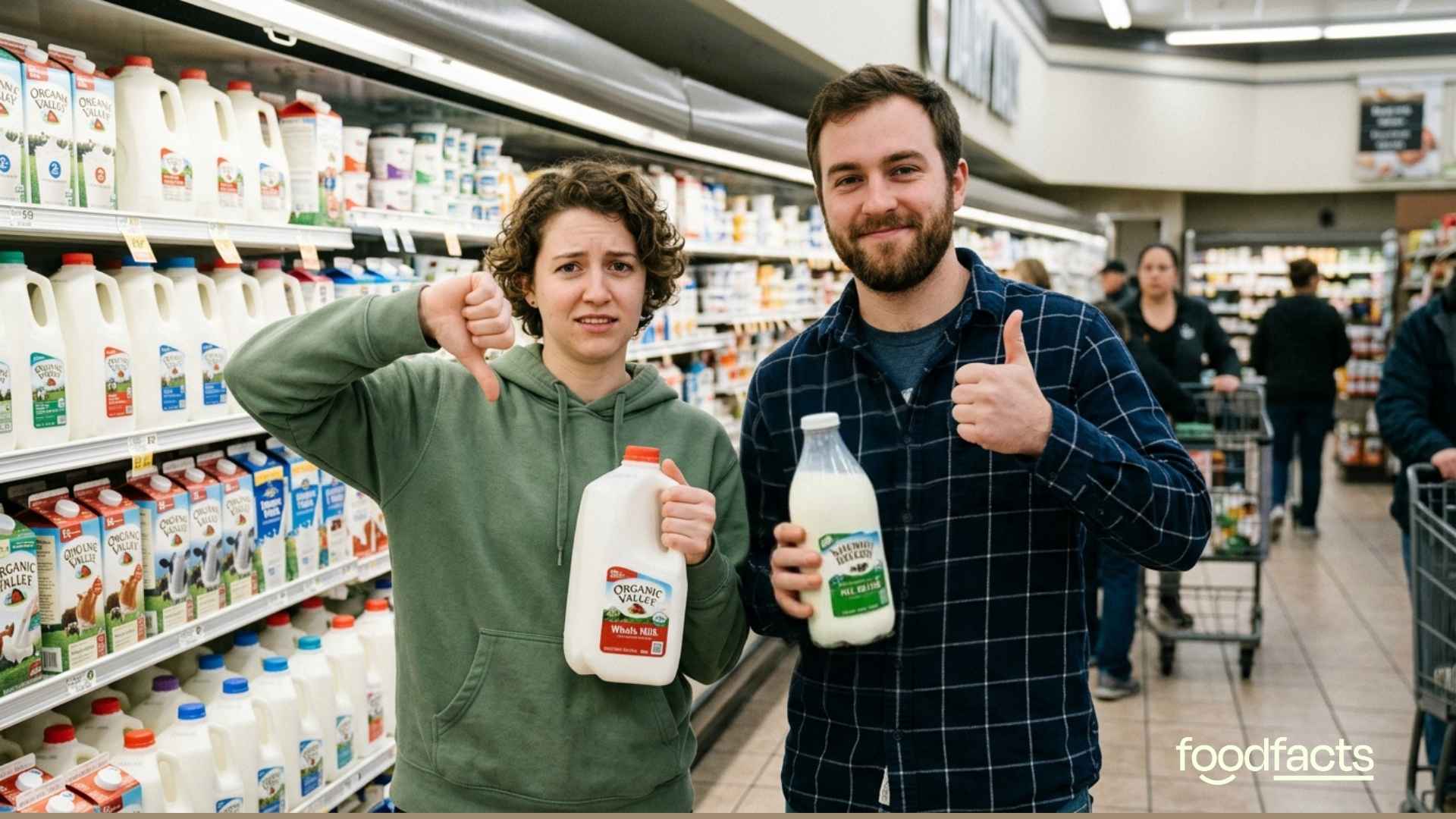




Why milk’s protein casein isn’t ‘one of the strongest promoters of cancer’?


Dr. Caldwell Esselstyn, a prominent advocate of whole-food, plant-based diets, has claimed that casein (the main protein in cow’s milk) is a powerful promoter of cancer. Plant Based News recently shared the claim in a short reel, which appears to be an extract from the 2018 documentary: H.O.P.E What you eat matters. Links between milk and cancer are often cited in discussions about dairy consumption and health risks, particularly in plant-based and vegan advocacy spaces. Comments on this reel show that some of the audience are wondering about the mechanism of action and about the evidence supporting the claim. In this article, we examine the origins of this claim, the scientific evidence it is based on, and whether current research supports the idea that casein meaningfully contributes to cancer development in humans.



Research showing that casein promotes cancer relied predominantly on animal experiments, or was very population-specific. The majority of research shows that dairy consumption can actually help protect against some cancers in humans.
Many people are rethinking dairy for ethical, environmental, or health reasons, and plant-based advocates like Esselstyn play an important role in that discussion. However, framing casein as “one of the strongest promoters of cancer” implies a level of risk that current human evidence does not support, which can fuel confusion, fear-based food decisions, and mistrust of public health messaging. Clear, nuanced communication helps people choose more plant-based diets for solid reasons—without overstating what the science can currently say about dairy and cancer.


In a short video for Plant Based News, cardiologist Caldwell Esselstyn reflects that people were once encouraged to consume dairy and drink milk every day. He then says that “the science” is now at a point where this advice “cannot be sustained,” citing researchers like T. Colin Campbell and claiming that casein, the major protein in milk, is “really one of the strongest promoters of cancer.” This message echoes Campbell’s interpretation of animal experiments and The China Study, which have strongly influenced parts of the plant-based community.
Claim 1: “Casein, the major protein in milk, is really one of the strongest promoters of cancer.”
Fact check: There is no robust human evidence that casein is a strong cancer promoter, and major cancer agencies do not classify it as a carcinogen. (source, source)
Campbell’s classic experiments gave rats a cancer-causing chemical and then fed them diets high or low in casein (source, source, source). Pre-cancerous lesions grew more in rats eating very high casein diets and less in rats on very low casein diets, leading Campbell to say he could “turn cancer on and off” and later to describe casein as an exceptionally relevant carcinogen (source). These results show that, under specific lab conditions, high-dose casein can promote tumor growth in rats already exposed to potent carcinogens—but they do not prove that typical casein intake in humans is among the strongest cancer promoters.
When researchers examine people rather than lab animals, and investigate milk and dairy as a whole rather than isolating casein, the picture looks much more mixed. Large studies and reviews generally find no consistent link between overall dairy intake and higher total cancer risk; some even find that dairy is associated with a lower risk of bowel cancer and breast cancer (source, source, source, source,). In the largest study of its kind on diet and bowel cancer, researchers found that calcium is likely the main reason dairy foods appear to protect against the disease. Among all the dietary factors they examined, calcium showed the strongest link with a lower risk of bowel cancer. The authors suggest that calcium may help protect the gut by binding to bile acids and fatty acids, reducing the chance of damage to the bowel lining. (source, source). This shows why it’s important to remember that milk is a complex food, with many different nutrients and compounds. Focusing only on casein could cause us to overlook other ingredients that may have a stronger protective effect against some cancers. Regardless, for a few cancer types, like prostate cancer and certain cancers in some East Asian cohorts, higher dairy consumption has been associated with modestly higher risk, but findings are inconsistent, and mechanisms remain uncertain ( source, source). Cancer Research UK and Science Feedback both state that there is no good or reliable evidence that casein or dairy as a whole causes cancer in people, and note that casein is not listed as a known or probable carcinogen by major agencies such as IARC and the U.S. National Toxicology Program.
Bottom line:
Taken together, animal data suggest casein can act as a tumor promoter in certain experimental settings, but human data do not support calling casein “one of the strongest promoters of cancer” in real-world diets.
Claim 2: “The science is now at a point where the old advice to drink milk every day ‘cannot be sustained’ because of casein’s cancer-promoting effects.”
Fact check: It is true that milk is not essential for health and some studies link high dairy intake to higher risk of specific cancers, but the total evidence does not justify saying dairy’s protein makes earlier advice to drink milk fundamentally unsound.

Public-health messaging on dairy has evolved, and there is broad agreement that people do not need to drink cow’s milk to be healthy; nutrients like protein and calcium can be obtained from plant-based sources and fortified alternatives. Plant-based and vegan diets can support good health and may help lower cardiovascular and metabolic risk when well planned (source); however, scientific evidence does show that dairy milk can provide benefits to human health (source, source)
However, the justification is more complex than “casein strongly promotes cancer.” Large cohort studies and meta-analyses show a nuanced pattern: dairy may lower colorectal cancer risk, may modestly raise the risk of certain cancers, and show no clear effect for many other cancer types (source). Cancer Research UK concludes that there is “no reliable evidence that casein or hormones in dairy causes cancer in people” and that, overall, dairy does not show a strong, consistent cancer-promoting effect.
Bottom line:
So while it is accurate to say that no one needs dairy and that many people may prefer to avoid it for ethical, environmental, or health reasons, current evidence does not support claiming that casein’s cancer risk alone makes traditional advice to drink milk scientifically untenable.
Independent fact-checking, funded by readers like you.
Misinformation is a growing threat to our health and planet. At foodfacts.org, we're dedicated to exposing the truth behind misleading food narratives. But we can't do it without your support.
Sources:
- Wikipedia (n.d.). The China Study
- Science Feedback (21 March 2021). No evidence that the milk protein casein causes cancer; claim is based on animal studies involving other well-known risk factors for liver cancer like hepatitis B virus infection
- Cancer Research (25 October 2024). Milk, dairy and cancer risk
- Appleton, B. S., & Campbell, T. C. (1983). Effect of high and low dietary protein on the dosing and postdosing periods of aflatoxin B1-induced hepatic preneoplastic lesion development in the rat.
- Youngman, L. D., & Campbell, T. C. (1992). The sustained development of preneoplastic lesions depends on high protein intake.
- Dunaif, G. E., & Campbell, T. C. (1987). Dietary Protein Level and Aflatoxin B1-Induced Preneoplastic Hepatic Lesions in the Rat.
- Jeyaraman, M. M., et al. (2019). Dairy product consumption and development of cancer: an overview of reviews.
- He, Y., et al. (2021). The relationship between dairy products intake and breast cancer incidence: a meta-analysis of observational studies.
- Zhao, Z., et al. (2023). The association between dairy products consumption and prostate cancer risk: a systematic review and meta-analysis.
- Kakkoura, M. G., et al. (2022). Dairy consumption and risks of total and site-specific cancers in Chinese adults: An 11-year prospective study of 0.5 million people.
- Kahleova, H., Levin, S., & Barnard, N. (2017). Cardio-Metabolic Benefits of Plant-Based Diets. Nutrients, 9(8), 848. https://doi.org/10.3390/nu9080848
- Nowson, G. K., et al. (2025). Exploring the Nutritional Profile and Cost of Plant-Based Milk Alternatives Compared with Dairy Milk in the UK with Consideration of Environmental Impact Data.
- Sanjulián, L., et al. (2024). The Role of Dairy in Human Nutrition: Myths and Realities.
- Foodfacts (6 March 2025). From cow to cup: the journey of dairy most consumers don't see — and a reality check on awareness
- Foodfacts (25 February 2025). The great milk debate: does the science really support recent claims about cow's milk?
- Papier, K., et al. (2025) Diet-wide analyses for risk of colorectal cancer: prospective study of 12,251 incident cases among 542,778 women in the UK.
- Cancer Research (8th January 2025). Bowel cancer risk could be reduced with an extra glass of milk.




foodfacts.org is an independent non-profit fact-checking platform dedicated to exposing misinformation in the food industry. We provide transparent, science-based insights on nutrition, health, and environmental impacts, empowering consumers to make informed choices for a healthier society and planet.








.svg)


.svg)

