





Could a spoonful of cocoa mitigate the harms of prolonged sitting?


In an instagram reel, Ayus Wellness UK claims that sitting for most of the day increases all‑cause mortality by about 20% and heart disease risk by about 30%, that endothelial function (the thin layer of cells lining blood vessels) is one of the first systems to suffer during prolonged sitting, and that drinking a flavanol‑rich cocoa drink (about a spoonful of organic cocoa powder in morning coffee or tea) can prevent the decline in endothelial function during six hours of sitting and provide long‑term protection for brain and heart. These are significant claims about both the harms of office sitting and the protective power of cocoa, but are they supported by evidence? Let's see what the science says.
NB: Following our correspondence with Ayus Wellness UK, they have indicated that they will edit the video caption to clarify which studies are being referenced and to avoid implying that a single serving of cocoa has all-day vascular benefits. The analysis below reflects the content of the original post before these changes.



Long periods of sitting are consistently associated with worse cardiovascular health, and short-term experimental studies show that prolonged sitting can impair blood vessel function. Cocoa flavanols may offer a small, temporary vascular benefit in tightly controlled settings, and a reduction in long-term cardiovascular risk when consumed regularly, but they are not a proven fix for the harms of a sedentary lifestyle.
Quick-fix nutrition claims can sound appealing because they offer an easy solution to a modern problem. But framing cocoa as a workaround for prolonged sitting risks distracting people from the strategies that are much better supported by evidence: reducing sedentary time where possible, breaking up long sitting periods, and staying physically active overall.


Claim 1: “Sitting down for most of the day is not harmless. In fact, it increases your risk of death by any cause by about 20% and your risk of heart disease by about 30%.”
Fact-check: This is broadly accurate. The exact percentages vary between studies, but large meta-analyses and cohort studies consistently link prolonged sitting with higher risks of cardiovascular disease and earlier death.
A substantial amount of research has quantified this risk : a recent meta-analysis of 19 studies found that people with high self‑reported sedentary behaviour had around 30% higher cardiovascular disease (CVD) risk than those with low sedentary time, and each additional hour of daily sitting was associated with about a 5% increase in CVD risk.
With regards to mortality risk, the evidence is similarly concerning: a large meta-analysis of over half a million adults found that sitting more than 6–8 hours per day was associated with higher risk of both all‑cause and CVD mortality, with risk rising more sharply above about 7–10 hours per day.

More recently, a cohort study of over 480,000 workers found that people who “mostly sit” at work had a 16% higher risk of death from any cause and a 34% higher risk of death from cardiovascular disease, compared with those who mostly do not sit, even after adjusting for age, sex, smoking, and other factors. These figures are close to the “about 20%” and “about 30%” claimed by Ayus Wellness UK, and are consistent with other large studies that identify roughly 6–8 hours per day of sitting as a threshold beyond which risk starts to climb (source).
There is, however, some good news for people who do manage to fit exercise into their day. Several large analyses show that regular physical activity can offset part of the risk associated with high sitting time. In the occupational sitting study above, adding just 15–30 minutes per day of leisure‑time physical activity reduced mortality risk in workers who mostly sit, to levels similar to those who do not mostly sit (source). Other research reports that 10–30 minutes per day of moderate-to‑vigorous physical activity is associated with lower all‑cause mortality and roughly one‑third lower CVD risk when comparing high versus low activity groups, which was broadly comparable to the reduction in risk in high versus low sedentary groups (source, source, source).
How does sitting affect the blood vessels?
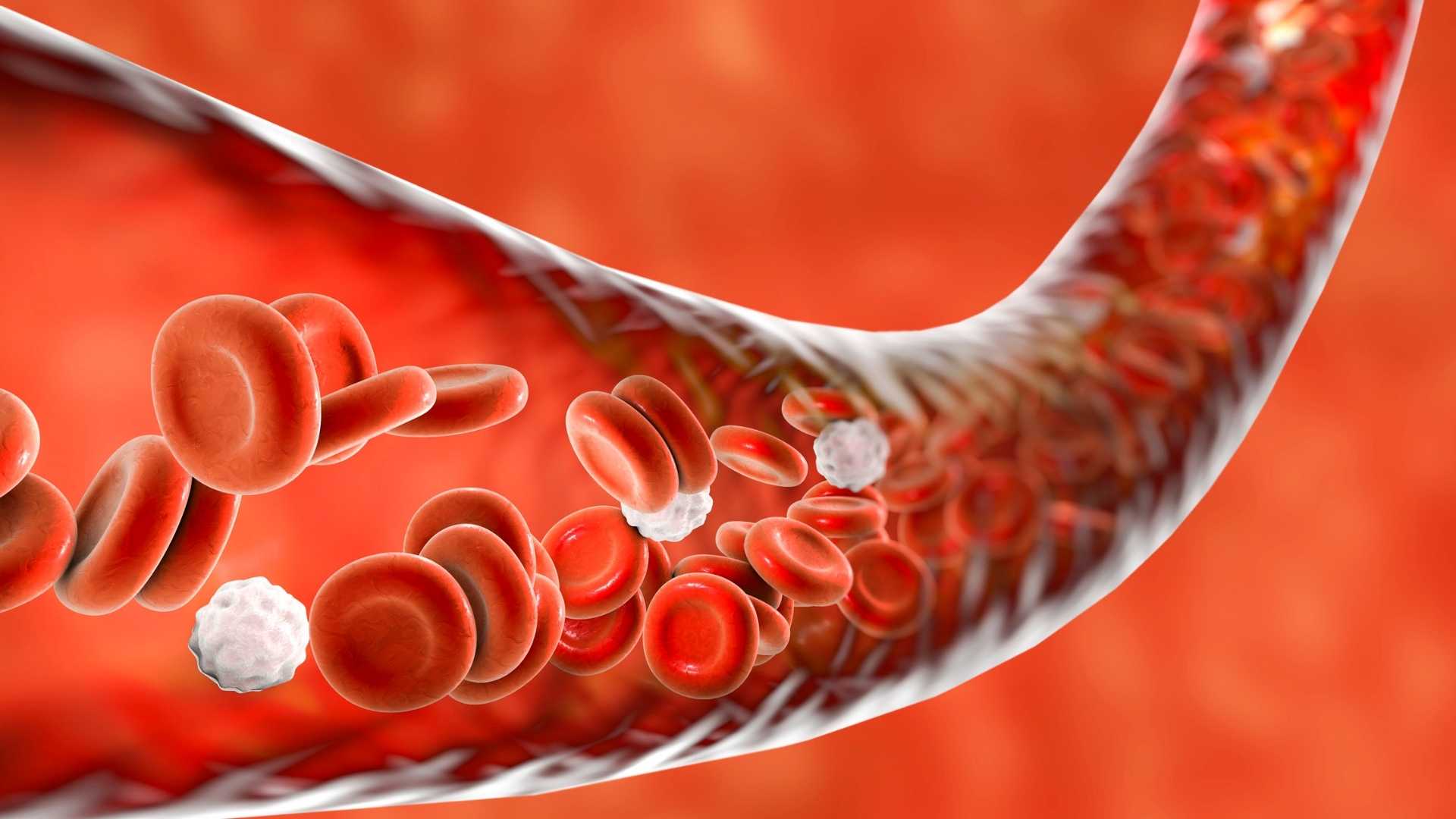
The claim also notes that the blood vessel endothelium is one of the first systems that is affected by prolonged sitting. Experimental studies show that just a few hours of uninterrupted sitting can acutely impair endothelial function in both upper and lower limb arteries, typically measured as a reduction in flow‑mediated dilatation (FMD) (source, source). This likely occurs because sitting reduces muscle pumping and blood flow, lowering the shear stress on vessel walls that normally helps keep the endothelium healthy (source).
When endothelial function drops, the vessel wall is less able to release nitric oxide and other protective molecules. Over time, repeated episodes of reduced shear stress and endothelial dysfunction can promote a more pro‑inflammatory environment: expression of adhesion molecules increases, inflammatory signalling rises, and the vessels become more prone to plaque formation and stiffening. This is an early marker for atherosclerosis, which is when fatty plaque builds up in the arteries, impairing blood flow. In simple terms, impaired endothelial function and chronic low‑grade inflammation make it harder for blood vessels to regulate blood flow and may contribute to inefficient oxygen delivery to tissues, which are well‑recognised early markers of higher future cardiovascular risk (source, source).
Importantly, this acute vascular impairment appears even in people who are otherwise fit and physically active. Recent work suggests that prolonged sitting reduces leg blood flow and FMD in both aerobically trained and untrained individuals, meaning that high fitness does not fully prevent the endothelial dysfunction caused by sitting (source, source). This supports the idea that prolonged sitting is an independent cardiovascular risk factor, separate from low physical activity, and that breaking up sitting with movement may be important even for people who exercise regularly (source).
Bottom line: Taken together, the evidence supports this claim. Sitting for much of the day is consistently associated with higher risk of dying earlier and developing heart disease, and the blood‑vessel explanation helps make sense of why. Observational studies show that people who spend long periods seated tend to have worse long‑term health outcomes, while controlled experiments find that even a single prolonged sitting session can temporarily worsen how arteries widen and how blood flows through the legs. While physical activity and fitness may mitigate some of the long-term cardiovascular risks from sedentary lifestyles, they do not fully prevent short-term vascular impairment. For this reason, prolonged sitting is generally regarded as an independent risk factor and we should both move more and sit less for optimal cardiovascular health.
Claim 2: “ Here’s the simple fix [to prolonged sitting]: add a spoonful of organic cocoa to your morning coffee or tea.”
Fact check: This is misleading. In the video, Ayus Wellness UK links the suggestion to add one spoonful of organic cocoa to your morning coffee/tea to a recent study, implying it may provide a “simple fix” to issues related to prolonged sitting. He explains: a “recent human study […] had people sit for six hours straight […] When they drank a flavonoid-rich cocoa drink first, […] there was no decline in endothelial function.” The referenced study investigated the effect of the consumption of cocoa, due to its high flavanol content, on blood vessel endothelial health. While the study suggests a short-lived protective effect in a tightly controlled lab setting, it is not proof that adding a spoonful of cocoa to a morning drink will protect everyone who sits at a desk all day.

What are flavanols?
Flavanols, also called flavan-3-ols, are natural plant compounds found in plant foods and drinks such as tea, cocoa, apples, berries, grapes and wine (source, source).
They belong to the wider flavonoid family and are of interest because they appear to support heart and metabolic health, mainly by improving blood vessel function, reducing inflammation and lowering oxidative stress (the “wear and tear” caused by reactive molecules in the body) (source, source).
Cocoa flavanols health benefits: what the research says
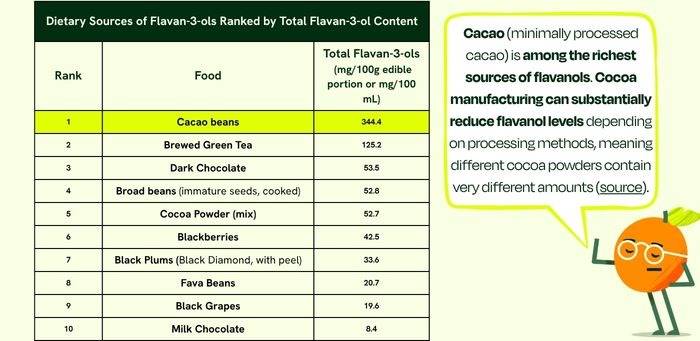
Since cocoa is one of the richest dietary sources of flavanols, cocoa drinks, cocoa extracts and dark chocolate are often used in studies to test how flavanols affect our health (source).
One of the largest and most recent trials is the COSMOS study, which followed about 21,000 older adults with low to moderate cardiovascular risk who were given a 500 mg/day cocoa flavanol supplement for a median of 3.6 years. Overall cardiovascular events were not significantly lower, but there was a 27% reduction in deaths from cardiovascular disease, and analyses suggested possible reductions in total cardiovascular events.
Benefits to cardiovascular health have been observed over shorter time frames. For example, one trial showed that a month of daily consumption of 900 mg of cocoa flavanols can modestly lower blood pressure, arterial stiffness and LDL cholesterol (source). Further to this, a meta-analysis of cocoa flavanol intervention studies with a median duration of 28 days reported significant improvements in endothelial function, with small but potentially meaningful changes in vascular health (source).
Researchers have also looked at the acute effects of cocoa flavanols on the cardiovascular system. Individual trials show that high‑flavanol cocoa drinks can enhance blood vessel function and/or lower blood pressure within a few hours after consumption in healthy adults. These effects are thought to be mediated by increased nitric oxide, a molecule that helps arteries relax, as in the study cited by the claim (source, source, source). This acute cardiovascular response supports the view that flavanols have a direct, rapid effect on the blood vessels, and regular consumption over time may reduce CVD risk. That said, they should be seen as a helpful addition to an overall healthy lifestyle, not a substitute for regular physical activity or other established heart‑healthy habits.
Did the study find that cocoa reduces the impact of prolonged sitting?
The evidence so far suggests that flavanols can benefit cardiovascular health, including in short‑term experiments, but that does not automatically mean cocoa can “fix” the effects of a sedentary lifestyle. To judge the claim made by Ayus Wellness UK, we need to look closely at what the study he refers to actually tested and found.
The study did find that the high-flavanol cocoa drink prevented the usual decline in blood vessel function (flow‑mediated dilation in arteries) during a 2-hour period of uninterrupted sitting in healthy young men, which is an important and interesting result. However, this protective effect was measured at two hours, not six, and other measures such as microvascular blood flow and blood pressure did not improve. The vascular benefits demonstrated in the lab were short‑lived, and we cannot assume they would continue to take effect throughout an entire day. Although the positive effect of cocoa for a few hours may be beneficial for overall cardiovascular health, it's important to ensure we don’t exaggerate the results of studies to make claims.
“Blood pressure benefits have been demonstrated after one dose of flavanols in individuals that have higher blood pressure or older adults. It´s very uncommon to see benefits in blood pressure after an acute dose in young healthy adults, so this was not something we expected to find. However, we were surprised that diastolic blood pressure was raised in both fitness groups after 2 hours of sitting, clearly demonstrating that even in healthy individuals, clear changes in vascular physiology occur when you sit uninterruptedly for as little as 2 hours. This speaks once more to the importance of interrupting sitting bouts, regardless of whether or not individuals use flavonoid-rich foods during these periods.”

We contacted Ayus Wellness UK, who acknowledged an inconsistency in the video. He explained that he was referring to two separate studies on cocoa flavanols but inadvertently combined their details while citing only one, creating the impression that all findings came from a single study. He clarified that the 6-hour figure was drawn from a second study examining the acute effects of cocoa flavanols on endothelial function (source). However, this study reported no significant changes in endothelial function at 4 or 6 hours post-intervention, reinforcing the current evidence which suggests vascular effects of cocoa flavanols are short-lived. This highlights the importance of accurately representing study findings when communicating scientific evidence on social media. We appreciate the willingness to update the post’s caption to reflect the inconsistency which was first reported.
Although Ayus Wellness UK let us know that they did not claim that “one 150 mg serving of cocoa will benefit someone’s health all day, more so that it will provide a likely protective effect against the negative impacts of sitting,” the recommendation in the video to add a spoonful of cocoa to your morning drink remains misleading.The dose used in the study was higher and more precise: participants consumed a standardised drink containing 150 mg of cocoa flavanols, equivalent to around 1.5 tablespoons (roughly 4–5 teaspoons) of a specific cocoa powder. Commercial cocoa products vary widely in flavanol levels depending on brand, processing and quality, and flavanol content is rarely listed on the label, so adding an unspecified spoonful to coffee or tea is unlikely to reliably reproduce the study dose (source).
The last part of this claim states to “tell anybody you know at an office job or sat all day”. While well-intentioned, we cannot assume from this specific study that the findings are generalisable to all people. The study was carried out on healthy young men, and while promising results were also found in healthy older adults in a similar study (source), we cannot generalise the findings to the wider population, for example, women or people with health conditions or on certain medications.

Bottom line: Overall, a flavanol‑rich cocoa drink appears to offer a modest, short‑term vascular benefit during unavoidable sitting, and may be a helpful addition to an already healthy lifestyle. But presenting cocoa as a simple fix for the harms of prolonged sitting overstates the evidence and risks undermining the well‑established importance of regular movement and overall diet quality for cardiovascular health (source). When a food or supplement is marketed as a simple solution to a complex problem like sedentary behaviour, we should interpret the claim with caution.
“An important take home message here is that other foods apart from cocoa contain similar compounds and are likely to deliver these benefits; e.g. green or black tea, blueberries etc. Intake of a food rich in flavanols every 2 to 3 hours is likely to sustain the benefits in arteries. However, this should not replace the importance of interrupting sitting as much as possible. Foods can be used cleverly to help the physiology cope with stresses such as sitting, but it is key that we continue to alleviate that stress as much as possible, by standing up for a few minutes every hour if we can.”
Final take-away
This is a good example of how nutrition content can be based on real studies but potentially still be misleading if they don’t provide the wider context. In this case, by skipping the key context that the effect was short‑term, under lab conditions, at a higher and more precise dose than a “spoonful”, and that moving regularly is still essential, the audience may be left with the interpretation that this habit may offer genuine protection and encourage readers towards a ritual that cannot replace evidence‑based habits.
After we contacted Ayus Wellness UK, they clarified that the intention was not to advise viewers to consume cocoa. Even so, the language and tone used in social media content must be carefully considered, as they can easily be interpreted in this way. This matters because misinterpretation of research can lead viewers to adopt inaccurate advice, with potential implications for health outcomes.
We would like to thank the Ayus Wellness UK team for offering clarifications and for amending the post’s original caption.
Disclaimer
This fact-check is intended to provide information based on available scientific evidence. It should not be considered as medical advice. For personalised health guidance, consult with a qualified healthcare professional.
Independent fact-checking, funded by readers like you.
Misinformation is a growing threat to our health and planet. At foodfacts.org, we're dedicated to exposing the truth behind misleading food narratives. But we can't do it without your support.
Sources
- Onagbiye S. et al., (2024). “Association of sedentary time with risk of cardiovascular diseases and cardiovascular mortality: A systematic review and meta-analysis of prospective cohort studies”.
- Xu, C. et al., (2019). “Sedentary Behavior, Physical Activity, and All-Cause Mortality: Dose-Response and Intensity Weighted Time-Use Meta-analysis.”
- Gao W et al., (2024). “Occupational Sitting Time, Leisure Physical Activity, and All-Cause and Cardiovascular Disease Mortality.”
- Ku, PW. et al., (2018). “ A cut-off of daily sedentary time and all-cause mortality in adults: a meta-regression analysis involving more than 1 million participants.”
- Sagelv, EH et al., (2023). “Device-measured physical activity, sedentary time, and risk of all-cause mortality: an individual participant data analysis of four prospective cohort studies.”
- Liang Z et al., (2022). “Association between sedentary behavior, physical activity, and cardiovascular disease-related outcomes in adults—A meta-analysis and systematic review.”
- Vaughan, Z., (2019). “Effect of Long-Duration Standing and Sitting On Vascular Function.”
- Daniele A et al., (2026). “Dietary flavanols preserve upper- and lower-limb endothelial function during sitting in high- and low-fit young healthy males.”
- Pekas EJ et al., (2023). “Prolonged sitting and peripheral vascular function: potential mechanisms and methodological considerations.”
- Bell AC et al., (2022). “Sedentary Behaviour-A Target for the Prevention and Management of Cardiovascular Disease.”
- Lavie, CJ et al., (2019). “Sedentary Behavior, Exercise, and Cardiovascular Health.”
- Henschel B et al., (2017). “Time Spent Sitting as an Independent Risk Factor for Cardiovascular Disease.”
- The Regents of the University of California, Davis campus, (2018). “Nutrition & Health Info Sheets for Health Professionals - Catechins and Epicatechins”
- Department of Agriculture (2018). “USDA Database for the Flavonoid Content of Selected Foods, Release 3.3 (March 2018).”
- Crowe-White KM et al., (2022). “Flavan-3-ols and Cardiometabolic Health: First Ever Dietary Bioactive Guideline.”
- Luo Y et al., (2022). “Flavanols from Nature: A Phytochemistry and Biological Activity Review. Molecules.”
- Andres-Lacueva C. et al., (2008). “Flavanol and Flavonol Contents of Cocoa Powder Products: Influence of the Manufacturing Process.”
Martin MÁ & Ramos S, (2021). “ Impact of cocoa flavanols on human health.“ - Sesso, HD et al., (2022). “Effect of cocoa flavanol supplementation for the prevention of cardiovascular disease events: the COcoa Supplement and Multivitamin Outcomes Study (COSMOS) randomized clinical trial.”
- Sansone R, et al., (2015). “Cocoa flavanol intake improves endothelial function and Framingham Risk Score in healthy men and women: a randomised, controlled, double-masked trial: the Flaviola Health Study.”
- Sun Y et al., (2019). “Dose-response relationship between cocoa flavanols and human endothelial function: a systematic review and meta-analysis of randomized trials.”
- Baynham R et al., (2021). “Cocoa Flavanols Improve Vascular Responses to Acute Mental Stress in Young Healthy Adults.”
- Faridi Z et al., (2008). “Acute dark chocolate and cocoa ingestion and endothelial function: a randomized controlled crossover trial.”
- Alañón, ME (2020). “Acute study of dose-dependent effects of (−)-epicatechin on vascular function in healthy male volunteers: A randomized controlled trial.”
- Daniele, A et al., (2026). “Cocoa flavanols protect endothelial function during prolonged sitting in healthy older adults.”



foodfacts.org is an independent non-profit fact-checking platform dedicated to exposing misinformation in the food industry. We provide transparent, science-based insights on nutrition, health, and environmental impacts, empowering consumers to make informed choices for a healthier society and planet.








.svg)


.svg)

