





Bacon vs. apple, honey and fruit juice: examining a viral nutrition comparison


A recent video posted by The Primal Podcast and Dr Ken Berry claims that foods often considered “unhealthy”, such as bacon and other processed meats, are healthier than foods commonly viewed as “healthy”, including fruit, fruit juice and honey. Ken Berry argues that honey is "junk food", fruit juice is "dangerous", and that there is "zero evidence" linking processed meat to heart disease. Instead he claims that eating bacon can improve key health markers linked to heart attacks and strokes.
Some of those claims appear to contradict dietary guidelines, but are they supported by evidence? In this fact-check we examine each claim individually.



While honey and fruit juice are high in free sugars and should be consumed in moderation, they can still fit into a balanced diet in small amounts. Meanwhile, substantial epidemiological evidence links processed meats like bacon to higher risks of heart disease and colorectal cancer, refuting the “zero evidence” claim.
Nutrition advice shared online can influence the foods people choose to eat. Understanding when claims are incomplete, misleading or unsupported by the wider body of evidence helps people make informed decisions based on reliable science rather than attention-grabbing comparisons.


Claim 1: “Honey is junk food. Fruit juice is dangerous.”
Fact-check: This claim is based on some partial truths but oversimplified. Honey and fruit juice are both high in free sugars and should be consumed in moderation, but describing them as "junk food" or “dangerous” overlooks that they can still contain some beneficial nutrients and form part of a balanced diet when consumed in appropriate amounts.
Honey is primarily composed of sugars and water. For this reason it is classified as a source of "free sugars" by many public health authorities such as the NHS (source). While honey does contain some small amounts of vitamins, minerals and plant compounds (source), excess consumption of free sugars, such as honey, is associated with tooth decay and can contribute to excess calorie intake and weight gain.
It is also important to note that the term ‘junk food’ is not an official scientific classification, therefore it's difficult to categorise individual foods objectively. Rather than classifying foods as simply "good" or "bad", nutrition guidance generally considers their overall nutritional composition and the role they play within the context of the whole diet (source, source) .
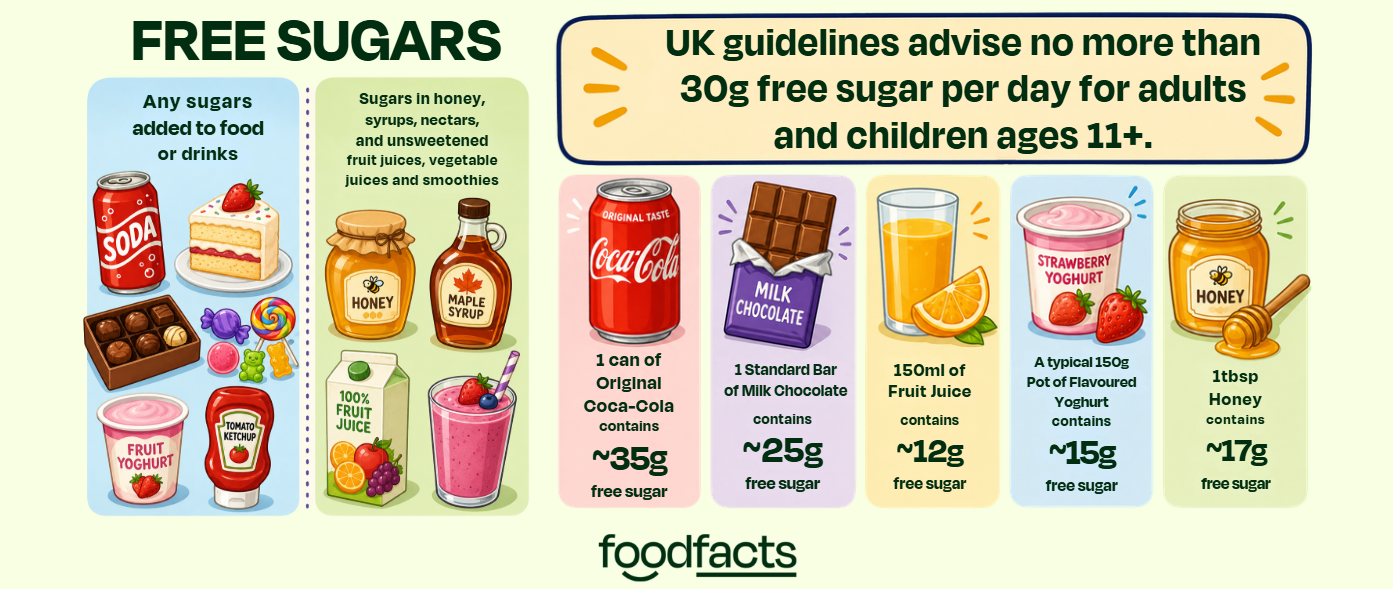
Similarly to honey, fruit juice is also classed as a source of free sugars (source). Although the sugars in fruit juice occur naturally, they are released from the cellular structure of the fruit during processing and are therefore considered "free". Unlike whole fruit, juice contains very little fibre, making it easier to consume large amounts of these free sugars in a short period. For this reason, health authorities recommend limiting sources of free sugar, such as honey and fruit juice (source).
However, this does not mean that fruit juice is inherently “junk” or “dangerous”. Moderate consumption, for example, a small daily serving of 150ml/day as recommended in UK dietary guidelines, can still form part of a healthy, balanced diet and provide key vitamins and minerals (source).
Claim 2: “Bacon is not a junk food. There’s zero evidence that eating bacon or bologna or hot dogs leads to heart disease.”
Fact-check: This statement is an inaccurate representation of the available evidence on processed meats, suggesting there is “zero evidence” to support the advice to limit consumption. On the contrary, there is a substantial body of scientific literature examining associations between processed meat consumption and cardiovascular disease.
It is true that bacon contains protein and several micronutrients such as B vitamins and other important minerals. However, bacon is also typically high in salt and saturated fat. Therefore, UK guidelines recommend limiting red and processed meat consumption, such as bacon (source).
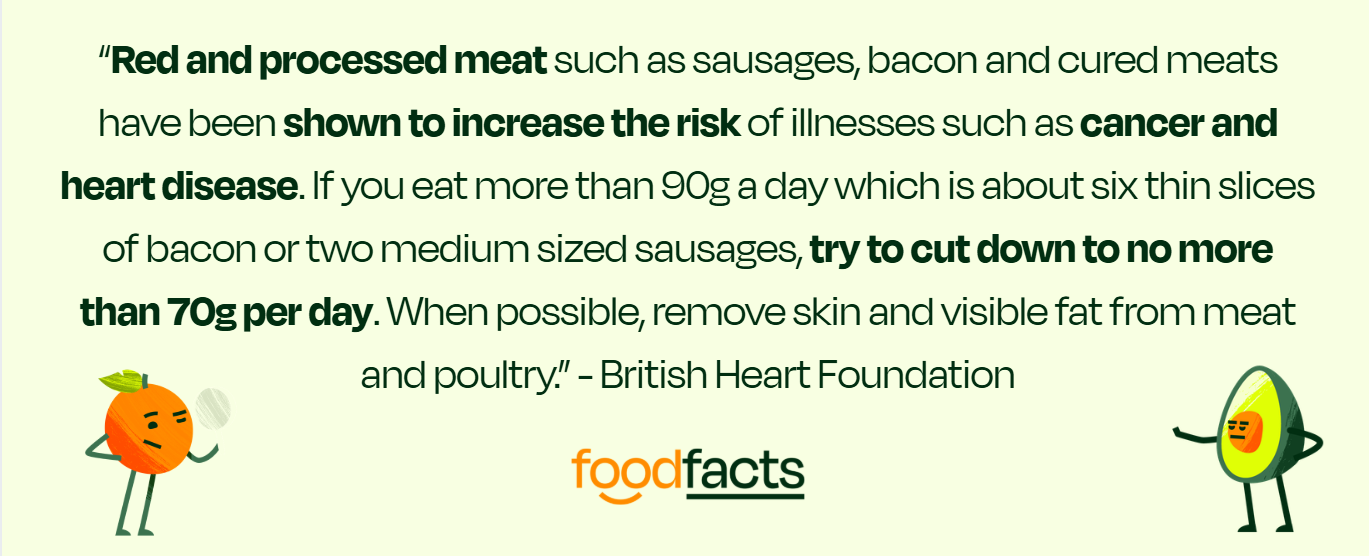
Numerous systematic reviews and meta-analyses have examined processed meat consumption and cardiovascular disease. For example, one large systematic review and meta-analysis of 20 studies and over 1,000,000 participants found that each serving per day of processed meat was associated with a 42% higher risk of coronary heart disease, as well as a 19% higher risk of diabetes mellitus (source).
By design, a systematic review aims to synthesise all available evidence on a given topic or question according to predefined criteria. This matters because it shows that those findings are consistent across not just one, but many studies, which strengthens our confidence and understanding of the relationship between processed meat consumption and risks of developing heart disease. Therefore, while scientific evidence can always be analysed and debated, saying there is “zero evidence” is incorrect.
Claim 3: “If you eat a pound of bacon versus one apple you’re going to have a better insulin level, a better glucose level … ”
Fact-check: This claim is lacking in context. A pound of bacon may produce a smaller short-term rise in blood glucose than an apple because it contains very little carbohydrate. However, this does not demonstrate that bacon is healthier overall.
The difference in insulin and glucose levels is due to the difference in carbohydrate content between an apple and bacon. An apple contains carbohydrates that raise blood glucose after eating, typically within the normal post-meal range for healthy individuals. However bacon contains very little carbohydrate so will generally produce a smaller immediate rise in blood glucose.
.jpg)
The video's caption reinforces this misleading narrative by claiming that these so-called "superfoods" are "spiking your insulin and keeping you sick." This suggests that any increase in blood glucose or insulin is inherently harmful. In reality, temporary increases in blood glucose and insulin after eating carbohydrate-containing foods are a normal and necessary part of human physiology. Problems arise when blood glucose regulation becomes impaired over time, such as in individuals with type 2 diabetes, not because nutrient dense, carbohydrate containing foods produce normal post-meal glucose responses.
Bottom line: The key detail here is that short-term blood sugar responses do not reliably reflect overall health. While blood glucose regulation can be one contributing factor, outcomes such as heart disease, stroke, type 2 diabetes and mortality often depend on a much wider range of factors. Overall lifestyle and dietary patterns can be a more useful focus than a single food item or short-term glucose responses.
Claim 4: “You’re going to have every single amino acid and fatty acid that your body needs. [There are] more vitamins and minerals in the pound of bacon than you do have in just a single apple.”
Fact-check: This claim is highly misleading because it compares two vastly different quantities of food while selectively highlighting nutrients that favour bacon. Although a pound of bacon may contain greater absolute amounts of some vitamins and minerals than a single apple, the comparison ignores important differences in serving size, calorie content, nutrient density and overall nutritional profile.
Overall this comparison relies on a false equivalence, as comparing an entire pound of bacon with a single apple is not a meaningful nutritional comparison.
A pound of bacon (or 454g) contains approximately 1300 calories based on the McCance and Widdowson composition data (287 kcal per 100 g), although this may vary slightly depending on the exact product and cooking method. By contrast, a medium-sized apple (or roughly 150g) contains around 77 calories (51 kcal per 100 g).
Unsurprisingly, consuming over ten times more calories from one food will generally result in consuming greater absolute amounts of many nutrients. Using the same approach, many calorie-dense foods could be made to appear nutritionally superior to a single piece of fruit simply because a much larger quantity is being compared.
A comparison using equal amounts of each food (per 100 g) provides a much fairer picture of their nutritional profiles:
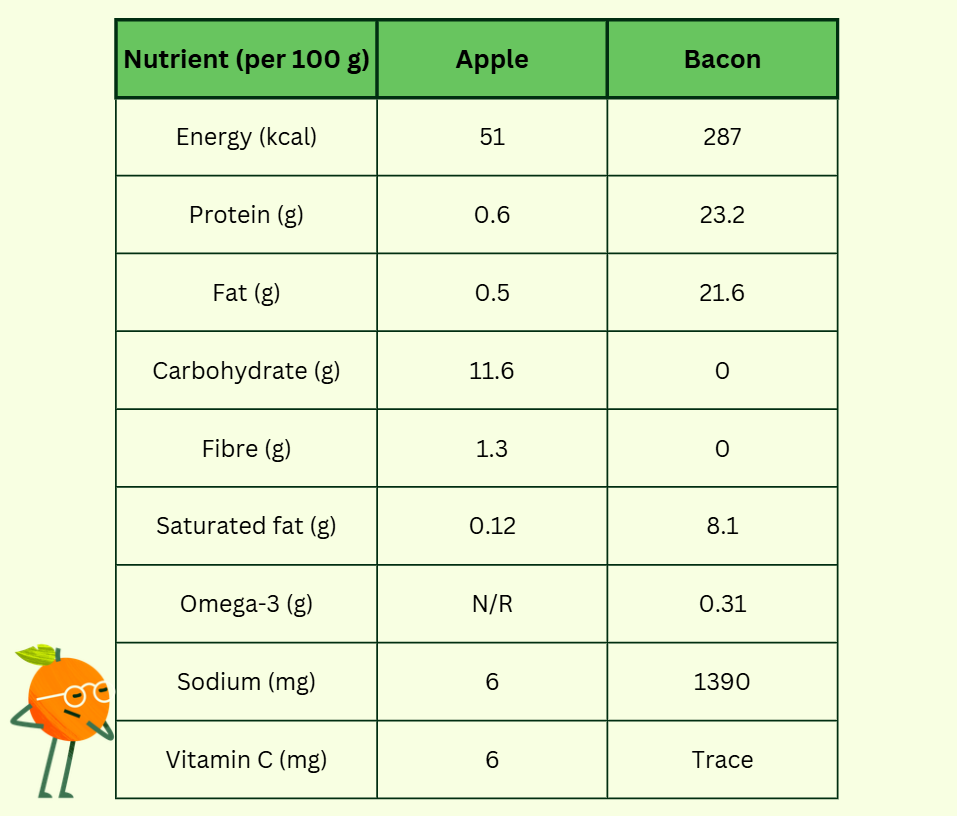
This comparison highlights why foods should not be judged on a single nutrient or in isolation. It is true that bacon is a complete protein, meaning it contains all nine essential amino acids. It also provides several vitamins and minerals including vitamin B12, zinc and iron (source). It is also higher in fat, although it is not a rich source of all essential fatty acids such as omega 3. Bacon is also much higher in saturated fat and sodium (source, source).
Apples, in contrast, provide a higher amount of carbohydrate, fibre and vitamin C, while containing very little sodium or saturated fat (source).
By focusing only on the nutrients that favour bacon and overlooking those that favour apples, the comparison presents a distorted picture of their overall nutritional value.

Nutrition research generally evaluates foods within the context of realistic serving sizes, overall dietary patterns and nutrient density rather than comparing a very large portion of one food with a small portion of another. For this reason, public health recommendations are typically based on the totality of evidence from dietary patterns and long-term health outcomes rather than isolated comparisons between individual foods.
Bottom line: Focusing on a single food item does not tell us much about health. It is instead the overall balance of a diet that is important. Eating only apples or only bacon would not be health-promoting, but including both in appropriate amounts alongside other foods can be part of a balanced healthy diet.
Claim 5: “You’re saying sliced up meat is not healthy for humans to eat? Based on what?”
Fact check: This claim is misleading. The scientific debate concerns specific types of processed meat, not whether humans can safely eat sliced meat in general.
Not all meats or sliced meats are the same. The World Health Organization (WHO) defines processed meat as meat that has been "transformed through salting, curing, fermentation, smoking or other processes to enhance flavour or improve preservation." This includes foods such as bacon, ham, salami, hot dogs and many packaged deli meats (source). This differs from fresh, unprocessed meats such as chicken breast, pork loin or beef which have not undergone processing or had preservatives added.
The concern surrounding processed meat is therefore not that it has been sliced, but that processing methods often increase sodium content and may introduce preservatives such as nitrites and nitrates.
.jpg)
A substantial body of research has linked higher consumption of red and processed meat with an increased risk of several chronic diseases, including colorectal cancer and cardiovascular disease(source). In 2015, after reviewing more than 800 epidemiological studies, the WHO's International Agency for Research on Cancer classified processed meat as carcinogenic to humans (Group 1) based on sufficient evidence that its consumption causes colorectal cancer (source, source). Additionally, red meat was classified as probably carcinogenic to humans (Group 2A), reflecting a lower but still concerning level of evidence (source, source).
It is important to note that this classification reflects the strength of the evidence, not the size of the risk, and does not mean that processed meat poses the same level of risk as other Group 1 carcinogens such as tobacco.
Bottom line: By reframing the discussion as though experts are arguing that all sliced meat is unhealthy, the video overlooks the actual evidence and gives a misleading impression of current dietary guidance. In reality, public health recommendations do not advise people to avoid all meat. Instead, they recommend limiting red and processed meat consumption as part of an overall healthy dietary pattern based on the best available evidence (source).
Final take-away
While some of the statements made in the video contain elements of truth, they are presented in ways that can be misleading.
Several of the video's claims conflict with the available scientific evidence, particularly the assertion that there is "zero evidence" linking processed meat with heart disease. Others omit important context, including realistic serving sizes, overall dietary patterns and the broader nutritional profile of foods. Throughout the video, misleading comparisons and false equivalences are used to support conclusions that are not justified by the wider body of evidence.
The video's caption concludes by directing viewers to the author's paid Patreon platform for additional information. The existence of paid content does not, by itself, affect whether a claim is true or false. However, when strong or controversial health claims are used to promote paid products, subscriptions or services, it is good practice for readers to be aware of any potential financial interests and to evaluate the evidence supporting the claims independently.
Overall, this type of content has the potential to cause harm by encouraging viewers to distrust evidence-based dietary guidance or to make dietary decisions based on incomplete or misleading information. When evaluating nutrition claims online, it is important to look beyond attention-grabbing comparisons and consider whether the full body of scientific evidence has been fairly and accurately represented.
We have contacted Dr Berry and are awaiting a response.
Disclaimer
This fact-check is intended to provide information based on available scientific evidence. It should not be considered as medical advice. For personalised health guidance, consult with a qualified healthcare professional.
Independent fact-checking, funded by readers like you.
Misinformation is a growing threat to our health and planet. At foodfacts.org, we're dedicated to exposing the truth behind misleading food narratives. But we can't do it without your support.
Sources
- NHS (2023). “Sugar: the facts”
- Da Silva et al (2016). Honey: Chemical composition, stability and authenticity.
- BDA (2021). Healthy Eating.
- NHS (2022). The Eatwell Guide.
- NHS (2022). 5 A Day – Food Facts – Healthier Families.
- NHS (2024). Meat in your diet.
- British Heart Foundation (2019). Healthy eating.
- Micha, R., Wallace, S.K. and Mozaffarian, D (2010). Red and Processed Meat Consumption and Risk of Incident Coronary Heart Disease, Stroke, and Diabetes Mellitus.
- Public Health England (2021) McCance and Widdowson's Composition of Foods Integrated Dataset (CoFID).
- World Health Organization (2015). Cancer: Carcinogenicity of the Consumption of Red Meat and Processed Meat.
- IARC Working Group on the Evaluation of Carcinogenic Risk to Humans (2018). Red Meat and Processed Meat. International Agency for Research on Cancer.



foodfacts.org is an independent non-profit fact-checking platform dedicated to exposing misinformation in the food industry. We provide transparent, science-based insights on nutrition, health, and environmental impacts, empowering consumers to make informed choices for a healthier society and planet.








.svg)


.svg)

