How much protein do you actually need to build muscle?




Protein matters, but the amount that’s right for you depends on more than a number copied from social media. Factors such as your age, body size and composition, training, goals and overall energy intake all influence what “enough” looks like.
For most adults who resistance train, around 1.4-2.0 g of protein per kilogram of body weight per day is enough, with average muscle gains plateauing at about 1.6 g/kg (source, source), although general reference intakes for healthy adults are 0.75-0.83 g/kg/day. Resistance training, not protein, is the main driver of muscle growth.
Most people who lift weights get the full muscle-building benefit of protein at around 1.6 g/kg a day; eating more rarely builds more muscle, and training matters far more. Yet advice about protein and muscle building is often conflicting. At one extreme, very high protein intakes are promoted as essential for maximising muscle growth. At the other, some influencers argue that resistance training is the only factor that matters and, as long as you are training effectively, there is little need to worry about protein at all.
Somewhere between these two extremes, one number comes up again and again: 1.6 grams of protein per kilogram of body weight per day. It sounds like a sensible middle ground, and for many people it may fall within a useful range for optimising muscle and strength gains. But where does this number come from, and is 1.6 g/kg really optimal for everyone trying to build muscle?
The reality is more nuanced. Protein requirements depend on factors including your body size and composition, training, energy intake, age and overall diet, and once needs are met, eating more protein does not necessarily mean more muscle.
So, how much protein do you actually need to maximise muscle growth? That is what this guide explores, and it is also what our FoodFacts Protein Calculator is designed to help with. Members can use it to generate a practical, individualised protein range, rather than relying on generic advice.
Start with the basics
Protein is an essential macronutrient. It supplies amino acids used to build and maintain body tissues, including muscle, and contributes to many other functions throughout the body.
For healthy adults, the European Food Safety Authority sets a population reference intake of 0.83 g of protein per kilogram of body weight per day, while the UK Reference Nutrient Intake (RNI) is 0.75 g/kg/day. These figures are intended to cover the needs of most adults in the general population; it is not a target specifically designed to maximise muscle gain or athletic performance.
That distinction matters because meeting basic protein requirements is not necessarily the same as optimising muscle health. Maintaining muscle mass and strength is important throughout life, supporting physical function, metabolic health and our ability to remain active and independent as we age (source). While someone who is generally healthy and relatively inactive may meet their basic protein needs at around the general reference intake, there may be circumstances in which consuming more is beneficial.
Protein needs can also increase with factors such as regular resistance training, ageing and energy restriction (source). A competitive athlete, someone undertaking several challenging resistance-training sessions each week, or a person trying to retain muscle during a calorie deficit may therefore benefit from substantially more protein than someone who is relatively inactive.
Protein recommendations are therefore better thought of as a range that depends on context, rather than a universal target. Just as importantly, however, increasing protein intake alone is unlikely to optimise muscle health without the physical activity and resistance-training stimulus needed to maintain or build muscle.
Why does everyone quote 1.6 g/kg?
The 1.6 g/kg figure has a scientific basis, but it is frequently presented without the context that makes it meaningful.
A major systematic review and meta-analysis examining protein supplementation alongside resistance exercise found that gains in fat-free mass were not further increased beyond total daily protein intakes of around 1.62 g/kg/day, on average. Another more recent, larger meta-analysis found similar results, with gains in muscle strength topping out at around 1.5 g/kg/day (source).
In other words, for many healthy adults regularly resistance training, protein intake around this level is likely to maximally support muscle-building adaptations. Eating substantially more is not guaranteed to build more muscle.
However, that does not mean:
- Every adult needs 1.6 g/kg/day
- 1.6 g/kg/day is a minimum requirement for health
- Protein intake alone will produce muscle gain
- A higher intake will automatically lead to better results
- Total body weight is always the most appropriate number on which to base a calculation
Sports-nutrition guidance commonly suggests that many exercising individuals can meet their needs within a broad range of around 1.4-2.0 g/kg/day. The appropriate point within that range depends on training demands, goals and energy intake (source). These recommendations should not be interpreted as strict thresholds: meaningful improvements in muscle mass and strength can occur at lower protein intakes, while evidence from dose–response analyses suggests that the average additional benefit of increasing protein intake tends to diminish at higher intakes (source).
Training is the main signal for muscle growth
If your goal is to build muscle, protein matters, but it’s not the main driver.
Muscle grows in response to a training stimulus, especially regular resistance training that challenges the muscles and becomes progressively more demanding over time. This is often described as progressive overload: gradually increasing the demands placed on the body by changing resistance, repetitions, sets, training volume or exercise difficulty (source).
Protein provides the amino acids that support muscle repair and adaptation. Resistance training provides the reason for the body to adapt. Protein and training work together, but they are not interchangeable.
This has an important practical implication: If you are not resistance training regularly or effectively, increasing protein alone is unlikely to lead to meaningful muscle gain.
The relative importance of resistance training and protein intake is illustrated by the meta-analysis discussed earlier. Across the included studies, resistance training alone increased fat-free mass (including muscle) by approximately 1.1 kg, while protein supplementation was associated with an additional 0.3 kg in fat-free mass (source). These findings highlight that resistance training is the primary stimulus for muscle growth and strength development, with additional protein providing a smaller, but still potentially meaningful, benefit.
For someone beginning strength training, establishing a consistent, progressively challenging programme is therefore likely to be considerably more important than achieving a precise daily protein target. Once training is established, optimising protein intake becomes a useful additional strategy, alongside adequate energy intake, recovery, sleep and a varied diet.

Your goal changes your target
The protein intake that makes sense for you depends partly on what you are trying to achieve.
General health and maintenance
For general health, meeting basic protein requirements is important, but regular physical activity is likely to be a much greater priority for many people. Both UK and US guidelines recommend that adults undertake at least 150 minutes of moderate-intensity aerobic activity (or 75 minutes of vigorous activity) each week, alongside muscle-strengthening activities on at least two days (source, source). Yet a substantial proportion of adults fail to meet these minimum recommendations (source).
For someone who is currently inactive, gradually increasing physical activity towards these targets is likely to deliver far greater overall health benefits than simply increasing protein intake above the general reference level. You therefore don't need to chase a sports-nutrition protein target simply because it's popular online, particularly if more fundamental aspects of your lifestyle, such as regular exercise, could offer greater benefits.
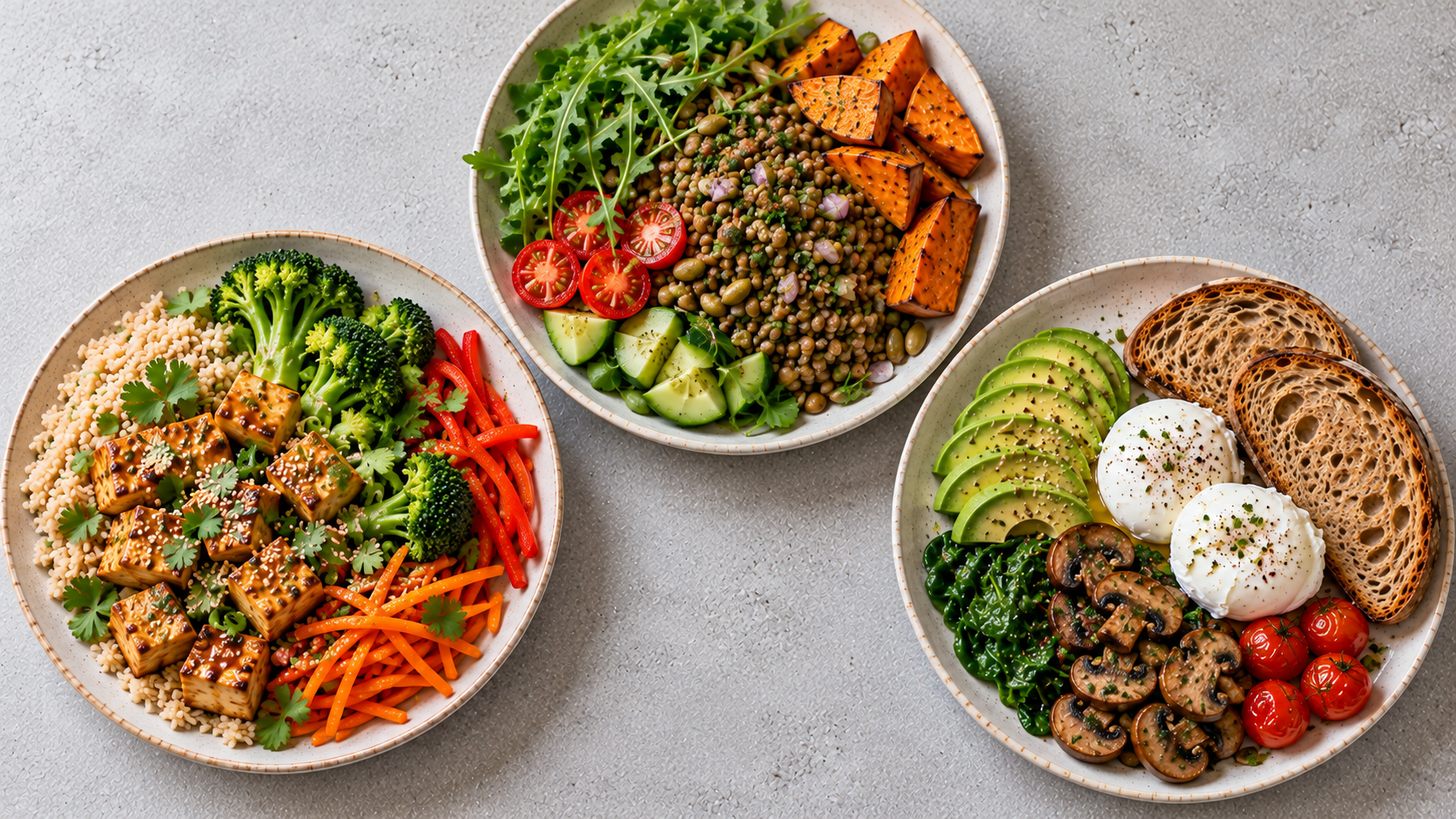
A varied dietary pattern can provide protein from many foods, including beans, lentils, chickpeas, peas, tofu, tempeh, soya yoghurt, wholegrains, nuts, seeds, dairy products, eggs, fish and meat, depending on your dietary preferences (source).
Building muscle
For people undertaking regular resistance training, a higher protein intake can help maximise muscle growth and recovery. Sports-nutrition guidelines commonly recommend approximately 1.4-2.0 g/kg/day, with meta-analytic evidence suggesting that muscle-building benefits, on average, tend to plateau at around 1.6 g/kg/day for many healthy adults (source, source). As discussed earlier, resistance training remains the primary driver of muscle growth, with optimising protein intake providing a smaller, additional benefit. The priority should therefore be to establish an effective training programme before worrying about fine-tuning protein intake.
Fat loss or a calorie deficit
Losing body weight requires an energy deficit: consuming less energy than the body uses (source). However, weight loss often involves some loss of lean mass, which can include muscle, alongside body fat. This makes the preservation of muscle particularly important, because maintaining muscle mass and strength supports metabolic health, physical function and long-term wellbeing (source, source).
Resistance training is particularly valuable during weight loss because it can provide a stimulus for the body to preserve muscle tissue during reduced energy availability. Higher protein intake can also help reduce lean-mass loss, particularly when combined with resistance exercise (source). During an energy deficit, amino acids may also be oxidised for energy, while the balance between muscle protein synthesis and breakdown can become less favourable (source). Together, these factors help explain why protein needs may increase during weight loss, particularly for lean individuals undertaking substantial training.
That does not mean everyone pursuing weight loss needs an extremely high protein target. The most appropriate intake depends on the size of the calorie deficit, body composition, training demands, current diet, food preferences and health history. A balanced, practical approach to weight loss also needs to accommodate other nutritional priorities, including adequate fibre, fruit and vegetables, wholegrains, pulses and healthy fats.
Why body weight can be misleading
Most online protein calculations multiply body weight by a set protein target. That is simple, but it is not always the most useful approach.
If someone has a higher body weight, particularly where a larger proportion consists of body fat rather than lean tissue, multiplying total body weight by 1.6 g/kg can produce an unnecessarily high protein target. This is because protein needs are more closely related to lean tissue, including muscle, than to fat mass. Fat tissue has a lower protein content and a lower rate of protein turnover than muscle and other lean tissues (source).
Protein requirements therefore don't necessarily increase in direct proportion to total body weight, meaning calculations based on body weight alone may overestimate the amount needed to support muscle maintenance or growth in people with higher levels of body fat (source).
For example, using a blanket 1.6 g/kg target:
- A lean individual weighing 50 kg would calculate a target of 80 g of protein per day. This may be sufficient for many people, although their optimal intake will depend on factors such as training demands, goals and energy availability.
- A 130 kg individual with a high proportion of body fat would calculate a target of 208 g per day. This may substantially overestimate their protein needs, particularly if their lean mass and training demands do not justify such a high intake. Pursuing this target could also unnecessarily displace other nutrient-rich foods.
These examples illustrate why protein requirements don't necessarily scale proportionally with total body weight, and why recommendations should be interpreted in the context of body composition, physical activity and individual goals.
This is one reason the FoodFacts Protein Calculator goes beyond a simple “body weight × 1.6” equation. It is designed to take account of factors that can make a generic target too low, too high or simply irrelevant.
The aim is not to encourage body checking or to imply that there is one “correct” body size. It is to prevent a crude calculation from creating unnecessary pressure to eat more protein than is likely to be helpful.
More protein can be helpful, but it’s not always better
Protein has become associated with health, fullness and fitness, but higher is not automatically better.
For many people who resistance train, protein intake around 1.6 g/kg/day may be sufficient to maximise average muscle-gain benefits, according to the available meta-analytic evidence (source, source). Consuming considerably more may add cost, inconvenience and dietary rigidity without producing additional muscle gain.
There are also trade-offs to consider. An extreme focus on protein can crowd out other priorities, such as:
- Fibre from beans, lentils, vegetables, fruit and wholegrains.
- A variety of plant foods that contribute vitamins, minerals and phytochemicals.
- Carbohydrate intake sufficient to support training, sport, and day-to-day energy.
- Healthy dietary fats.
- Enjoyment, flexibility and affordability.
A high-protein product is not automatically a nutritious food, just as a food that is not marketed for protein is not automatically less valuable. The goal is to meet your needs within an overall eating pattern that supports health.
For people with conditions which affect how the body handles protein, such as chronic kidney disease, general online guidance may not be appropriate. Speak with a doctor or registered dietitian before making major changes to protein intake.
Choosing protein sources
Protein source is another important consideration. Research suggests that well-planned plant-based diets can support muscle growth and strength gains comparable to omnivorous diets, particularly when total protein intake is sufficient and resistance training is appropriately structured (source, source). This means that animal-derived protein is not essential for building muscle.
Beyond performance, replacing certain animal protein sources, particularly red and processed meat, with plant proteins such as legumes, nuts and soya foods is associated with favourable long-term health outcomes (source, source). Plant protein sources also generally have a considerably lower environmental footprint than animal proteins (source, source). Choosing more plant-based protein sources can therefore support muscle development while offering potential benefits for long-term health and environmental sustainability.

Protein requirements may change with age
Maintaining muscle mass, strength and physical function becomes increasingly important as we age. Age-related declines in muscle strength can make everyday activities more difficult, from climbing stairs and carrying shopping to getting out of a chair. More pronounced declines can contribute to frailty, reduced independence and an increased risk of falls and fractures (source). Muscle strength and physical performance are also strongly associated with longevity, making the preservation of muscle function an important aspect of healthy ageing (source).
Skeletal muscle also plays an important metabolic role. It is a major site of glucose uptake and storage, helping to regulate blood glucose concentrations and maintain insulin sensitivity (source). Preserving muscle mass and function therefore has benefits that extend well beyond mobility and physical independence.
One challenge is that ageing is often accompanied by anabolic resistance, whereby skeletal muscle becomes less responsive to the muscle-building effects of dietary protein (source). As a result, some older adults may need more protein, or benefit from spreading it across meals in amounts that adequately stimulate muscle protein synthesis. This is one reason why expert recommendations for older adults often exceed the general adult reference intakes (source).
However, consuming more protein is only part of the solution. Resistance training remains one of the most effective strategies for preserving and improving muscle mass, strength and physical function in older adults (source, source). Research also suggests that resistance exercise can help overcome aspects of anabolic resistance by enhancing the muscle protein synthetic response to feeding (source). Combining regular resistance training with adequate protein intake is therefore particularly valuable for maintaining muscle health as we age.
Individual needs will vary depending on health status, physical activity and other factors. Older adults experiencing muscle loss, frailty or unintentional weight loss may benefit from personalised dietary advice, as may individuals with chronic health conditions, such as kidney disease, where protein requirements can differ from general recommendations.
Practical guidance: how to use protein well
Rather than aiming for perfection, focus on a pattern you can maintain.
- Choose a daily protein range that suits your goals, training and circumstances.
- Spread protein-containing foods across your meals in a way that is convenient and enjoyable.
- If muscle gain is your goal, prioritise a consistent resistance-training programme before worrying about fine-tuning your protein intake.
- During fat loss, maintain resistance training where possible and avoid allowing protein to crowd out fibre-rich, nutrient-dense foods.
- Include a healthy protein source in most main meals
- Use protein supplements only if they are helpful and convenient; they are not a requirement for meeting protein needs.
- Review your approach over time. Your needs may change as your training, body weight, age, goals or energy intake change.
Using the foodfacts.org protein calculator
Protein advice should be useful, not intimidating.
The FoodFacts Protein Calculator is designed to help you estimate a realistic protein range based on the factors that can influence your needs: your training, goals, body size and composition, and whether you are in a calorie deficit, at maintenance or in a surplus.
It also explains the rationale behind the calculation, including why protein alone is unlikely to build muscle without resistance training, why body weight can sometimes inflate a target, how overall energy balance can affect protein requirements, and why “more” is not always “better.”
Use the FoodFacts Protein Calculator to find your personalised protein range
The Bottom Line
Most adults do not need to chase the exact same high-protein target. The amount that is right for you depends on your circumstances.
For general health, the UK and European reference intakes (0.75-0.83 g/kg/day) are designed to meet the physiological protein requirements of most healthy adults, rather than to maximise muscle gain or athletic performance.
For people undertaking regular resistance training, approximately 1.4-2.0 g/kg/day is commonly recommended, with meta-analytic evidence suggesting that on average, additional benefits to fat-free mass tend to plateau at around 1.6 g/kg/day for many individuals.
Consuming substantially more protein is therefore unlikely to produce meaningful additional muscle growth for most people. Furthermore, prioritising protein excessively at the expense of carbohydrates, healthy fats and other nutrient-rich foods could compromise overall dietary quality.
The most important message is not to memorise a number. It’s to put protein in context: train consistently if muscle gain is your goal, eat enough overall energy for your needs, include a wide variety of nourishing foods, and choose an approach you can sustain.

Independent fact-checking, funded by readers like you.
Misinformation is a growing threat to our health and planet. At foodfacts.org, we're dedicated to exposing the truth behind misleading food narratives. But we can't do it without your support.
European Food Safety Authority (2011). “Scientific Opinion on Dietary Reference Values for protein.”
British Nutrition Foundation (2023). “Protein.”
García-Hermoso, A., et al. (2018). “Muscular Strength as a Predictor of All-Cause Mortality in an Apparently Healthy Population: A Systematic Review and Meta-Analysis of Data From Approximately 2 Million Men and Women.”
Jäger, R., et al. (2017). “International Society of Sports Nutrition Position Stand: protein and exercise.”
Morton, R. W., et al. (2018). “A systematic review, meta-analysis and meta-regression of the effect of protein supplementation on resistance training-induced gains in muscle mass and strength in healthy adults.”
Tagawa, R., et al. (2022). “Synergistic Effect of Increased Total Protein Intake and Strength Training on Muscle Strength: A Dose-Response Meta-analysis of Randomized Controlled Trials.”
Currier, B. S., et al. (2026). “American College of Sports Medicine Position Stand. Resistance Training Prescription for Muscle Function, Hypertrophy, and Physical Performance in Healthy Adults: An Overview of Reviews.”
Department of Health and Social Care (2026). “UK Chief Medical Officers' physical activity guidelines.”
Office of Disease Prevention and Health Promotion (2025). “Physical Activity Guidelines for Americans.”
Centers for Disease Control and Prevention (2024). “QuickStats: Percentage of Adults Aged ≥25 Years Who Met the 2018 Federal Physical Activity Guidelines for Both Muscle-Strengthening and Aerobic Physical Activity, by Educational Attainment — United States, 2022.”
British Dietetic Association (2024). “Healthy Eating.”
Monteyne, A. J.,et al. (2023). “Vegan and Omnivorous High Protein Diets Support Comparable Daily Myofibrillar Protein Synthesis Rates and Skeletal Muscle Hypertrophy in Young Adults.”
Damasceno, Y. O., et al. (2024). “Plant-based diets benefit aerobic performance and do not compromise strength/power performance: a systematic review and meta-analysis.”
Neuenschwander, M., et al. (2023). “Substitution of animal-based with plant-based foods on cardiometabolic health and all-cause mortality: a systematic review and meta-analysis of prospective studies.”
Naghshi, S., et al. (2020). “Dietary intake of total, animal, and plant proteins and risk of all cause, cardiovascular, and cancer mortality: systematic review and dose-response meta-analysis of prospective cohort studies.”
Poore, J., & Nemecek, T. (2018). “Reducing food's environmental impacts through producers and consumers.”
Scarborough, P., et al. (2023). “Vegans, vegetarians, fish-eaters and meat-eaters in the UK show discrepant environmental impacts.”
NICE (2025). “Overweight and obesity management.”
Murphy, C., & Koehler, K. (2022). “Energy deficiency impairs resistance training gains in lean mass but not strength: A meta-analysis and meta-regression.”
Peterson, M. D., et al. (2010). “Resistance exercise for muscular strength in older adults: a meta-analysis.”
Longland, T. M., et al. (2016). “Higher compared with lower dietary protein during an energy deficit combined with intense exercise promotes greater lean mass gain and fat mass loss: a randomized trial.”
Carbone, J. W., et al. (2012). “Skeletal muscle responses to negative energy balance: effects of dietary protein.”
Dekker, I. M., et al. (2022). “Calculation of protein requirements; a comparison of calculations based on bodyweight and fat free mass.”
Yeung, S. S. Y., et al. (2019). “Sarcopenia and its association with falls and fractures in older adults: A systematic review and meta-analysis.”
Merz, K. E., & Thurmond, D. C. (2020). “Role of Skeletal Muscle in Insulin Resistance and Glucose Uptake.”
Kristiansen, J. B., et al. (2026). “Age-related anabolic resistance and post-absorptive muscle protein synthesis: integrative evidence from a systematic review and meta-analysis.”
Bauer, J., et al. (2013). “Evidence-based recommendations for optimal dietary protein intake in older people: a position paper from the PROT-AGE Study Group.”
Lai, C. C., et al. (2018). “Effects of resistance training, endurance training and whole-body vibration on lean body mass, muscle strength and physical performance in older people: a systematic review and network meta-analysis.”




foodfacts.org is an independent non-profit fact-checking platform dedicated to exposing misinformation in the food industry. We provide transparent, science-based insights on nutrition, health, and environmental impacts, empowering consumers to make informed choices for a healthier society and planet.