
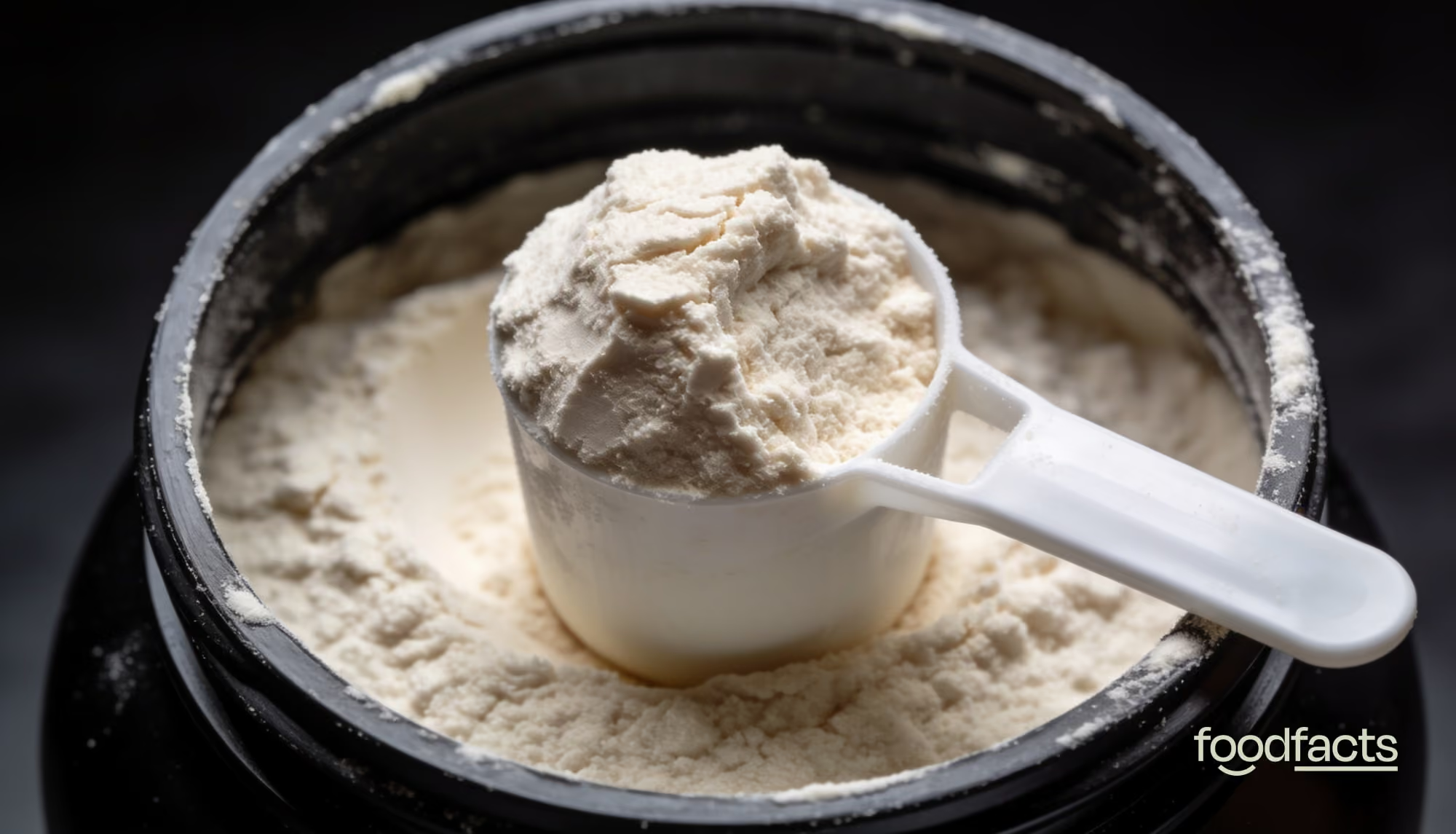




Glucose Goddess Wants You To Spend $120 On Protein Powder. Here's Why You Don't Need It.




Jessie Inchauspé, better known as the Glucose Goddess, has built a huge following by promoting the idea that blood sugar management is one of the keys to better health. While blood glucose is certainly important, many of her claims go well beyond the scientific consensus, often encouraging unnecessary concern around foods such as fruit and whole grains that are consistently associated with better long-term health outcomes (1,2).
Her latest venture, however, raises a different question.
After building a brand around glucose control, Glucose Goddess is now selling a protein powder called Protein Prodigy for a staggering $120 per tub. And once you look beyond the premium branding and carefully crafted marketing story, in our view, it's difficult to see why anyone should pay that much for what appears to be a fairly ordinary whey protein isolate.
The "First-Of-Its-Kind" Technology That Isn't
The product website highlights that Protein Prodigy is produced using "cold cross-flow microfiltration, a first-of-its-kind technology."
That sounds impressive, but the characterization may leave some consumers with the impression that the manufacturing process is unique or novel. Based on publicly available information, the cold cross-flow microfiltration used appears to be a well-established manufacturing method that has been used in the whey protein industry for many years.
Cold cross-flow microfiltration (often abbreviated to CFM) has been used to manufacture whey protein isolates for decades. The process uses specialised membranes to separate protein from fat and lactose at relatively low temperatures, helping preserve the protein's structure while producing a highly purified final product.
It's a perfectly legitimate manufacturing method. In fact, many of the best-known whey protein brands in the world already use it.
What's difficult to justify is presenting it as some kind of novel breakthrough. The average consumer reading the website could easily come away with the impression that Protein Prodigy is using a unique production process unavailable elsewhere. In reality, cold cross-flow microfiltration is a well-established technology that has been used in the sports nutrition industry for years.
Protein In Coffee Isn't A New Innovation
Another central selling point is that the protein dissolves smoothly into coffee. That's certainly a desirable feature, but in our view this is difficult to position as a major innovation. Protein powders that mix well into hot drinks have existed for years – there are already numerous whey isolates and plant proteins that blend into coffee, porridge and yoghurt with minimal impact on texture.
The marketing creates the impression that Protein Prodigy has solved a problem nobody else has managed to solve. In reality, it appears to be offering a solution that has been available for quite some time. That doesn't make it a bad product, but it does make it harder to justify the substantial premium being charged.
Why Is This "Especially Made For Women"?
Perhaps the more interesting aspect of the marketing is the repeated suggestion that this protein powder was designed specifically for women. On the surface, that sounds appealing. Women have historically been underserved by the sports nutrition industry, which has often focused its messaging on bodybuilding, performance enhancement and male consumers. Creating products that speak directly to women isn't inherently problematic.
The issue is that whey protein isolate doesn't suddenly become different because it is packaged for a female audience – the amino acid profile, digestion and absorption remain the same. Women may have different calorie requirements, body sizes or training goals, but there is nothing structurally unique about this protein powder that makes it particularly suited to women.
In our view, the available evidence suggests that the "made for women" positioning is primarily a branding exercise rather than a meaningful nutritional distinction. In many ways, it feels similar to the longstanding practice of marketing ordinary products as female-specific in order to justify premium pricing (3).
The Premium Branding Question
The product description also leans heavily on phrases such as "native", "grass-fed", "Irish family farms" and "the highest-quality whey isolate". These terms undoubtedly sound impressive, but consumers should be careful not to confuse premium-sounding language with meaningful performance advantages.
There is currently very little evidence to suggest that protein derived from grass-fed Irish dairy cows produces superior muscle-building outcomes compared with other high-quality whey protein isolates. Your muscles don't know whether the amino acids came from a cow reared in Ireland or a dairy farm elsewhere in the world. Once absorbed, those amino acids are utilised in exactly the same way.
The Grass-Fed Halo Effect
Grass-fed systems often enjoy a positive reputation because they evoke images of cows grazing in green pastures rather than being housed indoors. While some people may prefer these systems for animal welfare reasons, they come with important environmental trade-offs that are rarely discussed.

Compared with conventionally reared dairy cattle, grass-fed systems typically require substantially more land to produce the same amount of milk or protein. That matters because land use is one of the biggest drivers of biodiversity loss globally. The more land required for agriculture, the less land remains available for natural ecosystems, wildlife habitat, and reforestation.
Of course, this doesn't mean conventional dairy is environmentally benign either. Rather, it highlights that "grass-fed" is not the straightforward sustainability win that marketing often implies. It may sound more natural, but that doesn't automatically make it the most environmentally responsible option.
The comparison becomes even less favourable when plant proteins enter the picture. Whether we're talking about soy, peas, beans, lentils or other plant protein sources, they consistently require far less land and generate substantially lower greenhouse gas emissions than dairy protein, regardless of whether it’s derived from grass-fed or conventionally reared cattle (4,5).
The Plant Protein Conversation Is Missing
This brings us to perhaps the most important omission from the marketing narrative: the growing body of evidence showing that plant proteins can be every bit as effective as animal proteins for supporting muscle growth and strength development. For years, whey protein has enjoyed a reputation as the undisputed gold standard. However, a substantial body of research now suggests that this distinction may be far less meaningful than many consumers have been led to believe.
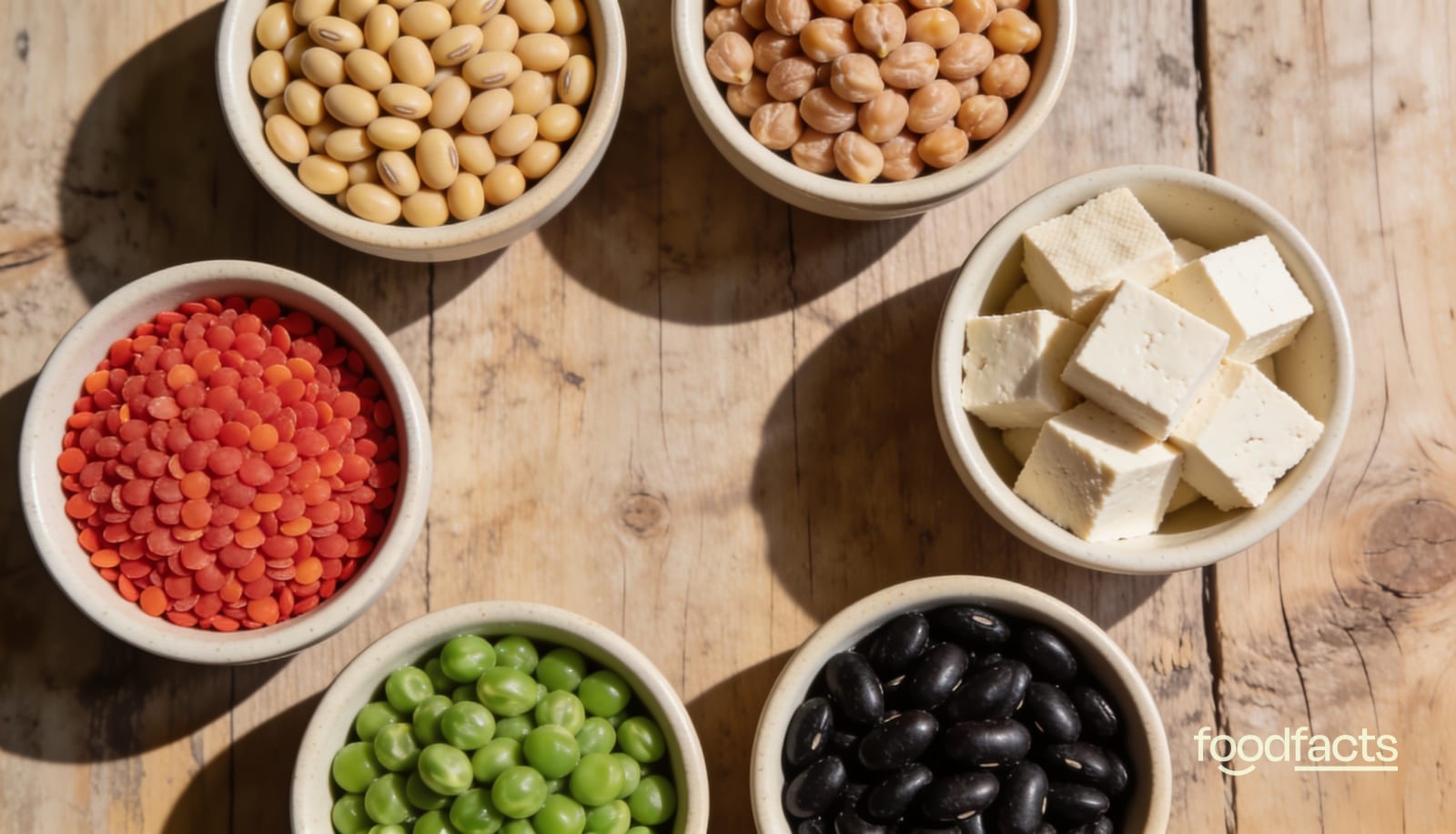
When total protein intake is matched, studies repeatedly demonstrate that plant proteins can support gains in lean mass and strength comparable to those seen with animal proteins, including whey (6-9). While there may be small differences in digestion rates or amino acid composition between individual protein sources, these differences become largely irrelevant when overall daily protein intake is sufficient.
This matters because many consumers are still being sold the idea that animal-derived proteins occupy a fundamentally superior category. The evidence increasingly suggests that what matters most nutritionally is consuming enough total protein, regardless of whether it originates from animal or plant sources.
The Bigger Problem With Wellness Marketing
Stepping back, the broader issue isn't really about this particular product. It's about the way wellness marketing often encourages people to focus on increasingly expensive optimisations while overlooking the fundamentals that have the biggest impact on health.
For most women, the difference between one high-quality protein powder and another is likely to be negligible. Far more important factors include resistance training, total protein intake, sleep quality, overall diet quality and long-term consistency. Those are the variables that genuinely move the needle. Whether your protein powder costs $30 or $120 is much less likely to make a meaningful difference to your results.
Final Thoughts
None of this means Protein Prodigy is a bad product. It may well be another high quality whey protein isolate. Many people will undoubtedly enjoy it, and those who value the branding, taste or convenience may feel the premium price is justified.
The problem is that the marketing may lead some consumers to perceive the product as unusually innovative or specifically tailored to women compared with other protein powders on the market. When you look closely at the formulation and the available evidence, those claims become much harder to support.
Ultimately, based on the publicly available information we reviewed, Protein Prodigy appears to be a fairly standard whey protein isolate wrapped in impressive branding and sold at an exceptional price. Before spending $120 on a tub of protein powder, it's worth asking a simple question: are you paying for better nutrition, or simply a better story?
Editorial Disclaimer: This article represents the personal opinion of TJ Waterfall (Director of Nutrition, foodfacts.org) and is based on publicly available information and scientific literature at the time of writing. It is intended for general educational and informational purposes only and does not constitute personalised medical, nutritional, or financial advice. All product names, brands, and trademarks referenced remain the property of their respective owners. foodfacts.org has no commercial affiliation with, and has not been compensated by, Glucose Goddess, Protein Prodigy, or any competing brand mentioned or implied in this article.

Independent fact-checking, funded by readers like you.
Misinformation is a growing threat to our health and planet. At foodfacts.org, we're dedicated to exposing the truth behind misleading food narratives. But we can't do it without your support.
References
- Sun, L., Liang, X., Wang, Y., Zhu, S., Ou, Q., Xu, H., Li, F., Tan, X., Lai, Z., Pu, L., Chen, X., Wei, J., Wu, F., Zhu, H., & Wang, L. (2021). Fruit consumption and multiple health outcomes: An umbrella review. Trends in Food Science & Technology, 118, 505–518.
- Huang, H., Lu, W., Hu, X., Chen, X., Shu, G., Wang, J., Zhu, M., Zhang, Z., & Zhang, S. (2025). The impact of whole grain consumption on metabolic health: an umbrella review of systematic reviews and meta-analyses of randomized controlled trials. Food & function, 16(23), 8925–8942.
- Wishart, G., Poo, M. C.-P., Baxter, K., & Lau, Y. (2024). The “Pink Tax” and Gender Price Disparity in Personal Care. Encyclopedia (Basel, Switzerland), 4(3), 1279–1285.
- Poore, J., & Nemecek, T. (2018). Reducing food's environmental impacts through producers and consumers. Science (New York, N.Y.), 360(6392), 987–992
- Merlo, M., Hennessy, T., Buckley, C., & O’Mahony, J. (2024). A comparison of animal and plant-based proteins from an economic, environmental, and nutritional perspective in the Republic of Ireland. Agricultural Systems, 221, Article 104143
- Messina, M., Lynch, H., Dickinson, J. M., & Reed, K. E. (2018). No Difference Between the Effects of Supplementing With Soy Protein Versus Animal Protein on Gains in Muscle Mass and Strength in Response to Resistance Exercise. International journal of sport nutrition and exercise metabolism, 28(6), 674–685.
- Hevia-Larraín, V., Gualano, B., Longobardi, I., Gil, S., Fernandes, A. L., Costa, L. A. R., Pereira, R. M. R., Artioli, G. G., Phillips, S. M., & Roschel, H. (2021). High-Protein Plant-Based Diet Versus a Protein-Matched Omnivorous Diet to Support Resistance Training Adaptations: A Comparison Between Habitual Vegans and Omnivores. Sports medicine (Auckland, N.Z.), 51(6), 1317–1330.
- Monteyne, A. J., Coelho, M. O. C., Murton, A. J., Abdelrahman, D. R., Blackwell, J. R., Koscien, C. P., Knapp, K. M., Fulford, J., Finnigan, T. J. A., Dirks, M. L., Stephens, F. B., & Wall, B. T. (2023). Vegan and Omnivorous High Protein Diets Support Comparable Daily Myofibrillar Protein Synthesis Rates and Skeletal Muscle Hypertrophy in Young Adults. The Journal of nutrition, 153(6), 1680–1695.
- López-Moreno M, Rossi EV, López-Gil JF, Marrero-Fernández P, Roldán-Ruiz A, Bertotti G. Are Plant-Based Diets Detrimental to Muscular Strength? A Systematic Review and Meta-Analysis of Randomized Controlled Trials. Sports Med Open. 2025 Jun 2;11(1):62.



foodfacts.org is an independent non-profit fact-checking platform dedicated to exposing misinformation in the food industry. We provide transparent, science-based insights on nutrition, health, and environmental impacts, empowering consumers to make informed choices for a healthier society and planet.






.svg)


.svg)

