




Do carbs make you gain weight? What the science shows




You cut carbs, the scale drops. You add them back, the number jumps up again. This makes it easy to conclude that "carbs make you gain weight", but what is really going on?
Carbohydrates are still often blamed for weight gain, with low-carb diets like carnivore or keto diets regularly being promoted as the go-to solution for anyone trying to lose weight. But, is there something about carbohydrates themselves that makes us gain body fat? Or have they simply become an easy target in the world of weight-loss advice and nutrition misinformation?
What are carbohydrates?
Carbohydrates are a key macronutrient along with proteins and fats in a healthy and balanced diet. They are a source of energy and common carbohydrate sources can also provide important vitamins, minerals and fibre [source].
Carbohydrates provide around 4 kcal per gram, similar to protein and less than half the energy of fat, which provides around 9 kcal per gram [source].
They can be classified into the following categories:
Complex (starchy) carbohydrates: Carbohydrates which are typically higher in fibre and harder to break down into glucose which leads to a slower release of energy. Examples include grains like barley and oats, and starchy vegetables such as potatoes [source].
Simple carbohydrates: Faster digesting molecules which provide a quick release of energy. Two types include:
• Naturally occurring sugars such as those found in milk (lactose) or fruit (fructose) which contribute to energy and essential vitamins.
• Free sugars which are added to foods during processing such as sweets, cakes or soft drinks , and generally lack essential nutrients [source].
Dietary fibre: Indigestible plant parts found in wholegrains, pulses, fruit and vegetables which keeps your digestive system healthy and helps you to stay full [source].
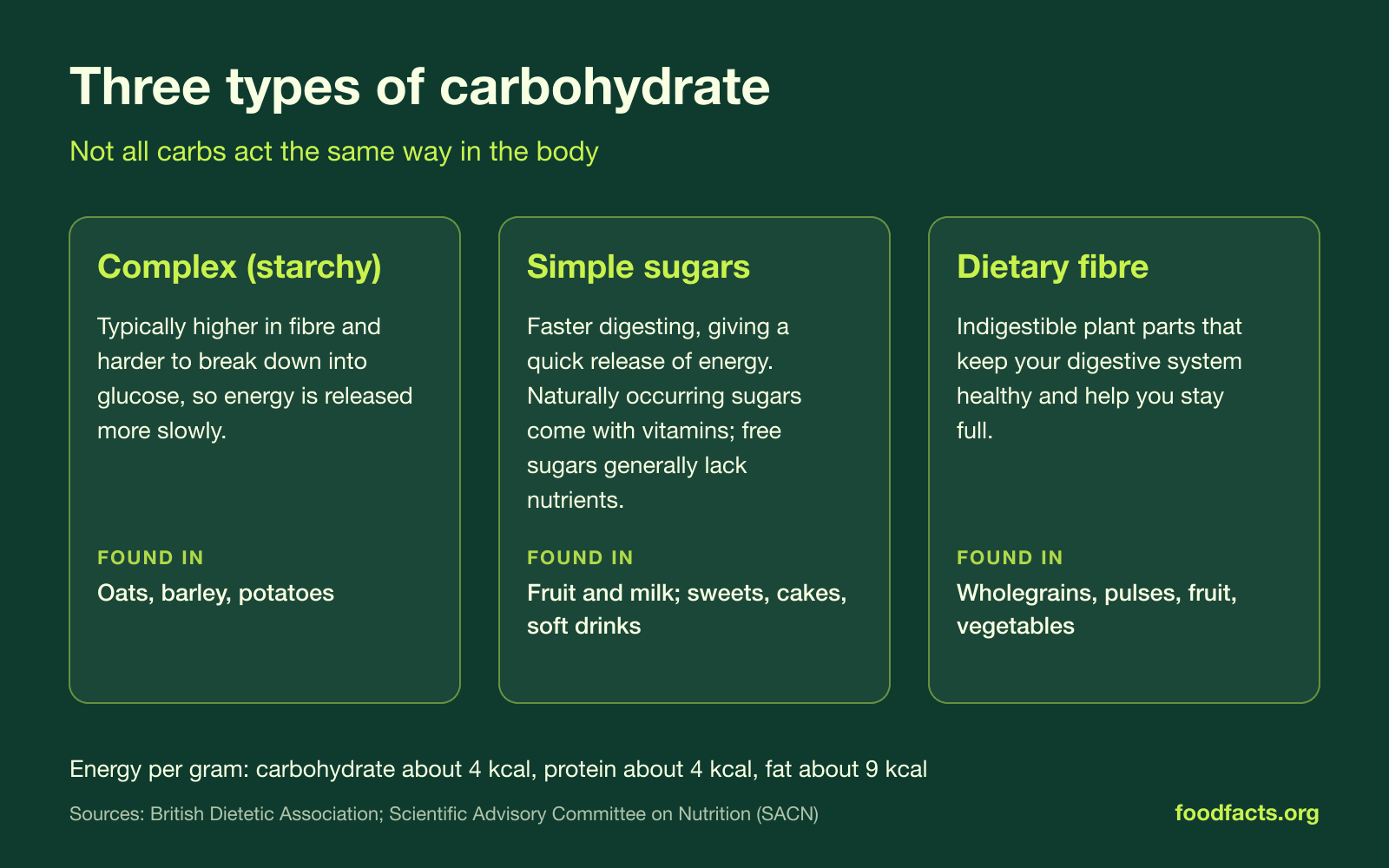
Not all carbohydrates are created equal
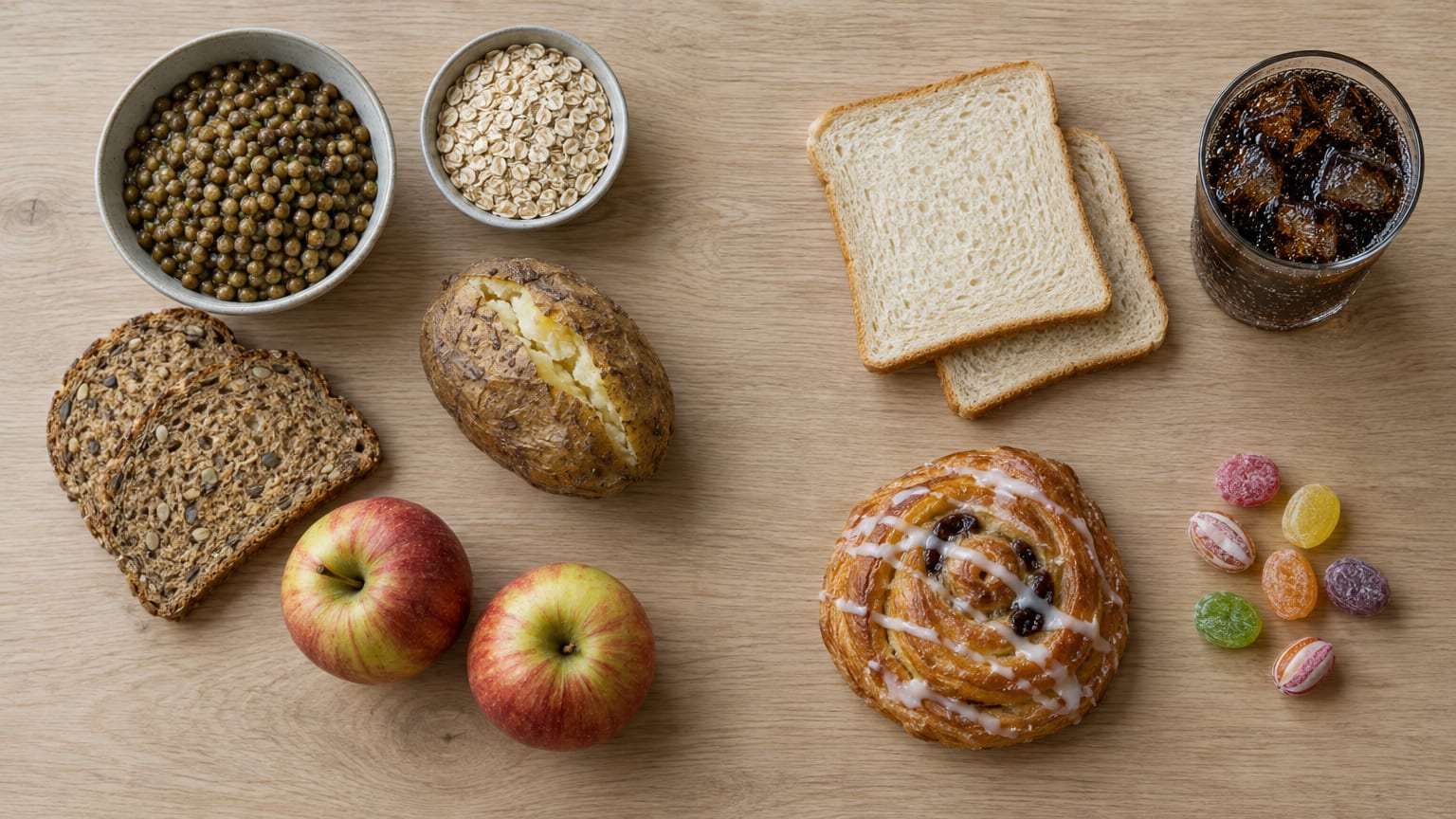
Not every carbohydrate-containing food affects appetite, satiety or body weight in the same way. Food quality, portion size, fibre, energy density, and our overall dietary pattern matter [source]. For example, the same amount of carbohydrates and total energy from lentil soup, whole grain toast, or a sugary drink will not have the same effects on the body
Weight management still comes down to energy balance, but the type of carbohydrate and the overall diet quality are important elements which influence how easy it is to maintain a healthy balance [source].
Prioritising choosing naturally occurring sugars (such as fruit and milk) and high‑fibre, complex carbohydrates (such as whole grains, pulses, starchy vegetables and other fruit and veg) can often be more beneficial for weight management compared to excluding an entire food group [source]. These foods digest more slowly and help you feel fuller for longer which can make it easier to maintain a healthy energy balance [source].
In contrast, foods high in free sugars (such as sweets, cakes, biscuits, and sugary drinks) provide energy with little fibre and are often easier to overconsume, therefore limiting these can support a healthier weight and overall health [source].
What the research says about carbohydrates and weight management
Despite the popularity of low-carbohydrate diets, research comparing them with carbohydrate-containing diets generally finds little to no difference in weight loss over the short or longer term. A systematic review and meta‑analysis of randomised controlled trials found similar weight loss with low‑carbohydrate and balanced‑carbohydrate approaches [source].
Another prospective study found no association between total carbohydrate intake and the risk of gaining at least 5% of body weight [source]. Tightly controlled feeding studies also find no meaningful difference in fat loss between high and low carbohydrate diets, when total calories and protein intake are kept constant [source, source].
Importantly, many of the weight management benefits seen with some higher‑carbohydrate patterns appear to depend on carbohydrate quality: diets emphasising high‑quality carbohydrate sources such as whole grains (especially oats and barley), pulses, fruits and vegetables [source].
This does not mean that low-carbohydrate diets cannot support weight management. They can be effective, particularly when they help to reduce the intake of energy-dense foods and drinks that can otherwise be easy to overconsume, such as sugary drinks and snacks [source, source].
Overall, the research does not show that carbohydrates themselves cause weight gain. Carbohydrate-containing foods can contribute to weight gain when they are regularly eaten in excess of energy needs, but the type of food, portion size, fibre and overall dietary pattern also matter [source].
Why low-carbohydrate diets can lead to quick, short-term weight loss
What is low-carb: A standard low carbohydrate diet typically limits carbohydrates to around 50-150g/day, though this can vary between approaches [source]. Very low‑carbohydrate or "keto" diets usually restrict carbs to around 20-50 g/day to induce nutritional ketosis [source].
How it works: Limiting carbohydrate intake reduces insulin secretion from the pancreas and increases glucagon. This hormonal shift promotes:
• A breakdown of the stored carbohydrates in the liver and muscle to glucose (glycogenolysis).
• The production of glucose from non-carbohydrate sources such as amino acids, lactate and glycerol (gluconeogenesis).
• The breakdown of fat into glycerol and free fatty acids for use as energy (lipolysis).
• For very low‑carbohydrate diets, fatty acids are further converted in the liver to ketone bodies, which can be used as an alternative fuel by the brain and other tissues (nutritional ketosis) [source, source].
As the body shifts towards using stored glycogen and fat for fuel, glycogen stores (which hold water) are depleted. The early, rapid drop on the scales is therefore largely water loss, not just body fat [source]. When carbohydrate intake increases again, glycogen stores and associated water are replenished, so some of the weight lost may appear to return quickly on the scales. This helps explain why weight can fall rapidly when carbohydrates are restricted and rise again when they are reintroduced. The change is largely water, rather than body fat [source].
These fuel‑switching responses also reflect how the body adapts to reduced carbohydrate intake; they do not mean that low carbohydrate diets bypass energy balance or necessarily have a unique metabolic advantage for weight loss [source].
How low carbohydrate diets can support with weight loss for some people
Beyond the rapid initial changes in water weight, low-carbohydrate diets can also lead to meaningful losses in body fat over time. However, this does not appear to require a unique fat-burning effect of carbohydrate restriction. Instead, low-carbohydrate diets may help some people maintain the calorie deficit needed for weight loss.
Reduced calorie intake. Cutting back on carbohydrates often reduces overall energy intake, particularly when it also reduces foods high in refined starches, free sugars and added fats (such as sugary drinks, sweets, biscuits and many ultra‑processed snacks). This can create a calorie deficit, which drives weight loss [source, source].
Potential increase in satiety. Higher protein intakes, along with removing many refined carbohydrate foods, may increase feelings of fullness and satisfaction for some people. This can make it easier to eat less without deliberate calorie counting [source].
In other words, low-carbohydrate diets may be an effective weight-loss strategy for some people, particularly if they find the approach satisfying and easy to maintain. But their effectiveness appears to depend largely on helping people sustain a lower overall energy intake, rather than carbohydrate restriction producing a unique metabolic advantage for fat loss.
Potential downsides of a low-carb approach
Lower intake of fibre and certain micronutrients. Many low‑carbohydrate approaches restrict whole grains, pulses, some fruits and some starchy vegetables, which can lead to lower intakes of fibre and important micronutrients such as magnesium, folate and some B vitamins unless the diet is carefully planned [source, source, source].
"Keto flu" and other side effects. In the first few days to weeks, some people experience fatigue, headaches, dizziness, irritability, low mood, muscle cramps and brain fog as the body adapts to lower carbohydrate intake and ketosis. These symptoms are more common with very low‑carb/keto diets and usually improve over time, but they can make the diet hard to follow initially [source].
Potential increase in "bad" cholesterol. Very low‑carbohydrate diets that are high in saturated fat can raise LDL ("bad") cholesterol in some individuals, which is a known risk factor for cardiovascular disease [source, source, source].
Restrictiveness and long‑term adherence. Highly restrictive eating patterns can be socially challenging and difficult to maintain over time. As a result, any weight loss may be temporary if the approach is not sustainable [source].
Low-carbohydrate diets are not suitable for everyone (for example, some people with type 1 diabetes, certain kidney or liver conditions, pregnancy and breastfeeding, or those on specific medications) and should be undertaken with medical and dietetic supervision where relevant [source].
Practical tips for eating carbohydrates while managing your weight
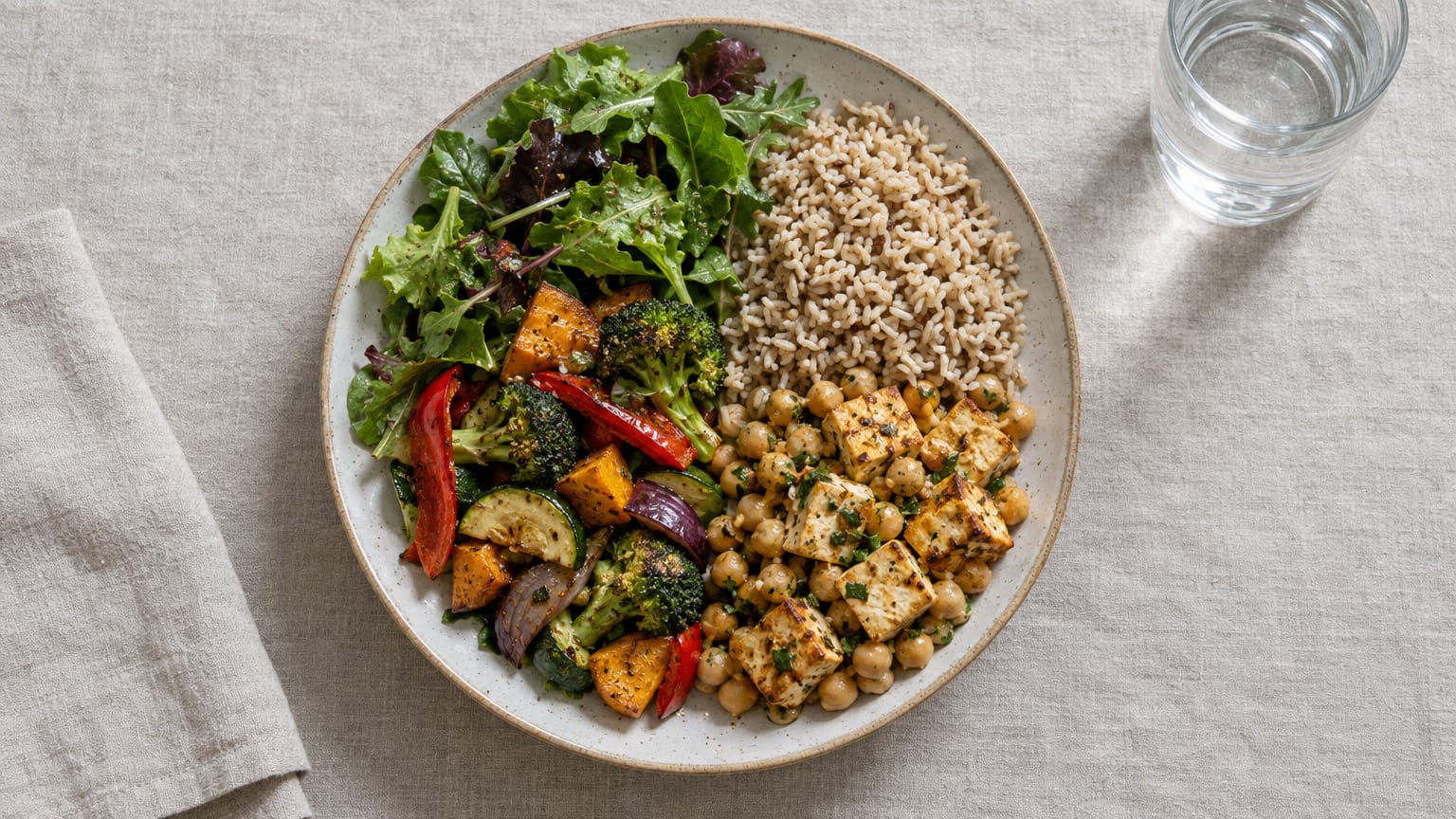
Make fibre-rich, complex carbohydrates the default by choosing:
• Whole grains such as oats, brown rice, wholemeal bread, wholewheat pasta, quinoa, barley)[source, source].
• Pulses such as beans, lentils, chickpeas [source, source].
• Starchy vegetables such as potatoes with skin, sweet potatoes and plenty of non‑starchy vegetables [source, source].
• Whole fruit rather than fruit juice [source, source].
Limit foods high in free sugars and refined starches by reducing:
• Sugary drinks, energy drinks and most fruit juices [source, source].
• Sweets, cakes, biscuits, pastries and many ultra‑processed snacks [source, source].
• Highly refined grain products e.g. white bread, some crackers, particularly when eaten without protein or fibre [source, source].
Be mindful of portion sizes by:
• Using the plate method: aim for roughly half your plate to be filled with non-starchy vegetables, one quarter fibre-rich starchy carbohydrates and one-quarter lean protein foods [source].
• Serve from the kitchen rather than the package, so you can see how much you're eating instead of losing track from a large bag or box [source].
• Check the "per portion" information on nutrition labels [source].
• Eat slowly and stop when comfortably full, rather than feeling that you must finish everything on your plate [source].
Common questions and myths about carbohydrates and weight
Do carbohydrates at night make you gain weight?
No, eating carbohydrates at night does not automatically cause weight gain. Weight gain occurs when you consistently consume more energy than you use over time [source]. However, large late night meals or frequent snacking on energy-dense, high sugar foods can make it easier to eat in a calorie surplus, which can therefore contribute to weight gain [source].
Do I need to go keto to lose weight?
No. You do not need to follow a ketogenic or very low‑carbohydrate diet to lose weight. Research shows similar long‑term weight loss with low‑carb and balanced‑carb diets when calories and protein are comparable. The most important factors are finding an eating pattern you can sustain, maintaining a calorie deficit if weight loss is the goal, and focusing on high‑quality foods (for example, fibre‑rich carbs, lean proteins, healthy fats and plenty of vegetables) [source, source].
Why does my weight jump after a pasta/pizza night?
Seeing a change in the scales after eating a carb heavy meal is generally due to water retention linked to glycogen stores, rather than an increase in body fat. This is normal and does not mean you have "undone" your progress. Looking at trends over weeks rather than day‑to‑day fluctuations gives a more accurate picture of changes in body weight and body fat [source].
Key takeaways
• Carbohydrates do not inherently cause weight gain; they provide around 4 kcal/g which is similar to protein and less than half the energy of fat.
• Not all carbohydrate foods affect weight in the same way: high‑fibre, starchy carbs can support satiety and steadier blood sugar, while free sugars and refined carbohydrates can be easier to overconsume.
• Research shows similar long‑term weight loss with low‑carb and balanced‑carb diets when calories and protein are comparable; overall diet quality and sustainability matter more than carb amount alone.
• Low‑carb diets can work mainly by reducing overall energy intake and removing energy‑dense foods, but they can also lower fibre and some micronutrients, cause short‑term side effects, and may raise LDL cholesterol in some people.
• For most people, a practical approach is to prioritise fibre‑rich complex carbs (whole grains, pulses, starchy veg, whole fruit), limit free sugars and refined starches, and use simple portion strategies (plate method, label checks, mindful eating) to support a healthy energy balance.

Independent fact-checking, funded by readers like you.
Misinformation is a growing threat to our health and planet. At foodfacts.org, we're dedicated to exposing the truth behind misleading food narratives. But we can't do it without your support.
British Dietetic Association (2026). "Carbohydrates."
Scientific Advisory Committee on Nutrition (2011). "Dietary Reference Values for Energy."
FoodFacts (2026). "How to Get More Fibre: A Practical Guide to High-Fibre Foods."
Scientific Advisory Committee on Nutrition (2015). "Carbohydrates and Health."
NHS (2023). "Understanding Calories."
Naude, CE., et al. (2022). "Low-carbohydrate diets or balanced-carbohydrate diets: which works better for weight loss and heart disease risk?"
Tammi, R., et al. (2023). "Different carbohydrate exposures and weight gain results from a pooled analysis of three population based studies."
Wan, Y., et al. (2023). "Association between changes in carbohydrate intake and long term weight changes: prospective cohort study."
National Institute for Health and Care Excellence (2025). "Overweight and obesity management."
Oh, R., and Daley, S.F. (2026). "Low-Carbohydrate Diet."
Daley, S.F., et al. (2025). "The Ketogenic Diet: Clinical Applications, Evidence based Indications, and Implementation."
Malhotra, V., and Sawal, A (2023). "Metabolic Effect of Ketogenic Diets and Their Utilization in Obesity Management: A Systematic Review."
Naude, C.E., et al. (2022). "Low-carbohydrate versus balanced-carbohydrate diets for reducing weight and cardiovascular risk."
Bilsborough, S.A., and Crowe, T.C. (2003). "Low-carbohydrate diets: what are the potential short and long-term health implications."
Soenen, S., et al. (2012). "Relatively high-protein or low-carb energy-restricted diets for body weight loss and body weight maintenance?"
Cunningham, W., and Hyson, D. (2007). "The Skinny on High-Protein, Low-Carbohydrate Diets."
Churuangsuk, C., et al. (2024). "Low thiamine status in adults following low-carbohydrate/ketogenic diets: a cross-sectional comparative study of micronutrient intake and status."
Skartun, O., et al. (2025). "Symptoms during initiation of ketogenic diet: a scoping review of occurrence rates, mechanisms and relief strategies."
Buren, J., et al. (2021). "A Ketogenic Low-Carbohydrate High-Fat Diet Increases LDL Cholesterol in Healthy, Young, Normal-Weight Women: A Randomised Controlled Feeding Trial."
Naveh, N., Avidan, Y., and Zafrir, B. (2023). "Extreme Hypercholesterolemia Following a Ketogenic Diet: Exaggerated Response to an Increasingly Popular Diet."
Silverii, G.A., et al. (2022). "Effectiveness of low-carbohydrate diets for long-term weight loss in obese individuals: A meta-analysis of randomized controlled trials."
British Dietetic Association (2026). "Weight loss."
Jia, S.S., et al. (2022). "The Use of Portion Control Plates to Promote Healthy Eating and Diet-Related Outcomes: A Scoping Review."
British Dietetic Association (2021). "Portion Sizes."
Kevin, H.D., et al. (2016). "Energy expenditure and body composition changes after isocaloric ketogenic diet in overweight and obese men."
Hall, K.D., and Guo, J. (2017). "Obesity Energetics: Body Weight Regulation and the Effect of Diet Composition."




foodfacts.org is an independent non-profit fact-checking platform dedicated to exposing misinformation in the food industry. We provide transparent, science-based insights on nutrition, health, and environmental impacts, empowering consumers to make informed choices for a healthier society and planet.






.svg)


.svg)

