
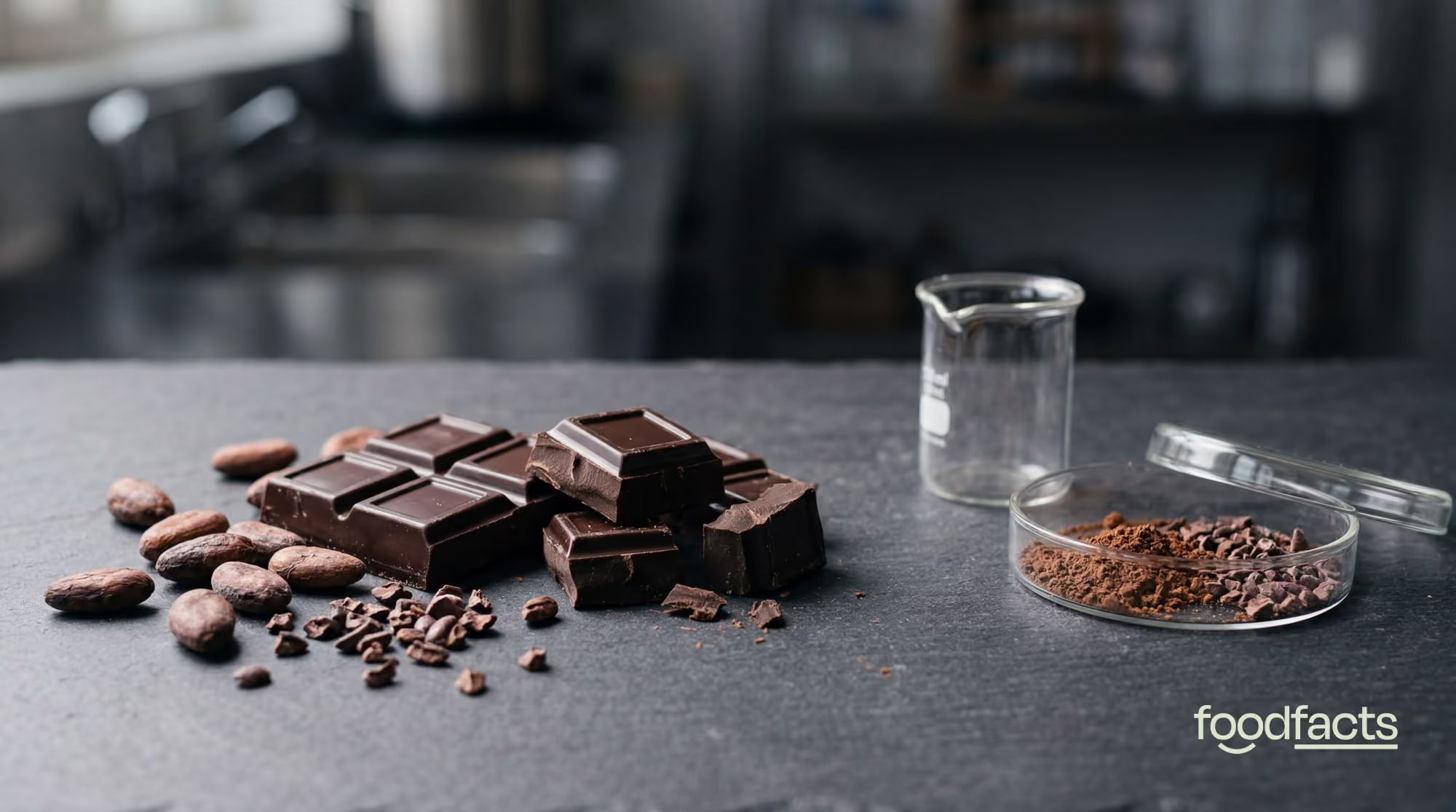




Why you shouldn't fear "poisonous" lab chocolate


In a recent Instagram Reel posted on 2nd April, wellness influencer Drew Canole warns his followers that lab-grown chocolate is already being funded by the companies behind Cadbury, Oreo, and Toblerone, and that it is already in the chocolate available on supermarket shelves. Canole claims that Cadbury Dairy Milk is "illegal in 27 countries," that its vegetable fat and synthetic vanilla make it "poison," and that parents should throw it in the bin. He contrasts it with 100% cacao, which he describes as "literally medicine." The post was timed for Easter and is clearly aimed at parents, with Canole describing discarding a Cadbury egg from his daughter's basket as an act of responsible parenting.
Full Claim: After what I just learned, I am never letting my baby girl eat another Cadbury bunny. Lab grown chocolate is now a thing. Oreo, Cadbury, and Toblerone are already funding overseas biotech companies producing it because lab is cheaper than farm grown always.
My daughter got a Cadbury egg in her basket last year. I looked at the ingredients, and immediately threw it away, which is exactly what you should do.
That dairy milk isn't even legal chocolate in 27 countries. The cocoa butter was replaced with vegetable fat a cheap blend of six industrial seed oils. That's right. Then they dilute it with polyglycerin flavor it with petroleum derived vanilla to mask the waxy taste and wrap it in foil. Real chocolate, 100% cacao, is loaded with polyphenos, magnesium, and antioxidants. It's literally medicine. But the second you replace it with seed oils, and synthetic flavors, you turn it into poison. This Easter, skip the bunny.



Lab-grown chocolate is an early-stage innovation being explored by major companies, but it is not yet on supermarket shelves and is currently more expensive to produce than conventional cocoa. Claims that Cadbury is “illegal in 27 countries” or that common ingredients like vegetable fats and vanillin are “poison” misrepresent food regulations and ignore well-established safety assessment.
Lab-grown food technologies represent a promising response to real pressures on global food security. Cocoa farming in particular faces serious threats from climate change, crop disease, and exploitative labour practices. Portraying these innovations as corporate poison plots, without evidence, risks stoking public distrust at exactly the moment they need informed, open debate. More broadly, sensationalist food content that misrepresents approved ingredients and dismisses regulatory oversight erodes consumer confidence in food safety systems as a whole, making it harder for accurate information to land, and easier for harmful misinformation to fill the gap.


Claim 1: "Lab-grown chocolate is now a thing. Cadbury, Oreo, and Toblerone are already funding overseas biotech companies."
Fact-check: Partly true - lab-grown chocolate does exist and Mondelēz (which owns Cadbury, Oreo, and Toblerone) has provided funding.
Lab-grown, or cell-cultured, chocolate is not science fiction. Israeli startup Celleste Bio announced the world's first cell-based chocolate bar produced in collaboration with Mondelēz International in April 2026 (source). This is a genuine and significant food-tech milestone. Mondelēz is the parent company of both Cadbury, Toblerone, and Oreo (source). However, the available evidence links Mondelēz the corporation to this project, not the specific sub-brands named in the post.
It is worth noting that this collaboration is currently at pilot stage. Lab-grown cocoa butter chocolate has been produced, but it is not commercially available, and no timeline for mass-market rollout has been confirmed. This is important, as the fact that a technology exists and a company is exploring it does not mean the product is already in your Easter egg.
Claim 2: "Lab is cheaper than farm grown — always."
Fact-check: This is false at the current stage of development. Lab-grown cocoa production remains more expensive than conventional farming, not cheaper.
The post presents the cost argument as the primary motive for corporate investment in lab-grown chocolate ("because lab is cheaper than farm grown always"). This claim is currently the reverse of the current reality. Cell-cultured cocoa butter production is still in early-stage pilot phases, and scaling costs remain higher than those of conventional cocoa farming (source).
The long-term aspiration for lab-grown food technologies is often reduced cost and supply chain stability, in a similar way to the hopes for lab-grown meat, particularly relevant given cocoa crop failures linked to climate change and disease in West Africa (source, source, source). The scientific consensus is that cocoa yields will fall in countries that produce around 70% of global yields, but recent modelling suggests that increased rainfall due to climate change could increase yields in some regions (source, source). But aspiration is not the same as current reality. Presenting a potential future cost advantage as a present, definitive fact is misleading.
Claim 3: "Dairy milk isn't even legal chocolate in 27 countries."
Fact-check: This is false. Cadbury Dairy Milk is legally sold in most major markets worldwide, including the EU, US, UK, Canada, and Australia.
This claim is one of the most specific, and most clearly wrong, in the post. Cadbury Dairy Milk is openly and legally available throughout Europe, North America, and beyond (source, source). Where a kernel of truth exists is this: some countries, including several EU member states, do have regulations specifying minimum cocoa butter content for a product to be labelled "chocolate." Under the EU Chocolate Directive, products containing vegetable fat in addition to (or instead of) cocoa butter must be labelled as "family milk chocolate" or "chocolate with vegetable fat" rather than plain "chocolate" (source). This is a labelling distinction, not a prohibition or an illegality.
The number "27 countries" appears to have no verifiable source, and no evidence supports the claim that Cadbury Dairy Milk is banned or illegal anywhere it is currently sold. Conflating "must be labelled differently" with "is illegal" is a significant distortion that creates unwarranted alarm.
"Chocolate alternatives made without cocoa, including lab-grown varieties, form part of a wider, fascinating emerging field of food innovation that's better for the planet. For example, ChoViva ferments sunflower seeds to mimic the flavour and aroma of cacao, which is genuinely exciting." - Tim Spector, Professor of Epidemiology at King's College London and Scientific Co-Founder at ZOE
Claims like “clean,” “natural,” and “real” don’t reliably indicate whether a food is healthy. These can obscure what the evidence actually shows about nutrition. In fact, health outcomes depend on overall dietary context, dose and exposure, as well as individual differences in genetics and biochemistry.

Claim 4: "The cocoa butter was replaced with vegetable fat and petroleum-derived vanilla… it's poison."
Fact-check: Vegetable fats and vanillin (synthetic vanilla) are approved food additives with established safety profiles assessed by the FDA, EFSA, and other regulatory bodies. Characterising them as "poison" is not supported by toxicological evidence.
Some chocolate, including Cadbury Dairy Milk, does contain vegetable fat, specifically a blend of palm oil and other fats, in some markets, and uses vanillin (a synthetic vanilla flavouring) rather than natural vanilla extract. These substitutions are real, they are disclosed on ingredient labels, and they are legitimate subjects for debate about taste, ethics, and environmental impact. Palm oil, in particular, has well-documented concerns around deforestation and biodiversity loss (source). These are valid conversations.
Cocoa butter itself is a plant-derived fat and is typically around 60% saturated fat by total fat content. High intakes of saturated fat are associated with increased LDL cholesterol and higher cardiovascular risk in many studies, so products made with "real" cocoa butter are not inherently protective for heart health if consumed in large amounts. For some individuals, dairy-containing chocolate may also pose issues due to milk allergy or lactose intolerance; these are clinically recognised conditions that require individual management.
What is not supported by science is the leap to "poison." Both vegetable fats and vanillin are approved for food use by major regulatory authorities including the European Food Safety Authority (EFSA) and the US Food and Drug Administration (FDA), following safety assessments (source, source). The term "poison" has a specific toxicological meaning; a substance capable of causing harm at typical exposure levels. Neither vegetable fat nor vanillin meets that threshold at the quantities present in a chocolate bar.
Describing vegetable fats and vanillin as "poison" does not reflect how toxicologists or regulators define and evaluate risk. The language in the reel fits into a broader pattern in nutrition discourse in which terms such as "chemical," "artificial," or "synthetic" are used as shorthand for "harmful," and "natural" is treated as synonymous with "safe." In reality, all foods are composed of chemicals, and safety depends on dose, context, and overall dietary pattern. This kind of framing is an example of the appeal to nature: the assumption that natural ingredients are inherently beneficial and that processed or synthetic ingredients are inherently dangerous, regardless of the available evidence.
Claim 5: "Real chocolate, 100% cacao, is loaded with polyphenols, magnesium, and antioxidants. It's literally medicine."
Fact-check: Partly true - dark, high-cacao chocolate contains polyphenols and antioxidants with studied health benefits, but calling it "literally medicine" significantly overstates what the evidence shows, and these benefits do not apply to standard milk chocolate.
The science on dark chocolate and cacao is genuinely interesting. High-cocoa content dark chocolate (typically 70% or above) does contain flavanols, a class of polyphenol, that have been associated in observational studies and some clinical trials with cardiovascular benefits, including modest blood pressure reduction (source). Magnesium is also present in cacao.
However, "literally medicine" is a significant overstatement. These are associations from nutritional research, not pharmaceutical evidence. The doses of beneficial compounds in a typical chocolate serving are modest, and benefit depends heavily on cacao content, processing methods, and overall diet. Milk chocolate, including Cadbury Dairy Milk, contains significantly lower flavanol levels than high-percentage dark chocolate due to dilution with milk solids and sugar (source). The "medicine" framing also glosses over the substantial sugar and calorie content in commercial chocolate products.
Flavonoid content, however, is strongly influenced by processing. Products made from minimally processed, non–Dutch processed cacao tend to retain higher levels of flavonoids and antioxidant activity, whereas Dutch processing (treating cocoa with alkaline solutions to reduce bitterness and darken the powder) can substantially reduce these compounds. Most commercial chocolate products have undergone some degree of processing, so their flavonoid content is often lower than that of minimally processed cacao.
The reel also emphasises the term "cacao," which is frequently used in marketing to imply greater purity, minimal processing, or superior healthfulness compared with "cocoa." In practice, at least in markets such as the United States, "cacao" versus "cocoa" is not a tightly regulated distinction, and the terminology on packaging does not consistently correspond to clear differences in processing or health impact.
Against this backdrop, "literally medicine" is a significant overstatement. These are nutritional associations, not pharmaceutical effects, and the doses of potentially beneficial compounds in typical serving sizes are modest. Any potential benefit depends heavily on cocoa content, processing methods, and overall diet. Milk chocolate, including Cadbury Dairy Milk, generally contains substantially lower flavanol levels than high-percentage dark chocolate because the cocoa is diluted with sugar and milk solids, and the products are relatively high in sugar and calories (source).
Bottom line
This viral post isn't entirely wrong. Lab-grown chocolate is real, and questions about ingredient transparency and corporate food practices are worth asking. But, it wraps those legitimate concerns inside a series of false and unsupported claims. Cadbury Dairy Milk is not illegal in 27 countries; some markets require different labelling for products containing vegetable fat, but that is a far cry from a ban. Vegetable fats and vanillin are not poison; they are approved food additives with established safety profiles assessed by regulators on both sides of the Atlantic. The cost claim is simply backwards: lab-grown cocoa production currently costs more than conventional farming, not less. And while high-cacao dark chocolate does contain polyphenols and antioxidants with genuinely studied benefits, calling any food "literally medicine" overstates the evidence, and those benefits don't meaningfully apply to standard milk chocolate anyway. The post also relies on an appeal to fear fallacy: phrases like "never letting my baby girl eat," "poison," and "skip the bunny" use strong emotional language to imply imminent danger rather than explain actual levels of risk, dose, or frequency. Readers are better served by the accurate version of this story, which is interesting enough on its own merits.
We have contacted Drew Canole and are awaiting a response.
Disclaimer
This fact-check is intended to provide information based on available scientific evidence. It should not be considered as medical advice. For personalised health guidance, consult with a qualified healthcare professional.
Independent fact-checking, funded by readers like you.
Misinformation is a growing threat to our health and planet. At foodfacts.org, we're dedicated to exposing the truth behind misleading food narratives. But we can't do it without your support.
Sources
• Food Navigator (21 April 2026). World's first cell-based chocolate bar developed with Mondelēz
• Mondelez (n.d.). OUR BRANDS
• The Guardian (31 October 2025). I tried lab-grown chocolate. Could it be the future of Halloween?
• foodfacts.org (21 January 2025). British farmers say lab-grown meat is not their enemy — here's why some are open to working with it
• Schroth, G., et al.. (2016). Vulnerability to climate change of cocoa in West Africa: Patterns, opportunities and limits to adaptation.
• Cilas, C., & Bastide, P. (2020). Challenges to Cocoa Production in the Face of Climate Change and the Spread of Pests and Diseases.
• Afele, J. T., et al. (2023). Understanding and addressing climate change impacts on cocoa farming in Ghana. Asante, P. A., et al. (2025). Climate change impacts on cocoa production in the major producing countries of West and Central Africa by mid-century.
• Metro (10 November 2025). Cadbury responds to rumours Dairy Milk 'doesn't meet the criteria' to be called chocolate
• The Guardian (25 October 2025). 'If you use chocolate, you're in crisis': the surprise ingredients being used to beat costs
• Gov.uk (n.d.) Directive 2000/36/EC of the European Parliament and of the Council of 23 June 2000 relating to cocoa and chocolate products intended for human consumption
• European Parliament (n.d.) Palm oil: Economic and environmental impacts
• Younes, M., et al. (2017). Safety of orthosilicic acid-vanillin complex (OSA-VC) as a novel food ingredient to be used in food supplements as a source of silicon and bioavailability of silicon from the source. FDA (n.d.) VANILLIN
• Katz, D. L., et al. (2011). Cocoa and Chocolate in Human Health and Disease.


foodfacts.org is an independent non-profit fact-checking platform dedicated to exposing misinformation in the food industry. We provide transparent, science-based insights on nutrition, health, and environmental impacts, empowering consumers to make informed choices for a healthier society and planet.








.svg)


.svg)

