foodfacts logo
  • Articles
    
    Latest
    arrow pointing right
    All Fact Checks
    arrow pointing right
    Guides
    arrow pointing right
    Features
    arrow pointing right
    Opinion Pieces
    arrow pointing right
    Topics
    The Climate Crisis
    Politics Of Food
    Health
    Food Systems
    Media Literacy
    Popular Media
    Ethics
    Environment
    Nutrition
    Trending Tags
    Food Storage
    Metabolic Health
    ApoB
    LDL
    Crime
    Studies
    Fact Checking
    Cortisol
    Ultra Processed Animals (UPA)
    Zoonotic Diseases
    Lab-Grown Meat
    (UPF) Ultra Processed Foods
    Chemophobia
    Precision Livestock Farming (PLF)
    Glossary
    arrow pointing right
    Fact Checks
    Do tomatoes, bread, and ginger turn toxic in the fridge?
    Dark chocolate, cocoa beans and laboratory glassware on slate, illustrating lab-grown chocolate
    Why you shouldn't be scared of "poisonous" lab-grown chocolate
    Bowl of high-fibre foods including rolled oats, chia seeds, raspberries, broccoli and crackers next to a glass of water containing visible coloured microplastic particles
    Can fibre help your body excrete microplastics?
  • Take Action
  • About
    
    • About
    • The Team
    • Our Experts
    • Fact Checking Policies
    • Funding/Disclosures
    • Advisory Board
    • Media Mentions
    • FAQs
  • Food Database
  • Misinfo Watchlist
Report MisinfoDonate
Home
/
Articles
/
Plant foods

Plant foods

Explore Categories

The Climate Crisis
Politics Of Food
Health
Food Systems
Media Literacy
Popular Media
Ethics
Environment
Nutrition

Explore evidence-based articles on Plant foods, including nutrition science, health claims, dietary context and common myths. From Food Facts.

A colorful illustration features a bowl containing a variety of healthy foods. Included are rice, carrots, broccoli, edamame, and tempeh. These components together suggest a meal that is protein-rich (thanks to the tempeh) and beneficial for gut health.
FACT CHECK
OPINION
Health

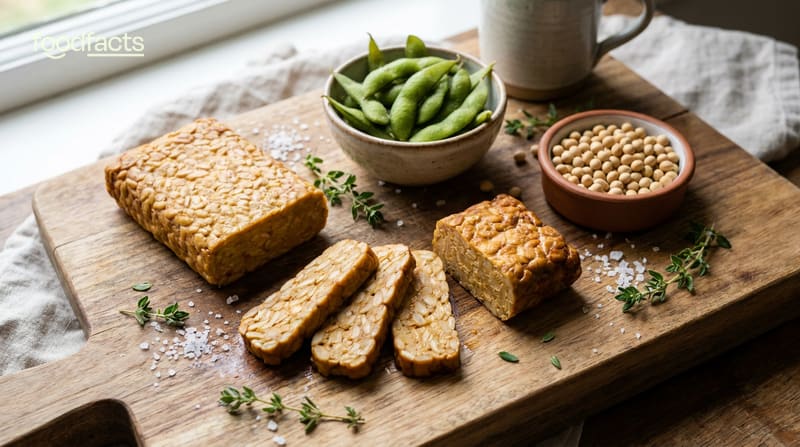
The high-protein, gut-friendly food that's been a staple for centuries. And it's going mainstream

Tempeh is one of the most nutritious plant proteins — high in complete protein, probiotics, and B12 precursors. Here's why nutritionists are…
Read more
A close-up of a person holding a small jar of honey, surrounded by a soft, glowing background that highlights the golden hue of the honey. This image aligns with the article "Honey Spikes Blood Sugar," which explains how despite its natural origins, honey can cause blood sugar levels to spike, particularly for individuals with conditions like diabetes. The article also delves into the complex relationship between honey and its effects on glucose metabolism, emphasizing the need for careful consumption.
FACT CHECK
OPINION
Nutrition

No, honey isn’t unhealthy because it spikes your blood sugar, but why does this influencer say the opposite?

Honey raises blood sugar — but so does everything sweet. The evidence shows honey's glycaemic response is more nuanced than most influencer claims suggest.
Read more
A visually split flat-lay of diverse food items on a marble surface, comparing plant-based foods on the left—such as fruits, legumes, rice, and vegetables—with animal-based foods on the right—like eggs, bacon, cheese, and meat. At the center is a plate with both types of foods divided down the middle, symbolizing the debate. A clipboard on the right lists protein-rich foods. This image supports the article's exploration of Paul Saladino’s critiques of plant-based diets in relation to longevity, and FoodFacts.org’s fact-checking of those claims through nutritional science.
FACT CHECK
OPINION
Health

Paul Saladino MD questions plant-based diets for longevity. What does the science say?

Paul Saladino questions whether plant-based diets support longevity — but the evidence from Blue Zones and long-term cohort studies tells a different…
Read more
A close-up of several slices of white bread overlapping each other, with golden-brown crusts and fluffy interiors. This image ties into the article's exploration of whether freezing white bread can make it healthier—challenging assumptions around ultra-processed foods and highlighting how food preparation methods may impact nutritional value.
FACT CHECK
OPINION
Nutrition

Can freezing white bread make it healthier? Here’s what you need to know

Freezing bread does lower its glycaemic index — but the effect is modest. Here's what the research actually shows and when it matters for your health.
Read more
Previous
More
See all articles

Ready to take action?

You have the power to make a difference 3 times a day.

Get Inspired Today!
Get the latest articles
You're all set! We've added you to our newsletter.
Oops! Something went wrong while submitting the form.
Follow Us
youtube [#168] Created with Sketch.
Food misinformation threatens public and planetary health. We're fighting back against misinformation, fostering healthy communities, honest food, and a thriving planet

ai powered chat bot experience provided by Elevenlabs
Article

Top Myths

Latest

The Climate Crisis
Politics Of Food
Health
Food Systems
Media Literacy
Popular Media
Ethics
Environment
Nutrition
Take Action
Partner Organisations
About
Fact Checking PoliciesOur Funding/DisclosuresThe TeamOrganisational StructureIndependence & TransparencyAi Usage PolicyAdvisory BoardMedia MentionsFAQsGlossaryXML News Feed
Contact
Report Mis/DisinformationContact Us / PressProvide Feedback
Privacy Policy  
Terms & Conditions © 2024
The Worlds First Food Fact-Check Platform.
foodfacts.org is a non-profit organisation. (no. 15414442) limited by guarantee and registered in England and Wales.
‍
© Copyright 2024-2026 foodfacts.org  Launched in 2025. 🇬🇧 Grown in the United Kingdom.