Please don't scroll past — we need your help to survive

No ads, no industry money. Without reader support, foodfacts will vanish.

Donate now →
foodfacts logo
  • Articles
    
    Latest
    arrow pointing right
    All Fact Checks
    arrow pointing right
    Guides
    arrow pointing right
    Features
    arrow pointing right
    Opinion Pieces
    arrow pointing right
    Topics
    The Climate Crisis
    Politics Of Food
    Health
    Food Systems
    Media Literacy
    Popular Media
    Ethics
    Environment
    Nutrition
    Trending Tags
    Red Wine
    Mediterranean Diet
    Alcohol
    Seed Oils
    Artificial Sweeteners
    Lifestyle
    Brain Health
    Yoghurt
    Polyphenols
    Frankenchicken
    Observational Study
    Ultra Processed Animals (UPA)
    Zoonotic Diseases
    Lab-Grown Meat
    Glossary
    arrow pointing right
    Fact Checks
    Is ketosis needed to combat inflammation?
    Are lentils and other pulses unhealthy?
    Do seed oils increase risk of sunburn?
  • About
    
    • About
    • The Team
    • Science Communication Fellowship
    • Board of Trustees
    • Our Experts
    • Fact Checking Policies
    • Funding/Disclosures
    • Advisory Board
    • Media Mentions
    • FAQs
  • Food Database
  • Misinfo Watchlist
Report Misinfo
Join freeJoin
Log inBecome a memberMy dashboardMy accountLog out
Home
/
Articles
/
Grains

Grains

Explore Categories

The Climate Crisis
Politics Of Food
Health
Food Systems
Media Literacy
Popular Media
Ethics
Environment
Nutrition

Explore evidence-based articles on Grains, including nutrition science, health claims, dietary context and common myths. From Food Facts.

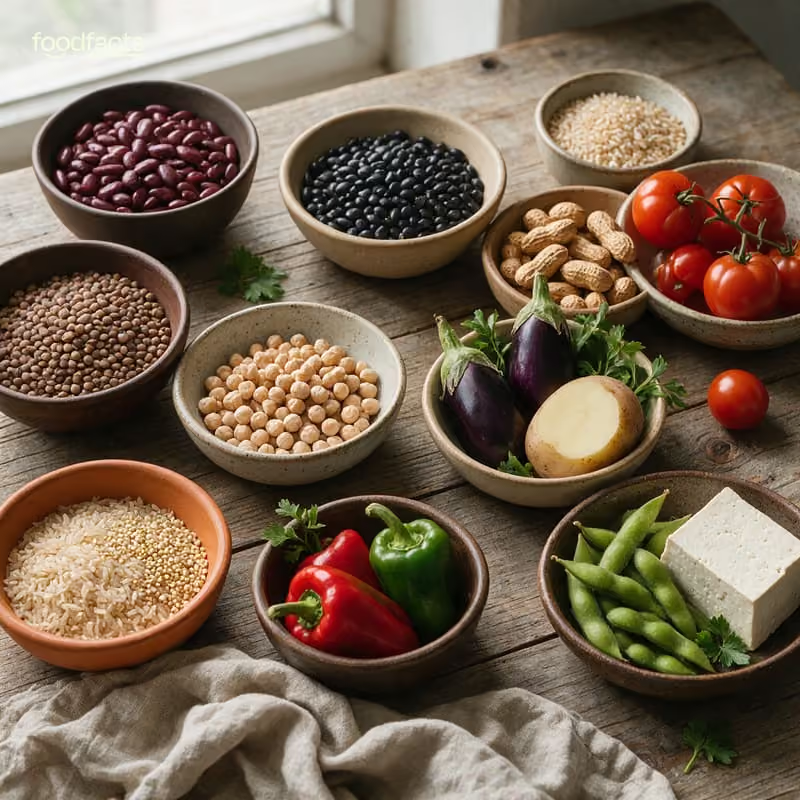
Overhead view of a rustic wooden table displaying various lectin-containing plant foods arranged in bowls and baskets with handwritten labels. From left to right: a white ceramic bowl of dark red kidney beans labeled 'BEANS'; a bowl of tan-colored lentils labeled 'LENTILS'; a bowl of small beige chickpeas labeled 'CHICKPEAS'; a terracotta dish of unshelled peanuts labeled 'PEANUTS'; and a bowl of black beans or black lentils. In the center, a large wicker basket contains fresh heirloom tomatoes and sliced yellow potatoes. To the right, another wicker basket labeled 'NIGHTSHADES' holds purple eggplants, a red bell pepper, and a green bell pepper. In front, a wicker tray displays various whole grains including brown rice, flaxseeds, and quinoa in small white bowls, labeled 'WHOLE GRAINS'. At the bottom right, a plate with fresh edamame pods and a block of tofu is labeled 'SOY'. A cream-colored linen cloth is draped at the top of the composition. The 'foodfacts' logo appears in white text in the bottom right corner.
FACT CHECK
OPINION
Nutrition

Should we be afraid of lectins? What the science actually says

Lectins are harmful in raw form but neutralised by cooking. The anti-lectin movement overstates the risk dramatically — here's what research actually…
Read more
A child is sat at a table that has whole grain foods on it. This highlights the fact that whole grains can contribute to a healthy diet.
FACT CHECK
OPINION
Nutrition

No, you don’t need to avoid feeding your kids whole grains.

Whole grains have been consistently linked with positive health outcomes and can play an important part in health-promoting, sustainable diets.
Read more
An assortment of artisanal breads in woven baskets, surrounded by wheat stalks and an open book. The warm, rustic setting contrasts with fearmongering about grains, contextualizing the article’s argument that whole grains are not a cause of depression, but a valuable part of a balanced diet unfairly demonized by wellness culture.
FACT CHECK
OPINION
Nutrition

Debunking the grain-depression myth: what you really need to know

“Grains are depression foods.” It’s a bold claim made by social media influencer Candi Frazier, but is there any truth to it?
Read more
See all articles

Free account, free goodies.

Save your favourite articles and unlock our members-only fact-checking toolkits, guides and resource library. Free to join, no card required.

Create free account

Get the facts, not the fads

Evidence-based nutrition and food-industry investigations — free to your inbox, every week.

One last step: check your inbox and click the confirmation link.

It may take a minute. Please check Promotions, Updates, or spam if you can’t see it.

Follow Us
youtube [#168] Created with Sketch.
Food misinformation threatens public and planetary health. We're fighting back against misinformation, fostering healthy communities, honest food, and a thriving planet

ai powered chat bot experience provided by Elevenlabs
Lenny the Lime, the foodfacts.org chatbotOr message Lenny on WhatsApp: +44 7356 131717 →
Article

Top Myths

Latest

The Climate Crisis
Politics Of Food
Health
Food Systems
Media Literacy
Popular Media
Ethics
Environment
Nutrition
Take Action
Become a MemberPartner Organisations
About
Fact Checking PoliciesOur Funding/DisclosuresThe TeamScience Communication FellowshipOrganisational StructureArticles Of AssociationIndependence & TransparencyAi Usage PolicyAdvisory BoardMedia MentionsFAQsGlossaryXML News Feed
Contact
Report Mis/DisinformationContact Us / PressHire Us To TalkProvide Feedback
Privacy Policy  
Terms & Conditions © 2024
The Worlds First Food Fact-Check Platform.
foodfacts.org is a non-profit organisation. (no. 15414442) limited by guarantee and registered in England and Wales.
‍
© Copyright 2024-2026 foodfacts.org  Launched in 2025. 🇬🇧 Grown in the United Kingdom.