
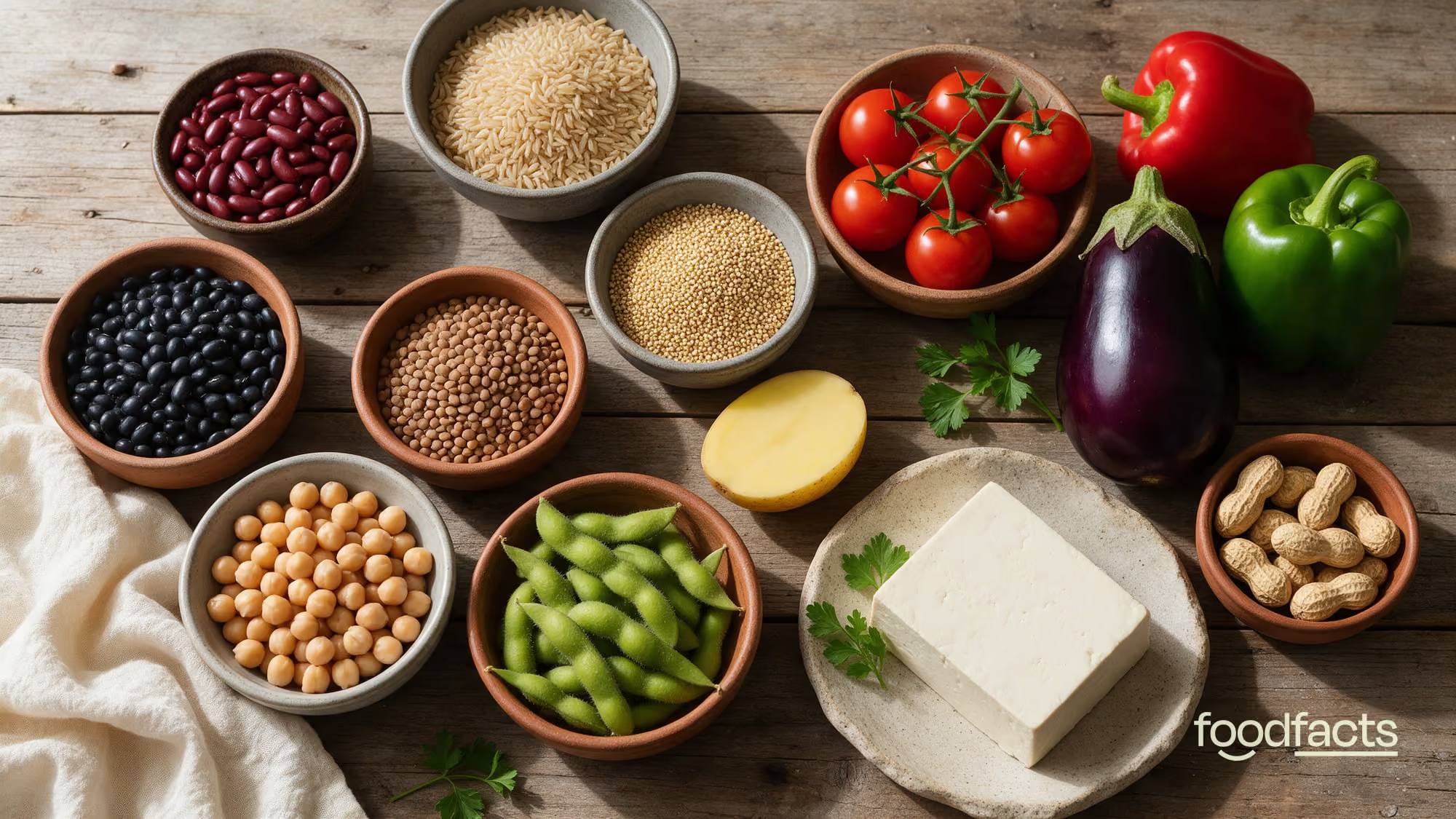




Should we be afraid of lectins? Why claims about oats, cashews and brown rice are misleading


Dr. Steven Gundry posted a Halloween reel on Instagram on 31st October, claiming that lectins are “scary” and bad for us. He talks about lectins in oats, cashew nuts and brown rice, specifically. Regarding oats, he claims they’re “loaded with glyphosate, other pesticides and herbicides” and says that they’re also “loaded with lectins” and are to “feed horses, not you”. Cashews are, too, loaded with lectins, he says, claiming they are “hard on your stomach” and “poke holes in your gut”. Lastly, he tells his followers that brown rice is “scary” and “loaded with lectins”.
The following article separates fact from fiction, providing you with an accurate and balanced take on the popular topic of lectins.



Lectins do exist in many plant foods, but existing human evidence does not support the idea that normally cooked oatmeal, cashews, or brown rice “poke holes” in our gut or are broadly dangerous.
Key points:
- Most lectins are heat‑sensitive and are greatly reduced by cooking, soaking, fermenting, or processing.
- Major reviews conclude that, in the way people typically eat them, lectin‑containing foods do not show clear harmful effects in humans and can provide health benefits via fibre, micronutrients, and phytochemicals.
- Regulatory agencies in the EU and elsewhere report that pesticide residues such as glyphosate in foods, including oats, are generally well below safety thresholds for consumers.
Dr Gundry is a medical professional with a sizeable online following who presents himself as a credible and authoritative voice; therefore, any claims he makes have the potential to impact social media users’ opinions and dietary choices significantly. In this case, the claims being made are exaggerated, and, like many of the loudest nutrition claims touted on social media, they also play on our fears and grab our attention. This reel taps into a common social media narrative that paints entire categories of foods as toxic based on lab or animal data taken out of context.


What do we really know about lectins, oats, cashews, and brown rice?
Lectins lowdown
Lectins are a large family of carbohydrate‑binding proteins naturally present in many plants, including beans, grains, nuts, and some vegetables (source). Lectins are also classified as antinutrients - natural compounds that are found in plants and some animal foods. Antinutrients can interfere with the absorption of nutrients; however, this risk is usually mitigated by cooking, soaking, sprouting or fermenting foods.
In high amounts and in inadequately prepared foods (for example, undercooked red kidney beans), certain lectins can cause acute gastrointestinal symptoms such as nausea, vomiting, and diarrhea, which is well documented in case reports and risk assessments (source).
However:
- Food‑safety bodies note that when plant foods are properly cooked and eaten in moderation, lectins are not expected to have negative health effects for the general population.
- A scientific review of wheat lectins concluded that, under typical conditions of cooking and processing, current data “do not support negative health effects in humans” (source).
Some lectins may also have beneficial properties, including possible roles in helping protect against certain cancers and infections, and supporting gut health. Research has also explored their potential links to lower risk of type 2 diabetes and obesity, showing that it is a lot more nuanced than “lectins are bad” (source).
Do lectins “poke holes” in the gut and cause leaky gut?
Health and wellness influencers’ claims often describe lectins as physically “poking holes” in the intestinal wall, causing “leaky gut” and a cascade of chronic disease.
What research shows:
- In vitro and animal work indicates that high doses of certain raw lectins can alter intestinal cell turnover, increase permeability, and affect immune responses (source).
- A risk assessment from Germany’s Federal Institute for Risk Assessment (BfR) concludes that these effects are mainly seen with high, non‑dietary exposures or improperly processed foods and that most lectins, as normally consumed, are not expected to harm gut health (source).
- Based on the current human data, there is no direct, clinically meaningful link between intake of cooked-food lectins and "leaky gut" or autoimmune disease (source).
Bottom line: In other words, concerns from high‑dose or raw exposures cannot simply be translated into “cooked oatmeal, cashews, and brown rice routinely damage your gut.”
Claim 1: “Oatmeal is loaded with glyphosate, other pesticides and herbicides and loaded with lectins. It feeds horses - not you”
Fact check: Assertions that oats are unsafe because of lectins or pesticide residues oversimplify and misrepresent the evidence; processing reduces lectin activity, regulatory limits exist to keep residues within safe levels, and oats are associated with cardiovascular benefits when eaten as part of a balanced diet.
Oats, lectins, and preparation
Oats do contain lectins, but:
- Oats are almost always heat‑processed (steamed, rolled, or otherwise heated) before reaching the consumer, which substantially reduces lectin activity.
- Reviews of cereal lectins indicate that typical processing (cooking, baking, extrusion) significantly diminishes lectin content and biological activity (source).
Observational studies consistently associate higher intake of whole grains, including oats, with lower risk of cardiovascular disease and all‑cause mortality, suggesting no obvious harm at population level, although these specific observations are not primarily about lectins. (source) (source). While research focusing on oats, specifically, also concludes that a higher oat intake is associated with lower risk of type 2 diabetes and reduced all-cause mortality (source).
Glyphosate and pesticide residues in oats
Residues of glyphosate and other pesticides can be detected in some oat products, especially when glyphosate is used as a pre‑harvest desiccant.
However, here are some key points from regulators on this subject:
- EFSA’s (The European Food Safety Authority) latest glyphosate risk assessment includes cereals such as oats, and current EU regulations are based on the conclusion that dietary exposure to glyphosate is unlikely to pose a health risk at typical intake levels (source).
- The 2023 EU pesticide residue report found that the vast majority of foods tested, including cereals, were within legally allowed maximum residue levels (MRLs), with dietary exposure remaining below toxicological reference values (source).
This does not necessarily mean “zero exposure,” but it does mean that, under current regulations, glyphosate residues in oat products are considered unlikely to pose a health risk at typical intake levels. In addition, it’s important to also note that organic standards ban glyphosate use, and surveillance data show markedly lower pesticide residues in organic foods in general (source) (source).
“Horse feed, not human food”
Calling oats “horse feed” ignores extensive human data:
- Oats are widely recognised in clinical and public‑health guidance as a source of beta‑glucan fibre, which can help reduce LDL cholesterol and support glycemic control (source).
- No major health authority recommends avoiding oats because of lectins; instead, they are often recommended as part of a balanced, fibre-rich diet.
The claim that oatmeal is one of the “worst foods you can put in your body” due to lectins and glyphosate is therefore not supported by current evidence when oats are prepared and consumed in typical ways.
Claim 2: “Cashews are loaded with lectins, hard on your stomach and poke holes in your gut”
Fact check: Claims that cashews are harmful due to lectins or antinutrients oversimplify the evidence; in reality, typical processing mitigates these compounds, and moderate consumption fits safely into a heart-healthy diet.
Cashews do contain antinutrients (like many nuts and seeds), but the context again matters.
Key points:
- Cashews sold for consumption are heat‑treated to remove toxic components in the shell (such as urushiol‑like compounds). More broadly, this heat processing also denatures proteins, including lectins, reducing their biological activity (source).
- Human studies and dietary patterns frequently associate nut consumption (including tree nuts) with reduced risk of cardiovascular disease and improved overall diet quality, not increased gut damage, when eaten in moderate amounts (source).
Lectins and other antinutrients can theoretically contribute to digestive discomfort in some sensitive individuals, especially in large quantities. However, there is no robust body of human clinical evidence showing that normally prepared cashews “poke holes” in the gut or are uniquely damaging compared with other nuts. For most people without specific allergies or intolerances, cashews can reasonably fit into a varied, plant‑rich diet. In fact, some research shows that cashew nuts have been associated with reduced gut permeability.
If someone notices consistent gastrointestinal symptoms after eating cashews, individualised avoidance is reasonable, but that is very different from a blanket claim that cashews are broadly harmful due to lectins.
Claim 3: “Brown rice is loaded with lectins”
Fact-check: Although brown rice does contain slightly higher levels of lectins, claims that it is harmful because of this are not supported by human evidence. In fact, brown rice remains a widely accessible, fibre-rich whole grain recommended in public-health guidelines.
Brown rice retains the bran and germ, which means:
- Slightly higher levels of certain antinutrients, including lectins and phytic acid, compared to white rice.
- Higher amounts of fibre, vitamins, minerals, and bioactive compounds.
Important context:
- A large proportion of the world’s population consumes rice daily, and many public‑health guidelines encourage whole‑grain options like brown rice for added fibre.
- Reviews of cereal lectins again emphasise that, when grains are cooked or processed as normally eaten, evidence does not demonstrate clear adverse health outcomes in humans (source). In fact, the evidence consistently shows that regular consumption of brown rice and other whole grains is associated with a lower risk of type 2 diabetes and improved cardiometabolic health (source). The advantages of the extra nutrients and fibre clearly outweigh any effect of antinutrients.
Dr Gundry acknowledges that many cultures traditionally remove the hull (choosing white rice), but this observation alone does not establish that brown rice is harmful; it reflects culinary, taste, and storage preferences, not controlled trials on lectin toxicity in humans.
For individuals with specific digestive issues, experimenting with different grains (including white rice) can make sense, but labelling all brown rice as “scary” because of lectins oversimplifies the evidence.
The online anxiety surrounding lectins is a classic case of taking a kernel of scientific truth and extrapolating it into nutrition scaremongering. The reality is that standard preparation methods (soaking or cooking) render them harmless. To claim that staples like oats and cashews are damaging ignores mountains of evidence showing the opposite: that populations with the highest intake of whole grains and nuts have the lowest risks of chronic disease and mortality.
.avif)
Danae Marshall is affiliated with ZOE, a commercial company focused on personalised nutrition.
When lectin concerns can be legitimate
It is fair to acknowledge specific, evidence‑based lectin risks:
- Raw or undercooked legumes, especially kidney beans, can cause acute poisoning due to high phytohemagglutinin activity, which is why proper soaking and boiling are essential (source).
- Experimental and observational research indicates that some plant antinutrients can reduce nutrient bioavailability or affect digestion, particularly at high intakes, and that food processing can lessen these effects. For people with gastrointestinal disorders or nutrient deficiencies, seeking personalised dietary guidance may be warranted (source).
These genuine concerns do not extend to a blanket condemnation of all lectin‑containing foods, especially when properly cooked and eaten in normal amounts.
Social media, “scary” language, and cherry‑picking information
The Halloween framing and “scary foods” language are classic examples of how social media can amplify:
- Cherry-picked mechanistic studies (often in vitro or in animals at high doses) while ignoring large‑scale human data and real‑world dietary patterns.
- Black‑and‑white narratives (“this food is toxic,” “this food is a superfood”), which are more engaging but less accurate than nuanced, dose‑ and context‑dependent explanations.
Consumers can protect themselves by asking:
- Is this claim supported by human studies on normally prepared foods, or only by lab/animal work?
- Do major independent health authorities recommend avoiding this food for the stated reason?
- Is the influencer selling or promoting a product or “lectin‑free” programme tied to the fear‑based message?
Bottom Line
Lectins are real, and certain raw or improperly prepared foods can cause problems, but major reviews and risk assessments indicate that cooked grains, legumes, and nuts are generally safe and can be part of a healthy diet.
Current evidence does not support the claim that everyday oatmeal, cashews, or brown rice “poke holes” in the gut or are inherently dangerous for most people. Regulatory data show that while glyphosate residues may be detectable in oats and other crops, typical dietary exposures are assessed as well below health‑based safety thresholds in the EU. Cherry picking data from in vitro and/or animal trials that are not supported by human studies is overstretching the truth. Learnings can be taken from this important research, of course. But to extrapolate results and apply them to the human context, presenting them as fact without evidence to support the claims, is misleading and irresponsible.
Fear‑based messages that frame common pantry staples as “scary” often overstate limited mechanistic data and underplay the well‑documented benefits of plant‑rich eating. This kind of emotional messaging also neglects to consider the concept of dose in our diet or our dietary patterns. As we see time and time again, there is little sense in singling out specific foods to attack (or indeed singling them out as a superfood), as we know that the key to a healthy diet is the overall pattern, including balance and variety.
Focusing on overall dietary patterns, including more minimally processed whole foods, and prioritising variety matters far more for our health than avoiding specific lectin‑containing foods like oats, cashews, or brown rice.
We have contacted Dr. Steven Gundry, MD. and are awaiting a response.
Disclaimer
This fact-check is intended to provide information based on available scientific evidence. It should not be considered as medical advice. For personalised health guidance, consult with a qualified healthcare professional.
Danae Marshall is affiliated with ZOE, a commercial company focused on personalised nutrition.
Independent fact-checking, funded by readers like you.
Misinformation is a growing threat to our health and planet. At foodfacts.org, we're dedicated to exposing the truth behind misleading food narratives. But we can't do it without your support.
Sources
- Adamcová A., et al. (2021). “Lectin Activity in Commonly Consumed Plant-Based Foods: Calling for Method Harmonization and Risk Assessment.”
- Petroski, W., & Minich, DM. (2020). “Is There Such a Thing as "Anti-Nutrients"? A Narrative Review of Perceived Problematic Plant Compounds.”
- Van Buul, V.J., et al (2014). “Health effects of wheat lectins: A review.”
- He, S., et al. (2018). “Phaseolus vulgaris lectins: A systematic review of characteristics and health implications.”
- Vasconcelos, I M., & Oliveira, J T A., (2004). “Antinutritional properties of plant lectins.”
- BfR (2025). “Lectins in plant-based foods.”
- Lan Shi, et al. (2018). “Changes in levels of phytic acid, lectins and oxalates during soaking and cooking of Canadian pulses.”
- Aune, D., et al. (2016). “Whole grain consumption and risk of cardiovascular disease, cancer, and all cause and cause specific mortality: systematic review and dose-response meta-analysis of prospective studies.”
- Hu, Y., et al. (2022). “Intake of whole grain foods and risk of coronary heart disease in US men and women.”
- EFSA (European Food Safety Authority) (2023). “Glyphosate.”
- EFSA Carrasco Cabrera, L., et al. (2025). “The 2023 European Union report on pesticide residues in food.”
- Wehrli F, et al. (2021). “Oat Intake and Risk of Type 2 Diabetes, Cardiovascular Disease and All-Cause Mortality: A Systematic Review and Meta-Analysis.”
- Regulation (EU) 2018/848 of the European Parliament and of the Council.
- EFSA, (2018). “Monitoring data on pesticide residues in food: results on organic versus conventionally produced food.”
- Ho HVT, et al. “The effect of oat β-glucan on LDL-cholesterol, non-HDL-cholesterol and apoB for CVD risk reduction: a systematic review and meta-analysis of randomised-controlled trials.”
- Kheto A, et al. (2025). “Anti-nutritional factors: Nutrient interactions, processing interventions, and health aspects.”
- Houston, L., (2023). “Tree Nut and Peanut Consumption and Risk of Cardiovascular Disease: A Systematic Review and Meta-Analysis of Randomized Controlled Trials.”
- Kelly Souza Silveira B, et al. (2024). Daily Cashew and Brazil Nut Consumption Modifies Intestinal Health in Overweight Women on Energy-Restricted Intervention: A Randomized Controlled Trial (Brazilian Nuts Study).
- Saleh ASM, (2019) Brown Rice Versus White Rice: Nutritional Quality, Potential Health Benefits, Development of Food Products, and Preservation Technologies.
- Popova, A., & Mihaylova, D., (2019). “Antinutrients in Plant-based Foods: A Review.”


foodfacts.org is an independent non-profit fact-checking platform dedicated to exposing misinformation in the food industry. We provide transparent, science-based insights on nutrition, health, and environmental impacts, empowering consumers to make informed choices for a healthier society and planet.








.svg)


.svg)

