Please don't scroll past — we need your help to survive

No ads, no industry money. Without reader support, foodfacts will vanish.

Donate now →
foodfacts logo
  • Articles
    
    Latest
    arrow pointing right
    All Fact Checks
    arrow pointing right
    Guides
    arrow pointing right
    Features
    arrow pointing right
    Opinion Pieces
    arrow pointing right
    Topics
    The Climate Crisis
    Politics Of Food
    Health
    Food Systems
    Media Literacy
    Popular Media
    Ethics
    Environment
    Nutrition
    Trending Tags
    Red Wine
    Mediterranean Diet
    Alcohol
    Seed Oils
    Artificial Sweeteners
    Lifestyle
    Brain Health
    Yoghurt
    Polyphenols
    Frankenchicken
    Observational Study
    Ultra Processed Animals (UPA)
    Zoonotic Diseases
    Lab-Grown Meat
    Glossary
    arrow pointing right
    Fact Checks
    Is ketosis needed to combat inflammation?
    Are lentils and other pulses unhealthy?
    Do seed oils increase risk of sunburn?
  • About
    
    • About
    • The Team
    • Science Communication Fellowship
    • Board of Trustees
    • Our Experts
    • Fact Checking Policies
    • Funding/Disclosures
    • Advisory Board
    • Media Mentions
    • FAQs
  • Food Database
  • Misinfo Watchlist
Report Misinfo
Join freeJoin
Log inBecome a memberMy dashboardMy accountLog out
Home
/
Articles
/
Food Waste Reduction

Food Waste Reduction

Explore Categories

The Climate Crisis
Politics Of Food
Health
Food Systems
Media Literacy
Popular Media
Ethics
Environment
Nutrition

Explore evidence-based articles on Food Waste Reduction, including environmental impacts, sustainability debates and food-system relevance. From Food Facts.


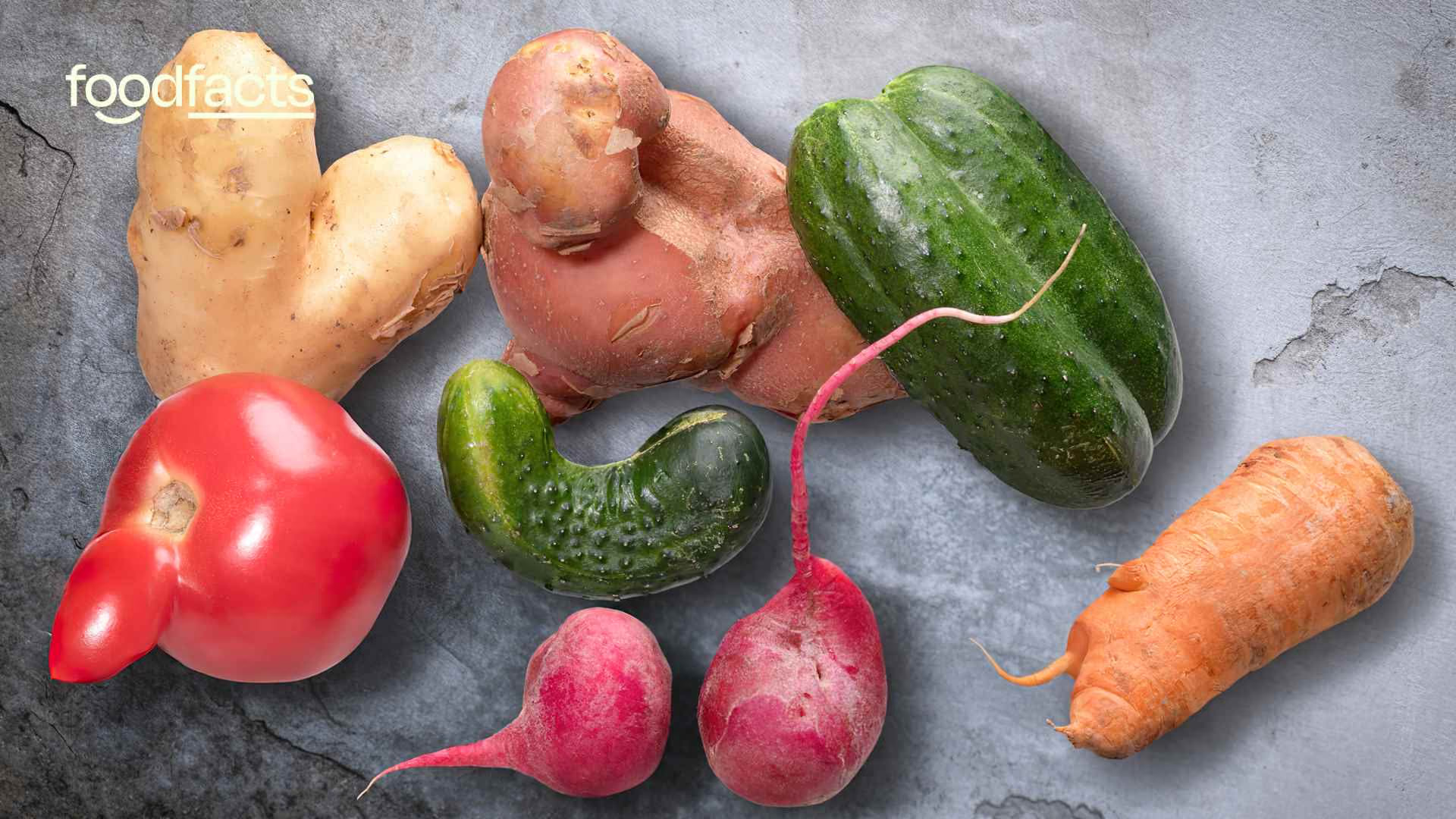
A collection of odd shaped vegetables, that are often excluded.
FACT CHECK
OPINION
Food Systems

Perfectly imperfect: why choosing 'wonky' veg matters more than ever

Explore how accepting visually imperfect fruits and vegetables reduces waste, fights climate change, and reshapes consumer habits.
Read more
A vibrant image of birds perched on branches amidst a coffee agroforestry system, with lush green trees and coffee plants in the background. The scene highlights the biodiversity and ecological balance provided by agroforestry practices. This visual complements the article "Can Agroforestry Save Coffee from Climate Catastrophe?", which discusses how agroforestry can offer a sustainable solution to the climate challenges facing coffee cultivation by integrating trees with coffee crops, enhancing resilience, and supporting biodiversity. The article emphasizes the importance of such practices in protecting coffee production from climate-related threats.
FACT CHECK
OPINION
The Climate Crisis

Can agroforestry save coffee from climate catastrophe?

Climate change threatens global coffee production. Agroforestry — growing coffee under tree canopies — could be the solution the industry needs.
Read more
An illustrated infographic depicting the concept of the circular economy, with interconnected arrows forming a loop, symbolizing sustainability, waste reduction, and resource reuse. The image is tied to the article "Reimagining the Food System Through Circular Thinking," which explores how a circular economy model can transform food systems by minimizing waste and optimizing resources for a more sustainable future. The article discusses how this approach can help reshape food production, consumption, and waste management to create a more resilient and eco-friendly system.
FACT CHECK
OPINION
Food Systems

Reimagining the food system through circular thinking

A circular food economy could dramatically cut waste and emissions. Here's what it means in practice and why it could transform how we produce and…
Read more
A fridge shelf of fresh whole foods including vegetables, dairy and eggs
FACT CHECK
OPINION
Food Systems

Are ‘best before’ dates necessary? Understanding food labels and reducing waste

While much of the industry maintains that best before dates are helpful, anti-waste campaigners argue that they encourage people to throw out…
Read more
Previous
More
See all articles

Free account, free goodies.

Save your favourite articles and unlock our members-only fact-checking toolkits, guides and resource library. Free to join, no card required.

Create free account

Get the facts, not the fads

Evidence-based nutrition and food-industry investigations — free to your inbox, every week.

One last step: check your inbox and click the confirmation link.

It may take a minute. Please check Promotions, Updates, or spam if you can’t see it.

Follow Us
youtube [#168] Created with Sketch.
Food misinformation threatens public and planetary health. We're fighting back against misinformation, fostering healthy communities, honest food, and a thriving planet

ai powered chat bot experience provided by Elevenlabs
Lenny the Lime, the foodfacts.org chatbotOr message Lenny on WhatsApp: +44 7356 131717 →
Article

Top Myths

Latest

The Climate Crisis
Politics Of Food
Health
Food Systems
Media Literacy
Popular Media
Ethics
Environment
Nutrition
Take Action
Become a MemberPartner Organisations
About
Fact Checking PoliciesOur Funding/DisclosuresThe TeamScience Communication FellowshipOrganisational StructureArticles Of AssociationIndependence & TransparencyAi Usage PolicyAdvisory BoardMedia MentionsFAQsGlossaryXML News Feed
Contact
Report Mis/DisinformationContact Us / PressHire Us To TalkProvide Feedback
Privacy Policy  
Terms & Conditions © 2024
The Worlds First Food Fact-Check Platform.
foodfacts.org is a non-profit organisation. (no. 15414442) limited by guarantee and registered in England and Wales.
‍
© Copyright 2024-2026 foodfacts.org  Launched in 2025. 🇬🇧 Grown in the United Kingdom.