foodfacts logo
  • Articles
    
    Latest
    arrow pointing right
    All Fact Checks
    arrow pointing right
    Guides
    arrow pointing right
    Features
    arrow pointing right
    Opinion Pieces
    arrow pointing right
    Topics
    The Climate Crisis
    Politics Of Food
    Health
    Food Systems
    Media Literacy
    Popular Media
    Ethics
    Environment
    Nutrition
    Trending Tags
    Food Storage
    Metabolic Health
    ApoB
    LDL
    Crime
    Studies
    Fact Checking
    Cortisol
    Ultra Processed Animals (UPA)
    Zoonotic Diseases
    Lab-Grown Meat
    (UPF) Ultra Processed Foods
    Chemophobia
    Precision Livestock Farming (PLF)
    Glossary
    arrow pointing right
    Fact Checks
    Do tomatoes, bread, and ginger turn toxic in the fridge?
    Dark chocolate, cocoa beans and laboratory glassware on slate, illustrating lab-grown chocolate
    Why you shouldn't be scared of "poisonous" lab-grown chocolate
    Bowl of high-fibre foods including rolled oats, chia seeds, raspberries, broccoli and crackers next to a glass of water containing visible coloured microplastic particles
    Can fibre help your body excrete microplastics?
  • Take Action
  • About
    
    • About
    • The Team
    • Our Experts
    • Fact Checking Policies
    • Funding/Disclosures
    • Advisory Board
    • Media Mentions
    • FAQs
  • Food Database
  • Misinfo Watchlist
Report MisinfoDonate
Home
/
Articles
/
Food Waste Reduction

Food Waste Reduction

Explore Categories

The Climate Crisis
Politics Of Food
Health
Food Systems
Media Literacy
Popular Media
Ethics
Environment
Nutrition

Explore evidence-based articles on Food Waste Reduction, including environmental impacts, sustainability debates and food-system relevance. From Food Facts.

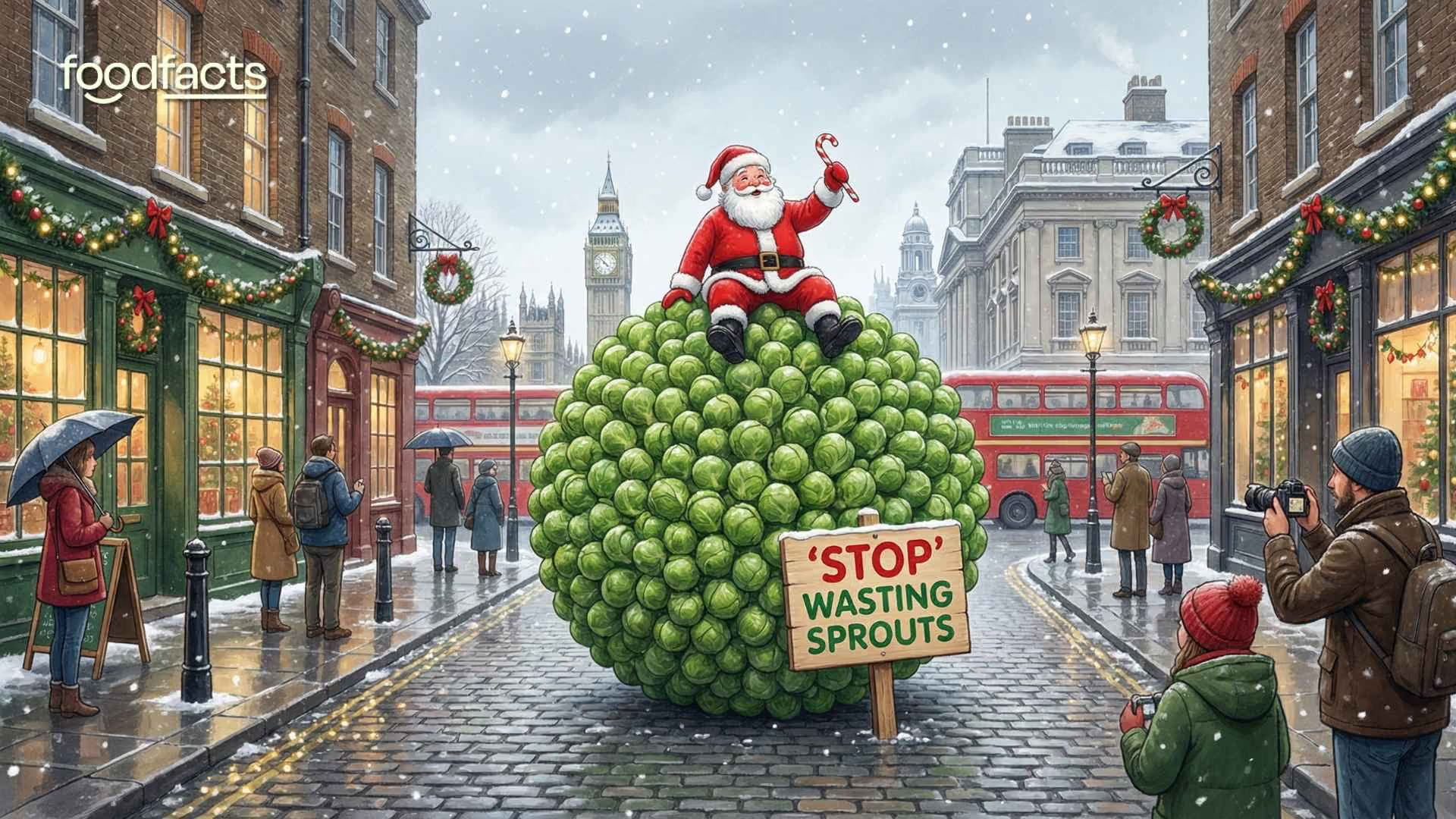
Santa sits on a large pile of Brussels sprouts with a sign that reads 'stop wasting brussels sprouts'
FACT CHECK
OPINION
Food Systems

Why 50 million Brussels sprouts end up in the bin at Christmas

Every December, Britons toss away enough Brussels sprouts to feed a small nation. But sprouts aren't the problem; our treatment of them as a single-use...
Read more
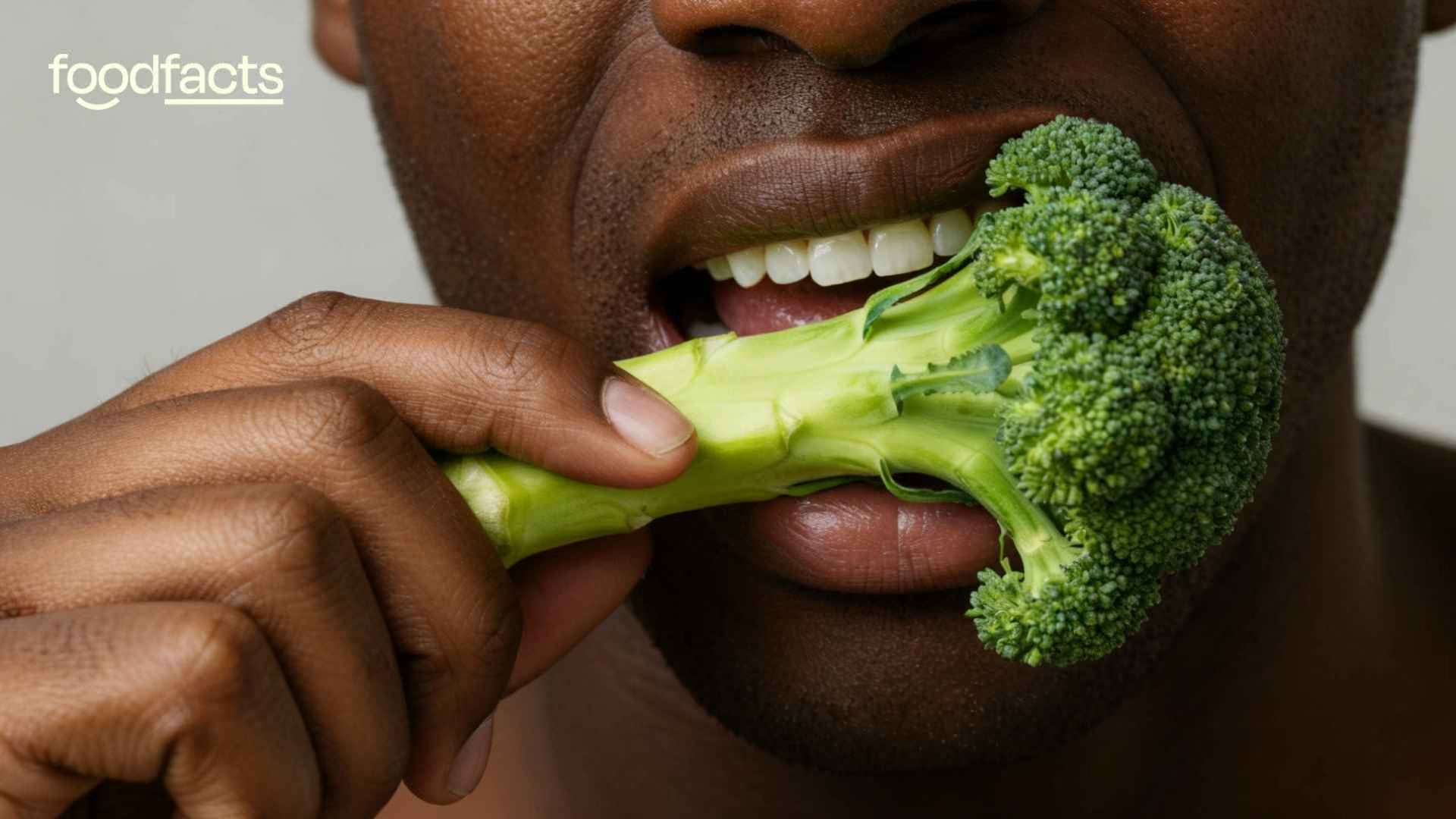
A person holds a broccoli and eats the stalk
FACT CHECK
OPINION
Environment

Should you eat broccoli stalks? Rethinking food waste, one stem at a time

Broccoli stalks are as nutritious as the florets and most people throw them away. Here's what eating the whole vegetable means for nutrition and food…
Read more
A person scrapes some food into a bin.
FACT CHECK
OPINION
Environment

Reducing food waste vs. dietary change: which matters more for the planet?

Reducing food waste and shifting diets both cut emissions. But which matters more—and how can we do both without feeling overwhelmed?
Read more
A collection of odd shaped vegetables, that are often excluded.
FACT CHECK
OPINION
Food Systems

Perfectly imperfect: why choosing 'wonky' veg matters more than ever

Explore how accepting visually imperfect fruits and vegetables reduces waste, fights climate change, and reshapes consumer habits.
Read more
More
See all articles

Ready to take action?

You have the power to make a difference 3 times a day.

Get Inspired Today!
Get the latest articles
You're all set! We've added you to our newsletter.
Oops! Something went wrong while submitting the form.
Follow Us
youtube [#168] Created with Sketch.
Food misinformation threatens public and planetary health. We're fighting back against misinformation, fostering healthy communities, honest food, and a thriving planet

ai powered chat bot experience provided by Elevenlabs
Article

Top Myths

Latest

The Climate Crisis
Politics Of Food
Health
Food Systems
Media Literacy
Popular Media
Ethics
Environment
Nutrition
Take Action
Partner Organisations
About
Fact Checking PoliciesOur Funding/DisclosuresThe TeamOrganisational StructureIndependence & TransparencyAi Usage PolicyAdvisory BoardMedia MentionsFAQsGlossaryXML News Feed
Contact
Report Mis/DisinformationContact Us / PressProvide Feedback
Privacy Policy  
Terms & Conditions © 2024
The Worlds First Food Fact-Check Platform.
foodfacts.org is a non-profit organisation. (no. 15414442) limited by guarantee and registered in England and Wales.
‍
© Copyright 2024-2026 foodfacts.org  Launched in 2025. 🇬🇧 Grown in the United Kingdom.