




Why 50 million Brussels sprouts end up in the bin at Christmas — and why we need to rethink them




Picture this: it's Boxing Day morning, and a pile of uneaten Brussels sprouts sits at the bottom of your bin. You're not alone. This year, an estimated 50 million individual sprouts will end up in waste bins across the UK during the Christmas period, with each household throwing away roughly seven sprouts after December 25th.
The numbers reveal something troubling: 750 million Brussels sprouts are sold at Christmas, with 25% of the year's sprout sales occurring in just two weeks before Christmas. Yet despite their massive seasonal importance, Brussels sprouts consistently rank among the most wasted festive foods.
But here's my view: Brussels sprouts are just one of the many foods we've wrongly reduced to seasonal commodities. We've created an artificial narrative that sprouts exist solely for Christmas Day, when the reality is far richer and more delicious.
Brussels sprouts aren't just for Christmas.
The fundamental problem is cultural, not culinary. Seasonal vegetables like Brussels sprouts are in season for around five to six months in the UK—from September through February. They're a winter staple, thriving in cold weather and reaching peak flavour after the first frost. Yet we've convinced ourselves they're appropriate only for a single meal on December 25th.
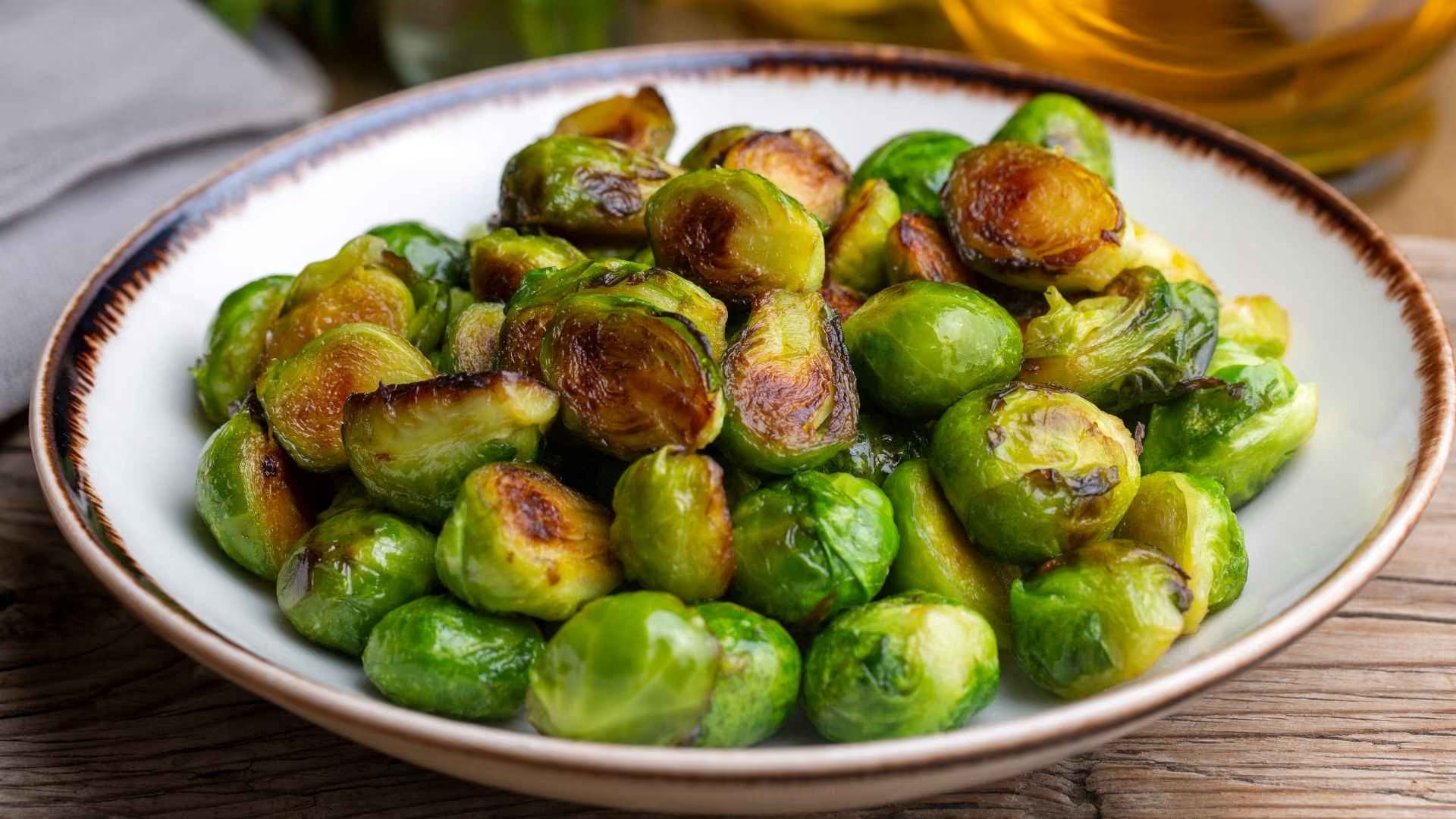
This is bizarre when you consider the versatility of sprouts. There are countless ways to cook Brussels sprouts that make them genuinely delicious: roasted until caramelized with garlic, sautéed in cast iron until crispy and golden, stir-fried with chilli, shredded raw into winter slaws, or charred with bold flavours. The boiled, mushy sprouts of Christmas past don't represent what this vegetable can be.
A recent survey found that one in four people blame their aversion to sprouts on childhood tastes they "couldn't shake off." This reveals the heart of the issue: we're buying sprouts out of obligation, not genuine interest. If childhood memories or texture preferences mean no one will eat them, there's no shame in choosing alternative winter vegetables instead. But the solution isn't to avoid sprouts entirely—it's to discover how to prepare them properly and eat them throughout their natural season.

The environmental case for seasonal eating
The food waste problem extends beyond sprouts. During the Christmas period, waste levels spike by approximately 30% across UK households, generating over 270,000 tonnes of extra festive waste. Not only is this bad for the planet, but it’s terrible for your wallet, especially when food prices are higher than last year.
When uneaten sprouts and other festive food decompose in landfills, they release methane, a greenhouse gas roughly 25 times more potent than carbon dioxide. But the environmental argument for eating Brussels sprouts extends beyond waste reduction—it's about embracing seasonal eating itself.
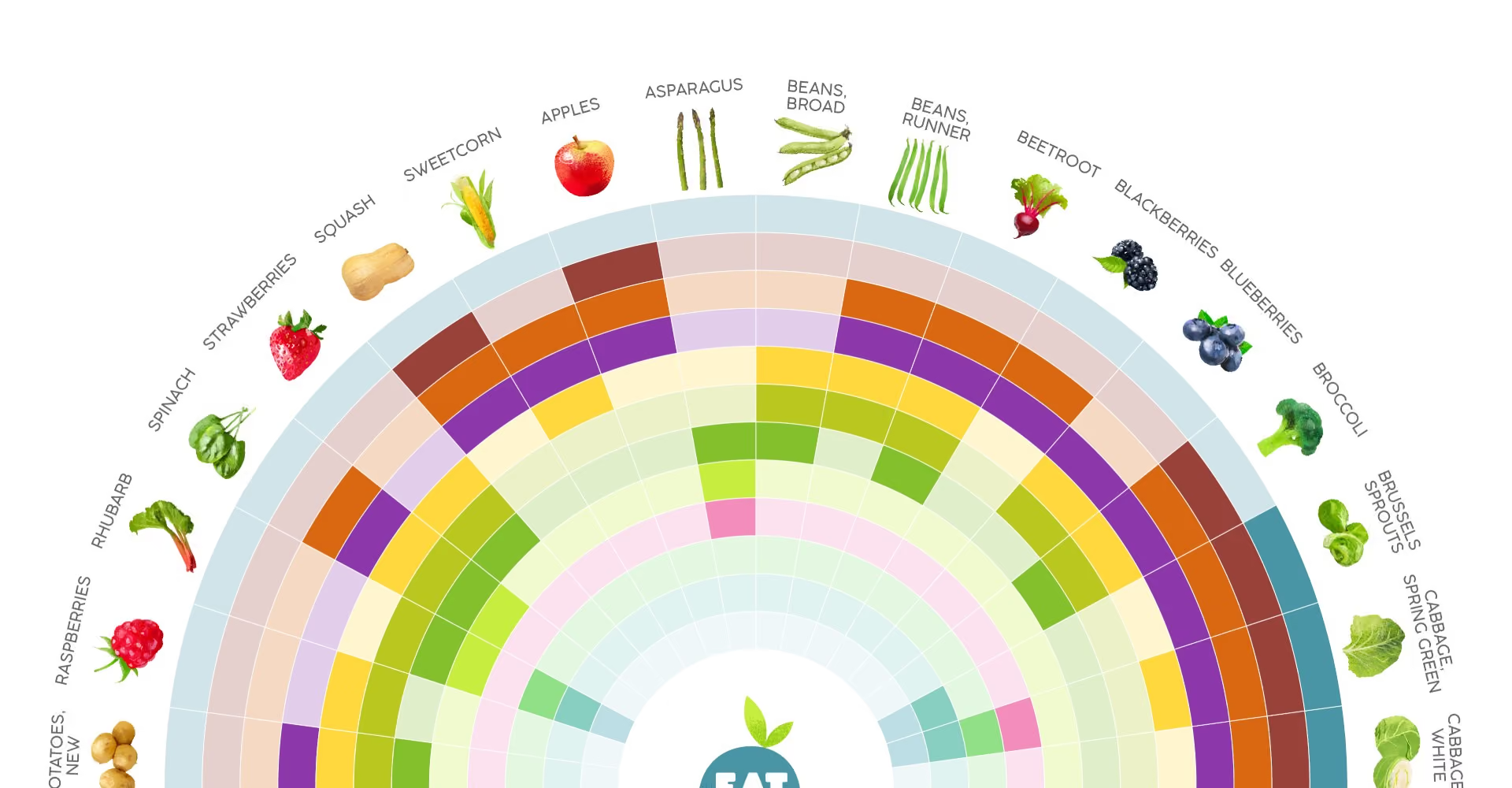
Eating seasonally reduces the need for long-distance transportation, extensive refrigeration, and energy-intensive greenhouse operations. When you buy sprouts in December, January, or February, you're consuming produce at its natural peak, grown locally without the environmental cost of artificial growing conditions. This helps reduce your carbon footprint and supports sustainable agriculture. However, if you’re concerned about reducing the carbon footprint of your food, the most effective thing you can do is to swap some of the meat out for plant-based alternatives.
Yet we've created a food culture where Brussels sprouts appear en masse for one week, get purchased out of tradition, and vanish from our plates for the remaining 11 months. This is the opposite of seasonal eating—it's seasonal panic-buying followed by waste.
Rethinking our sprout habits
The solution requires honest assessment and culinary curiosity. Before Christmas shopping, consider whether anyone in your household genuinely enjoys sprouts prepared in the way you typically cook them. If not, experiment with new preparation methods during the months when they're naturally abundant. Roasting at high heat transforms them. Pairing them with bold flavours, chilli, balsamic vinegar, miso, makes them compelling.
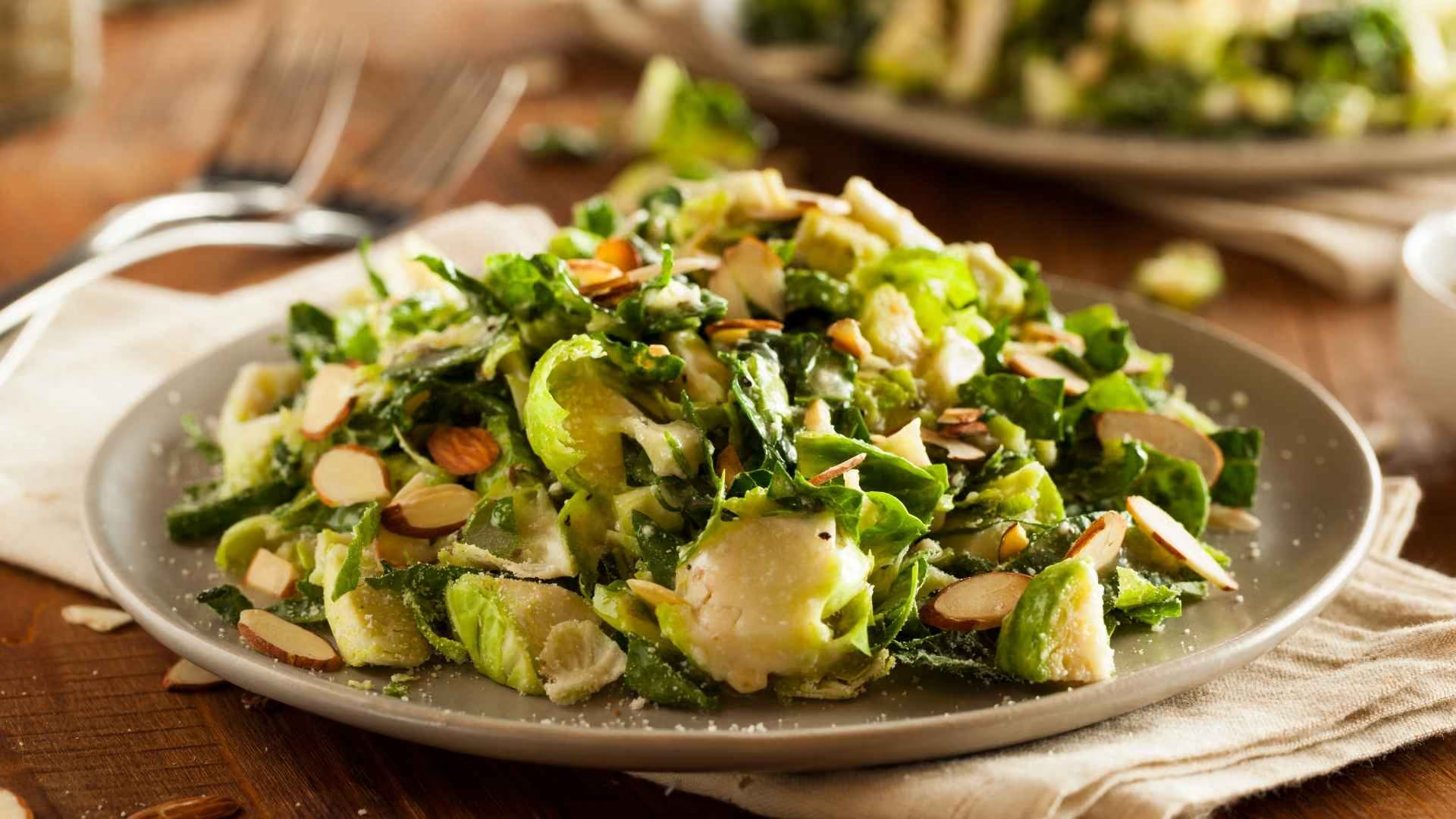
More fundamentally, we need to spread sprout consumption across their five-month season rather than concentrating it into one day. There's no reason Brussels sprouts should be relegated to Christmas when they're equally delicious (and far cheaper) in October, November, January, and February. Making them a regular part of your winter repertoire rather than a once-yearly obligation means you'll buy them when you genuinely want them, not out of festive duty.
For unavoidable scraps and leftovers, composting keeps organic waste out of landfills and prevents methane emissions. But the real victory is eating the food you buy in the first place.
The bigger picture
Brussels sprouts have become a symbol of something larger: our disconnection from seasonal eating patterns and the environmental consequences that follow. We generate enormous waste not because sprouts are inherently unpalatable, but because we've reduced a versatile winter vegetable to a checkbox on a Christmas shopping list.
To me the path forward is straightforward. Eat Brussels sprouts throughout their natural season. Experiment with cooking methods that highlight rather than hide their flavour. Buy them when you genuinely want to eat them, not because it's December 23rd and tradition demands it. And recognise that seasonal eating isn't about restriction—it's about alignment with what grows naturally, tastes better, costs less, and carries a smaller environmental footprint.
This Christmas, if you find yourself reaching for those frozen sprouts out of habit, pause and ask: will anyone actually eat these? If the answer is yes, brilliant, make sure you cook them in a way that does them justice. If the answer is no, the most sustainable choice is to leave them on the shelf, enjoy the festive season with food that will genuinely be appreciated, and rediscover sprouts properly when January arrives and they're still in glorious season.

Independent fact-checking, funded by readers like you.
Misinformation is a growing threat to our health and planet. At foodfacts.org, we're dedicated to exposing the truth behind misleading food narratives. But we can't do it without your support.
Sources
- BBC (19 January 2025). What's pushing up the cost of Christmas dinner this year? Available at: https://www.bbc.com/news/articles/cj01rvgd3jvo
- BBC Good Food. (24 January 2024). Brussels sprouts. Available at: https://www.bbcgoodfood.com/glossary/brussels-sprouts-glossary
- BBC Good Food. (21 September 2025). How to cook brussels sprouts. Available at: https://www.bbcgoodfood.com/recipes/how-to-cook-brussels-sprouts
- BBC Good Food. (29 October 2025). Brussels Sprouts Recipes. Available at: https://www.bbcgoodfood.com/recipes/collection/brussel-sprouts-recipes
- British Dietetic Association. (31 October 2024). Which fruit and veg are in season in the UK? Available at: https://www.bda.uk.com/food-health/your-health/sustainable-diets/seasonal-fruit-and-veg-a-handy-guide.html
- Business Waste. (2 December 2025). Christmas Waste Facts - It's Not Very Jolly. Available at: https://www.businesswaste.co.uk/news/christmas-waste-facts-its-not-very-jolly/
- FoodFacts.org. (2 December 2024). Are 'best before' dates necessary? Understanding food waste. Available at: https://www.foodfacts.org/articles/are-best-before-dates-necessary
- FoodFacts.org. (30 October 2024). Methane in the food system: a hidden driver of climate change. Available at: https://www.foodfacts.org/articles/methane-and-the-food-system
- FoodFacts.org. (17 October 2025). Reducing food waste vs. dietary change: which matters more for the planet? Available at: https://www.foodfacts.org/articles/reducing-food-waste-vs-dietary-change-which-matters-more-for-the-planet
- Grocery Gazette. (18 December 2025). 50 million sprouts will end up in the bin over Christmas, says new data. Available at: https://www.grocerygazette.co.uk/2025/12/19/sprouts-too-good-to-go/
- GWR Waste Management. (11 December 2025). Sustainable Christmas guide: Festive facts, food waste tips and more. Available at: https://www.gwrwastemanagement.co.uk/sustainable-christmas-guide-festive-facts-food-waste-tips-and-more
- Lennox Farm. (30 June 2024). Eating in Season: Why it Matters. Available at: https://lennoxfarm.ca/eating-i ch 2025). Eating Seasonally: Health and Environmental Benefits. Available at: https://merakijuicekitchen.com/2025/03/26/eating-seasonally-health-and-environmental-benefits/
- Office for National Statistics (7 December 2018). The Twelve Stats of Christmas. Available at: https://blog.ons.gov.uk/2018/12/07/the-twelve-stats-of-christmas/
- Seeds Canada. (1 July 2023). Why Eating Seasonally is Good for You and the Environment. Available at: https://seeds.ca/schoolfoodgardens/why-eating-seasonally-is-good-for-you-and-the-environment/
- Vegetarian Society. (13 July 2025). Seasonal UK Grown Produce. Available at: https://vegsoc.org/blog/seasonal-uk-grown-produce/
- Wikipedia (n.d.).Brussels sprout. Available at: https://en.wikipedia.org/wiki/Brussels_sprout
- World Cancer Research Fund. (2 December 2025). Which fruit and vegetables are in season in winter? Available at: https://www.wcrf.org/living-well/children-families/health-facts/which-fruit-and-vegetables-are-in-season-in-winter/



foodfacts.org is an independent non-profit fact-checking platform dedicated to exposing misinformation in the food industry. We provide transparent, science-based insights on nutrition, health, and environmental impacts, empowering consumers to make informed choices for a healthier society and planet.






.svg)


.svg)

