




Fish farming's hidden truth: how aquaculture actually intensifies overfishing of wild species




Fish farming's broken promise: The industry that intensifies overfishing
The aquaculture industry has long marketed itself as the solution to overfishing, promising to relieve pressure on wild fish populations while feeding a growing world. This narrative helped propel fish farming into a $300 billion global industry that now produces more fish than wild-capture fisheries. Behind the eco-friendly marketing, however, lies a troubling reality: industrial fish farming has not decoupled seafood production from wild capture and instead maintains a structural dependency on wild fish through feed production, exacerbating pressure on already stressed marine ecosystems.
The feed paradox
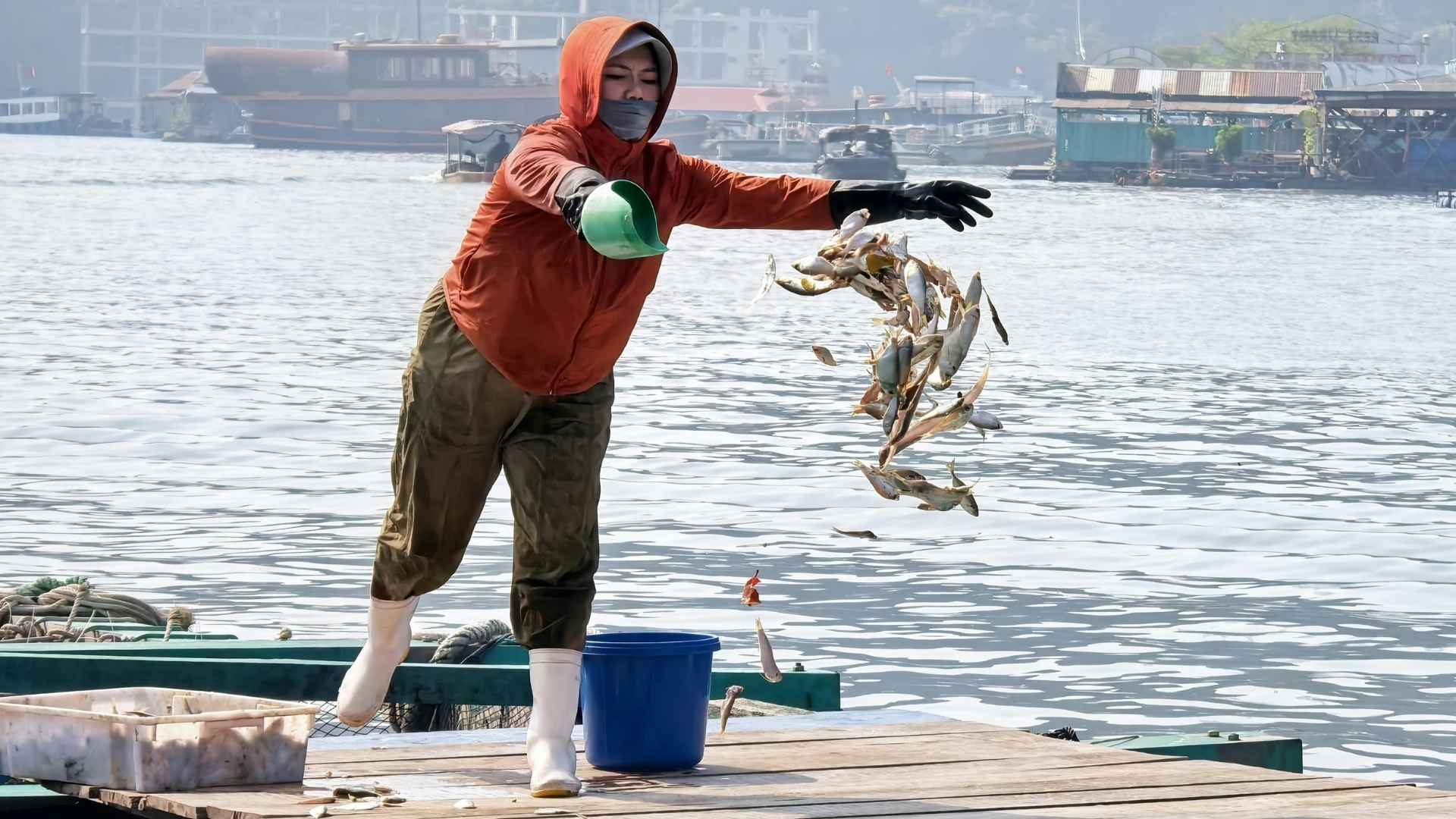
At the heart of aquaculture's sustainability crisis is an uncomfortable truth about fish feed production. The most popular farmed species in wealthy nations, particularly salmon and trout, are carnivorous fish that require diets made from wild-caught species. These small coastal fish, including sardines, anchoveta, herring, and menhaden, are caught from so-called reduction fisheries and processed into fishmeal and fish oil (FMFO).
Reduction fisheries now account for roughly 25% of the global ocean catch, with the vast majority of resulting FMFO used to feed farmed fish. While the industry frequently points to reduced fishmeal inclusion rates since the 1990s, these gains reflect changes in feed composition and accounting rather than a meaningful reduction in total wild fish dependence—particularly for fish oil, which remains indispensable to salmon farming. Rather than decoupling fish production from wild capture, the industry has created a protein drain, consuming more wild fish than it produces in edible farmed product.
"The aquaculture industry has sold people the narrative that it is a silver-bullet solution for overfishing. Instead, it's the opposite: fish farming depends on massive amounts of wild-caught fish for feed and is devastating the oceans. Alongside the industry's rise, UN data show that global fisheries have become even more depleted." - Laura Lee Cascada, Director of the Aquaculture Accountability Project
Global south communities bear the cost
The extraction of forage fish disproportionately impacts vulnerable communities in the Global South, where these coastal species have historically provided sustenance. A 2019 Greenpeace investigation mapped dozens of fishmeal factories across West Africa, primarily in Mauritania, Senegal, and The Gambia, that process wild fish into FMFO for export to the European Union, China, and Vietnam. Scientists now consider these fisheries overexploited, yet exports continue to grow amid inadequate reporting and enforcement.
In South America, Peru's anchoveta fishery, the world's largest source of FMFO, has faced repeated early closures or season cancellations over the past four years due to low biomass and high juvenile catch rates. These closures reflect the vulnerability of the fishery to both climate variability and sustained fishing pressure. A 2024 report by Feedback Global (now Foodrise) revealed that Norway's salmon industry alone extracts almost 2 million tonnes of fish for feed annually, much of it from Northwest Africa, placing additional strain on regions already facing food insecurity, with nearly 4 million people at risk of undernourishment.
The efficiency myth
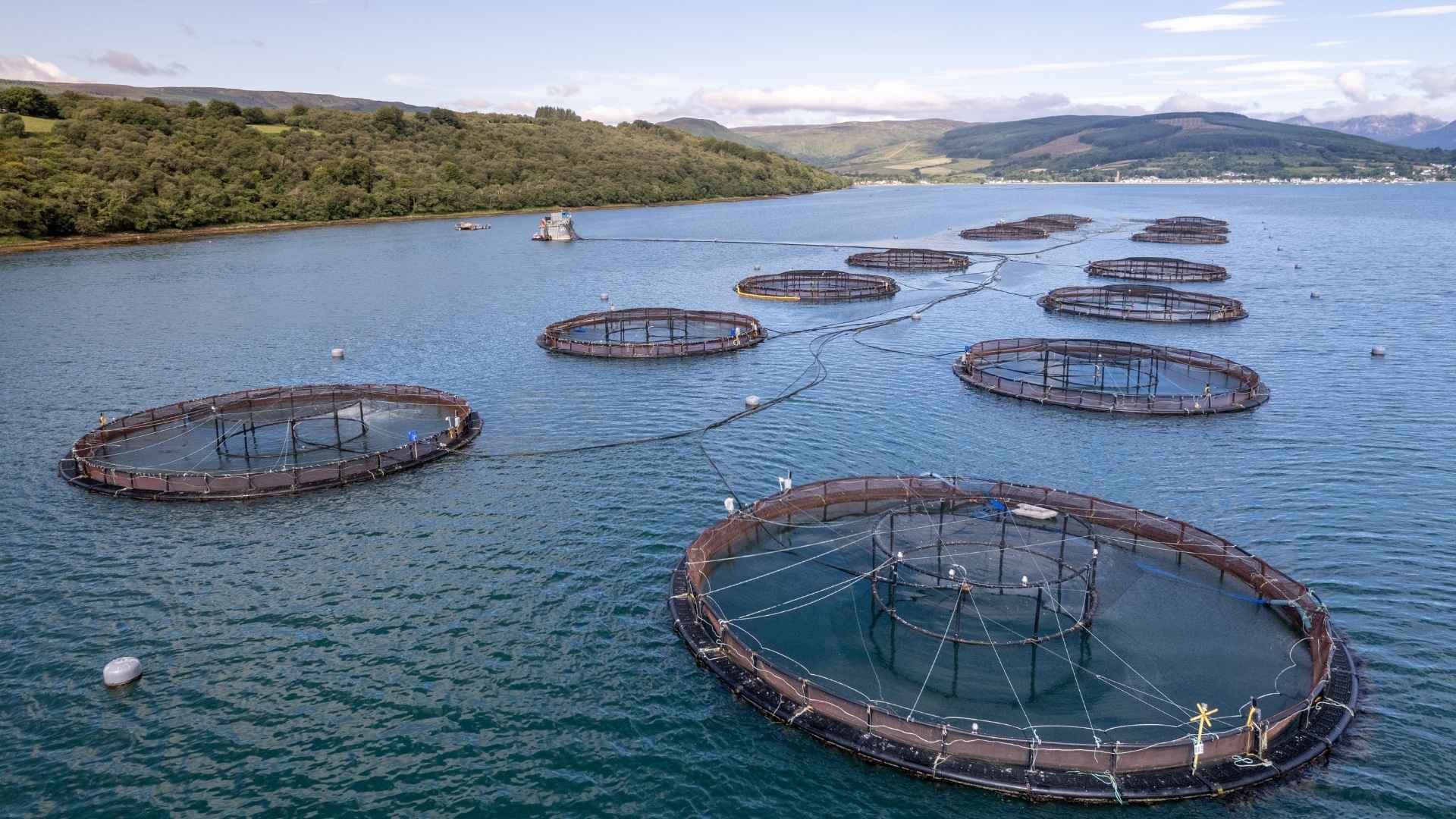
Norway-based Mowi, the world's largest salmon producer, exemplifies the industry's net protein loss. According to the company’s own reporting, in 2019, Mowi sourced nearly twice as much wild fish as the amount of salmon it harvested. Specifically, the company used approximately 880,000 tonnes of wild fish to produce 436,000 tonnes of salmon. This capture volume exceeds the entire volume of wild fish caught by Canada in 2018.
According to Mowi CEO Ivan Vindheim, "Food security and climate change are two of the most pressing challenges facing humanity. As a seafood producer, Mowi is unlocking the potential of the ocean to produce healthy and climate-friendly food for a growing world population." The company's own production figures tell a different story, one of continued resource extraction rather than reduced reliance on wild fisheries.
Misleading metrics obscure the truth
The aquaculture industry has promoted two key metrics to reassure policymakers and consumers:
Maximum Sustainable Yield (MSY) and the Fish In/Fish Out (FIFO) ratio. Both measures, however, are deeply flawed tools that conceal the industry's continued depletion of wild fish populations.
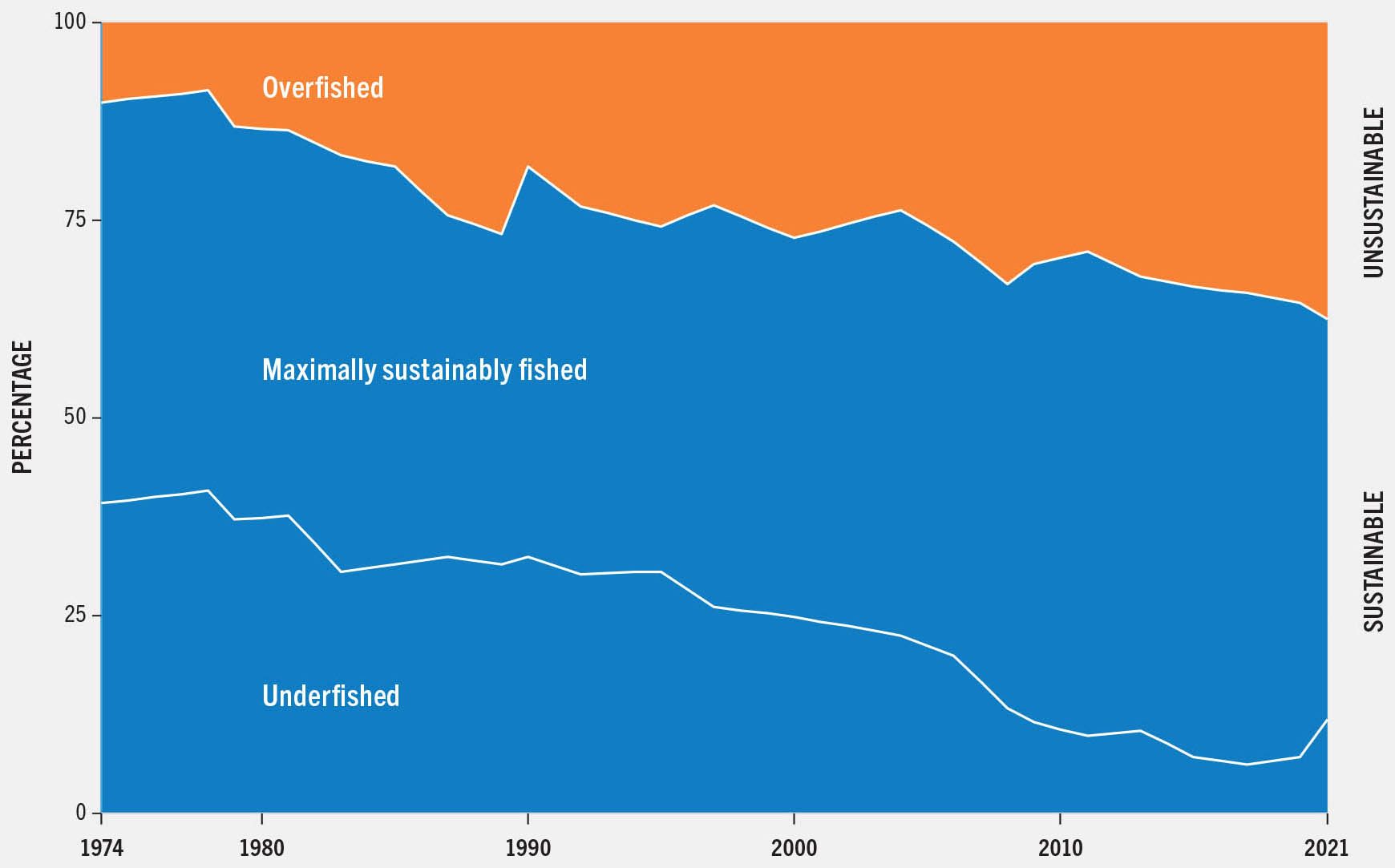
MSY emerged in the 1940s not from ecological science but from political and commercial ambitions to maximize harvests. The model defines sustainability as maintaining fish populations at roughly half their natural abundance, intentionally keeping stocks in a depleted state. Several fisheries management agencies have pushed this threshold even lower, allowing some fisheries to be considered sustainable with populations reduced by as much as 70% from their original size.
If aquaculture were truly relieving pressure on wild fisheries, MSY indicators would show broad recovery. Instead, the opposite has occurred. In 1980, roughly 34% of assessed stocks were underfished, about 56% were fully exploited, and around 10% were overfished. Today, those proportions have inverted; only about 7% of global stocks remain underfished, roughly 35% are overfished, and the majority fall into the fully exploited category.
The FIFO ratio presents an equally misleading picture. Developed by the International Fishmeal and Fish Oil Organisation (IFFO), the global trade association representing the FMFO industry, FIFO measures the kilograms of wild fish required to produce one kilogram of farmed fish. The industry has reported steadily shrinking FIFO ratios, reaching a low of 0.27 in 2020, by averaging carnivorous species with herbivorous and omnivorous species that require little or no fish oil, a practice increasingly criticized by independent researchers.
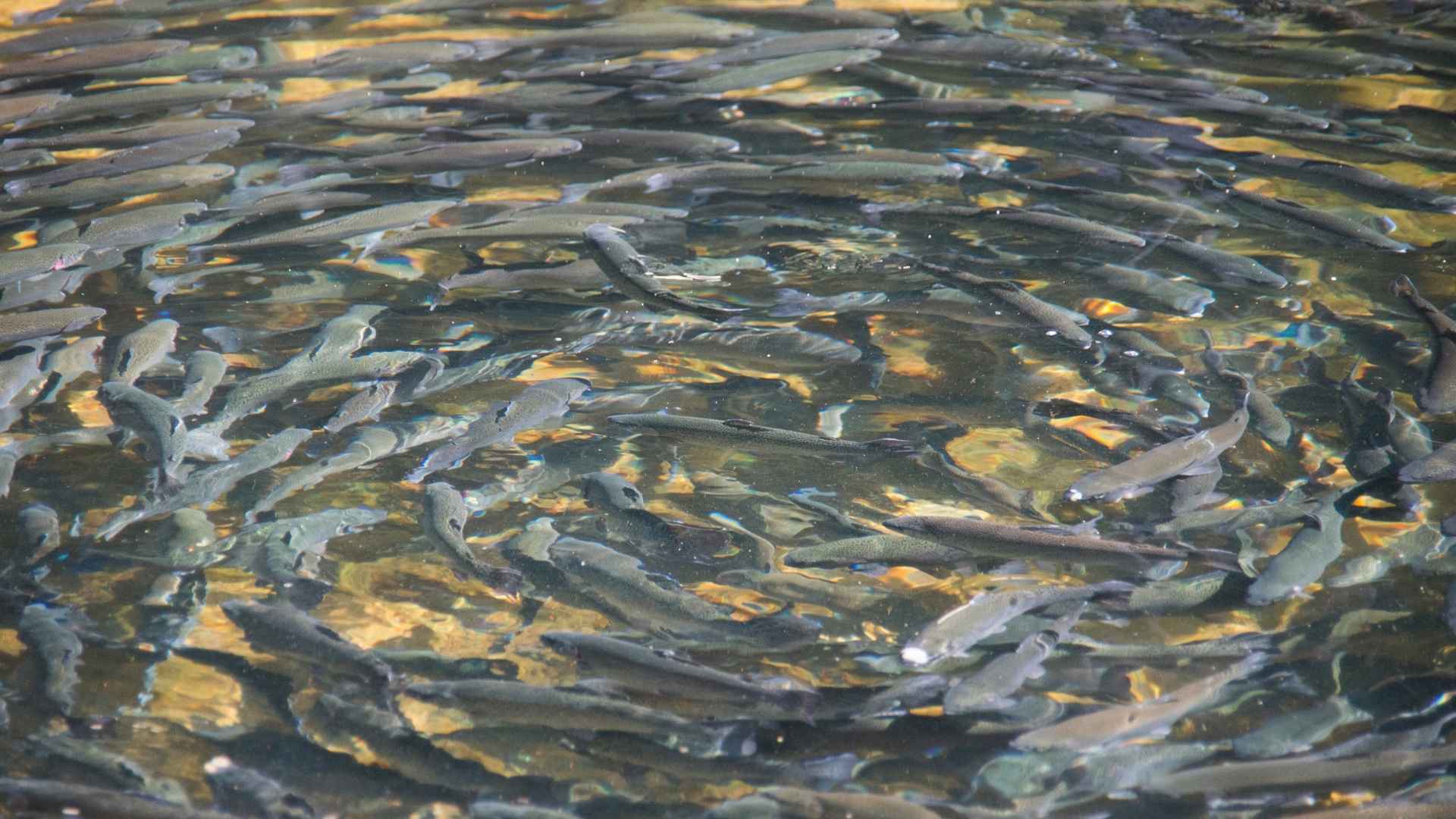
A peer-reviewed October 2024 study published in Science Advances challenges this narrative. Researchers recalculated FIFO ratios for the top 11 fed aquaculture species using comprehensive accounting methods and found that true ratios were 27 to 307% higher than industry-reported figures. For carnivorous species like salmon, the findings were particularly stark: wild-fish inputs exceeded farmed biomass produced, with aggregate ratios ranging from 2.27 to 4.97—and up to 5.57 in some calculations. These results explicitly account for by-products and co-product allocation, directly challenging claims that modern FIFO figures below 1.0 reflect physical reality.
The study’s authors also explain that, even if FIFO ratios were to show improvement over time, they should not be interpreted as gains in overall production efficiency. Apparent reductions in wild fish use have been achieved largely by substituting crop-based ingredients for fishmeal—shifting, rather than eliminating, environmental pressure. This accounting shift underpins the industry’s “decoupling” narrative: the claim that aquaculture is becoming independent of wild fisheries by using fewer wild fish inputs, while ignoring the rapidly expanding reliance on terrestrial crops that now make up the majority of aquafeeds. These crop inputs carry their own ecological costs, including land-use change, freshwater depletion, fertilizer runoff, and increased competition with human food systems—costs that are excluded from FIFO calculations altogether.
Ecosystem consequences
The ecological impacts extend far beyond depleted fish populations. Small coastal species sit near the bottom of the marine food chain, playing a critical role in transferring energy from plankton to higher-level predators like sharks. Intensive harvesting of anchovies, sardines, and similar species for FMFO has been linked to declines in seabird populations that rely on these fish for feeding chicks.
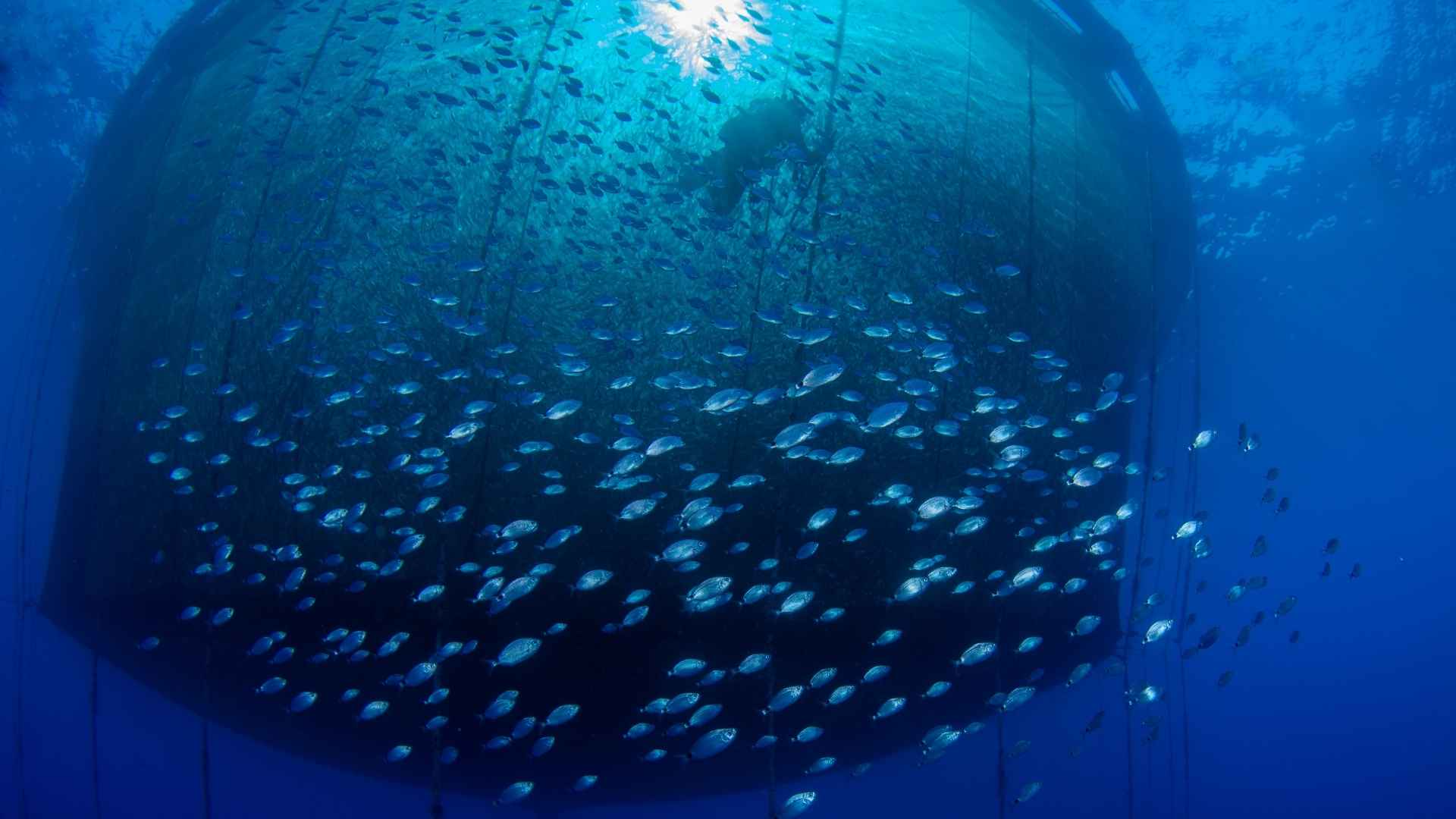
Exploitation of the Benguela sardine for FMFO in southern Africa has contributed to the endangered status of African penguins and Cape cormorants. These cascading effects demonstrate how industrial aquaculture's appetite for forage fish disrupts entire marine ecosystems while marketing itself as ocean-friendly.
The promise that fish farming would save wild fisheries has proven to be exactly what critics warned: a carefully constructed myth that obscures continued dependence on wild fish. Fish, both carnivorous and herbivorous, have a large and negative impact on our planet due to their huge resource footprint. Just as with land animal production, inefficiency is baked into fish farming. Although the industry’s reported fishmeal inclusion rates may have declined, this reflects ingredient substitution rather than true efficiency gains, and absolute demand for fishmeal and—critically—fish oil continues to rise as salmon production expands. As carnivorous species dominate aquaculture production, and reduction fisheries supply their feed, the industry remains a net consumer of ocean protein rather than a solution to overfishing.

Independent fact-checking, funded by readers like you.
Misinformation is a growing threat to our health and planet. At foodfacts.org, we're dedicated to exposing the truth behind misleading food narratives. But we can't do it without your support.



foodfacts.org is an independent non-profit fact-checking platform dedicated to exposing misinformation in the food industry. We provide transparent, science-based insights on nutrition, health, and environmental impacts, empowering consumers to make informed choices for a healthier society and planet.






.svg)


.svg)

