Does yoghurt cause gut disruption?
What about phytic acid?
Although Kara did not raise phytic acid in her post, we are including the following explanation to address a common question some readers have about chia seeds and mineral absorption.
Like many seeds, chia contains phytate, which can bind minerals in the gut. Typical levels in chia are about 1 to 1.2 grams per 100 grams of dry seed, and European safety reviewers have not flagged phytate in chia as a consumer risk at customary intakes.
Now zoom out to the real portion size. Most people use one to two tablespoons, not half a bag. Dairy calcium also remains reasonably bioavailable in mixed meals. So while phytate can nudge mineral absorption down in theory, there is no evidence that a normal sprinkle of chia “cancels” the calcium in yoghurt for healthy people. Soaking or hydrating chia before eating is sensible for texture and may modestly reduce phytate, though the effect varies by seed (source).
A simple way to do it well
Stir 1 to 2 tablespoons of chia into ¾ to 1 cup of plain yoghurt.
Let it sit for 10 to 15 minutes so the seeds hydrate and the gel forms.
Add fruit or spices for flavour. If you want sweetness, use whole fruit or a light drizzle of honey.

This gives you a protein-plus-fibre snack that tends to keep you full and steady. In product studies, adding chia or its mucilage improved yoghurt thickness and reduced whey separation, which many people enjoy. Honey, used sparingly, can also be compatible with probiotic survival, although health outcomes in healthy adults may not change (source).
Smart tweaks for extra benefit
• Choose your base. If you suffer from intolerances, allergies or if you are plant-based/vegan, use lactose-free yoghurt or a fortified plant yoghurt with live cultures. Aim for at least 120 mg calcium per 100 g on the label. Probiotic counts and calcium absorption vary by product, but both dairy and fortified non-dairy options can contribute meaningfully (source).
• Build a balanced bowl. Add berries, sliced kiwi, or grated apple for polyphenols and vitamin C. Sprinkle cinnamon or cocoa for flavour without much sugar. Keep portions comfortable for your gut.
For more practical information on how to gradually build up your fibre intake, check out our related guide and fact-check on fibremaxxing.
Final take away
For most people, the evidence doesn’t show that yoghurt harms the gut. In fact, and especially when pairing it with chia seeds, it’s quite the opposite. The pairing is nutritionally sound, common in research, and supports a diverse microbiome when part of a balanced diet.
Disclaimer: Kara Swanson didn't provide us with evidence to support her claims and asked us not to publish this fact-check, which she feels misrepresents her views. We have amended the article to ensure the claims made in the video were accurately portrayed. If provided with evidence, we will update the article.
Claim 2 (implied): Adding chia seeds to yoghurt isn’t enough to make it a supportive breakfast.
Fact-check: The implication of this post is that pairing fibre and dairy isn’t as supportive as people think it is.While it is true that there are ways to pack even more fibre to your breakfast, Greek yogurt and chia seeds each provide distinct nutritional benefits. More importantly, there is no evidence that pairing them is misguided. In fact, it might well be the opposite as they can work together as a synbiotic to support gut health. For a lot of people, adding fibre-rich foods like chia seeds to foods they already consume is a convenient way to increase their fibre intake.
What each food brings to the bowl
Yoghurt gives you quality protein, calcium, and live cultures that support a healthy gut. Calcium from dairy is well absorbed, usually in the 20 to 45 percent range depending on the product and context (source).
Chia seeds are tiny nutrition tanks. They are rich in soluble and insoluble fibre, plant omega-3 fat, and useful minerals. Reviews consistently report that chia seeds are very high in fibre and notably alpha-linolenic acid, the plant omega-3 that many of us under-consume (source).
Together, they can work as a synbiotic
A synbiotic is a combination of good bacteria and the food that helps them grow, working together to support your body’s health. In other words, yoghurt supplies helpful bacteria and chia’s soluble fibre forms a mild gel that microbes like to eat. Expert groups updated this definition in 2020 to make it clearer and more practical (source).
We also see a pattern in yoghurt research. Adding fermentable plant fibres, such as inulin, can help probiotic survival during storage and may improve texture. Chia’s mucilage is a fibre gel that behaves similarly in fermented dairy. Studies that added chia seeds or chia mucilage to yoghurt, including goat and cow milk versions, reported acceptable microbiology and good texture through chilled storage. That is the profile of a sensible functional add-in, not a harmful one (source).

Chia seeds and yoghurt are a common combination which many people enjoy for breakfast. We have contacted Kara Swanson, who clarified that the main point of her post was not to say that the combination causes gut issues, but rather to emphasise that adding chia seeds and fruit to yoghurt doesn’t make it a high-fibre breakfast. While it seems that the issue presented rests with the impact of dairy, no further evidence was provided to support the suggestion that dairy can cause gut disruption.
Let’s start by checking the research on dairy and inflammation.
Claim 1: Dairy can disrupt the gut and raise inflammation
Fact-check: Does dairy “disrupt the gut” or drive inflammation? The short answer is no in most people.
“Dairy disrupts the gut” sounds persuasive because it plugs into two real things. First, inflammation is a very broad term. It can mean acute immune responses, low grade metabolic inflammation, gut barrier issues, skin flares, even joint pain. Second, lots of people experience digestive discomfort. So when a content creator links those two and points to one food group, it can feel true even if the science is thin.
That is exactly why broad claims need to be backed by scientific evidence. If someone implies dairy is inflammatory for everyone, we should check at least three things:
What population was studied? Many people with lactose intolerance or milk protein allergy do react, and that is valid. But that data cannot be stretched to the general population.
What kind of study was it? Randomized controlled trials and meta-analyses on dairy and inflammatory markers often show neutral or slightly anti-inflammatory results in healthy adults and people who are overweight. That is stronger evidence than an anecdote or a single in vitro paper.
Are we talking about the actual food people eat? A fermented yoghurt with live cultures, modest sugar and some fibre on the side behaves differently in the gut than a sweetened milk drink.
For example, clinical reviews (source, source) on dairy and inflammation in adults report no pro-inflammatory effect of usual dairy intake, and in some cases improved markers in people with metabolic risk. That is relevant because it studies humans eating normal dairy, and measures real biomarkers. Studies on fermented dairy (source, source) are useful because they show that adding live cultures does not damage gut health and can support microbial diversity. Work on lactose intolerance (source) is important too, but it tells a narrower story, namely that undigested lactose can cause symptoms which is a tolerance issue, not proof that dairy universally disrupts the gut.
More broadly speaking, if a post cites “a study” without telling you who was studied, how long the study ran, what was measured, or whether the product looked like the yoghurt in your fridge, it is not enough to make broad recommendations to the public.

“If you eat chia seeds with yoghurt rather than water, you get more benefits for your gut and microbiome. Yoghurt contains live bacterial cultures like Lactobacillus and Bifidobacteria. Chia's soluble fibre and mucilage act as prebiotics, thus feeding these bacteria. When eaten together, you get this natural symbiotic effect. Probiotics in the yoghurt have a ready source of fermentable carbohydrates, which can improve short-chain fatty acid production. That is 'the good stuff', which is 'gold dust’ for your health.
Furthermore, the calcium, vitamin D, and fat in the yoghurt enhance the absorption of fat-soluble compounds in the chia, namely ALA omega-3 fatty acids. One of the biggest benefits of eating more fibre is appetite regulation. When you combine fibre from the chia seeds and protein and fat from the yoghurt, you get even more satiety signals and even more stimulation of natural fullness hormones like GLP-1, cholecystokinin, PYY, etc.. This means you feel fuller for longer compared to chia water. When you combine dairy proteins and peptides from the yoghurt with fibre in the chia seeds, you get a slower, more consistent fermentation of those compounds in the colon. This leads to a wider range of short-chain fatty acids which are produced, such as butyrate and propionate.”
Look for evidence: Reliable claims should be backed by scientific studies or data.
Kara Swanson regularly challenges the idea that adding chia seeds and fruit to Greek yogurt supports gut health. She argues that dairy can disrupt the gut, drive inflammation, and lead to bloating, and contrasts this with high-fibre, plant-based breakfasts, which she says are what will “heal the gut,” “calm inflammation,” and “beat the bloat.”Kara Swanson challenges the idea that adding chia seeds and fruit to Greek yogurt is enough to make it a high-fibre breakfast. She argues that this is because dairy can disrupt the gut, drive inflammation, and lead to bloating, and contrasts this with high-fibre, plant-based breakfasts, which she says are what will “heal the gut,” “calm inflammation,” and “beat the bloat.”
In this fact check, we examine the evidence behind these claims about dairy, assessing whether dairy and fibre really need to be opposed.
There is no scientific basis for advising against yoghurt as a driver of inflammation. Combining yoghurt with chia seeds is common in research and product development, plays nicely with probiotic cultures, and offers a practical way to add protein, fibre, and plant omega-3s to a snack.
Food rules spread fast, fear even faster. When we label common pairings as harmful without context, people miss out on straightforward ways to eat well.
Joe Wicks "Licensed to Kill" sparked a global conversation on ultra-processed foods—what comes next?
Joe Wicks’ recent Channel 4 documentary, Licensed to Kill, has achieved something worth acknowledging: it has made people talk. Whether viewers applauded or criticised it, the show has pushed ultra-processed foods (UPFs) into mainstream debate, and it certainly is a public-health conversation worth having.
Exposing a flawed system
The documentary’s strength lies in its ability to reveal the architecture of our food system. It shows how marketing, convenience, shelf-life and profit often dominate food production, leaving nutrition and well-being behind. Without that framing, the burden of “making better choices” inevitably falls on individuals who operate within an environment designed to make unhealthy options easy, cheap, and normal.
Recent data highlights the extent to which this problem has become embedded. According to researchers at the University of Cambridge, UK, adolescents obtain approximately two-thirds of their daily calories from ultra-processed foods, while adults consume more than half. These figures are among the highest in Europe, reflecting the extent to which industrial products have replaced home-cooked and minimally processed meals in the British diet.
One of the solutions suggested in Licensed to Kill is the use of black, front-of-pack warning labels, similar to the system adopted in Chile. These are designed to have an immediate, visual impact, in contrast with the UK’s more nuanced traffic-light system. The question, though, is whether such warnings would genuinely shift long-term behaviour or instead intensify fear without changing the wider environment that drives consumption.

Why a bigger change is needed: the junk-food cycle
The National Food Strategy: The Plan (2021), commissioned by the UK Government and led by Henry Dimbleby, gives useful context here. It describes the “junk-food cycle”, a self-reinforcing loop that keeps both consumers and companies locked into unhealthy patterns.
- Food companies maximise profits by producing cheap, convenient, ultra-processed products.
- Consumers, influenced by marketing, low prices and the demands of busy lifestyles, buy them in large quantities. For many people, long working hours, childcare and limited time for cooking make convenience a necessity rather than a choice. Ultra-processed products fit easily into these routines, reinforcing dependence on them.
- High sales prompt further investment in similar products.
The result is a system that rewards the sale of foods high in fat, sugar and salt, while discouraging healthier alternatives. The National Food Strategy specifically examines the UK context and concludes that government efforts, primarily focused on labelling and awareness, have not been sufficient to disrupt this cycle.
Measures such as calorie counts, traffic-light labels and “eat well” campaigns are valuable tools, as they help people make more informed decisions. But their impact is limited when the wider food environment remains unchanged.
The report argues that the UK has relied too heavily on what it calls ‘single-loop interventions’ that nudge consumers but don’t disrupt the cycle, rather than ‘double-loop interventions’ that reshape the system. Breaking the cycle means addressing the structures that drive production and marketing — the incentives, pricing, and accessibility that determine what ends up on our plates.
From that perspective, stronger labels alone are unlikely to solve the problem. They may raise awareness, but they cannot rebalance the forces that shape the modern diet. Without changes to industry practices, affordability and culture, the result could simply be more anxiety, rather than healthier eating.

The role of language and fear
Another important question raised by Licensed to Kill is how we communicate about food and health. In the documentary, Dr Chris van Tulleken makes a powerful point in arguing that some UPFs should be thought of not as food but as industrially edible substances. This could help audiences think of nourishment as the primary purpose of food.
As a cognitive linguist, I can’t ignore how language shapes understanding, and unfortunately, Licensed to Kill leans rather heavily on the language of fear. Phrases like “killer bar,” “licensed to kill,” and “most dangerous health bar,” paired with ominous music and stylised visuals, create a sense of menace that sends a clear message: every bite of these UPFs is dangerous. But is the reality really so clear-cut?
The language used and its emotional impact are reminiscent of the dynamics of social media. If we examine how nutrition is discussed online, it often follows a similar formula: direct cause and effect. “Eat this and you’ll lose weight.” “Avoid that and you’ll prevent disease.” These claims are rarely contextualised. A good example is the way in which the phrase “linked to cancer” is generally thrown in social media posts, without the crucial questions: at what dosage? In what context? Sinister warnings about additives generate engagement and strong reactions, but they also often distort the science. They erase the nuance of dosage, context, and overall dietary pattern, all of which are essential for understanding risk.
This is not to criticise the documentary’s intent, which clearly aims to provoke thought. However, I feel that it risks reinforcing the same pattern of communication that we often challenge at FoodFacts.
Nuance matters not just to scientists trying to delve into the specifics of complex issues. It matters here, too, especially in the context of the UPFs conversation. This is because without nuance, risk perception gets quickly distorted. Unfortunately, at no point in the documentary are dietary patterns or dosage explained in a way that helps viewers understand the concept that the dose makes the poison, and that the relationship between food and health is complex and contextual, not binary.
What fear misses
The first question we need to ask is: what is the end goal? In certain contexts, fear can effectively trigger short-term avoidance behaviour. However, in nutrition, fear without understanding can easily lead to confusion and guilt. It can push people toward restrictive diets or make them anxious about everyday foods. For many, UPFs are affordable and practical options. Demonising them entirely can isolate those who already struggle with access to healthier choices. Meanwhile, important messages, such as the significance of dietary patterns (by over-focusing on single ingredients), are left in the background.
Fear is a powerful emotion, and as a result, it can also lead to distraction. The focus on protein bars and similar products can make it seem as though single items are the problem, when the real issue lies in dietary patterns. Within a balanced diet, these kinds of products can serve as convenient snacks and need not be seen as inherently harmful. What matters most is the overall quality and balance of what people eat on a day-to-day basis, not whether one occasional snack falls into a particular category.
However, the question then arises: although the documentary claims it aims to prompt the government to take more action, its primary audience is the general public. And in that context, is fear the right tool? Is fear what we need to make people stop eating what is considered junk food? This appears to be the primary tension at the heart of Licensed to Kill, and it opens up an important space for discussion about how we discuss health, risk, and responsibility.
Yes, people need to be aware that diets high in UPFs can lead to health issues, but understanding why this is the case and distinguishing between different types of UPFs is an important part of that conversation. Unfortunately, this was not addressed here.

Understanding what “Ultra-Processed” means
To have an honest conversation about UPFs, we also need clarity on what the term actually means.
A short explainer: The NOVA classification system, developed by Brazilian researchers, groups foods according to the extent and purpose of processing: from unprocessed or minimally processed foods (Group 1) to ultra-processed products (Group 4). “Ultra-processed” describes industrial formulations made mainly from substances extracted from foods (like starches, oils, protein isolates, flavourings, and additives). NOVA helps identify patterns, but it isn’t a health scale. Some UPFs, like fortified cereals or plant-based milks, can still provide useful nutrients.
Understanding this helps us refocus on what matters: the overall pattern of our diet.
Taking the conversation forward
Licensed to Kill deserves credit for reigniting a national conversation about how our food system operates and the impact of ultra-processed foods on health. Its strength lies in drawing attention to the structures that shape eating habits and in prompting debate among professionals and the public alike. However, to achieve lasting change, the discussion must shift beyond warnings and toward accountability.
Communication is central to that shift. Social media and much of the wellness industry have shaped how we discuss food, often through simplified cause-and-effect claims, click-driven alarmism, and influencer-led narratives. These approaches create attention, but they also reduce understanding. The same pattern can appear in mainstream health coverage, when complex nutrition science is condensed into good-versus-bad headlines.
If we want healthier diets, we also need healthier communication, and it starts with transparency. That means holding both corporations and communicators accountable for the information they share, ensuring that their reach informs rather than inflames. Real progress will depend on joined-up action: policies that make nutritious food affordable, fiscal and regulatory incentives that reward reformulation, public procurement that sets the example, and food education that promotes understanding over fear.
Cultural change will take time, but it begins with consistency, transparency and collaboration. Awareness is only the first step. Turning it into action requires shared responsibility: from those who make our food, those who communicate about it, and those who set the conditions that shape what we eat.

Why illegal beef laundering should matter to every shopper: how your food choices shape the climate and nature crisis
What's Really Behind the Beef on Your Plate?
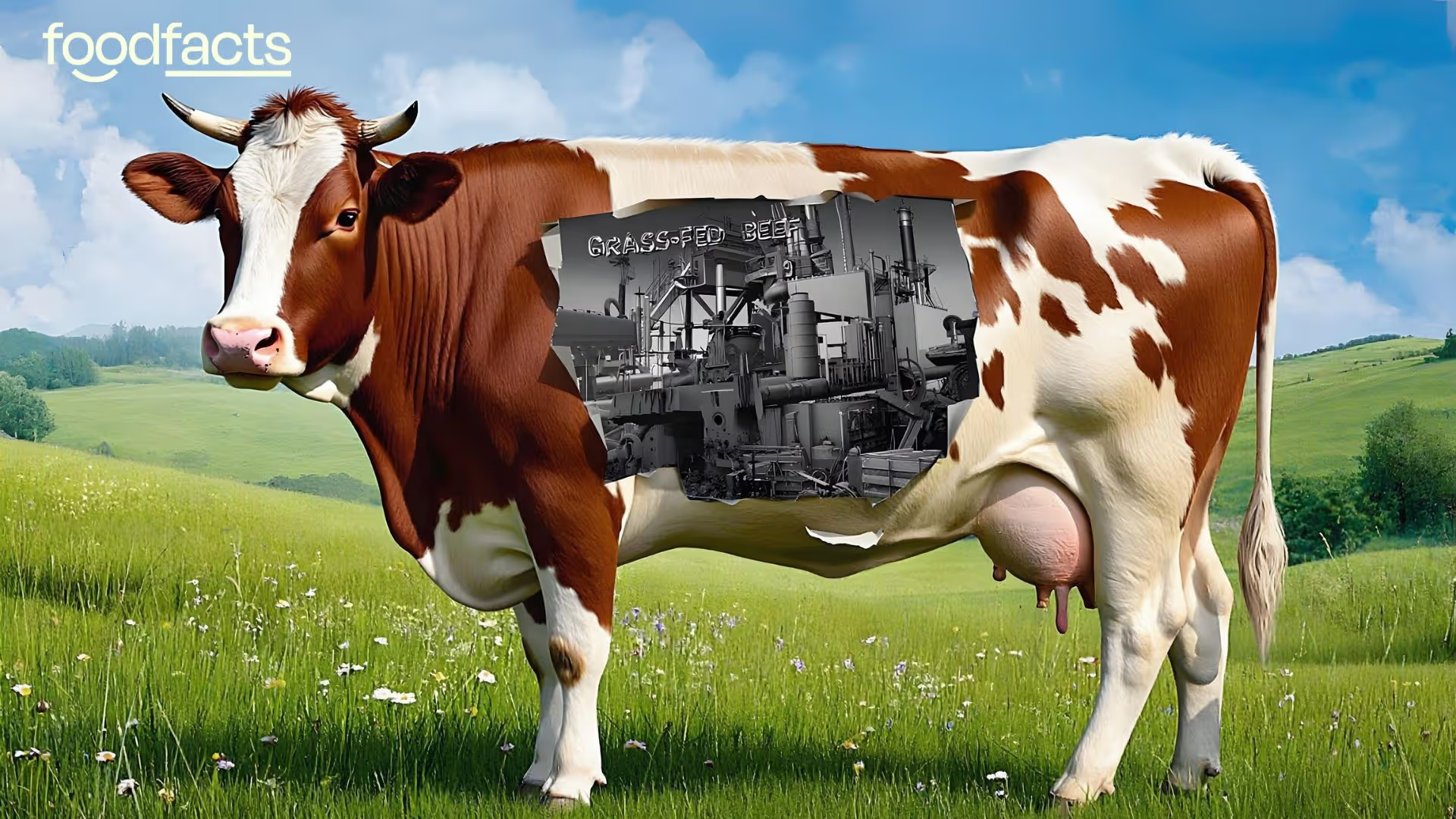
Ever stood in a supermarket aisle, wondering if your burger or steak could be linked to rainforest destruction or the extinction of rare animals? While most packaging features rolling green fields and happy cows, the real story behind global beef can be far murkier, and directly connected to the climate and nature crisis facing our planet.
Recent investigations, including into Brazil's Ricardo Franco State Park, reveal how JBS, the world's largest meat company, bought cattle that were "laundered" through a scheme designed to hide their illegal origins in a protected area where the Amazon, Cerrado, and Pantanal meet. Understanding and challenging these hidden supply chain loopholes isn't just for policymakers or activists. It matters for everyone who eats food.
The Case: How JBS Ended Up With Illegal Cattle
Between 2018 and 2024, JBS purchased at least 6,790 cattle from a farm called Barra Mansa, including 790 animals in 2024 alone. But these weren't ordinary cattle. Before reaching Barra Mansa, at least 5,295 cattle had been transferred from Fazenda Paredão, a ranch sitting entirely inside Ricardo Franco State Park, where cattle ranching is illegal and where over 2,000 hectares of forest were illegally cleared.
The cattle were slaughtered at JBS's facility in Pontes e Lacerda, roughly 140 kilometres from the park, a plant authorised to export beef to the European Union, China, and Canada. This means beef from illegally deforested protected areas could have ended up on dinner tables across the globe, including potentially in your local supermarket.

Why Should You Care? The Connection to the Nature and Climate Crisis
Beef and the Earth: More Than Just Food
Forests vs. Feedlots: Rainforests like those in Ricardo Franco function as a major climate-regulating system. They sustain rainfall patterns and stabilise temperatures. When they're cleared for pasture, they release stored carbon, accelerating climate change and leaving wildlife homeless or extinct.
Beef's Outsized Footprint: Animal farming, especially of cattle, is the largest driver of tropical deforestation. Over 16.4 million trees are lost each day due to animal agriculture, and it is responsible for up to 19.6% of global greenhouse gas emissions.
Nature's Crisis Unfolds: Ricardo Franco State Park is home to 473 bird species, one-quarter of all bird species recorded in Brazil, including the rare orange-breasted falcon, plus endangered mammals like the giant otter and giant anteater. When cattle are grazed illegally in such places, these unique animals are pushed closer to extinction.

How Do Cattle Get "Laundered" Into JBS's Supply Chain?
The Trick: Cattle Triangulation
Picture this: A calf is born and raised inside Ricardo Franco State Park, where clearing forest for pasture is totally illegal. But before it's sold, it's moved to a "clean" legal farm outside the park called Barra Mansa, and new paperwork is issued so it appears the animal always came from the compliant property. This is called triangulation for cattle laundering. Here's how it worked in this case:
Illegal ranch (Paredão) → Animals raised inside the protected park on illegally deforested land,
"Clean" pass-through farm (Barra Mansa) → Animals transferred here, new transit papers issued,
JBS slaughterhouse → Company buys cattle from Barra Mansa, a farm that is legal on paper without tracing the cattle’s true origin,
Because JBS relied on paperwork from only the last farm (Barra Mansa), the company missed the potentially illegal origin inside the park. Even more concerning: records show serious gaps between what JBS reported on its own transparency platform and what appeared in government databases, with 2024 purchases showing up only in state records, not on JBS's public portal.

Why "Deforestation-Free" Pledges Aren't Always What They Seem
JBS has made public commitments to eliminate deforestation from its supply chain. Yet, this case shows how easy it is for illegal cattle to slip through when companies check only their direct suppliers and don't trace animals back to where they were born and raised.
Data Gaps Matter: For 2020–2022, no movement records appeared in government systems (though some were on JBS's portal), there were no records at all in 2023, and 2024 movements showed up in state databases but not on JBS/Friboi's transparency platform. These mismatches make it nearly impossible for consumers, regulators, or watchdogs to trust that beef is truly deforestation-free.
Export Markets at Risk: The JBS Pontes e Lacerda plant is approved to ship beef to the European Union, China, and Canada, markets that expect higher environmental standards. Yet, through cattle laundering schemes, there is a risk of laundered cattle from a protected area making it through, showing how weak traceability can undermine even strict-sounding import rules.

"Better" Beef, Less Beef, or Both?
Eating Less Red Meat Matters: Research shows that if everyone cut their meat and beef consumption even a little (such as by 25%), it would make a measurable difference in slowing the climate crisis, protecting rainforests, and reducing species losses.
Eating more plant-based food: Eating more plant-based food can help reduce the demand for meat and reduce emissions. Replacing 50% of meat and milk products with plant-based alternatives by 2050 can reduce agriculture and land use-related greenhouse gas (GHG) emissions by 31%.
Supporting higher-welfare, traceable farming: Nature-friendly farms keep animals in woodland, shrubs, or orchards. These woody plants help capture carbon and offset greenhouse emissions, while providing better welfare for the animals. To buy from such farms, look for the Pasture for Life certification or on individual farm websites. If you’re buying from supermarkets, organic levels are higher welfare options with higher levels of traceability. Remember that the country of origin in the UK only applies to fresh meat, so your ready meals and sandwich meats won’t reveal where your meat might come from.
Making It Personal: What You Can Do As a Consumer
Switch It Up: Try plant-based options and eat less meat. Feed for animals is a key driver of deforestation, so eating less meat is a great solution for the environment. When you do eat meat, swap to higher-welfare meat from nature-friendly farms or your local butcher to shrink your climate and nature impact
Ask Retailers Hard Questions: Does your supermarket know where all its beef came from, back to the birth farm? Are they buying from JBS or other companies with documented traceability gaps? Can they show you independent verification, not just company claims? Demand honest and traceable supply chains.
Support Legal Accountability: In March 2025, Brazil's Supreme Court upheld a freeze of R$38 million in assets tied to illegal deforestation inside the park, with total environmental liabilities reaching R$109.6 million across properties. Consumer pressure can help ensure that companies like JBS face real consequences when laundering schemes are exposed.,
Tell your bank to stop supporting factory farming. The UK’s most popular bank, Barclays, is the biggest funder of JBS. It provided over £5bn in funding to JBS between 2015-2022. You can sign World Animal Protection’s petition to urge Barclays to stop funding JBS Ethical Consumer Magazine World Animal Protection petition.

What's at Stake: Wild Places, Climate, and the Future of Food
The story of Ricardo Franco State Park and JBS isn't just about one company or one park in Brazil. It's about the forests, water, and wildlife that support life everywhere, including the food on our plates and the climate we all share. Since the park's creation in 1997, over 12,000 hectares of native forest have been lost to illegal ranching. The choices we make at the checkout, for school dinners, and even meals in hospitals, ripple out to jungles half a world away. They shape the air our children will breathe and the future of species most of us will never see.
The solution starts with awareness, and keeps growing with every meal we choose.

The Bottom Line
You have more power than you think. The Ricardo Franco JBS case shows that the meat sold in the supermarket, provided in schools or in hospitals, can end up coming from illegal, deforestation-linked beef. Every time you shop, you can help change the story, from one of destruction and "laundered" cattle to one where forests, the climate, and our food system are all protected for the future.
Demand better from JBS, from the banks that fund it, and from policymakers. The planet, and the 473 bird species, giant otters, and countless other lives and ecosystems that depend on places like Ricardo Franco, can't afford business as usual.
All images credited to: Fernando Martinho/World Animal Protection
Is creatine safe for teens?
Creatine is one of the most widely used sports supplements across the world. It’s taken by many in the hopes of boosting strength, enhancing athletic performance and promoting muscle growth.
But it isn’t only adults who are using this supplement. A growing number of teenagers and young adults report taking creatine in the hopes of reaping the supplement’s benefits.
Surveys show that as many as 72% of male athletes aged 17-18 report using creatine. Use is typically more common among athletes, especially young men.
While creatine is generally considered to be safe for young people to use, it’s no shortcut to getting fit. It’s better for young people looking to get strong or improve their athletic performance to focus on the fundamentals: exercising, eating properly and prioritising sleep.
Creatine is a natural compound stored within muscle. Although a small amount is produced in the kidneys and liver, most (around 95%) is obtained from eating meat and seafood. Creatine plays an important role in providing energy during high-intensity activities, such as sprinting and lifting weights.
Although several forms of creatine are commercially available, creatine monohydrate is the most stable and extensively studied form.
Numerous studies show that creatine supplementation enhances performance in high-intensity exercises requiring strength and power, such as strength training and sprinting. Creatine supplementation may also lead to more muscle growth when combined with resistance training, and faster recovery from exercise.
Emerging research also suggests that creatine’s benefits extend beyond the gym. Studies indicate that creatine may improve aspects of cognitive function – specifically memory and attention.
Creatine also shows promise for older adults in preventing muscle loss and protecting against neurological disorders such as Parkinson’s and Alzheimer’s.

Creatine’s safety
A typical diet that includes meat and seafood provides around 1–2 grams of creatine per day, which keeps the muscles around 60–80% full of creatine.
Taking a daily creatine supplement eventually fills the muscles with creatine. There are two common ways to do this.
The quickest and most commonly studied method involves a one week loading phase. This entails taking 0.3 grams of creatine per kilogram of body weight four times a day. For example, a 75kg person would take a total of 24g of creatine per day.
An alternative approach, which increases muscle creatine levels more gradually, is to take 3g of creatine per day for around 28 days.
Both approaches will fill muscle creatine stores. The first (loading) approach tops up creatine stores faster, which means you’ll see benefits to exercise performance faster. However, the second approach is less likely to cause temporary gastrointestinal discomfort (such as bloating and diarrhoea) which are more common when using the loading approach.

Regardless of what approach you use, taking 3-5g of creatine daily is necessary to maintain muscle creatine levels.
Numerous studies show that short and long-term creatine supplementation (up to 30g a day for five years) is safe and has no ill effects on health when taken at the recommended dosages.
The most common side-effect of creatine is weight gain as the supplement increases water retention in muscles. This extra water remains only as long as you’re taking creatine.
Creatine and young people
Although creatine is shown to be safe and effective for adults, only a few studies have investigated the effects among children and adolescents.
The available studies show that creatine appears to be safe for young people to use and can provide performance benefits, particularly for athletes. Most studies have only looked at the safety of a creatine dosage between 0.1g and 0.3g per kg of body mass per day. As such, it’s important that any young people who choose to use creatine do not exceed this dosage.
Although creatine appears to be safe for children and adolescents to take, it is possible that, without proper nutrition education and supervision of dosing, they could be at risk of misusing creatine – potentially leading to adverse effects such as stomach cramps.
A study that evaluated young athletes’ understanding of how sports supplements should be used reported that only 11% of the athletes answered questions correctly about creatine use.
Regardless of age, it’s important to recognise that supplements such as creatine are not a shortcut to improving fitness, building muscle or losing body fat. Supplements provide much smaller performance gains compared to what can be achieved through good training and nutrition alone. While sports supplements support training and recovery, significant progress comes from consistent exercise, a balanced diet and adequate sleep.
With a well-designed training programme and healthy eating plan, young people will experience rapid improvements in strength, power and endurance without the need for supplements. Focusing too soon on taking supplements could distract young people from building good training habits and healthy eating patterns.
This is why most sport nutritionists recommend using a food-first approach, which focuses on maximising diet quality before recommending supplements such as creatine.
This article is republished from The Conversation under a Creative Commons license. Read the original article.

Are we being fed cancer cells? The lab-grown meat controversy
Final thoughts
The claim that lab‑grown meat is made from cancerous animal cells doesn’t hold up under scientific scrutiny. Cultivated meat starts from normal animal cells, often stem or progenitor cells, that are carefully selected and grown under controlled conditions for consistency and safety, not from malignant or cancerous lines.The processes involved in cultured‑meat production include rigorous screening, quality controls, and clear regulatory pathways aimed at ensuring food‑safety standards are met. While the field is still young and continued transparency around cell sourcing and manufacturing will be important, there’s no credible evidence that the product you might buy is anything like animal cancer tissue.Given the potential of cultivated meat to reduce environmental footprints, support animal welfare, and diversify protein sources, it’s helpful to view it with curiosity rather than fear.
Disclaimer
This fact-check is intended to provide information based on available scientific evidence. It should not be considered as medical advice. For personalised health guidance, consult with a qualified healthcare professional.
Eating a lot of red and processed meats has been linked to a higher risk of certain cancers, like bowel and stomach cancer, mainly because harmful chemicals can form when these meats are cooked at high temperatures or heavily processed (source, source, source, source, source). These chemicals, called mutagens, aren’t found in raw meat but are created during grilling, frying, or smoking (source).
Lab-grown meat on the other hand is made differently: it’s produced in clean, controlled settings and doesn’t need the same high-heat cooking or processing that creates these cancer-linked chemicals, so it likely doesn’t have the same risks. However, lab-grown meat is still very new, and scientists haven’t had enough time to study whether eating it affects cancer risk in the long run (source, source, source). Right now, there’s no evidence that lab-grown meat increases cancer risk, but more research is needed as it becomes more common.

Untangling links between meat consumption and cancer risk: where does lab-grown meat fit in?
According to large cohort studies and systematic reviews (source, source), cancer risk and particularly colorectal cancer, begins to increase when red meat intake exceeds about 350–500 grams of cooked weight per week. That’s roughly three to four portions per week, or about 50–70 grams per day. Beyond this, the risk rises in a dose-dependent way. For example, a meta-analysis (source) found that for every additional 100 grams of red meat per day, colorectal cancer risk increased by about 12–17%. For processed meat the evidence is even stronger and more consistent. Processed meats — like bacon, sausages, ham, and cured meats — were classified by the World Cancer Research Fund (source) as Group 1 carcinogens, meaning there is sufficient evidence that they cause cancer in humans.
Lab-grown meat is produced from animal cells and is not the same as cured processed meat. There’s no long-term human data yet, so any risk would depend on how it’s made and cooked, with lower exposure expected if no heavy processing is applied and high-temperature charring is minimised.

What about claims that lab-grown meat is made from animal cancer cells because they replicate fast?
Lab-grown meat is indeed made by quickly growing animal cells in a controlled environment, but not by using cancer cells. The cells used are normal animal stem cells, which are grown and differentiated into muscle and fat cells, being carefully monitored to ensure they grow safely and do not become abnormal or cancerous (source).
Some people worry about safety because the cells multiply quickly, but this is completely natural; it’s the same way stem cells grow and repair tissue in animals. The process is closely monitored to ensure the cells remain healthy and normal. In fact, lab-grown meat avoids some of the health risks linked to traditional meat, such as bacteria from slaughterhouses and harmful chemicals from processing (source, source, source).
However, like any new food, lab-grown meat does face safety challenges, including the risk of contamination during production and ensuring that all ingredients used in the growth process are food-safe. (source, source, source). These risks are being addressed with strict safety standards similar to those used in medicine and food manufacturing. There is no evidence that eating lab-grown meat increases cancer risk, and the idea that it is made from cancer cells is a myth. Still, because lab-grown meat is new, scientists and regulators are continuing to study its long-term safety to make sure it is healthy for everyone (source, source, source).
“Some cell lines used in cultivated meat production are designed to divide indefinitely, allowing a continuous and reliable supply of cells. However, immortalisation is not the same as malignancy. Instead, it simply means that the cells can keep dividing, whereas cancer involves many additional, uncontrolled behaviours. Properly immortalised cell lines are thoroughly tested to confirm that they do not display other cancer-like traits.
Immortalised cell lines have been used safely in research and vaccine production for decades, and their characteristics are well understood. Even if such cells contain mutations, eating them does not pose a risk; our digestive system breaks down all cells into basic components like amino acids and nucleotides, just as it does with conventional meat.
In the UK, novel foods regulations require rigorous review of every step of cultivated meat production, from the cell line to the growth process to the final product. This means that before reaching consumers, cultivated meat will be among the most thoroughly tested foods ever for health and safety.”
Avoid emotional language: Sensationalist or emotional headlines often indicate misinformation.
A [now deleted] TikTok video by @courageousmomma went viral stating that lab-grown meat is made out of cancerous cells. This fact-check looks at where these claims come from and unpacks how lab-grown meat is made to see whether the science supports them.
The cells used are normal animal stem cells, which are carefully monitored to ensure they grow safely and do not become abnormal or cancerous. Although these cells divide rapidly, this behaviour simply mirrors how stem cells function in living animals to replace or repair tissue. In cultivated meat production, the cells are later guided to develop into muscle and fat cells, just like they would naturally, before the product reaches consumers.
Understanding the safety of lab-grown meat is important as it could offer a more sustainable and potentially safer alternative to traditional meat, but consumers and regulators need clear, evidence-based information to make informed choices as this technology becomes more common.
Cows won’t cool the planet – and saying they can misses the point
I'll admit it: when I first saw the LinkedIn post about cows that could "cool the planet," I did a double-take. Not because I thought it was true, but because I was genuinely surprised at how far the livestock industry's greenwashing has evolved. We've gone from "cows aren't that bad for the climate" to "actually, cows can save us from climate change." It's a masterclass in reframing—and it's dangerously misleading.
The post, referencing Dr. Emma Stuart's presentation at the British Cattle Veterinarians Association Congress in Edinburgh, claims that breeding low-methane cattle can "actively cool the planet" and that "cows can be one of the solutions to climate change". Let me be clear: this is not how climate science works, and framing it this way obscures the real solutions we desperately need.
The science is real, but the framing is all wrong
I want to be fair here: the Cool Cows project represents legitimate research. Scientists at Scotland's Rural College (SRUC), working with Paragon Veterinary Group and Semex, are using DNA testing and in vitro fertilisation to breed cattle that produce less methane. The numbers suggest calves in the program produce about 2% less methane than their parents, with potential cumulative reductions of 40% over 20 years through successive generations.
Research published in the journal Animal found that incorporating methane production into breeding goals could reduce methane intensity by 24% by 2050. Scotland's Climate Exchange estimates that under optimistic scenarios, breeding could cut enteric methane emissions by up to 9.5% (382.2 kt CO₂ equivalent) by 2045.
These are real reductions. I'm not disputing that. What I'm disputing is the claim that this somehow translates to "cooling the planet."

Here's the problem: reducing emissions doesn't reverse warming
This is the crux of the issue, and it's where the LinkedIn post's claim completely falls apart. Reducing emissions—even to zero—doesn't cool the planet. It slows warming.
Climate scientist David Keith puts it plainly: "Stopping emissions stops making the climate worse. But repairing the damage, insofar as repair is possible, will require more than emissions cuts". When we reach net-zero emissions, temperatures stabilise. They don't magically decrease.
Research from the Zero Emissions Commitment Model Intercomparison Project, using 18 different Earth system models, found that 50 years after reaching zero emissions, projected temperature changes range from 0.3°C of cooling to 0.3°C of warming, with an average of around 0.03°C of cooling—basically, stabilisation.
To actually cool the planet, we need negative emissions—actively removing greenhouse gases from the atmosphere faster than we're adding them. Breeding cows that produce 40% less methane over 20 years is not the same thing. Not even close.
The methane confusion
I understand why this claim sounds plausible to people unfamiliar with atmospheric science. Methane behaves differently from carbon dioxide, which creates some counterintuitive dynamics.
Methane has an atmospheric lifetime of about 9-12 years compared to centuries for CO₂. It's also 80-84 times more potent at trapping heat than carbon dioxide over a 20-year period. Because it breaks down relatively quickly, reducing methane emissions can produce faster climate benefits than reducing CO₂ alone.

UC Davis's CLEAR Center research shows that if a herd maintains constant methane emissions for 12 years, warming plateaus because new emissions equal atmospheric breakdown. And yes, if methane emissions drop below this equilibrium, it can create a cooling effect relative to the warming trajectory we're on.
But—and this is crucial—that "cooling" is relative to where we'd be with higher emissions, not relative to pre-industrial temperatures. It's like saying that if you're accelerating toward a cliff at 60 mph and you slow down to 30 mph, you're "reversing" toward safety. You're still heading toward the cliff. You've just bought yourself more time.
Environmental Defence Fund scientist Ilissa Ocko's research indicates that deploying all possible methane reduction measures could slow the mean rate of warming per decade by 30% over the next few decades and avoid 0.25°C of warming by century's end. That's valuable—I genuinely think we should pursue it—but it's slowing warming, not creating cooling.
Let's talk about scale
Even if we accept the most optimistic projections for low-methane breeding, we're talking about relatively modest reductions that take decades to achieve.
The Cool Cows project expects individual animals to produce 1-2% less methane than non-selected animals. Reaching that 40% reduction requires 20 years of sustained breeding efforts. And that's per animal, not across the entire global cattle population.
Meanwhile, livestock account for roughly one-third of global methane emissions—about 120 million tonnes annually. Agriculture contributes approximately 40% of human-caused methane emissions. Even achieving the most optimistic 9.5% reduction in enteric methane by 2045 represents a tiny fraction of what we need to address the climate crisis.

The alternative nobody wants to talk about
Here's what frustrates me most about this conversation: we already know the most effective solution, but it requires changing consumption patterns rather than tweaking production methods—and that makes people uncomfortable.
The research is unambiguous. A global shift to plant-based diets could reduce mortality and greenhouse gases from food production by 10% and 70%, respectively, by 2050. The EAT-Lancet Commission found that vegan and vegetarian diets produce the greatest reductions in greenhouse gas emissions.
Oxford University research analysing data from over 55,000 people found that compared to high meat-eaters, vegans have approximately 25% of the greenhouse gas emissions and land use, 46% of the water use, and 34% of the biodiversity impact. Even modest reductions help: if every American cut meat consumption by 25%, it would reduce annual greenhouse gas emissions by 1%.
If Americans replaced beef with beans, we'd free up 42% of U.S. cropland and reduce greenhouse gas emissions by 334 million metric tons—accomplishing 75% of the 2020 carbon reduction target. Globally, animal products provide only 18% of calories but use 83% of farmland and generate 56% of food sector GHG emissions.
The evidence is overwhelming. The most direct way to reduce livestock methane emissions is to reduce livestock populations by reducing demand for animal products.

Why this framing is harmful
I don't think Dr. Stuart or the researchers involved in the Cool Cows project are intentionally misleading people. I suspect they're genuinely excited about their work and perhaps got caught up in optimistic framing during a conference presentation.
But here's the problem: when livestock industry representatives claim that cows can "cool the planet," it provides cover for business-as-usual consumption patterns. It suggests we can continue eating meat at current levels as long as we make the production slightly more efficient. It delays more effective interventions.
This is textbook greenwashing—framing incremental improvements as revolutionary solutions. The meat industry has a documented history of this, from promoting "regenerative grazing" despite evidence that grass-fed beef has similar or higher emissions than conventional production, to making unsubstantiated net-zero claims.
Even researchers working on methane reduction technologies acknowledge these are complementary strategies, not replacements for dietary shifts. As Walter Willett, professor of epidemiology and nutrition at Harvard T.H. Chan School of Public Health, admits about the current system: "it's destroying our environment and our health at the same time".
What would actual cooling look like?
If we want to talk about actually cooling the planet, we need to talk about negative emissions technologies—and there's vigorous debate about whether these can scale effectively.
Atmospheric methane removal technologies are being explored, including catalytic oxidation enhancement. Carbon dioxide removal strategies include direct air capture, enhanced weathering, and ecosystem restoration. But all of these are early-stage technologies with uncertain scalability and significant costs.
The uncomfortable truth is that the most reliable, scalable, proven method for reducing food-system climate impacts is reducing consumption of animal products—particularly beef. Everything else is incremental improvement at best, distraction at worst.
The honest conversation we need to have
I want to end on a realistic note. I'm not saying everyone needs to become vegan tomorrow. I'm not even saying we should completely eliminate livestock agriculture (though many would argue we should come close). What I am saying is that we need to be honest about what different interventions can actually accomplish.
Low-methane cattle breeding is a real technology that could contribute to climate mitigation. If we're going to continue raising cattle, we should pursue these efficiency improvements. But calling it "cooling the planet" is misleading at best and dangerously deceptive at worst.
The claim that cows can be "one of the solutions to climate change" inverts reality. The honest statement would be: "Cows are a significant part of the climate problem. If we insist on continuing to raise them in large numbers, breeding lower-methane animals might make them slightly less problematic."

That's not as catchy for a LinkedIn post, I'll admit. But it has the advantage of being true.
The research is clear: if we want to significantly reduce food-related greenhouse gas emissions, the most effective path is reducing consumption of animal products, especially beef. Breeding-based approaches might achieve 10-24% reductions in methane intensity over decades. Dietary shifts could nearly halve food-related emissions.
We can accept that reality and work with it, or we can keep looking for technological fixes that let us avoid changing our consumption patterns. But we can't do both and pretend we're taking the climate crisis seriously.
The planet isn't going to cool because we breed cows that burp slightly less methane. It might warm slightly less quickly—and that's worth pursuing—but let's call it what it is. Anything else is just another form of climate denial, dressed up in the language of innovation.