




Forced monkey labour on coconut farms: what you need to know and how to shop ethically




Over the past six years, investigations into Thailand's coconut industry have exposed a troubling reality: thousands of pig-tailed macaques, already classified as an endangered species, are being forcibly trained and chained to harvest coconuts that end up in products sold across the UK, US and European supermarkets. The revelations have prompted major retailers to sever ties with implicated suppliers, but the issue remains widespread—and shoppers need to know how to avoid inadvertently supporting this cruel practice.
The issue at hand: what forced monkey labour really means
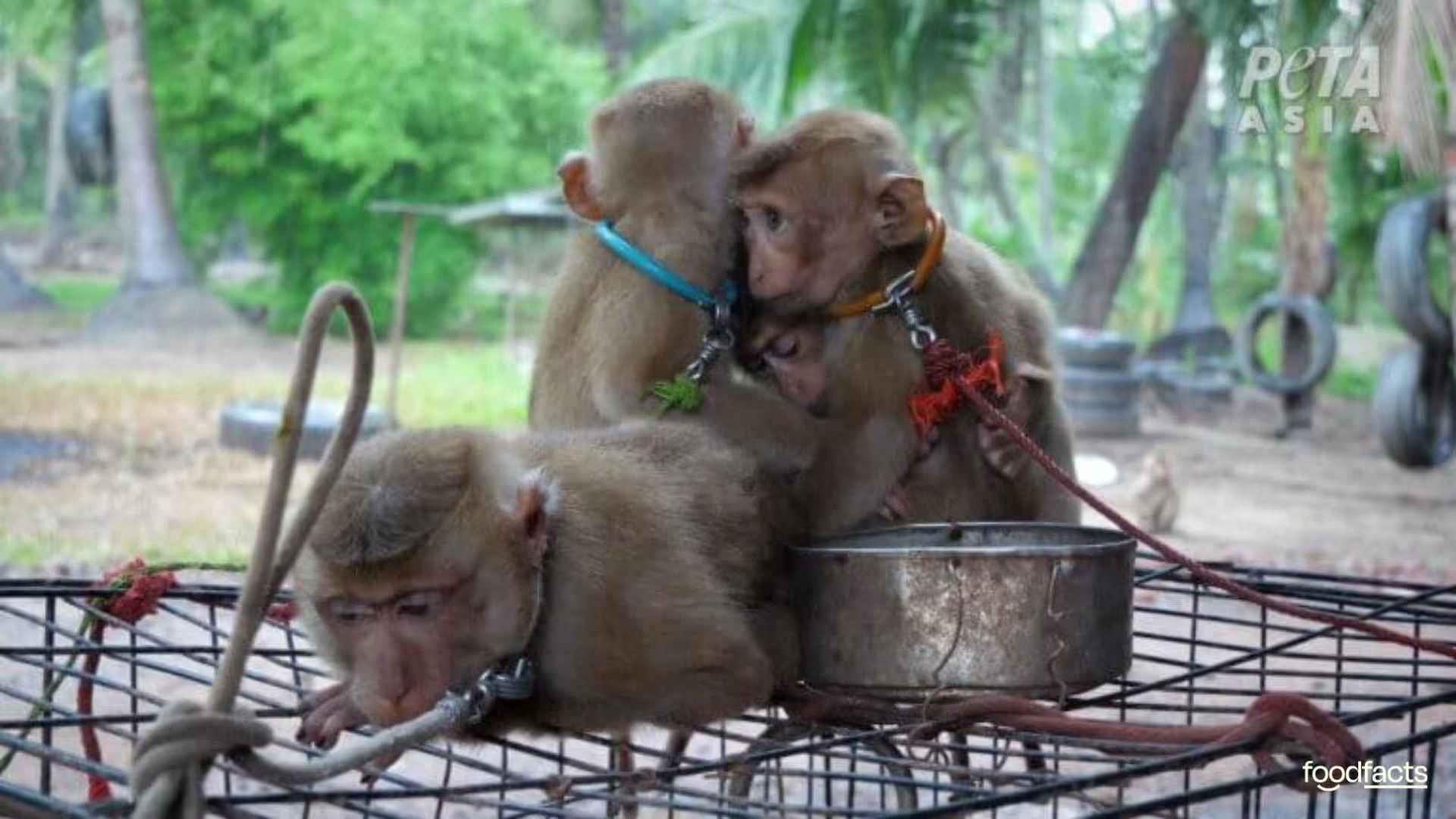
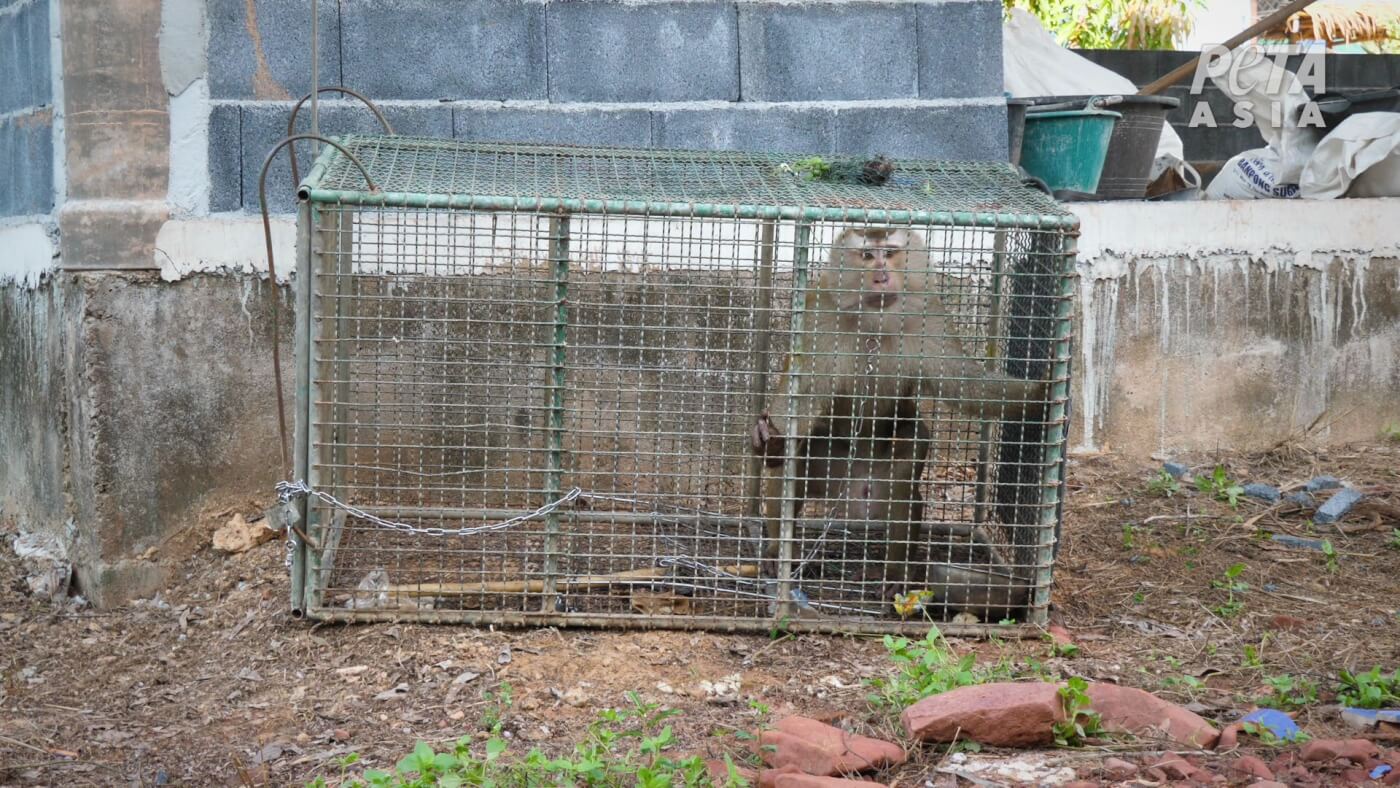
In Thailand's coconut industry, both northern pig-tailed macaques (Macaca leonina) and southern pig-tailed macaques (Macaca nemestrina)—species classified as Vulnerable and Endangered respectively by the International Union for Conservation of Nature—are kidnapped illegally from the wild, or taken from their mothers in captivity, as infants and are sold into what the industry calls "monkey schools". At these facilities, baby monkeys are tethered with ropes and chains, often tied to tiny metal cages where their skin chafes raw. Denied comfort, enrichment, or adequate socialisation, individuals are subjected to abusive training methods for months, designed to break their spirits and force them to obey commands.
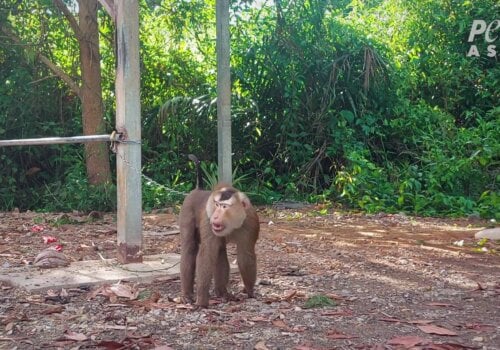
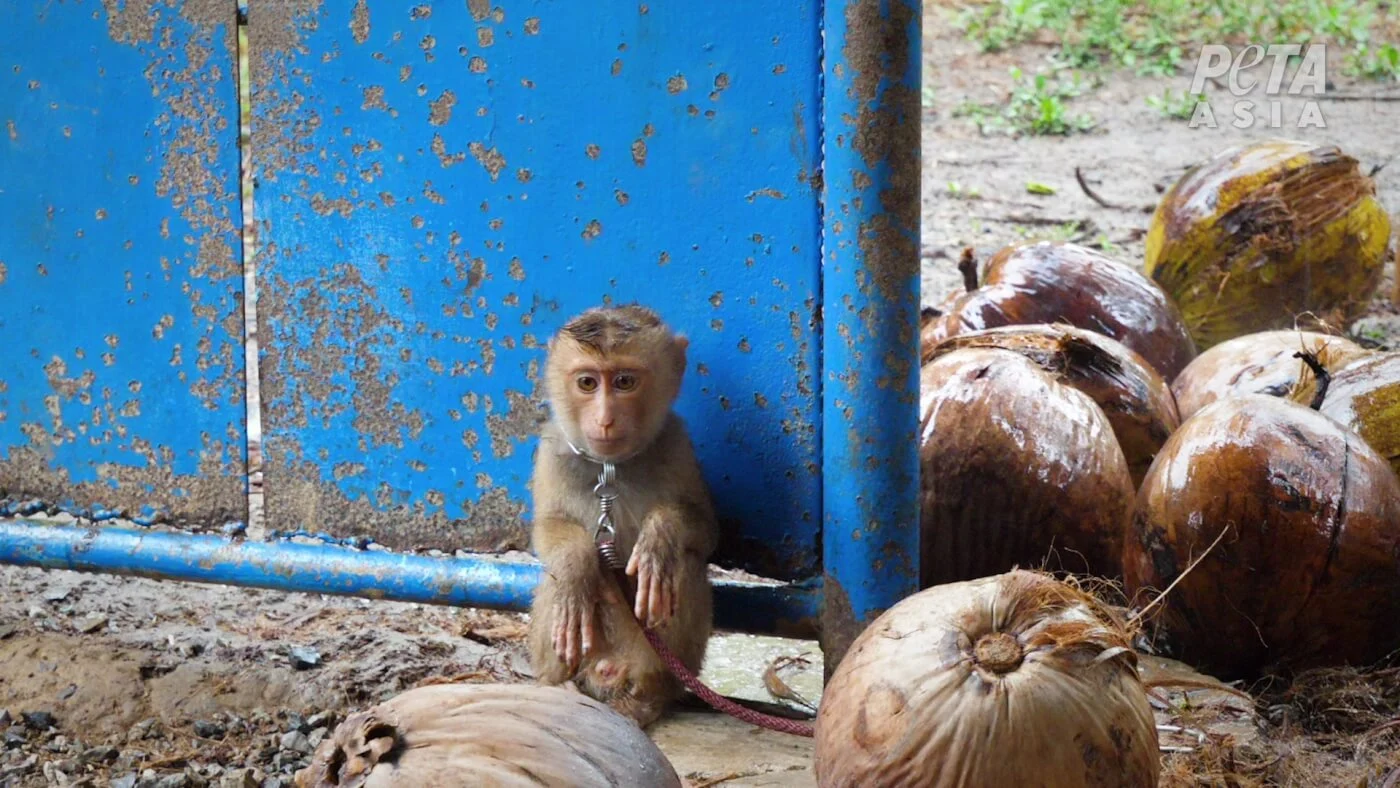
Once "trained", these intelligent, social animals are forced to pick coconuts on farms. PETA Asia’s investigations in Thailand have implicated coconut pickers, brokers, farms, and monkey-training operations in nine provinces, including top-producing ones. Monkeys spend their working lives climbing tall coconut trees—some reaching up to 30 metres—to twist and drop heavy coconuts. A male macaque can be forced to pick up to 1,600 coconuts per day, compared to approximately 80 that a human worker could harvest. Handlers put rigid metal collars around the monkeys’ necks and use chains and leashes to choke and control them. This forced labour is dangerous and unnatural - in the wild, pig-tailed macaques do not pick coconuts from tall trees. When not working, the monkeys are kept chained to old tyres, confined to cramped cages, or left isolated without adequate food, water, or shelter.
.jpeg)
The physical toll is severe. Monkeys frequently suffer bites from ants and stings from hornets whilst in trees, which can prove fatal. They also sustain broken bones from falling or being violently yanked down by handlers. Some farmers reportedly have the monkeys' teeth pulled out when they try to defend themselves. Many monkeys also suffer from extreme mental distress due to the forced captivity and abuse. After years of exploitation, when the animals are no longer deemed useful, many are simply abandoned—lacking the social and survival skills needed to live independently in the wild.
Why retailers have changed suppliers
Since People for the Ethical Treatment of Animals (PETA) Asia first exposed forced monkey labour in Thailand's coconut industry in 2019, international pressure has mounted on retailers to ensure their supply chains are free from animal exploitation.
In the UK, multiple major supermarket chains have taken action. Waitrose committed in 2020 to "never knowingly sell any products sourced from monkey labour" as part of its animal welfare policy. Tesco delisted the Chaokoh brand—one of Thailand's largest coconut milk producers implicated in the investigations—and confirmed it doesn't tolerate such practices. Co-op switched its own-brand coconut milk sourcing from Thailand to Sri Lanka in 2024, where monkey labour is not used. Asda removed Aroy-D and Chaokoh-branded products whilst investigating suppliers, and later switched to a Philippines supplier for their own-brand canned coconut milk. Sainsbury's also reviewed its ranges and dropped Thai coconut brands linked to the practice.
Most recently, Morrisons announced in March 2025 that it would source its own-brand coconut milk exclusively from a Thai company verified by PETA Asia as not using monkey labour.
In the United States, major retailers, including Albertsons, Costco, Kroger, Target, Walmart, Walgreens, and Wegmans, have discontinued sales of Chaokoh coconut milk following the investigations. Meal kit company HelloFresh went further in 2023, ceasing all coconut milk sourcing from Thailand entirely. European retailers Albert Heijn, Aldi, Jumbo, Penny and Vomar have also taken action to remove implicated Thai coconut brands.
In total, nearly 40,000 stores worldwide have removed brands linked to forced monkey labour from their shelves. However, PETA emphasises that retailer commitments often apply only to own-brand products, and many stores continue to stock externally branded Thai coconut products on their shelves. The organisation is calling for comprehensive policies that cover all coconut products, not just own-brand ranges.
The cover-up and certification concerns
A 2020 follow-up investigation by PETA Asia revealed that despite promises from the Thai government and coconut producers, monkey labour remained widespread—and industry insiders were deliberately concealing it. Investigators discovered that farms simply hide monkeys when audits are announced in advance, or purchase monkeys without legally registering them. Because farmers can hire contractors to bring in monkeys only during harvest periods, it becomes nearly impossible to verify whether farms are truly monkey-free.
The Thai government launched a "Monkey Free Plus" certification programme in 2023, claiming to provide traceability and assurance that coconuts are harvested without animal labour. However, PETA's 2024 investigation found monkeys still being used on a farm that had been certified "monkey-free" and was selling coconuts to Merit Food Products—a supplier holding government certification. One broker admitted to investigators that, with no meaningful oversight, coconut pickers simply lie about their practices. The certification scheme also ignores the fact that many monkeys used for labour don’t live on farms, but instead, are brought in on harvest days, and taken from farm to farm by coconut pickers.
This revelation underscores a critical point: government certifications from Thailand cannot currently be trusted to guarantee monkey-free products.
PETA Asia’s investigations have repeatedly exposed a shocking reality: endangered pig-tailed macaques are forced into a lifetime of labour on Thai coconut farms. Torn from their families and trained using fear and violence, these intelligent primates are chained up and suffer years of confinement and exploitation. They are denied comfort, socialisation, or anything natural or important to them. We urge everyone to avoid coconut milk from Thailand until the government takes action to completely end the use of monkey labour. - Dr Carys Bennett, Senior Corporate Projects Manager, PETA
Ethical alternatives: how to shop responsibly
Fortunately, there are several practical steps shoppers can take to ensure their coconut products are not linked to forced monkey labour.
Check the country of origin
The most reliable approach is to avoid coconut products sourced from Thailand altogether, as forced monkey labour is endemic within the country's industry. Instead, look for products from countries where monkey labour is not used in coconut harvesting:
- Sri Lanka – A major producer of high-quality organic coconut products, with no history of monkey labour
- Philippines – The world's largest exporter of desiccated coconut, with human-based harvesting methods
- India – Growing exporter using human labour and, increasingly, mechanical aids
- Vietnam – Emerging supplier with human-based harvest practices
- Indonesia – Largest global coconut producer by volume, primarily using human labour
The country of origin is typically listed on product packaging or website listings, though you may need to contact customer service for confirmation if it's not clearly marked.
Look for verified monkey-free brands
PETA maintains an updated Shoppers Guide listing coconut milk brands verified as monkey-free. Brands that have been independently verified include:
- Native Forest (organic coconut milk from Edward & Sons)—verified by PETA following extensive audits
- Let's Do Organic (EdwardPETA maintains an updated Shoppers Guide listing coconut milk brands verified as monkey-free. Brands that have been independently verified include:
- Native Forest (organic coconut milk from Edward & Sons)—verified by PETA following extensive audits
- Let's Do Organic (Edward & Sons)—verified monkey-free
- Trader Joe's organic coconut milk—sourced from Sri Lanka
- Goya—sources from countries outside Thailand
- A Taste of Thai—switched to Chef's Choice Foods, which only processes coconuts from non-Thai sources
- Essential—organic coconut milk—sourced from Sri Lanka
Support progressive retailers
Prioritise shopping at retailers that have implemented comprehensive policies covering both own-brand and externally branded products. Ask your local supermarket about their coconut sourcing Prioritise shopping at retailers that have implemented comprehensive policies covering both own-brand and externally branded products. Ask your local supermarket about their coconut sourcing policies and encourage them to extend monkey-free commitments to all products on their shelves.and encourage them to extend monkey-free commitments to all products on their shelves.
Consider alternative coconut-producing regions
Many coconut-producing countries use humane harvesting methods, including tractor-mounted hydraulic elevators, willing human tree-climbers, rope or ladder systems, or cultivation of dwarf coconut tree varieties that are easier to harvest. By choosing products from these regions, you support ethical labour practices whilst still enjoying coconut-based foods.
The path forward: technology and advocacy
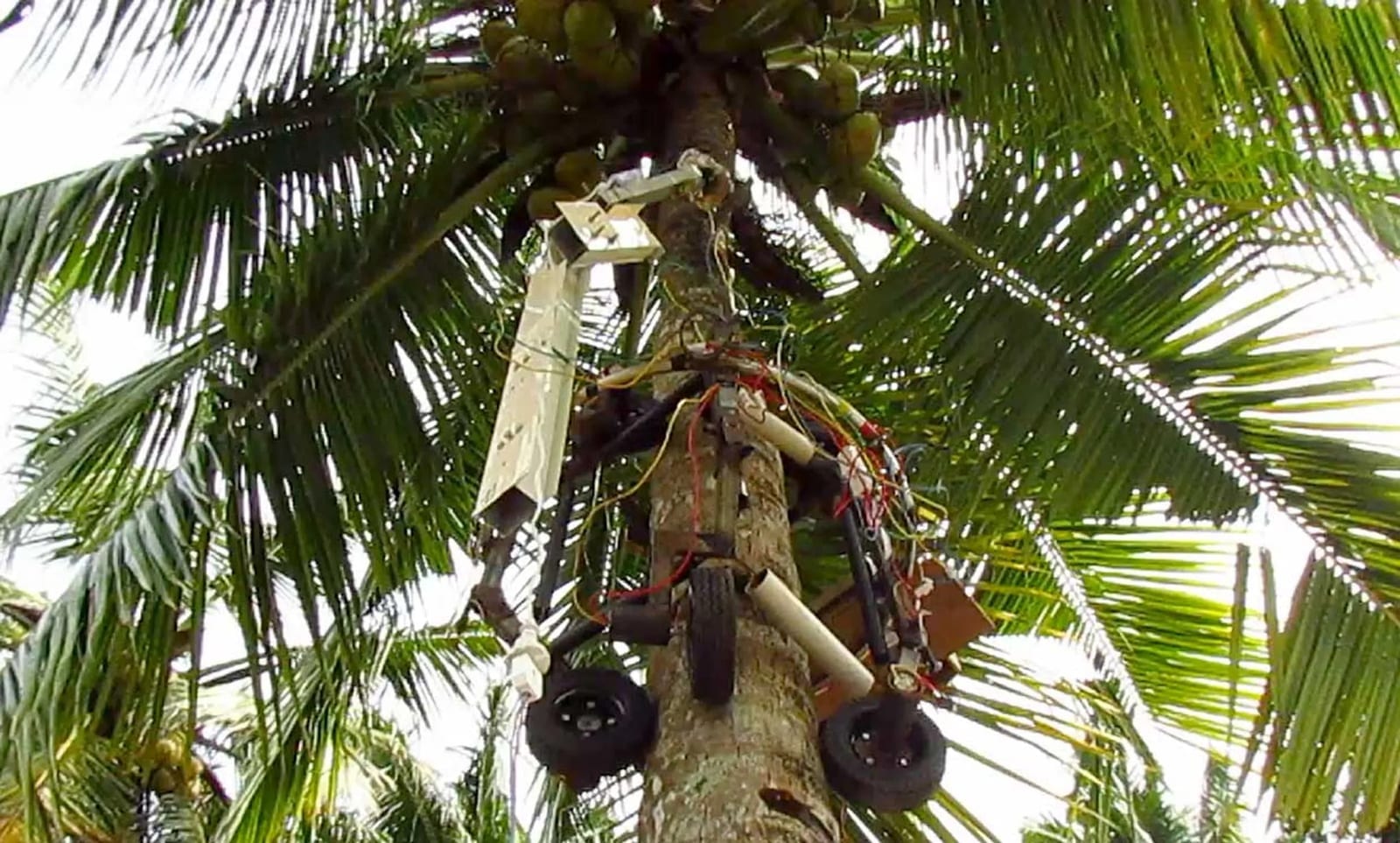
Whilst consumer choices matter, systemic change requires broader action. Researchers are developing autonomous coconut harvesting robots equipped with machine learning algorithms, robotic arms, and sensors that can identify ripe coconuts and harvest them without human climbers or animal exploitation. These technologies, though still emerging, represent a sustainable alternative that could eliminate the economic incentive for monkey labour entirely.
Wildlife organisations like the Wildlife Friends Foundation Thailand (WFFT) are working to rescue and rehabilitate macaques abandoned by the coconut industry. They’ve rescued individuals from farms who had missing canine teeth, injuries, and were chained up with no shelter or drinking water. In March 2025, WFFT signed a memorandum of understanding with Thailand's coconut industry and the Ministry of Agriculture to phase out monkey labour and exploitation in coconut harvesting. However, these rescued monkeys often lack the skills to survive in the wild and require significant veterinary care and socialisation before they can be released into protected habitats.
What you can do
The most effective action you can take is to vote with your wallet. By choosing coconut products from verified monkey-free sources and avoiding Thai coconut products until the industry implements meaningful reforms, you send a clear message that animal exploitation is unacceptable.
Additionally, contact your regular supermarket to ask about their coconut sourcing policies. Request that they extend monkey-free commitments beyond own-brand products to include all coconut items they stock. Public pressure has already prompted dozens of major retailers to change suppliers—your voice contributes to that momentum.
The forced labour of endangered macaques in Thailand's coconut industry is a welfare crisis that demands urgent attention. Whilst government certifications have proven unreliable, consumer awareness and ethical purchasing decisions are driving real change. By making informed choices about which coconut products we buy, we can help end this cruel practice whilst supporting humane alternatives that respect both workers and wildlife.

Independent fact-checking, funded by readers like you.
Misinformation is a growing threat to our health and planet. At foodfacts.org, we're dedicated to exposing the truth behind misleading food narratives. But we can't do it without your support.
Sources
- Bangkok Post (8 July 2025). Thai coconut industry takes steps to ban monkey labour
- BBC (3 July 2020). Supermarkets snub coconut goods picked by monkeys
- IEEE Spectrum (1 September 2020). Amaran the Tree-Climbing Robot Can Safely Harvest Coconuts The robot could one day reduce the need for humans to take on the risky job of climbing coconut trees
- ITVx News (13 March 2025). Morrisons drops producers of own-brand coconut milk with ties to forced monkey labour
- IUCN Red List (n.d). https://www.iucnredlist.org/es/search/map?taxonomies=130129&searchType=species
- National Geographic (19 February 2021). Monkeys still forced to pick coconuts in Thailand despite controversy
- NPR (19 October 2015). What's Funny About The Business Of Monkeys Picking Coconuts?
- PETA (n.d). ASDA Says No to Thai Coconut Milk After Monkey Abuse Exposé
- PETA (n.d). PETA Uncovers Heartbreaking Exploitation of Monkeys in the Thai Coconut Industry.
- PETA (17 August 2023). Screaming ‘Monkeys’ Confront Whole Foods Over Thai Coconut Milk Sales
- PETA (11 November 2022). Target, Trader Joe’s, and Other Monkey Labor–Free Canned Coconut Milk Retailers and Brands
- Supply Chain Digital (18 March 2025). PETA Finds Forced Monkey Labour Rife in Thai Agriculture
- VeganFTA (16 December 2024). The Servitude of Monkeys in the Coconut Industry
- WFFT (31 March 2025). MOU signed with Coconut Industry & Ministry of Agriculture to phase out coconut monkey exploitation




foodfacts.org is an independent non-profit fact-checking platform dedicated to exposing misinformation in the food industry. We provide transparent, science-based insights on nutrition, health, and environmental impacts, empowering consumers to make informed choices for a healthier society and planet.






.svg)


.svg)

