
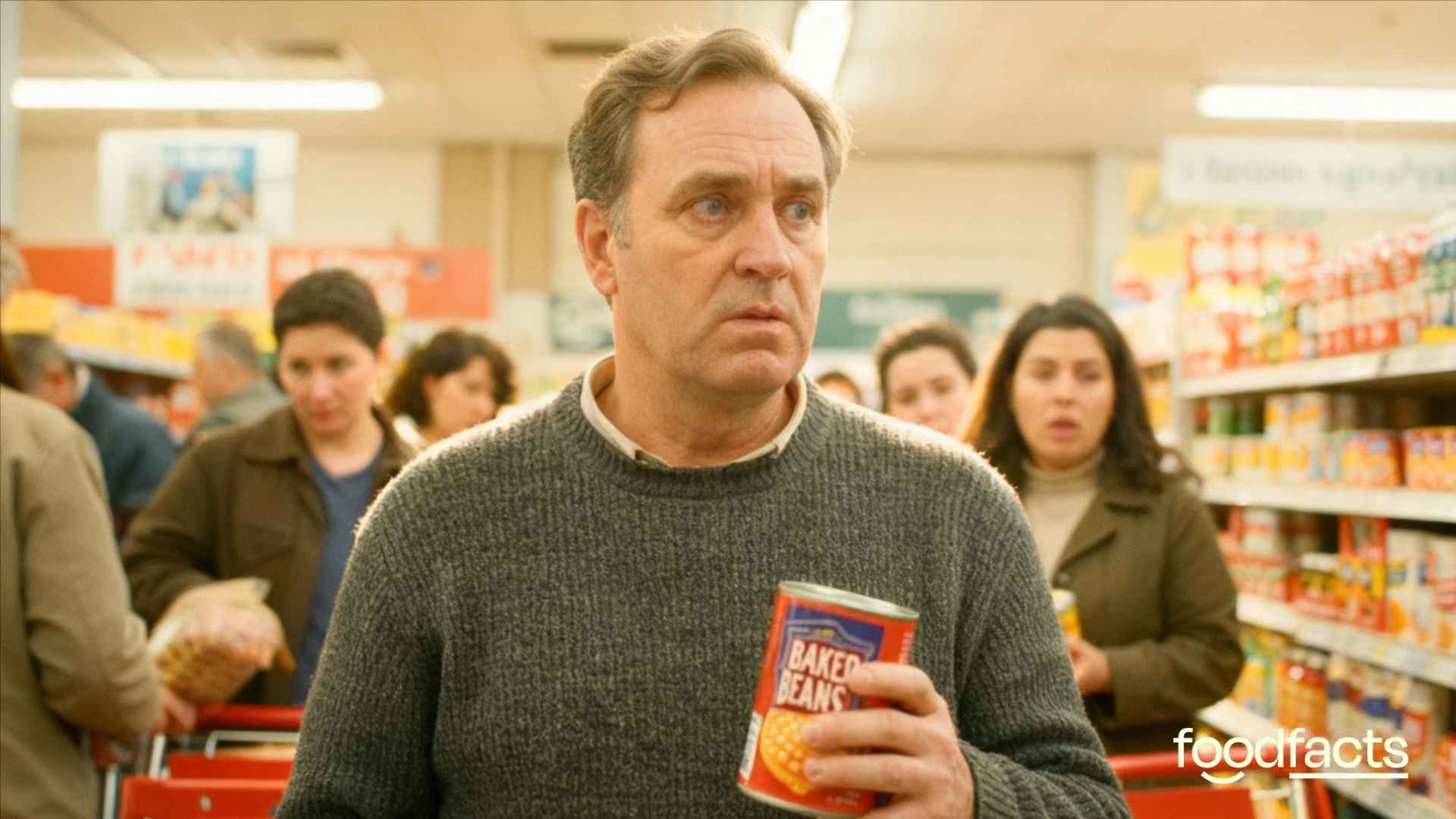




When nutrition policy misses the mark: why taxing baked beans ignores the real barriers to healthy eating




When Professor Chris van Tulleken recently appeared before the Commons Health Committee calling for taxes on baked beans, brown bread, fish fingers, and Coco Pops, it sparked an important conversation - but one that glosses over a critical reality. For many families, these everyday foods provide affordable sources of protein, fibre and essential nutrients. Having the luxury of choice is a privilege that is not always available to those living with food insecurity.
As a Registered Associate Nutritionist, I support genuine efforts to tackle diet-related disease. But the conversation surrounding ultra-processed foods has become dangerously disconnected from how the general population actually eat. It's time we talked honestly about why simplistic solutions like taxation miss the point entirely.
The uncomfortable truth about UK food affordability
The Broken Plate 2025 highlights a growing inequality in our food system. We know that healthier foods are more than twice as expensive per calorie compared to less healthier options. Over the past two years, the price of healthier foods has risen at twice the rate of less healthy ones. Additionally, The Broken Plate 2025 report demonstrated that the most deprived fifth of the UK population would have to spend 45% of their disposable income on food to meet the UK government's healthy eating recommendations. For households with children in this group, that figure rises to 70%. By contrast, the wealthiest fifth needs to spend just 11% of their income. With 21% of the UK living in poverty, this makes it increasingly challenging for many UK households to afford a healthy diet.
The conversation also overlooks a fundamental issue: access. Around one in ten deprived areas in the UK are classed as food deserts, affecting an estimated 1.2 million people. These are not just neighbourhoods without supermarkets. They are communities where residents face multiple barriers to accessing affordable and nutritious food. This includes limited public transport in rural areas, digital exclusion that prevents people from using online grocery services and physical barriers faced by disabled people. Low-income households and older adults are particularly affected, often relying on nearby convenience stores where healthier options are limited and significantly more expensive than in larger supermarkets.
For a pensioner without a car in a rural area, a parent working two jobs with no time to cook from scratch or a family in an area with limited public transport, telling them to "eat more fruit and vegetables" isn't helpful advice, it is a privilege they do not have access to.

The fibre crisis has a much simpler solution
Here’s another crucial point that’s often overlooked: the UK is not eating enough fibre. According to the latest National Diet and Nutrition Survey only 4% of UK adults meet the recommended intake of 30 grams of fibre per day. Among children and teenagers, 96% fall short of this target.
For many people, the small amount of fibre they do consume may come from foods such as baked beans, which provide around 5 grams per half tin. Baked beans remain one of the most accessible and affordable ways for households to increase their fibre intake. The Food Foundation is even running a national campaign to promote the benefits of beans. Messaging that discourages or criticises the consumption of baked beans risks confusing the public and undermining efforts to improve fibre intake across the UK population.
The nuance that gets lost in headlines
There’s an important distinction that often gets lost in the discussion: not all ultra-processed foods are created equal. While some baked beans contain additives such as modified cornstarch or spice extracts (which can classify them as ultra-processed) they provide valuable nutrients and are an affordable source of fibre and protein for many people.
Grouping baked beans with products such as foods contain high levels of fat, salt and sugar, oversimplifies the issue and risks misleading the public. Nutrition science is about context and balance, not blanket statements. A tin of beans on wholemeal toast is a genuinely nutritious, accessible meal that millions of people rely on. Labelling such foods as problematic can undermine public health messaging and cause unnecessary guilt around practical, nourishing choices.
Why expertise matters—and who gets heard
Public health policy should be grounded in evidence and shaped by those who understand both the science and the lived realities of the UK population. When high-profile figures call for taxation or restrictions without acknowledging the wider determinants of health, it shifts blame onto individuals and stigmatises affordable foods, rather than addressing the real issue: a food system that makes healthy choices inaccessible for millions.
It is also important to recognise that having a “Dr” title does not automatically mean someone is qualified to speak on nutrition. Nutrition is a complex and nuanced science that requires years of dedicated study and supervised practice. Registered Nutritionists (AfN), Dietitians and researchers who work directly with low-income communities bring this depth of expertise, along with an understanding of the social and economic factors influencing diet. Their voices deserve as much - if not more - weight in these discussions than those of television personalities.

What actually needs to happen
Taxation of affordable staple foods will not reduce obesity or diet-related disease. It will simply make survival harder for the people already struggling most. I am yet to find a single study showing that foods such as baked beans or brown bread contribute to obesity. These are everyday, nutrient-dense staples that provide fibre, protein and energy at a low cost.
If we are serious about improving public health, we need policies that address the root causes: wages that have not kept pace with living costs, a food system that makes cheap calories more readily available than nutritious ones and communities where fresh food is genuinely inaccessible.
This means ensuring that minimum wage and benefits reflect the true cost of living. It means investing in local food infrastructure and transport links to underserved areas. It means reformulating products to reduce sugar and salt where evidence supports it. And it means introducing price supports for fruits, vegetables and legumes so they become cheaper than junk food, not more expensive.
Most importantly, it means having honest conversations with registered and qualified nutrition professionals who understand both the evidence and the real barriers people face.
The bottom line
We all want people to eat well and live healthier lives. But that vision needs to be rooted in reality. For now, baked beans on toast remains a sensible meal - quick, nutritious, filling and genuinely affordable. Let's talk about how to make nutritious food universally affordable and how to rebuild a food system that works for everyone, not just those who can afford artisan sourdough and organic vegetables.
Until that happens, taxing the foods that help people stay fed cannot be called public health policy. It reflects a position of privilege that overlooks the realities faced by millions. The real question is what the government and influential public figures are doing to make food more affordable and accessible for everyone.

Independent fact-checking, funded by readers like you.
Misinformation is a growing threat to our health and planet. At foodfacts.org, we're dedicated to exposing the truth behind misleading food narratives. But we can't do it without your support.



foodfacts.org is an independent non-profit fact-checking platform dedicated to exposing misinformation in the food industry. We provide transparent, science-based insights on nutrition, health, and environmental impacts, empowering consumers to make informed choices for a healthier society and planet.






.svg)


.svg)

