Please don't scroll past — we need your help to survive

No ads, no industry money. Without reader support, foodfacts will vanish.

Donate now →
foodfacts logo
  • Articles
    
    Latest
    arrow pointing right
    All Fact Checks
    arrow pointing right
    Guides
    arrow pointing right
    Features
    arrow pointing right
    Opinion Pieces
    arrow pointing right
    Topics
    The Climate Crisis
    Politics Of Food
    Health
    Food Systems
    Media Literacy
    Popular Media
    Ethics
    Environment
    Nutrition
    Trending Tags
    Microbiome
    Red Wine
    Mediterranean Diet
    Alcohol
    Seed Oils
    Artificial Sweeteners
    Lifestyle
    Brain Health
    Animal Study
    In-Vitro Study
    Polyphenols
    Frankenchicken
    Observational Study
    Ultra Processed Animals (UPA)
    Glossary
    arrow pointing right
    Fact Checks
    A person holds an anatomical model of the large intestine whilst sitting at a table with another person.
    Is colonoscopy prep dangerous? Barbara O'Neill's claims fact-checked
    Is eating two meals a day better for your health? What the evidence says
    Is berberine really “nature’s metformin and Ozempic”? What research actually shows
  • About
    
    • About
    • The Team
    • Science Communication Fellowship
    • Board of Trustees
    • Our Experts
    • Fact Checking Policies
    • Funding/Disclosures
    • Advisory Board
    • Media Mentions
    • FAQs
  • Food Database
  • Misinfo Watchlist
Report Misinfo
Join freeJoin
Log inBecome a memberMy dashboardMy accountLog out
Home
/
Articles
/
Cancer

Cancer

Explore Categories

The Climate Crisis
Politics Of Food
Health
Food Systems
Media Literacy
Popular Media
Ethics
Environment
Nutrition

Explore evidence-based articles on cancer and diet, including risk factors, prevention claims and what the evidence actually shows.


A woman eats a cocktail cherry with a scepitcal look on her face. Her scepticism highlights the concern towards red food colouring additives.
FACT CHECK
OPINION
Nutrition

Red 3 in the spotlight: should you stop eating cocktail cherries?

Social media posts often compare EU and US food safety regulations. We explore the relevance of such comparisons around food additives and cancer links.
Read more
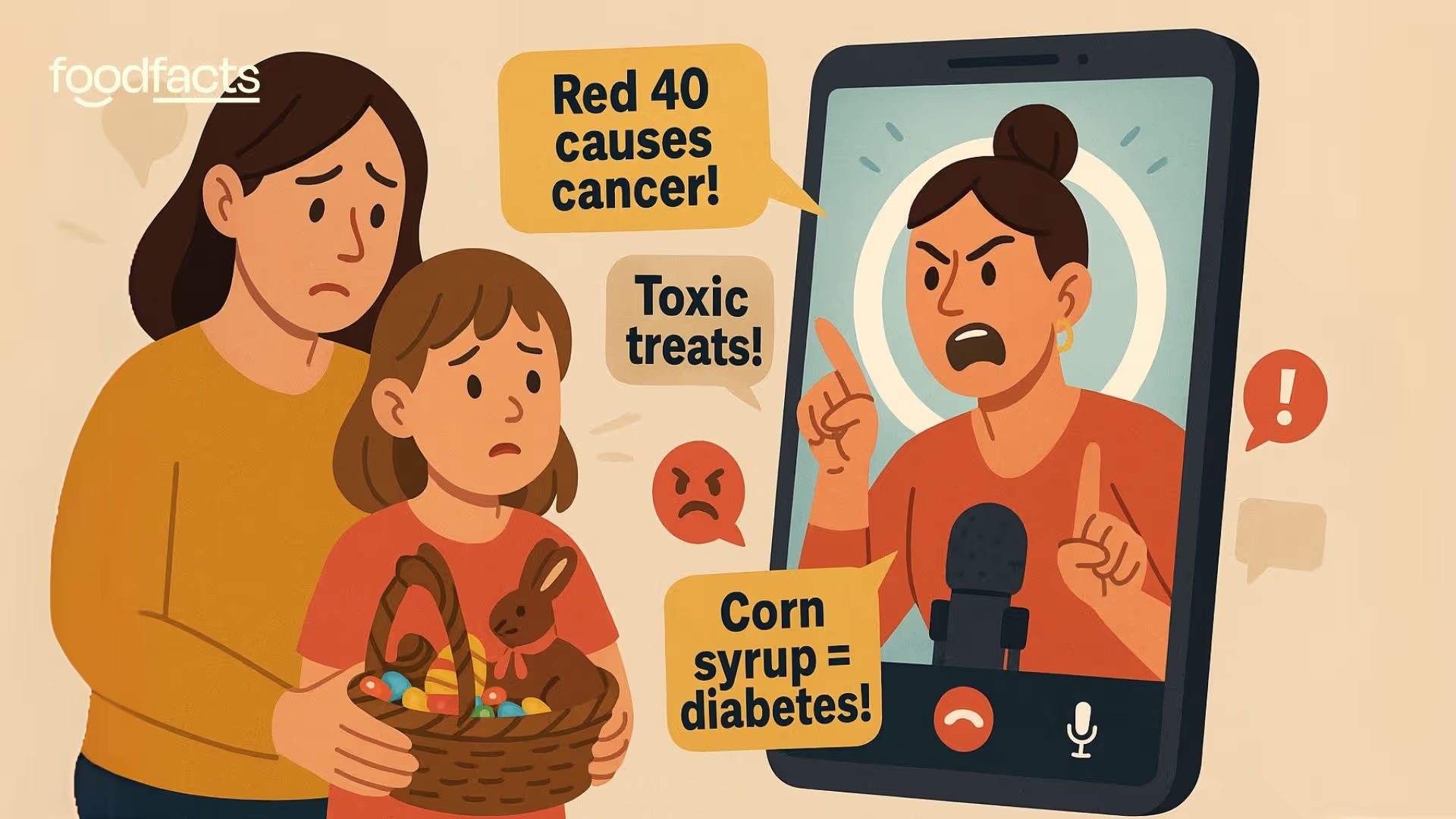
A mother and child are being told by an influencer to not eat Easter candy. This represents a trend of health influencers spreading fear about ingredients present in candy.
FACT CHECK
OPINION
Nutrition

Influencer suggests Easter candy treats are dangerous. Here's what you need to know

This is part of a social media trend advocating for food swaps that will instantly improve your health. But it misses the big picture, read on to find…
Read more
A vibrant, educational image showing various plant-based foods rich in fiber, including fruits, vegetables, and whole grains, alongside a question about fiber intake. The visual supports the article "No, Fibre Isn't Useless: Why Dr. Ede's Comments on DOAC Are Wrong," which debunks the myth that fiber is unnecessary in the diet. The article argues that fiber plays a crucial role in digestive health, disease prevention, and overall well-being, refuting the recent claims about its lack of importance.
FACT CHECK
OPINION
Nutrition

No, fibre isn’t useless – why Dr Ede's comments on DOAC are wrong

Dr. Georgia Ede claims fibre is unnecessary—but the science says otherwise. We debunk the myths and reveal why fibre is essential for your health.
Read more
A young child smiles while holding and about to eat a red candy, set against a warm, colorful background. This image connects to the article "FDA Bans Red No.3 Cancer Risk," which discusses the FDA's recent decision to ban the use of Red No.3 in food products due to health concerns, including its potential links to cancer. The image emphasizes the common consumption of food additives in sweets often enjoyed by children, linking to the ongoing debate about food safety.
FACT CHECK
OPINION
Health

FDA bans the use of Red No.3 in food because of links to cancer. What’s the actual risk?

The FDA’s ban on Red No. 3 is more about outdated legal requirements than new evidence of harm On Wednesday, January 15th, the FDA banned the use of a synt
Read more
Previous
More
See all articles

Free account, free goodies.

Save your favourite articles and unlock our members-only fact-checking toolkits, guides and resource library. Free to join, no card required.

Create free account

Get the facts, not the fads

Evidence-based nutrition and food-industry investigations — free to your inbox, every week.

One last step: check your inbox and click the confirmation link.

It may take a minute. Please check Promotions, Updates, or spam if you can’t see it.

Follow Us
youtube [#168] Created with Sketch.
Food misinformation threatens public and planetary health. We're fighting back against misinformation, fostering healthy communities, honest food, and a thriving planet

ai powered chat bot experience provided by Elevenlabs
Lenny the Lime, the foodfacts.org chatbotOr message Lenny on WhatsApp: +44 7356 131717 →
Article

Top Myths

Latest

The Climate Crisis
Politics Of Food
Health
Food Systems
Media Literacy
Popular Media
Ethics
Environment
Nutrition
Take Action
Become a MemberPartner Organisations
About
Fact Checking PoliciesOur Funding/DisclosuresThe TeamScience Communication FellowshipOrganisational StructureArticles Of AssociationIndependence & TransparencyAi Usage PolicyAdvisory BoardMedia MentionsFAQsGlossaryXML News Feed
Contact
Report Mis/DisinformationContact Us / PressHire Us To TalkProvide Feedback
Privacy Policy  
Terms & Conditions © 2024
The Worlds First Food Fact-Check Platform.
foodfacts.org is a non-profit organisation. (no. 15414442) limited by guarantee and registered in England and Wales.
‍
© Copyright 2024-2026 foodfacts.org  Launched in 2025. 🇬🇧 Grown in the United Kingdom.