foodfacts logo
  • Articles
    
    Latest
    arrow pointing right
    All Fact Checks
    arrow pointing right
    Guides
    arrow pointing right
    Features
    arrow pointing right
    Opinion Pieces
    arrow pointing right
    Topics
    The Climate Crisis
    Politics Of Food
    Health
    Food Systems
    Media Literacy
    Popular Media
    Ethics
    Environment
    Nutrition
    Trending Tags
    Food Storage
    Metabolic Health
    ApoB
    LDL
    Crime
    Studies
    Fact Checking
    Cortisol
    Ultra Processed Animals (UPA)
    Zoonotic Diseases
    Lab-Grown Meat
    (UPF) Ultra Processed Foods
    Chemophobia
    Precision Livestock Farming (PLF)
    Glossary
    arrow pointing right
    Fact Checks
    Do tomatoes, bread, and ginger turn toxic in the fridge?
    Dark chocolate, cocoa beans and laboratory glassware on slate, illustrating lab-grown chocolate
    Why you shouldn't be scared of "poisonous" lab-grown chocolate
    Bowl of high-fibre foods including rolled oats, chia seeds, raspberries, broccoli and crackers next to a glass of water containing visible coloured microplastic particles
    Can fibre help your body excrete microplastics?
  • Take Action
  • About
    
    • About
    • The Team
    • Our Experts
    • Fact Checking Policies
    • Funding/Disclosures
    • Advisory Board
    • Media Mentions
    • FAQs
  • Food Database
  • Misinfo Watchlist
Report MisinfoDonate
Home
/
Articles
/
Behavioural Disorders

Behavioural Disorders

Explore Categories

The Climate Crisis
Politics Of Food
Health
Food Systems
Media Literacy
Popular Media
Ethics
Environment
Nutrition

Explore evidence-based articles on Behavioural Disorders and diet, including risk factors, health claims, prevention narratives and what the evidence shows.

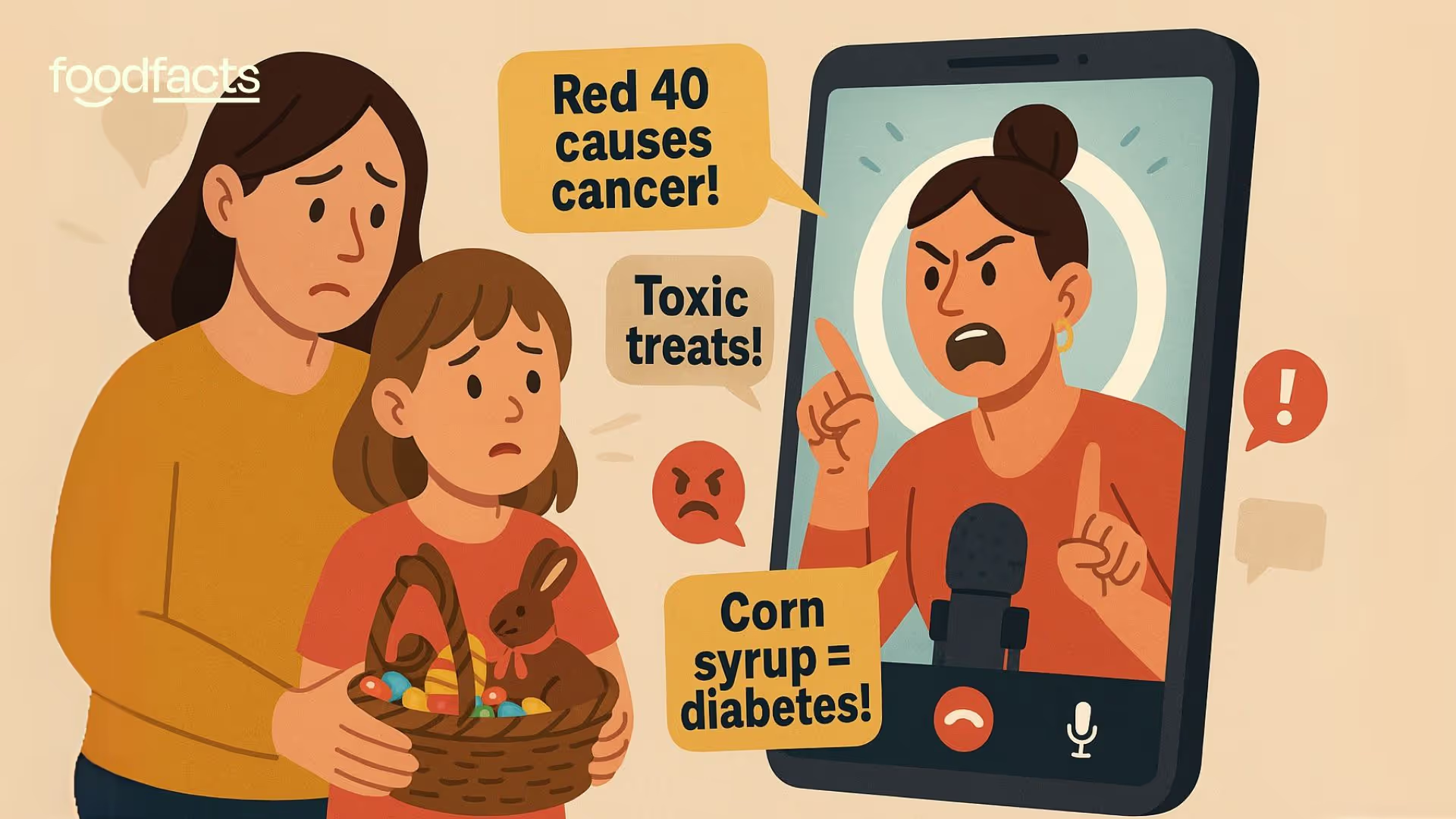
A mother and child are being told by an influencer to not eat Easter candy. This represents a trend of health influencers spreading fear about ingredients present in candy.
FACT CHECK
OPINION
Nutrition

Influencer suggests Easter candy treats are dangerous. Here's what you need to know

This is part of a social media trend advocating for food swaps that will instantly improve your health. But it misses the big picture, read on to find out more
Read more
An illustration displays a variety of colorful fruits, including oranges, grapefruit, bananas, papaya, mango, and kiwi, along with some pills and chemical structures drawn in white. This collection of items likely represents sources of folic acid or nutrients relevant to children's health and development.
FACT CHECK
OPINION
Nutrition

Yes, folic acid is synthetic, but that doesn’t mean it’s harming your child’s behaviour

Some influencers claim folic acid damages children's health — but the scientific consensus strongly supports its role in preventing birth defects.
Read more
A young child smiles while holding and about to eat a red candy, set against a warm, colorful background. This image connects to the article "FDA Bans Red No.3 Cancer Risk," which discusses the FDA's recent decision to ban the use of Red No.3 in food products due to health concerns, including its potential links to cancer. The image emphasizes the common consumption of food additives in sweets often enjoyed by children, linking to the ongoing debate about food safety.
FACT CHECK
OPINION
Health

FDA bans the use of Red No.3 in food because of links to cancer. What’s the actual risk?

The FDA’s ban on Red No. 3 is more about outdated legal requirements than new evidence of harm On Wednesday, January 15th, the FDA banned the use of a synt
Read more
See all articles

Ready to take action?

You have the power to make a difference 3 times a day.

Get Inspired Today!
Get the latest articles
You're all set! We've added you to our newsletter.
Oops! Something went wrong while submitting the form.
Follow Us
youtube [#168] Created with Sketch.
Food misinformation threatens public and planetary health. We're fighting back against misinformation, fostering healthy communities, honest food, and a thriving planet

ai powered chat bot experience provided by Elevenlabs
Article

Top Myths

Latest

The Climate Crisis
Politics Of Food
Health
Food Systems
Media Literacy
Popular Media
Ethics
Environment
Nutrition
Take Action
Partner Organisations
About
Fact Checking PoliciesOur Funding/DisclosuresThe TeamOrganisational StructureIndependence & TransparencyAi Usage PolicyAdvisory BoardMedia MentionsFAQsGlossaryXML News Feed
Contact
Report Mis/DisinformationContact Us / PressProvide Feedback
Privacy Policy  
Terms & Conditions © 2024
The Worlds First Food Fact-Check Platform.
foodfacts.org is a non-profit organisation. (no. 15414442) limited by guarantee and registered in England and Wales.
‍
© Copyright 2024-2026 foodfacts.org  Launched in 2025. 🇬🇧 Grown in the United Kingdom.