foodfacts logo
  • Articles
    
    Latest
    arrow pointing right
    All Fact Checks
    arrow pointing right
    Guides
    arrow pointing right
    Features
    arrow pointing right
    Opinion Pieces
    arrow pointing right
    Topics
    The Climate Crisis
    Politics Of Food
    Health
    Food Systems
    Media Literacy
    Popular Media
    Ethics
    Environment
    Nutrition
    Trending Tags
    CBD
    Junk Food
    Menopause
    Pesticides
    Rice
    Immune System
    Supplements
    Vitamins
    Lab-Grown Meat
    (UPF) Ultra Processed Foods
    Chemophobia
    Precision Livestock Farming (PLF)
    Manosphere
    Net Zero
    Glossary
    arrow pointing right
    Fact Checks
    Should we be afraid of lectins? What the science actually says
    Do plant milks really harm our IQ?
    Is a “plant heavy” diet preferred for women in perimenopause?
  • Take Action
  • About
    
    • About
    • The Team
    • Fact Checking Policies
    • Funding/Disclosures
    • Advisory Board
    • Media Mentions
    • FAQs
  • Superspreaders
Report MisinfoDonate
Home
/
Articles
/
Lectins

Lectins

Explore Categories

The Climate Crisis
Politics Of Food
Health
Food Systems
Media Literacy
Popular Media
Ethics
Environment
Nutrition
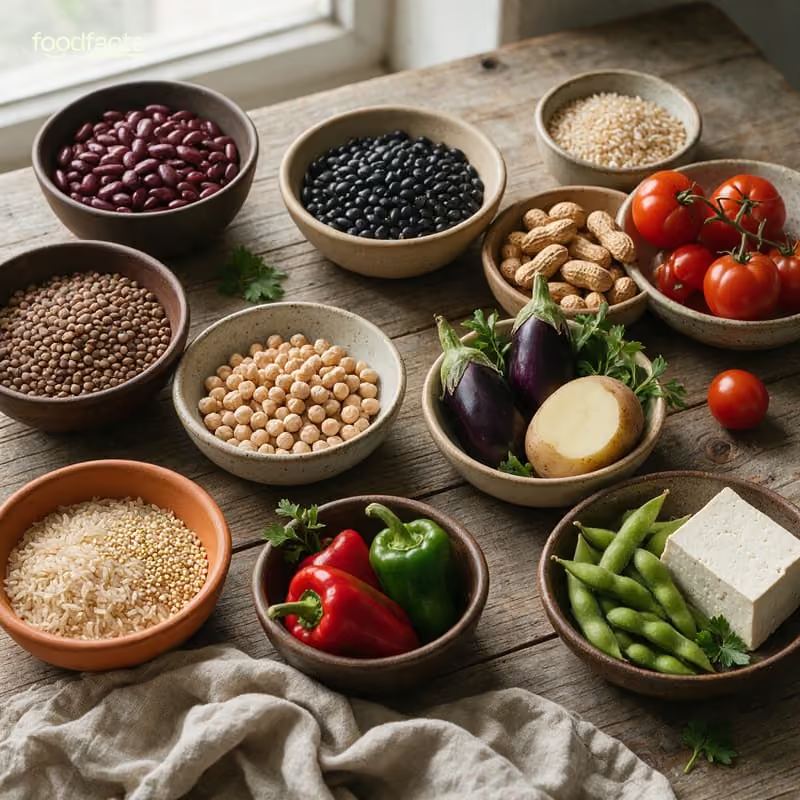
Overhead view of a rustic wooden table displaying various lectin-containing plant foods arranged in bowls and baskets with handwritten labels. From left to right: a white ceramic bowl of dark red kidney beans labeled 'BEANS'; a bowl of tan-colored lentils labeled 'LENTILS'; a bowl of small beige chickpeas labeled 'CHICKPEAS'; a terracotta dish of unshelled peanuts labeled 'PEANUTS'; and a bowl of black beans or black lentils. In the center, a large wicker basket contains fresh heirloom tomatoes and sliced yellow potatoes. To the right, another wicker basket labeled 'NIGHTSHADES' holds purple eggplants, a red bell pepper, and a green bell pepper. In front, a wicker tray displays various whole grains including brown rice, flaxseeds, and quinoa in small white bowls, labeled 'WHOLE GRAINS'. At the bottom right, a plate with fresh edamame pods and a block of tofu is labeled 'SOY'. A cream-colored linen cloth is draped at the top of the composition. The 'foodfacts' logo appears in white text in the bottom right corner.
FACT CHECK
OPINION
Nutrition

Should we be afraid of lectins? What the science actually says

Lectins in oats, cashews and brown rice aren’t “scary” when cooked; this fact-check explains what lectins are, real risks, and why these plant foods remain safe
Read more
See all articles

Ready to take action?

You have the power to make a difference 3 times a day.

Get Inspired Today!
Get the latest articles
You're all set! We've added you to our newsletter.
Oops! Something went wrong while submitting the form.
Follow Us
Food misinformation threatens public and planetary health. We're fighting back against misinformation, fostering healthy communities, honest food, and a thriving planet

ai powered chat bot experience provided by Elevenlabs
Article

Top Myths

Latest

The Climate Crisis
Politics Of Food
Health
Food Systems
Media Literacy
Popular Media
Ethics
Environment
Nutrition
Take Action
Partner Organisations
About
Fact Checking PoliciesOur Funding/DisclosuresThe TeamOrganisational StructureIndependence & TransparencyAi Usage PolicyAdvisory BoardMedia MentionsFAQsGlossaryXML News Feed
Contact
Report Mis/DisinformationContact Us
Privacy Policy  
Terms & Conditions © 2024
Freedom Food Alliance is a non-profit organisation. (no. 15414442) limited by guarantee and registered in England and Wales.
‍
© Copyright 2025 Freedom Food Alliance.  Launched in 2025. 🇬🇧 Grown in the United Kingdom.