
Fact-Checking:
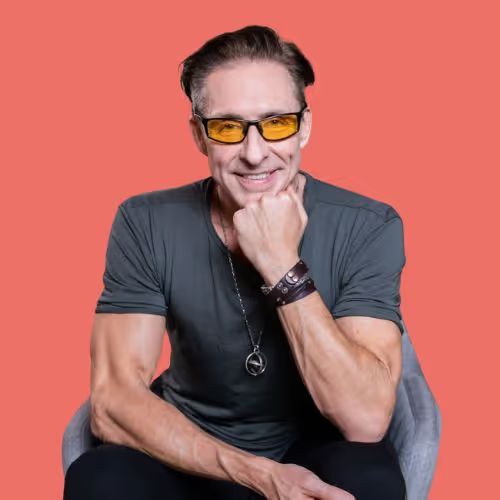
Dave Asprey
Dave Asprey is an American entrepreneur and biohacking advocate best known for popularising Bulletproof coffee (coffee enriched with butter and MCT oil) and promoting a low‑carbohydrate, high‑fat “Bulletproof” diet


Profession: Entrepreneur, author and podcast host. Founder and CEO of Upgrade Labs, a “Human Upgrade Center” chain.
Credentials: Asprey holds an MBA from the Wharton School and has a background in technology and business. Founder of Bulletproof Coffee and the Bulletproof Company (stepped down as CEO in 2019). No known credentials in medicine, dietetics or public‑health nutrition.
Tagline: Asprey self-describes as the “Father of Biohacking,” a “man of firsts”, the “world’s first professional biohacker”, and plans to live to 180 years old (source).
Dave Asprey is an American entrepreneur and biohacking advocate best known for popularising Bulletproof coffee (coffee enriched with butter and MCT oil) and promoting a low‑carbohydrate, high‑fat “Bulletproof” diet. Profiles in outlets such as Men’s Health and The New York Times Magazine report that Asprey says he expects to live to 180 and has spent at least one to two million dollars on biohacking himself, ranging from intensive neurofeedback retreats and device‑based “upgrades” to large monthly supplement regimens, in pursuit of that goal.
His public narrative combines personal stories of weight loss, improved cognition, and recovery from mold‑related illness with confident claims about the dangers of seed oils, oxalates, grains, or “toxic” modern environments, alongside bold longevity and performance promises and, at times, suggestions that biohacking approaches could even reverse serious conditions like Alzheimer’s.
Dietitians and health journalists have criticised aspects of the Bulletproof diet and Asprey’s approach as unsupported. In her analysis, Vox’s senior health correspondent Julia Belluz called it “filled with dubious claims, based on cherry‑picked studies, that are not supported by scientific consensus,” and a New York Times Magazine profile raised concerns about the evidence base behind some of Asprey’s recommendations, noting “there’s little research outside his own that backs them up.” Evidence‑based critics such as nutritional scientist Layne Norton (Biolayne) have publicly dissected specific claims—on calories, vegetable oils, carbohydrates, among others—showing that some of the studies Asprey cites do not support his interpretations and, in some cases, report opposite associations. Some of those concerns about referencing research in misleading ways have been echoed by experts such as Dr Stuart Philipps.
In June 2020, the U.S. Federal Trade Commission sent Asprey a formal warning letter stating that he was “unlawfully advertising” certain supplements and products on his website as preventing or treating COVID‑19, and emphasising that “any coronavirus‑related prevention claims regarding such products are not supported by competent and reliable scientific evidence” and must cease.
For followers, his overall message is attractive because it offers simple villains (seed oils, oxalates, grains, toxins) and the sense of accessing unique, cutting‑edge insights; from a public health perspective, the narrative he promotes raises concerns about fear‑based messaging, erosion of trust in evidence-based guidelines and in some places encouragement of self‑experimentation through use of phrases like “be a scientist with your own body.”

F – Financial incentive
Are there visible revenue streams associated with the content?
Asprey has built a substantial commercial ecosystem around his biohacking persona. He founded Bulletproof Coffee and the Bulletproof Company, which grew from a blog into a business selling branded coffee, MCT oil, supplements and food products marketed as free from “toxic” mold and inflammatory ingredients. He later founded Upgrade Labs, described as the world’s first “Human Upgrade Center,” which offers memberships and single sessions for high‑tech fitness and recovery services such as cryotherapy, red‑light therapy and AI‑guided exercise; published price examples from various locations include monthly memberships in the hundreds of dollars (between $149 and $699).
Beyond these, Asprey’s site promotes books, live and virtual events (with tickets around 99 USD in example promotions), biohacking conferences, podcasts and products like Danger Coffee, all seemingly connected to his framing of non‑toxic foods and effective biohacks. For example, Danger Coffee is marketed as one of Asprey’s solutions to remineralise and fuel his body “after years of battling mineral loss and toxic mold exposure.”
Rachel Monroe, who met and interviewed Dave Asprey, writes for Men’s Health: “In his books, podcasts and blog posts, he is a proponent of several companies he either owns or has a stake in.”
Here are a few direct examples from his social media.
- Asprey appears to warn the public about the harms of “junk light”; and then in posts like this one, he praises the benefits of TrueDark tinted glasses (Asprey founded TrueDark), which he claims “just block the bad blue light”, supposedly helping to wake up your brain.
- Asprey also warns about dangerous compounds hiding in coffee - a problem which does not appear to apply to the products his brands sell. According to this profile by the New York Times Magazine, Asprey and Bulletproof Coffee employees emphasise that real Bulletproof Coffee uses their branded product, because simply adding butter to your own coffee may mean you are still getting the fungus which according to Asprey, American coffee is full of. Asprey now also promotes a product linked to his new franchise Upgrade Labs, Danger Coffee, which he says differs from Bulletproof coffee because it solves a problem that many people don’t know they have, by remineralising the body.
- In this video he promotes a retreat he created, called 40 Years of Zen. According to Asprey, “if you feel like you want to be smarter, faster, stronger, and more peaceful, and happier, and know why you’re doing what you do and maybe have a bigger sense of purpose in your life,” that’s what 40 Years of Zen is for - and it will cost you $16,000.
Take‑away: On social media, it appears that fear‑framed posts about various toxins sit alongside promotion of his books, supplements, coffee and labs, so that the same channels that emphasise risks also showcase branded solutions.
A – Authority
How do they get perceived as an authority on the topics discussed?
Asprey’s perceived authority is built primarily on his entrepreneurial track record and communication reach. He presents himself, and is introduced in event bios, as a pioneering entrepreneur, he emphasises his early adoption of technologies from e‑commerce to biohacking tools. He also often refers to his personal health history (obesity, brain fog and suspected mold toxicity) which he frames as the catalyst for his self‑experimentation and development of biohacking protocols.
On social media he can come across as being ahead of conventional medicine or research, by suggesting he has been talking about certain lab tests or interventions “for years” while “most doctors still don’t order it,” positioning himself as a clear‑sighted early adopter contrasted with cautious, guideline‑bound clinicians (source, source, source). At the same time, Asprey is not a medical doctor, registered dietitian, endocrinologist or epidemiologist, and he does not list formal qualifications in nutrition or public‑health science.
Take‑away: Asprey’s prominence as an entrepreneur and communicator gives him a substantial social media platform, but despite the fact that a lot of his claims relate to health concerns, his credentials are not in medicine or nutrition science. When he makes confident recommendations about diet, supplements and sometimes medical-sounding “hacks” to a large audience, it becomes particularly important for readers to scrutinise how he uses evidence and how his advice compares with regulated, evidence‑based practice that includes safety and accountability mechanisms.
C – Claims
What is the core messaging, and what is left out?
Core idea
Asprey’s messaging centres on the idea that modern diets and environments are loaded with “toxins” (industrial seed oils, oxalates in leafy greens, gluten‑containing grains, mold, or some medical interventions like vaccines) which drive inflammation, brain fog, weight gain and disease. He argues that by adopting a high‑fat, “low‑toxicity” biohacked lifestyle built around a Bulletproof‑style diet, lower‑oxalate and low‑grain eating, targeted supplements and high‑tech interventions, people can dramatically improve cognitive performance, body composition and longevity, often with relatively little ‘conventional’ exercise (source, source, source).
From idea to certainty
On his website and social media, Asprey uses language that suggests an open‑ended, experimental attitude (“research, test, modify, repeat”). In practice, many of his public statements use very confident language, suggesting that biohacking techniques could reverse diseases like Alzheimer’s, and reporting “profound benefits” from his own experiments.
What is left out
Across these themes, Asprey’s narrative tends to give heavy prominence to striking success stories and personal transformations, while giving much less space to what happens across the broader population or over longer periods. As journalist Rachel Monroe noted in Men’s Health, “for every online anecdote about a devotee who lost 50 pounds on the Bulletproof Diet, there seems to be someone else who received alarming results on their lipid panels after they began putting two tablespoons of butter in their coffee every morning,” and “there’s a lack of large‑scale, long‑term research in humans to back up Asprey’s more grandiose claims about his diet.”
Some more in-depth examples of how this plays out
The following examples show how vivid anecdotes and one‑liners can dominate the narrative, while the less dramatic but more robust evidence on typical risks and long‑term outcomes gets less attention.
Example 1 – Oxalates and rare scary cases
Asprey devotes significant attention to oxalates, with posts warning for example that a “green smoothie sent a woman to permanent dialysis in just 10 days” and describing her kidneys as “crystallising themselves to death,” without naming the case report or providing context about underlying health status or intake levels. In the same post he claims that “a single serving of spinach” can produce urinary oxalate “levels seen in genetic kidney disease,” which, taken at face value, may suggest that ordinary servings of spinach can be acutely dangerous, even for otherwise healthy people. Without reference to the case he is discussing, we cannot check its specific circumstances. Case reports of acute oxalate nephropathy linked to green smoothie cleanses do exist. The context of such reports however matters when drawing conclusions for the broader population.
In this case report, the patient suffered from Type 2 Diabetes, and Chronic Kidney Disease. It was found that his sister was making him daily green ‘concoctions’, thinking that they would support his health, and unaware of special cautions for people with decreased kidney function. This other case report describes that of a woman who, trying to follow a popular diet, ended up consuming around 5 times the typical amount of oxalate. Finally, this case report describes that of a female who followed a green smoothie cleanse, and who, similarly to the case mentioned by Dave Asprey, developed acute kidney injury that progressed to end-stage renal disease. It is important to note that a smoothie cleanse tends to involve replacing most or all of your meals with smoothies, and so the conclusions from those reports tend to focus on overall dietary intake, rather than vilifying high-oxalate green foods altogether. Most importantly, they all hint at the potential dangers that can follow from following fad diets or trends found online, without medical supervision.
Nephrology sources and kidney‑stone guidelines do recognise that spinach and other high‑oxalate foods can contribute to stone risk in susceptible individuals and recommend moderation, adequate fluid intake and pairing oxalate‑rich foods with dietary calcium to reduce absorption (source, source). In contrast, equating a single serving of spinach in a person with normal metabolism to the persistent, markedly elevated urinary oxalate levels seen in genetic conditions substantially overstates risk for the general population and conflates a chronic metabolic disorder with transient dietary responses.
Example 2 – Whole grains, carbs and one‑liner comparisons
Asprey discusses whole grains and starchy vegetables in ways that go against mainstream recommendations. He has dismissed brown rice as a “scam,” and suggested whole wheat foods are not as healthy as you might think, framing these foods as problematic sources of toxins or anti‑nutrients. For instance, he has shared sentiments such as preferring 100 g of white flour to 100 g of sweet potato, claiming that when you remove the outer part of the grain off, you remove all of its toxins. Removing the outer layers of cereal grains (bran and germ) does reduce some compounds that tend to concentrate there, including certain mycotoxins (fungal toxins), pesticide residues, and so‑called “anti‑nutrients” like phytic acid. However, these substances are not universally harmful at typical dietary levels, many have potential benefits, and they are not completely removed by refining. Moreover, refining strips away most of the fibre, vitamins, minerals, and phytochemicals that are consistently associated with better health outcomes, while leaving the high‑starch endosperm that is linked to higher glycemic response and increased risk of chronic disease when consumed in large amounts (source, source, source). The blanket suggestion that refining removes all the toxins is therefore inaccurate both chemically and nutritionally.
What gets missed is that large prospective studies and meta‑analyses consistently associate higher intakes of whole grains and fibre‑rich plant foods with lower risks of cardiovascular disease, type 2 diabetes, and total cancer, supporting guidelines that recommend an increased intake of whole grains to lower risks of chronic diseases.
By relying on sharp one‑liners and selective interpretations, the public message can suggest that widely recommended foods are fundamentally harmful without reflecting the weight of evidence.
Example 3 – Butter coffee, saturated fat and “minimal exercise”
Asprey’s narrative is closely tied to his concept of Bulletproof coffee and promoting a high‑fat diet, with 50-70% of calories coming from specific fats; he has claimed substantial improvements in weight, cognition and even IQ after adopting this pattern and has stated that he can maintain health and body composition with surprisingly little exercise compared to standard guidelines. This can leave followers with the impression that adding butter to coffee or following his dietary recommendations, combined with targeted biohacks, is a superior alternative to traditional advice emphasising moderate fat intake, whole‑food carbohydrates and regular activity.
While recommendations have evolved to differentiate between types of fats, they still recommend limiting high saturated‑fat intake and prioritising unsaturated fats and whole‑food sources; they also place regular physical activity among the most robustly supported levers for longevity and chronic‑disease prevention.
Take‑away: Asprey’s claims may resonate because they point to genuine concerns about one‑size‑fits‑all guidance and issues with modern lifestyles, but his public messaging can expand from narrow or rare phenomena into broad, high‑certainty statements that overstate the dangers of common foods and underplay the substantial evidence for varied, plant‑inclusive diets and regular exercise; as a result, followers may encounter a picture in which a tightly curated, Bulletproof‑style lifestyle appears uniquely effective, even though current evidence supports a wider, more flexible range of healthy patterns.
T – Tone
How is the information packaged, and what makes it appealing?
Asprey’s tone is a key component of how his message lands.
Example 1 – Appeal to fear and distrust of modern systems
Asprey frequently uses fear‑based language about foods and medical interventions, warning, for example, that “they want to put mRNA in your spinach,” that informed consent has become an “inconvenience,” and urging followers to “grow your own [food] if you have to” (source), which frames food systems and medical institutions as untrustworthy or even hostile.
Posts about oxalates describe kidneys “crystallising themselves to death,” making rare complications feel more immediate/likely and suggesting that everyday choices like spinach consumption are much riskier than they are. Other posts may focus on the hidden dangers of everyday drinks/foods like coffee.
Example 2 – Direct, confident cause‑and‑effect promises
Asprey often communicates in direct causal patterns: “Cut MSG, seed oils, and artificial colorings and watch your brain fog disappear.” In that sense his discourse appears much more confident and perhaps hopeful than nuanced scientific advice.
He also markets products or approaches as offering the same benefits as much lengthier/time-consuming recommendations. For example, his 40 Years of Zen retreat claims to help you absorb decades of mindful state training into a few days.
For people frustrated by probabilistic guideline language or feeling unheard in conventional care, this clarity is appealing and offers a sense of control. But it can also compress complex conditions into single‑cause stories, and can lead followers to overestimate the protective power of specific biohacks or undermine the potential negative impact of strong dietary exclusions.
Example 3 - When medical sounding claims may misrepresent scientific evidence
Although Asprey is not a trained doctor or dietitian, a lot of his claims are about optimising health and can sound clinical at times. For example, he has claimed that by minimising omega-6 fats, he has been able to avoid sunburn. The language is again definitive in tone: “We know that [...] it’s your office lighting/lights that cause melanoma, not sunshine, but sunburn is correlated with it.” This messaging thus risks undermining evidence-based recommendations and research regarding the role played by sun exposure, use of sunscreen, and cancer risk.
Take‑away: Asprey’s storytelling—combining fear of “toxic” modern foods and interventions, a potentially heroic narrative of being years ahead of doctors, and confident cause‑and‑effect promises—makes his content highly compelling and commercially powerful, but it also risks eroding trust in nuanced, evidence‑based guidance and encouraging large audiences to experiment with restrictive diets and biohacks that are not backed by the same level of oversight or accountability as mainstream medical recommendations.
Disclaimer
FoodFACT profiles summarise public‑facing claims and marketing alongside our analysis. Quotes, prices, and membership figures are taken from linked sources as viewed at the time and may change. This content is for information only and is not medical advice. The profile does not assert or imply intent or motive. See something wrong or outdated? Let us know and we’ll update.





.svg)
