
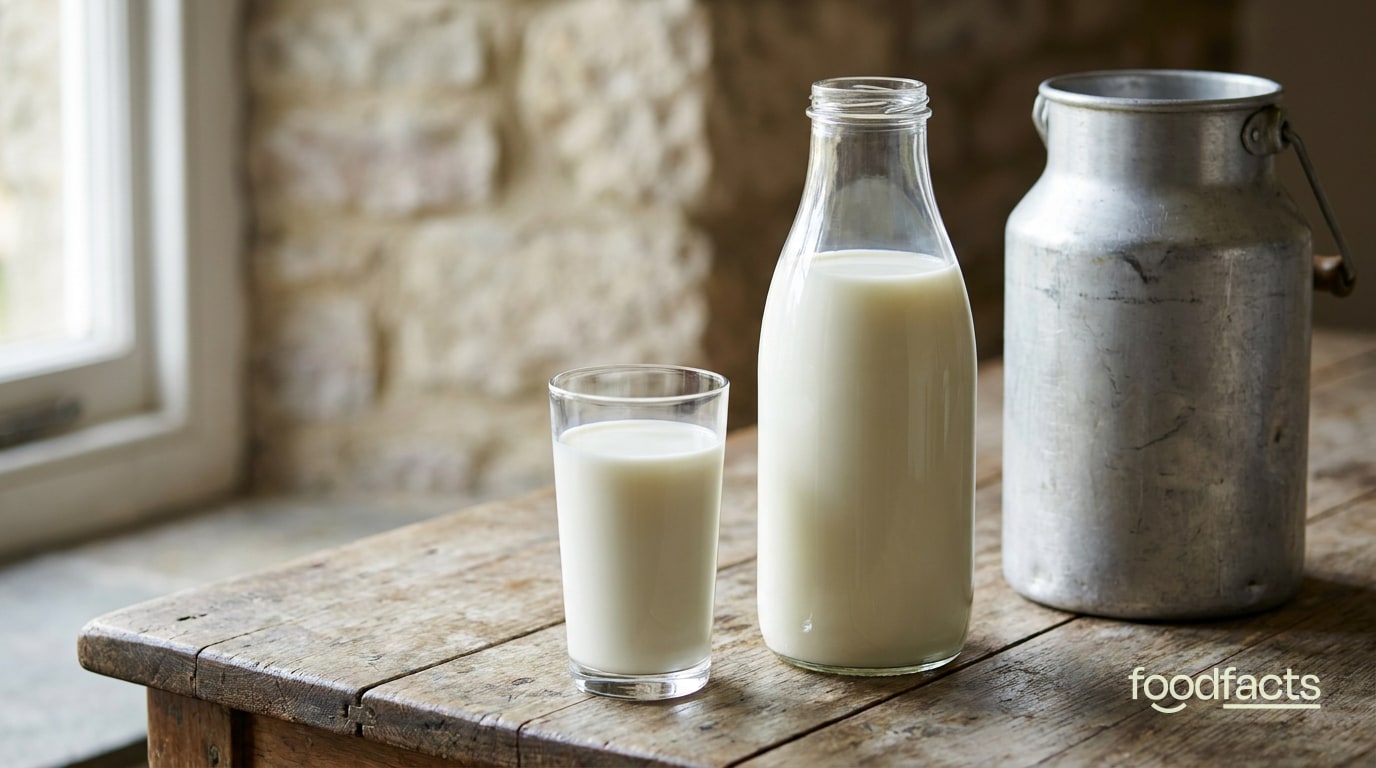




RFK Jr. and Saladino promote raw milk for children's health — but does the evidence support these claims?


On October 25th, Robert F. Kennedy Jr. posted a tweet listing products he claims “advance human health,” including raw milk. Influencers like Paul Saladino also advocate for raw milk, asserting that it’s better than pasteurised milk. Among the claims, Paul Saladino says that raw milk can “lower rates of asthma and allergic illness like eczema” in children, and “protect kids” against these conditions. This fact check evaluates this claim and examines the scientific evidence behind it as part of our series on raw milk.



Significant risks are associated with its consumption, including exposure to pathogens like Salmonella, Listeria, and E. coli, which can cause severe illnesses and can be fatal.
Interest in raw milk is increasing, fuelled by influencer endorsements. This poses public health concerns, particularly for children, pregnant women, and individuals with weakened immune systems, as raw milk carries a heightened risk of food-borne illnesses.


Claim: “There are studies in kids who drink raw milk that show they have lower rates of asthma and allergic illnesses like eczema.”
Several peer-reviewed studies have examined the associations between raw milk consumption and asthma and allergies, and some have suggested lower rates of these conditions among children who consume raw milk. This includes the GABRIELA study, which Saladino highlights in one of his videos, the PARSIFAL study 1, and a more recent meta-analysis.
The GABRIELA study was a cross-sectional analysis conducted to investigate whether children who consumed farm milk, which included raw ‘unboiled’ milk, experienced lower rates of asthma, atopy, and hay fever. While the findings suggested an association between farm milk consumption and lower rates of these conditions, the evidence doesn’t prove a protective effect of raw milk consumption, meaning it can’t be used to make any conclusions about raw milk consumption. The researchers themselves acknowledge the limitations, cautioning that
“Prospective analyses need to confirm the results of this cross-sectional study, and further analyses are needed to determine the specific compounds underlying the epidemiologically observed inverse association of farm milk consumption with atopy and hay fever.”
Additionally, the researchers found much higher levels of bacteria in raw milk consumed by the children in this study. The authors clearly state in their conclusions that “...on the basis of current knowledge, raw milk consumption cannot be recommended because it might contain pathogens.”
In response to this study, Dennis K. Ledford, MD, FAAAAI, a medical doctor from the American Academy of Allergy Asthma & Immunology, said,
“In summary, epidemiologic data such as those derived from the GABRIELA stimulate hypothesis generation but are not sufficient for policy decisions without confirmatory studies. Furthermore, the benefits of unboiled cow’s milk ingestion would need to be balanced against the potential risks.”
The PARSIFAL study, conducted in 2007, is also frequently cited in support of raw milk’s supposed benefits for allergies and asthma. However, this study found an association between farm milk consumption, not raw milk consumption, with rates of asthma and allergy and therefore cannot be used to make any conclusions about raw milk. In the paper, the authors clearly state that “The present study does not allow evaluating the effect of pasteurized vs. raw milk consumption because no objective confirmation of the raw milk status of the farm milk samples was available.”
Like the GABRIELA study, the researchers behind the PARSIFAL study emphasised the serious risks posed by pathogens in raw milk, stating that its consumption cannot be recommended. The authors cautioned that “raw milk may contain pathogens such as salmonella or EHEC, and its consumption may therefore imply serious health risks… At this stage, consumption of raw farm milk cannot be recommended as a preventive measure.”
A recent meta-analysis reviewed 12 studies and confirmed an association between raw milk consumption in early childhood and reduced risks of asthma, wheezing, and hay fever. These effects were observed in both farm-raised and rural non-farm children, suggesting benefits independent of other farm exposures. Despite these findings, the authors concluded, “Because of the minimal but real risk of life-threatening infections, however, consumption of raw milk and products thereof is strongly discouraged.”
When making population level recommendations it is important to consider the strength of evidence available, and to evaluate risk vs benefit. The evidence presented here highlights there are limitations to the available data linking raw milk consumption to a reduced risk of childhood asthma or eczema. Due to ethical reasons it would not be possible to conduct intervention trials, which can be used to determine whether there is a causal relationship. The risks associated with consuming raw milk, particularly in vulnerable groups which includes children, are well documented and are acknowledged by the authors of these papers. It is therefore not an appropriate public health recommendation to encourage people to consume raw milk.

Overall, despite some studies showing an association between raw milk consumption and allergies and asthma, they do not prove any cause-and-effect relationship between raw milk and allergies and asthma, and therefore no conclusions can be drawn from their results. Several of these studies also make clear the health hazards of raw milk consumption in their conclusion. Additionally, a paper that explored the potential benefits of raw milk in these conditions stated that “the final proof based on controlled studies in infants is not possible due to ethical reasons.”
Even though these studies could be seen as interesting, any potential benefits of drinking unboiled or raw cow’s milk is outweighed by the known risks of ingesting harmful pathogens.
As a food scientist, I’m concerned when raw milk is promoted as “healthy.” Evidence clearly shows that raw milk can carry harmful bacteria like Salmonella, E. coli, and Listeria, all of which can cause serious illness, especially in children, pregnant women, the elderly, and those with compromised immune systems. The CDC and FDA have extensively documented these risks.
Additionally, the CDC and FDA have warned against recent misinformation suggesting that drinking raw milk can build antibodies against A(H5N1), labeling it unsafe. The USDA’s National Milk Testing Strategy further highlights the significant risks raw milk can pose.

Summary
There is no strong evidence that raw milk can help with asthma and allergies. The risks associated with raw milk are much greater than any theorised gain.
Our rating (see how we rate media pieces here): Mostly False
Misleading Potential ⭐⭐⭐⭐
Balance ⭐
Factuality ⭐⭐⭐
Clarity ⭐
In addition to our overall rating of the claim (Mostly False), we have used our star rating system to review the widespread promotion of raw milk by health influencers on multiple media platforms. While the studies often cited are indeed real, the promotion of raw milk systematically fails to acknowledge the health hazards which these very studies caution against, as well as other studies on the safety of raw milk. The lack of balance drives the misleading potential of this argument.
Independent fact-checking, funded by readers like you.
Misinformation is a growing threat to our health and planet. At foodfacts.org, we're dedicated to exposing the truth behind misleading food narratives. But we can't do it without your support.
Sources
Loss, G. et al. (2011). The protective effect of farm milk consumption on childhood asthma and atopy: The GABRIELA study. https://www.jacionline.org/article/S0091-6749(11)01234-6/fulltext
American Academy of Allergy Asthma & Immunology. (2016). Unpasteurized cow's milk and food allergy.
Waser, M. et al (2007). Inverse association of farm milk consumption with asthma and allergy in rural and suburban populations across Europe. https://pubmed.ncbi.nlm.nih.gov/17456213/.
Brick, T. et al. (2020). The Beneficial Effect of Farm Milk Consumption on Asthma, Allergies, and Infections: From Meta-Analysis of Evidence to Clinical Trial. https://pubmed.ncbi.nlm.nih.gov/31770653/


foodfacts.org is an independent non-profit fact-checking platform dedicated to exposing misinformation in the food industry. We provide transparent, science-based insights on nutrition, health, and environmental impacts, empowering consumers to make informed choices for a healthier society and planet.








.svg)


.svg)

