




Costco's 'organic' chicken: what's really behind the label


A Costco chicken supplier is accused of cruelty, broken organic standards and biosecurity failures. We unpack the investigation and what it means for shoppers.



Editor's note: this article describes cruelty documented by an undercover investigation, including the killing of young birds, which some readers may find distressing.
A new undercover investigation by Mercy For Animals alleges extreme cruelty, broken organic promises and serious biosecurity failures at a US farm that raises chickens for a Costco supplier. foodfacts has not been able to independently verify the footage or the investigation's findings; in 2021, Costco described animal welfare as "a critical component" of its supply chain.
What the investigation found
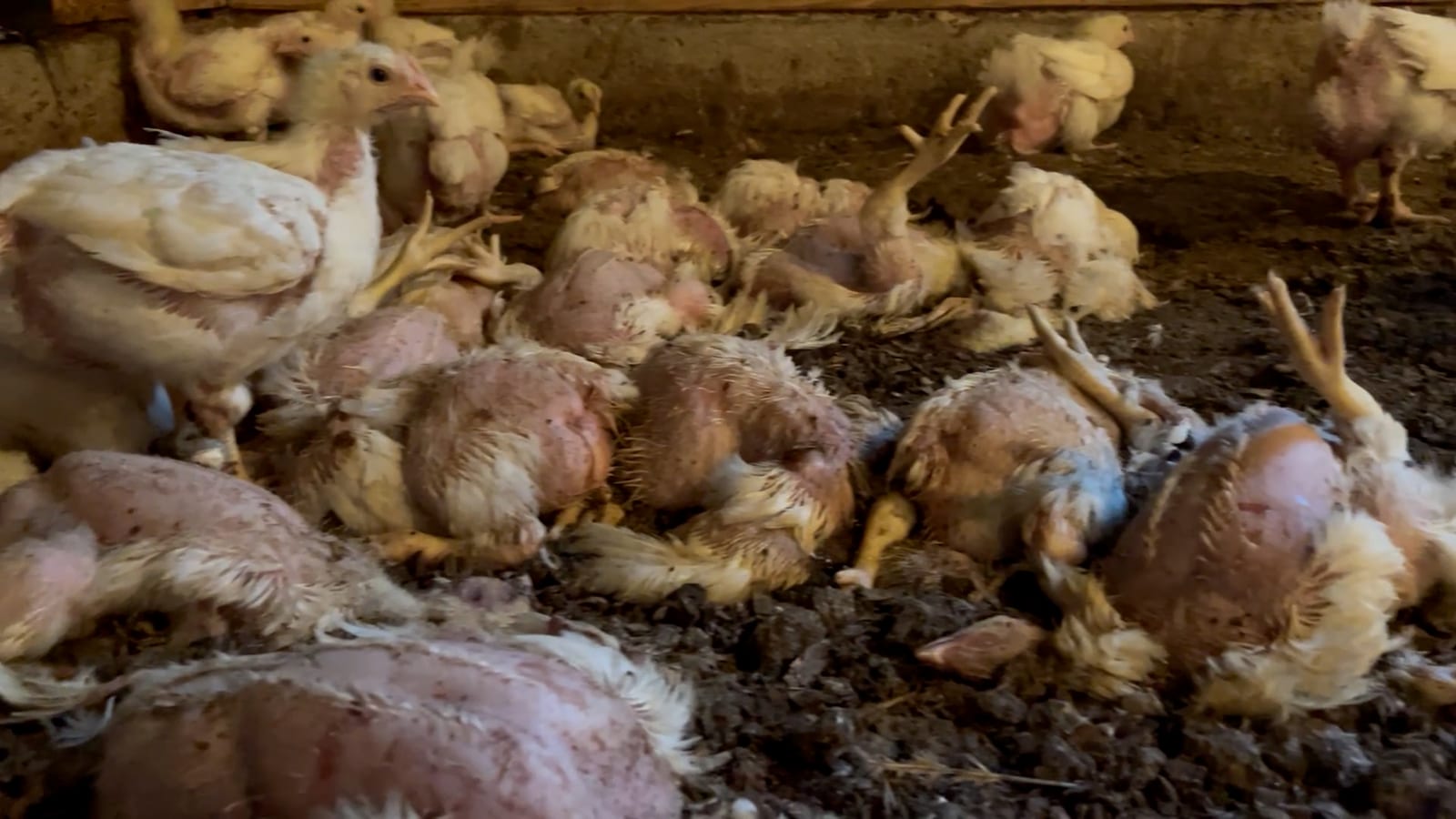
Mercy For Animals sent an undercover investigator to a farm raising chickens for a Costco supplier. According to the group's president and CEO, Arash Yomtobian, the findings spanned three areas: "blatant animal cruelty," biosecurity and health protocols "being broken," and "USDA organic standards not being upheld even though the chickens were sold as organic."
This is the second time in five years that Mercy For Animals has investigated Costco's chicken supply chain. The organisation first reported welfare problems at a Costco supplier in 2021, documenting chickens too heavy to stand, open wounds, ammonia burns and piles of dead birds outside the barns. Costco said at the time that animal welfare was "a critical component" of its supply chain, but two Costco shareholders later sued the company's executives in 2022, alleging the company had been caused to violate Nebraska and Iowa livestock-neglect laws. Yomtobian says the new footage shows those problems were never resolved: "The second investigation confirms that animals are still suffering. And Costco has the power to change that."
Practices the industry itself prohibits

Much of the suffering the investigation documents traces back to how the chickens are bred. Yomtobian explains that broiler chickens are "bred to grow so unnaturally fast that many collapse under their own weight because their young bones and anatomy can't keep up with the speed in which we've bred them to grow to be top-heavy... to meet the demands for chicken breasts." He says many birds "struggle to walk," have "broken bones," and "endure chronic pain throughout their short lives."
Beyond that systemic issue, the investigation alleges specific acts of abuse. According to Mercy For Animals, chickens were "beaten with sticks, bludgeoned with a pipe," and baby chicks were discarded into compost piles "while still chirping and fighting for their lives." Yomtobian says these methods were used on injured birds or ones not growing fast enough to be profitable, and says this is neither standard nor legal practice: "It is not. It is prohibited on all fronts."

Mercy For Animals argues the fixes are straightforward. Yomtobian lists slower-growing chicken breeds, "better lighting to allow for adequate sleep," and "higher quality litter to avoid infections... and to prevent the spread of diseases" as changes Costco could implement.
The organic label problem

The farm investigated held USDA organic certification, and Mercy For Animals alleges that farm records were falsified and organic standards violated. The group says its investigator measured ammonia levels more than triple the recommended limit, which Yomtobian says causes "burns around their eyes, their feet" and raises infection risk.
The farm also had an outdoor area on paper, but the investigator said the chickens were never given access to it — meaning, according to Mercy For Animals, they never experienced sunlight or fresh air, despite USDA organic rules requiring that opportunity. Yomtobian says this gap between paperwork and practice is common: "We unfortunately find that it's more common than not."
He frames this as a consumer trust issue: "Many consumers, especially at Costco... pay a premium to purchase organic and when they purchase something that's labeled organic, they believe that that label means something." Mercy For Animals says it has filed a legal complaint and has also raised the farm's organic certification with the USDA.
Biosecurity gaps and disease risk

The investigation also alleges failures in basic disease-prevention measures. Yomtobian describes finding no foot baths and no boot changes between chicken houses, "sick and dead birds" moved between houses in buckets, and darkling beetles — which can carry E. coli, Salmonella and avian influenza — in the litter of every house on the property. He calls this "a facility operating without meaningful disease prevention infrastructure."
Asked how worried shoppers should be about pathogens in store-bought chicken, Yomtobian says it "is something that should be of concern anytime purchases are being made of products that could potentially have that risk." He adds that disease risk is part of why his own family shifted to a plant-based diet. With the US disbanding two food safety advisory committees in 2025, he argues this risk becomes even greater.
A veterinary assessment

Mercy For Animals also asked a veterinary expert to review the footage. Professor Andrew Knight, a specialist in animal welfare who also sits on the foodfacts.org advisory board, said the birds "showed clear signs of severe suffering, including physical impairments, disease, and conditions that compromised their welfare," and that raising animals in such conditions "violates animal welfare legislation in many regions of the world."
Why Costco, specifically

Costco has an unusually direct hand in its chicken supply, running a dedicated operation that produces the roughly 100 million rotisserie chickens it sells each year — which gives it significant control over supply-chain standards. Yomtobian says that control comes with a responsibility Costco has not met: "They have broken the trust of the consumers and they're not following through with what they committed to five years ago."
During the interview, Yomtobian drew a comparison between US and international welfare standards:
"The United States generally lags behind the European Union and the United Kingdom when it comes to legal welfare protections for chickens. While these regions enforce strict housing and slaughter welfare standards, the U.S. relies mostly on voluntary industry guidelines. For example, the European Union mandates specific directives covering stocking density, lighting, litter quality, staff training, and mandatory approved stunning methods prior to slaughter. By contrast, the U.S. lacks enforceable federal animal welfare mandates for these practices. That is precisely why it is so important for companies like Costco to prevent the cruelty we exposed by adopting meaningful, enforceable standards."
That legal gap is central to Mercy For Animals' argument: without federal enforcement comparable to the EU or UK, US retailers are largely left to police themselves. Yomtobian wants policymakers to close that gap rather than rely on companies' voluntary pledges: "There needs to be better audit standards and there needs to be accountability... getting a slap on the wrist is not sufficient." The changes Mercy For Animals is asking Costco to make include a committed timeline for reform, adoption of slower-growing breeds, better environmental enrichment, and independent oversight with greater transparency.
The bigger picture: greenwashing
Yomtobian argues that most shoppers don't realise how removed their food is from the animals they picture. "We are working in an industry and in a society that does a really great job of greenwashing," he says, citing an estimate that most animals in the US food system come from factory farms, even when products are marketed as local or organic.
His recommendation for consumers is direct: "The ultimate idea would be to not have chickens in your supply chain and what you're consuming." He describes a decade on a plant-based diet, which he credits with helping him stop medication for cholesterol and allergies. For those still eating meat, he suggests questioning suppliers and retailers more closely rather than trusting labels at face value.
He is careful to note this doesn't require an all-or-nothing approach: "It doesn't need to be an all or nothing. Just simple small choices every day makes a huge impact."
Where to learn more
Mercy For Animals' campaign about the investigation is at CostcoExposed.com, where the footage and a petition calling on Costco to adopt the Better Chicken Commitment — an industry animal-welfare standard — are available.
Sources
- Mercy For Animals (2026). CostcoExposed
- The New York Times (6 February 2021). The Ugly Secrets Behind the Costco Chicken
- Legal Impact for Chickens (n.d.). Smith v. Vachris: The Costco Lawsuit
- USDA (n.d.). Organic Regulations
- foodfacts.org (10 July 2025). What does 'free range' really mean? The truth behind the label
- foodfacts.org (1 April 2025). What do rising egg prices have to do with pandemics? Understanding the bird flu (H5N1) crisis
- foodfacts.org (22 April 2025). Food safety in peril: why cutting key committees puts millions of consumers at risk
- European Commission (n.d.). Welfare of Poultry
- foodfacts.org (23 January 2025). What is factory farming? A closer look at the industry that produces most of the world's meat — and what can change

Independent fact-checking, funded by readers like you.
Misinformation is a growing threat to our health and planet. At foodfacts.org, we're dedicated to exposing the truth behind misleading food narratives. But we can't do it without your support.



foodfacts.org is an independent non-profit fact-checking platform dedicated to exposing misinformation in the food industry. We provide transparent, science-based insights on nutrition, health, and environmental impacts, empowering consumers to make informed choices for a healthier society and planet.






.svg)


.svg)

