




Can CBD supplements cause liver damage in healthy adults? What an FDA trial found




Cannabidiol (CBD) supplements marketed for anxiety, sleep, and general wellness may pose liver health risks even at moderate doses commonly used by consumers, according to a randomized controlled trial published in JAMA Internal Medicine. The study, conducted by FDA researchers, found that 5.6% of healthy adults taking approximately 400 mg of CBD daily for four weeks developed significantly elevated liver enzymes—a warning sign of potential liver injury.
This finding challenges the widespread perception that CBD is entirely harmless and raises questions about the safety of unregulated CBD products flooding the market.
What the research revealed
The trial enrolled 201 healthy adults (average age 36, average weight 80 kg) who received either 5 mg of CBD oil per kilogram of body weight daily or a placebo for 28 days. Researchers monitored blood levels of alanine aminotransferase (ALT) and aspartate aminotransferase (AST)—liver enzymes that spike when liver cells are damaged or inflamed.
Of the 141 participants who completed the CBD arm of the study, eight (5.6%) developed ALT levels at least three times higher than the upper limit of normal—some as high as 18 times normal. Seven of these eight participants met clinical criteria for potential drug-induced liver injury (DILI), although none developed serious symptoms and enzyme levels returned to normal within one to two weeks after stopping CBD.
In stark contrast, zero participants in the placebo group experienced elevated liver enzymes.

Why this matters for CBD users
The 400 mg daily dose used in the study sits at the higher end of what typical consumers use—most take less than 100 mg daily, though some use 200 mg or more. However, unregulated CBD products sold online and in retail stores often contain inaccurate labelling, with some products containing significantly more CBD than stated on the label.
Dr. Amir Englund, a cannabinoid researcher at King's College London not involved in the study, emphasized the implications: "This is a significant finding, as it suggests that CBD itself, even in the absence of other drugs, may pose a risk to liver health. Many may be unaware of the potential for liver injury and assume that CBD is entirely benign".
The FDA has concluded that existing dietary supplement regulations are inadequate for CBD products, noting that CBD must meet specific safety standards to be lawfully marketed.
Understanding CBD metabolism and liver risk
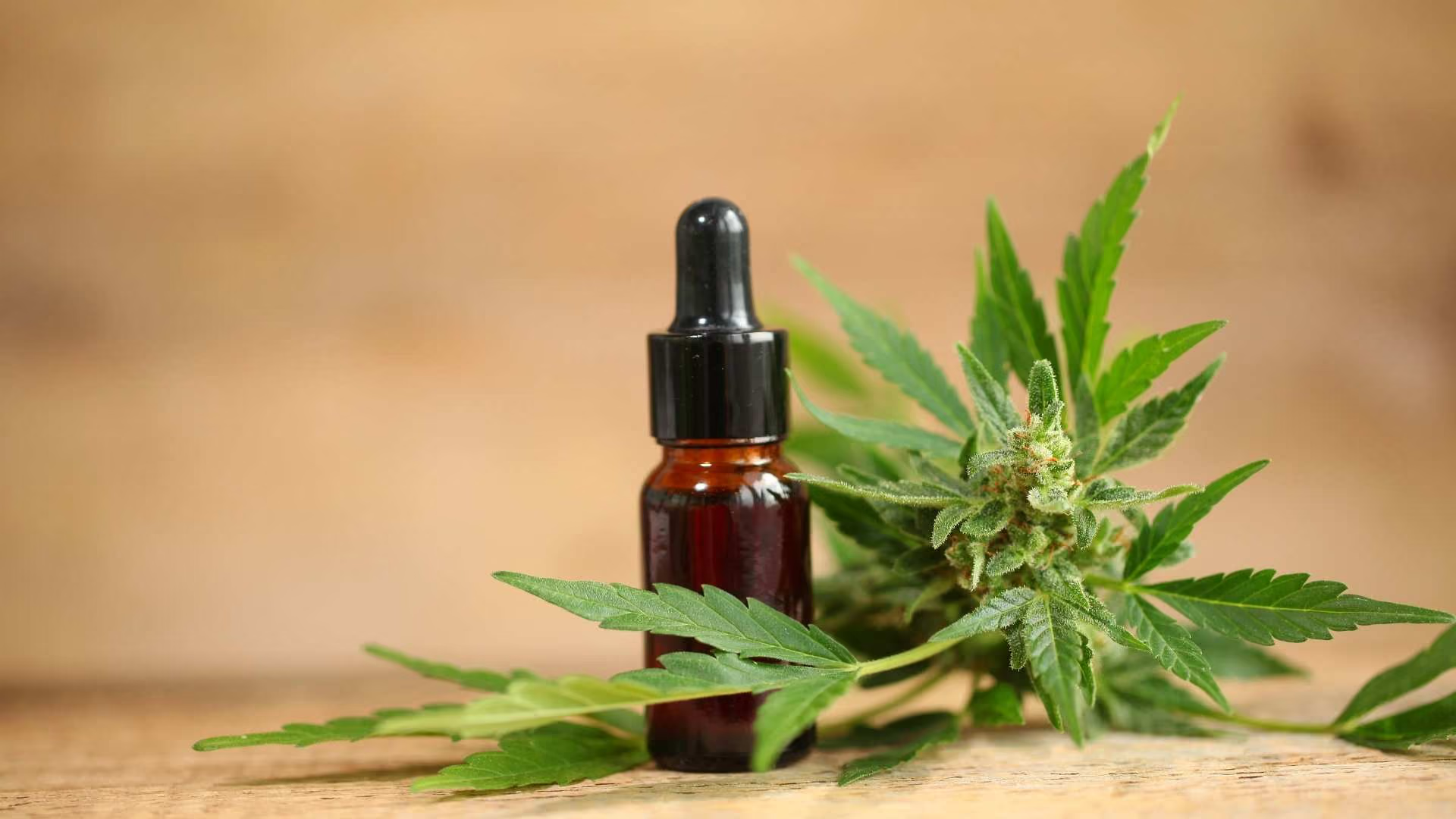
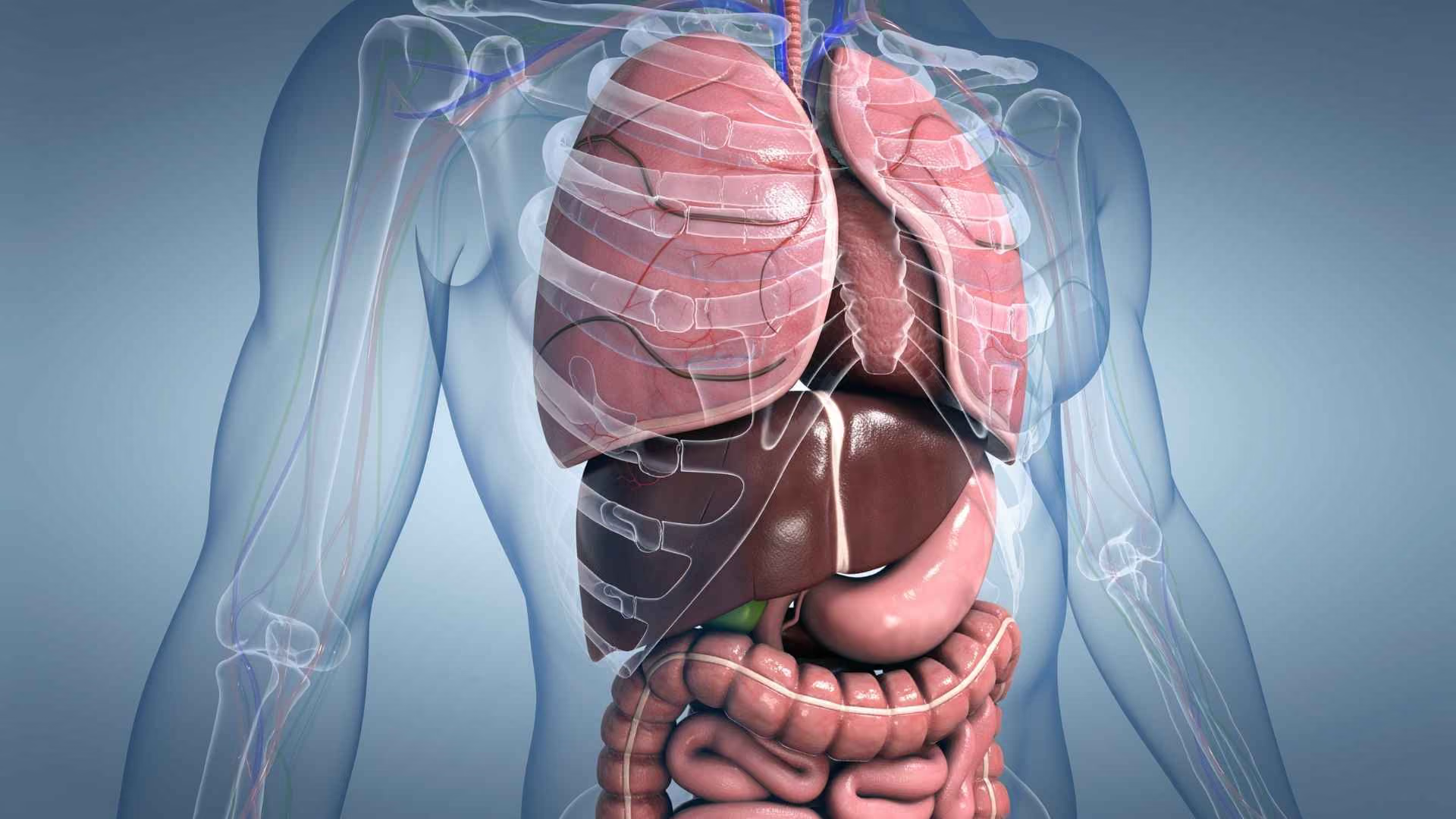
CBD is processed primarily in the liver through cytochrome P450 enzymes, particularly CYP2C19. This metabolic pathway makes the liver vulnerable to toxicity, especially since many prescription medications use the same enzyme system, creating potential for dangerous drug interactions.
Previous research on Epidiolex—the only FDA-approved CBD medication—showed that high doses (up to 25 mg per kg daily, often exceeding 1,000 mg) can cause liver injury, particularly when combined with other medications that affect the liver, such as sodium valproate. The new FDA trial demonstrates that liver enzyme elevations can occur at much lower doses in healthy adults taking no other medications.
Who might be most at risk?
The study participants had an average BMI of 27, classified as overweight. Because overweight and obesity can independently affect liver function, researchers noted it's unclear whether those with higher BMI were more susceptible to CBD-related liver effects. Women in the trial appeared more vulnerable than men to elevated liver enzymes.
Clinical guidance published in 2024 recommends that adults taking 300 mg or more of CBD daily should undergo liver function monitoring at baseline, then at 1, 3, and 6 months. Those with pre-existing risk factors—including liver conditions, concurrent hepatotoxic medications, or alcohol use—require more frequent monitoring every two weeks for the first six weeks.
The FDA study did not include older adults, who represent a significant portion of CBD consumers and whose liver function naturally declines with age. This gap highlights the need for research across diverse age groups.
The supplement regulation gap
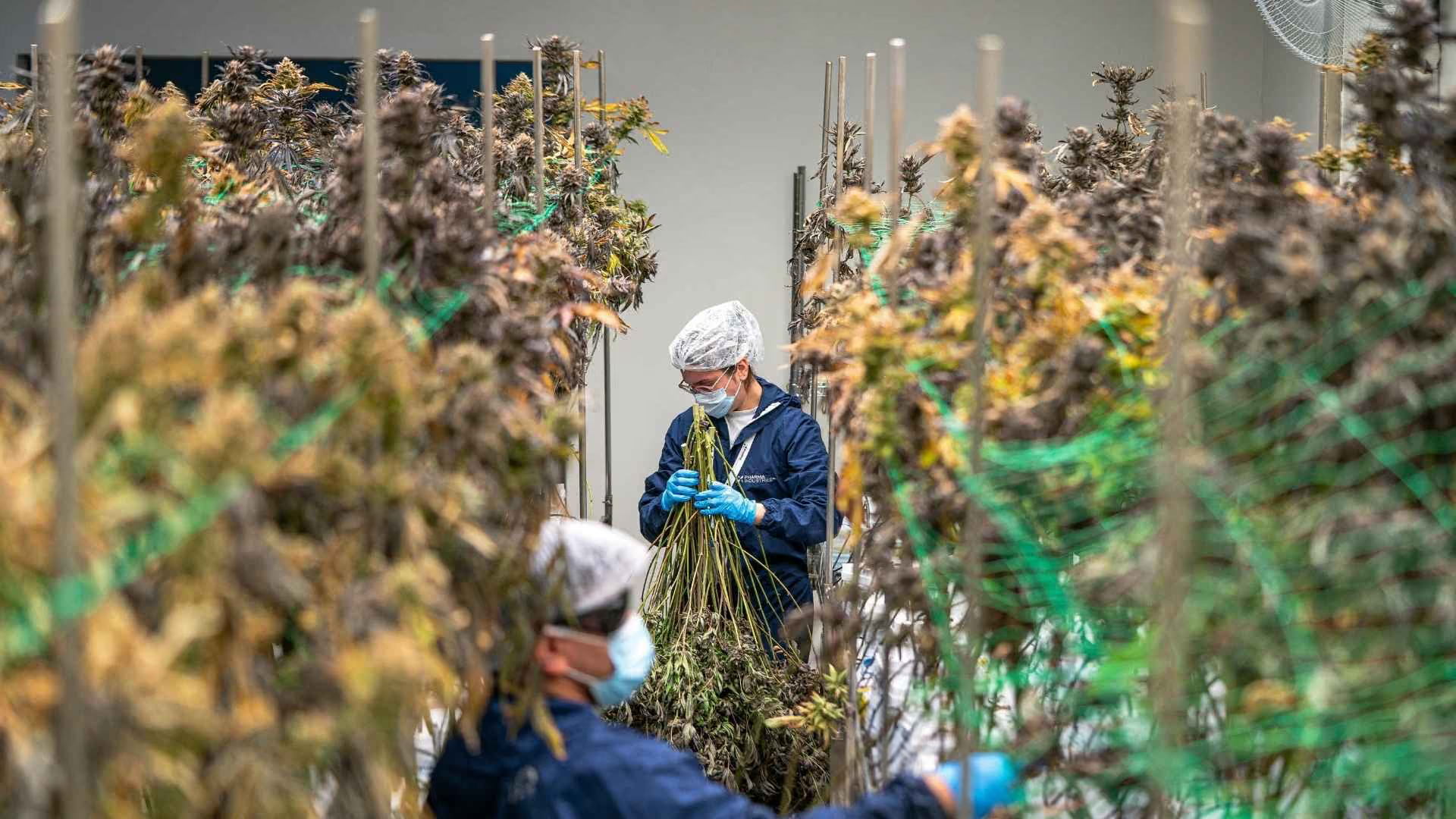
Unlike prescription medications, CBD supplements are not subject to pre-market FDA approval. Multiple investigations have found that commercial CBD products often contain different amounts of CBD than listed on labels, and some are contaminated with THC, pesticides, heavy metals, or solvent residues.
The lack of pharmaceutical-grade quality control means consumers may be exposed to unpredictable doses and unknown contaminants that could compound liver risks.
What CBD users should know
Current evidence suggests several practical considerations for anyone using or considering CBD:
- Doses below 300 mg daily may carry lower risk, though this remains under investigation
- Liver enzyme elevations can occur without symptoms, making monitoring important for regular users
- Product quality varies dramatically—pharmaceutical-grade CBD used in research differs substantially from retail products
- Drug interactions with medications metabolized by liver enzymes are possible
- Pre-existing liver conditions, overweight status, and concurrent medication use may increase risk
The bottom line
While CBD shows promise for specific medical applications like reducing seizure frequency in rare forms of epilepsy, its safety profile at doses commonly used by consumers requires further clarification. The new FDA trial provides concrete evidence that moderate CBD doses can cause liver enzyme elevations in a subset of healthy adults, even without other medications or health conditions.
Until more comprehensive safety data emerges—particularly regarding long-term use, lower doses, and vulnerable populations—consumers should approach CBD supplements with informed caution rather than assumptions of harmlessness. Those taking CBD regularly, especially at doses exceeding 300 mg daily, should discuss liver function monitoring with their healthcare provider.
The growing body of evidence underscores a broader issue: popular doesn't mean proven safe, and natural doesn't mean risk-free.
To learn more about the impacts of supplements on the body, check out our other articles about supplements.

Independent fact-checking, funded by readers like you.
Misinformation is a growing threat to our health and planet. At foodfacts.org, we're dedicated to exposing the truth behind misleading food narratives. But we can't do it without your support.
Sources
- Chen S, Li Y, Li X, Wu Q, Puig M, Moulin F, Gingrich J, Guo L (2024). Metabolism and liver toxicity of cannabidiol. J Environ Sci Health C Toxicol Carcinog.
- Eadie L et al (2 September 2024). Clinical guidance for cannabidiol-associated hepatotoxicity. PMC.
- Examine.com (29 December 2025). Is CBD a potential cause of liver injury?
- Florian J, Salcedo P, Burkhart K, et al (1 September 2025). Cannabidiol and Liver Enzyme Level Elevations in Healthy Adults: A Randomized Clinical Trial. JAMA Internal Medicine.
- Food and Drug Administration (24 August 2025). CDER Investigators Address the Safety of CBD in a Randomized Trial.
- Food and Drug Administration (9 January 2024). Dietary Supplements - FDA.
- Food and Drug Administration (25 January 2023). FDA Concludes that Existing Regulatory Frameworks for Foods and Supplements are Not Appropriate for Cannabidiol.
- NBC News (7 July 2025). Even low doses of CBD may cause harm to the liver, FDA study finds.
- NHS (n.d.) Medical cannabis (and cannabis oils)
- NutritionFacts.org (31 October 2025). Liver health | Health Topics.
- Radmann, G. C., & Santos, O. (2025). The efficacy of cannabidiol for seizures reduction in pharmacoresistant epilepsy: A systematic review and meta-analysis. Acta Epileptologica, 7, 20.
- Sanz-Pérez, A., Anaya, B., Fraguas-Sánchez, A., Serrano, D., Pérez, T., Spineli, M., Basilicata, P., Pieri, M., & González-Burgos, E. (2025). Oxidative stress and mitochondrial dysfunction in neuronal cells induced by commercial CBD products. Chemico-Biological Interactions
- Watkins PB, Church RJ, Li J, Knappertz V (20 November 2020). Cannabidiol and Abnormal Liver Chemistries in Healthy Adults: Results of a Phase I Clinical Trial. Clinical Pharmacology & Therapeutics.



foodfacts.org is an independent non-profit fact-checking platform dedicated to exposing misinformation in the food industry. We provide transparent, science-based insights on nutrition, health, and environmental impacts, empowering consumers to make informed choices for a healthier society and planet.






.svg)


.svg)

