





I gained 2.5 million followers spreading pet health misinformation. Here's exactly how I did it.




I need to tell you something I'm not proud of. For years, I built an audience of 2.5 million people on advice that was wrong:
- Raw feeding
- Anti-vaccine talking points
- "Kibble is poison"
I said all of it with my whole chest. Confidently, publicly, over and over. And people listened. I wasn't trying to trick anyone either. I thought I was genuinely helping.
That's the thing nobody tells you about misinformation. The scariest version of it doesn't come from some cartoon villain rubbing his hands together in his evil lair. It comes from someone who genuinely believes they're doing good in the world. I was that someone.
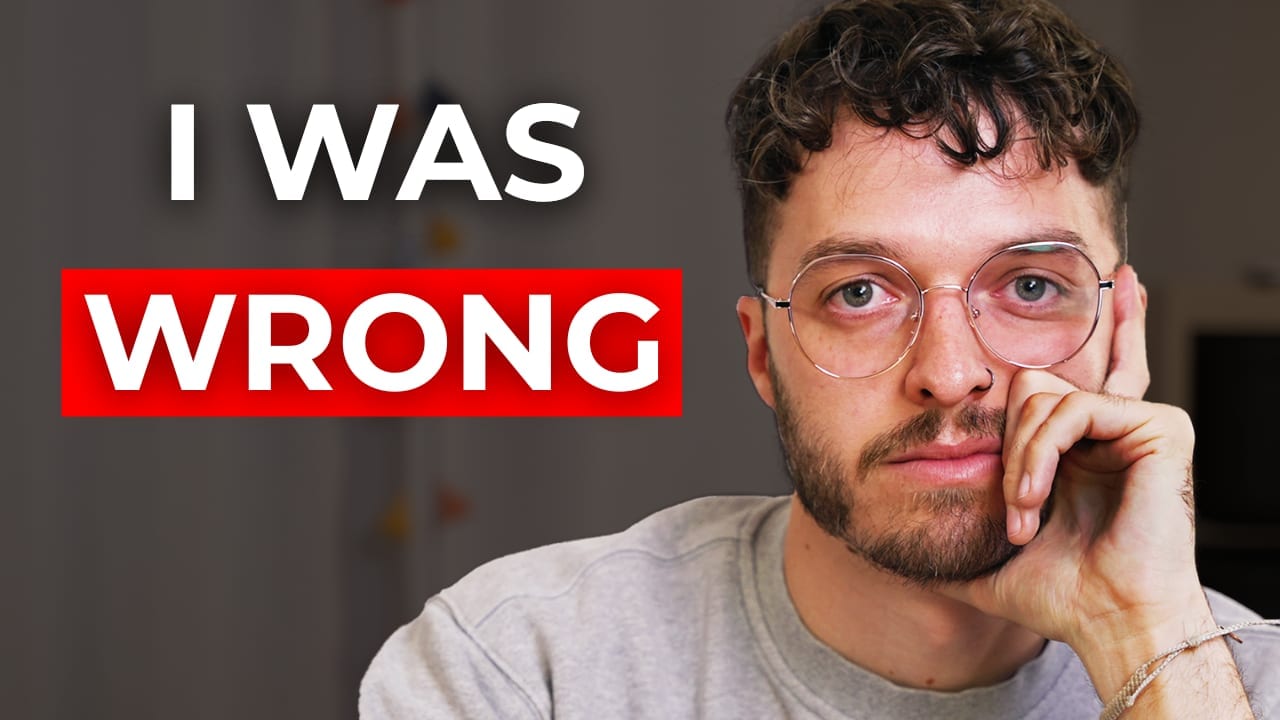
In June of 2025, my wife (and co-CEO) Kenzie and I recorded a two and a half hour podcast where we admitted that we were wrong in our beliefs and that we were flipping our entire approach to evidence-based pet care.
It was one of the hardest things I've ever done. It was also the most important.
But I've been sitting with something ever since. Looking back, there are very specific tactics I used that made the bad information spread so easily. They worked on good people who love their dogs. They worked because of how much those people love their dogs.
So I want to walk you through the misinformation playbook. Not so you can use it (please don't use it). So you can see it coming and join the fight.
1. Make "natural" the superhero and "synthetic" the villain
"Natural" is the hardest-working word in the pet space. It doesn't have to mean anything. It just has to feel good.
Pair it with words like "lab-made," "chemical," or "synthetic," and you can make natural seem like the only safe option available. Nobody wants to feel like they're feeding their dog something 'fake'.
2. Buy a credential and blur the line
I paid $750 for an online canine nutrition certification. It took a couple of months to complete and all I had to do was read stuff in a textbook and submit papers. After that, I opened every video with "I'm Bryce, a certified canine nutritionist."
Here's the trick. That sounds a lot like "veterinary nutritionist," which is a real, protected title that takes years of postgraduate training to earn. The blur was the point. People hear "nutritionist" and assume expertise.
Keep an eye out for "pet health coach" too. Another official-sounding title with nothing behind it.

3. Build a room where everyone already agrees with you
When you say what the holistic pet world wants to hear, that whole world opens up to you. I had veterinarians in that space write the foreword to our book. Promote our stuff. Vouch for us to their own audiences. Not one of them ever asked about my background, my training, or the evidence behind what I was saying. They didn't need to. I was repeating what they already believed, and that was enough.
Then I switched to evidence-based pet care. And the same people who championed us turned their backs almost overnight. Because the alignment was never really about the dogs, or the science, or whether I was right. It was about the ideology.
Surrounding yourself with people who don't challenge your beliefs allows you to think that every belief you have is the correct one. It's not.

4. Find the one study, ignore the other fifty
Find a single study that backs you up. Cite it like gospel. Ignore the fifty that don't. Read the abstract, skip the actual paper, and call it research.
Almost nobody is going to fact-check you. And "studies show" lands like the truth even when the studies don't support it.
5. Use fear, because fear sells
Tell a worried owner their kibble is poisoning their already-sick dog, and you don't need any evidence. And once someone believes their dog's illness is tied to the food, that belief is almost impossible to undo with facts. Fear moves people from worried to buying faster than just about anything.
That one still makes me a little sick. Those were scared people who just wanted their dog to feel better.
6. Tell people the experts are hiding something
We live in a world where some politicians really are bought, and where brands really do pay influencers. I was one of them. So it doesn't take much to nudge people one more step into thinking scientists are playing the same game.
They aren't. Most of them are desperate to hand you the evidence. But the line between "be skeptical of industry money" and "distrust all of science" is thin.
7. Turn a vet's education into a conspiracy
It goes like this:
- A pet food company donates to a vet school
- A vet graduates from that school
- A vet later recommends that company's food
- Therefore the vet was brainwashed in vet school because kibble companies are teaching nutrition
All of this skips the very real and boring possibility that the vet looked at the company's safety and research and decided it was actually up to their standards.
"Your vet was brainwashed" gets clicks. "Your vet weighed the evidence" does not.
8. Kill the nuance
Nuance is honest and contextual. It's also deeply unsexy and doesn't lend itself well to viral content. Nobody shares "it's complicated." They share "kibble is poison" and "your vet doesn't want you to know this." The moment you go fully black and white, you get quotable and shareable.And anyone who shows up with "well, it depends" can be waved off as a shill for the establishment.
I got REALLY good at this and I am NOT proud of that.
9. Borrow credibility from a fringe expert
There's an outlier in every field:
- A vet who doesn't trust vaccines
- A food scientist who cites a 1930s dentist to argue that raw milk is medicine and pasteurization is poison
- Someone with real letters after their name and views that are not shared by the greater bodies of evidence
They're gold for a misinformation playbook, because they let you say "leading experts agree with me." You're not technically lying. You're just quietly redefining what "leading" means.

So why am I telling you all this?
Misinformation doesn't spread because people are gullible. It spreads because it feels better than the truth. It hands you certainty, a community, and a villain to blame. All in one neat package.
Real, evidence-based advice is messier. It says "we're not sure yet," and "the research leans this way, but," and "ask a board-certified specialist," and "it depends."
If you've ever fallen for any of this, hear me clearly. It doesn't make you gullible.
It makes you someone who loves their dog, and who trusted the wrong person to help. I know, because I was the wrong person to trust and I trusted the wrong people.
To the experts who still believe in evidence
If you're a vet, a researcher, a nutritionist, or anyone dedicated to science, I want to talk to you for a second.
Thank you for the work you do. I mean that. You are underappreciated and overworked and I see you. But here's what I learned from the other side: misinformation doesn’t spread in exam rooms and it’s not enough to only fight misinformation in the exam rooms.
For someone like a veterinarian, the worried dog owner you're trying to reach isn't forming their beliefs in your office. They're forming them at 11pm, on their phone, scared, scrolling past someone who sounds confident and certain and kind. By the time they get to you, if they ever get to you, the story is already written.
That was the hardest thing for me to sit with. People are learning this stuff on social media and that's where almost none of the right people show up. The folks spreading the misinformation are there every single day. Consistent, loud, and not going anywhere.
So please, PLEASE bring your voice online.
Post the boring, honest, "it depends" version. Make the truth as easy to find as the fear is. You don't have to go viral. You just have to be there, so that when someone is up at 11pm looking for answers, yours is one they can actually trust.
I had that reach once, and I pointed it the wrong way for years. I'd give almost anything to take that back. Please don't keep your expertise in the exam room or the lab. We need you out here.

Independent fact-checking, funded by readers like you.
Misinformation is a growing threat to our health and planet. At foodfacts.org, we're dedicated to exposing the truth behind misleading food narratives. But we can't do it without your support.



foodfacts.org is an independent non-profit fact-checking platform dedicated to exposing misinformation in the food industry. We provide transparent, science-based insights on nutrition, health, and environmental impacts, empowering consumers to make informed choices for a healthier society and planet.






.svg)


.svg)

