foodfacts logo
  • Articles
    
    Latest
    arrow pointing right
    All Fact Checks
    arrow pointing right
    Guides
    arrow pointing right
    Features
    arrow pointing right
    Opinion Pieces
    arrow pointing right
    Topics
    The Climate Crisis
    Politics Of Food
    Health
    Food Systems
    Media Literacy
    Popular Media
    Ethics
    Environment
    Nutrition
    Trending Tags
    Lifestyle
    Brain Health
    Yoghurt
    Electrolytes
    Glucose
    Food Storage
    Metabolic Health
    ApoB
    Ultra Processed Animals (UPA)
    Zoonotic Diseases
    Lab-Grown Meat
    (UPF) Ultra Processed Foods
    Chemophobia
    Precision Livestock Farming (PLF)
    Glossary
    arrow pointing right
    Fact Checks
    Cocoa: could it be a quick fix for the harms of prolonged sitting?
    Can a sugar‑free diet really ‘conquer’ cancer?
    Red meat, APOE4 and Alzheimer’s risk: what the evidence really shows
  • Take Action
  • About
    
    • About
    • The Team
    • Board of Trustees
    • Our Experts
    • Fact Checking Policies
    • Funding/Disclosures
    • Advisory Board
    • Media Mentions
    • FAQs
  • Food Database
  • Misinfo Watchlist
Report MisinfoDonate
Home
/
Articles
/
Agroecology

Agroecology

Explore Categories

The Climate Crisis
Politics Of Food
Health
Food Systems
Media Literacy
Popular Media
Ethics
Environment
Nutrition

Explore evidence-based articles on Agroecology, including production systems, resilience, policy and wider food-system impacts. From Food Facts.

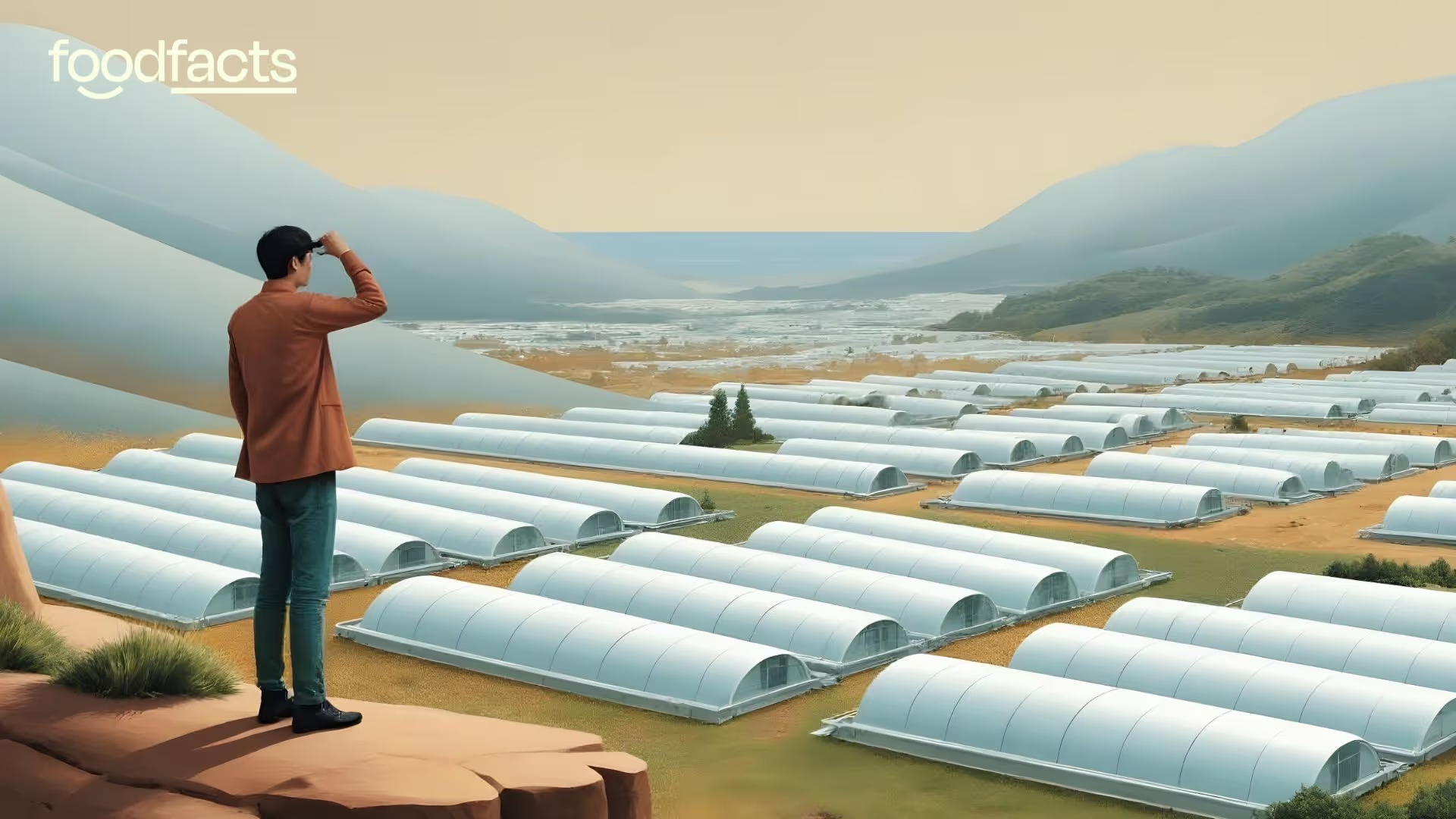
A person looks over a valley filled with greenhouses. This represents the issue of mass horticulture in southern Spain.
FACT CHECK
OPINION
Environment

Are plastic greenhouses in Spain caused by plant-based diets?

Blaming vegans for farmers growing food that everyone eats, is like blaming underwear models for shops selling underwear. It's a pants claim.
Read more
A vibrant image of birds perched on branches amidst a coffee agroforestry system, with lush green trees and coffee plants in the background. The scene highlights the biodiversity and ecological balance provided by agroforestry practices. This visual complements the article "Can Agroforestry Save Coffee from Climate Catastrophe?", which discusses how agroforestry can offer a sustainable solution to the climate challenges facing coffee cultivation by integrating trees with coffee crops, enhancing resilience, and supporting biodiversity. The article emphasizes the importance of such practices in protecting coffee production from climate-related threats.
FACT CHECK
OPINION
The Climate Crisis

Can agroforestry save coffee from climate catastrophe?

Climate change threatens global coffee production. Agroforestry — growing coffee under tree canopies — could be the solution the industry needs.
Read more
See all articles

Ready to take action?

You have the power to make a difference 3 times a day.

Get Inspired Today!

Get the facts, not the fads

Evidence-based nutrition and food-industry investigations — free to your inbox, every week.

One last step: check your inbox and click the confirmation link.

It may take a minute. Please check Promotions, Updates, or spam if you can’t see it.

Follow Us
youtube [#168] Created with Sketch.
Food misinformation threatens public and planetary health. We're fighting back against misinformation, fostering healthy communities, honest food, and a thriving planet

ai powered chat bot experience provided by Elevenlabs
Article

Top Myths

Latest

The Climate Crisis
Politics Of Food
Health
Food Systems
Media Literacy
Popular Media
Ethics
Environment
Nutrition
Take Action
Partner Organisations
About
Fact Checking PoliciesOur Funding/DisclosuresThe TeamOrganisational StructureIndependence & TransparencyAi Usage PolicyAdvisory BoardMedia MentionsFAQsGlossaryXML News Feed
Contact
Report Mis/DisinformationContact Us / PressHire Us To TalkProvide Feedback
Privacy Policy  
Terms & Conditions © 2024
The Worlds First Food Fact-Check Platform.
foodfacts.org is a non-profit organisation. (no. 15414442) limited by guarantee and registered in England and Wales.
‍
© Copyright 2024-2026 foodfacts.org  Launched in 2025. 🇬🇧 Grown in the United Kingdom.