
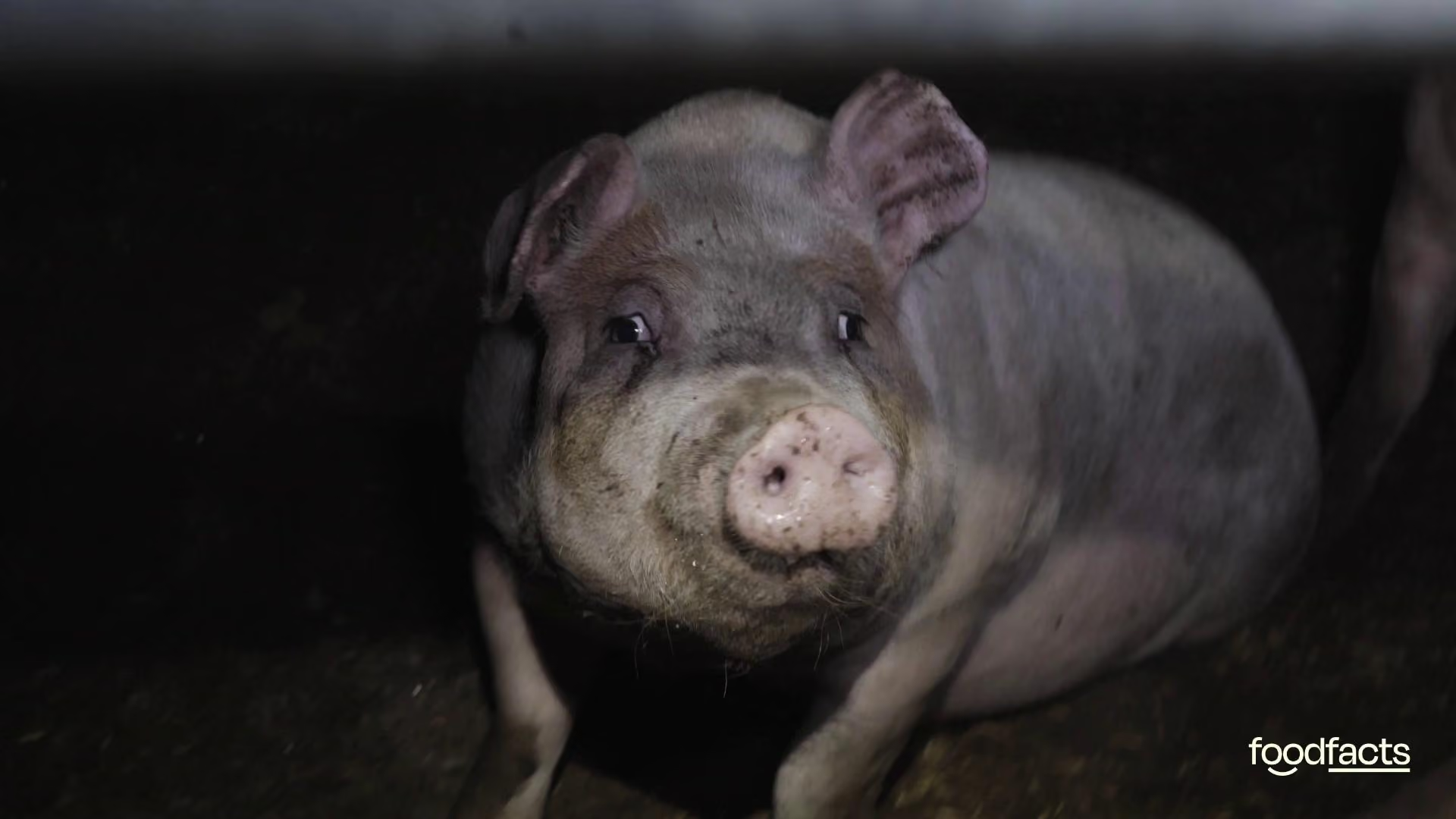




If pigs spend 80% of their lives indoors, how can the label say 'outdoor bred'?




A new investigation exposes suffering behind RSPCA Assured certified pigs, and it's part of a much bigger pattern of misleading welfare claims on meat and dairy packaging.
When you pick up a pack of sausages with the RSPCA Assured logo and the words "outdoor bred," your mind fills in the picture. Pigs in fields. Fresh air. Space to move around. That's exactly what the packaging wants you to think.
The truth is very different, and it starts with what "outdoor bred" actually means. Piglets are born outside and spend around four weeks with their mothers in the open air. After that, they're moved indoors into crowded sheds where they spend roughly 80% of the rest of their lives. Only around 3–4% of UK pigs ever live outside for their whole lives. More than 90% are kept in intensive indoor systems. So the label that sounds like a description of a pig's whole life is, at best, a description of its first few weeks.
That gap between what the packaging says and what's really happening is what a new investigation by Animal Justice Project makes impossible to ignore.
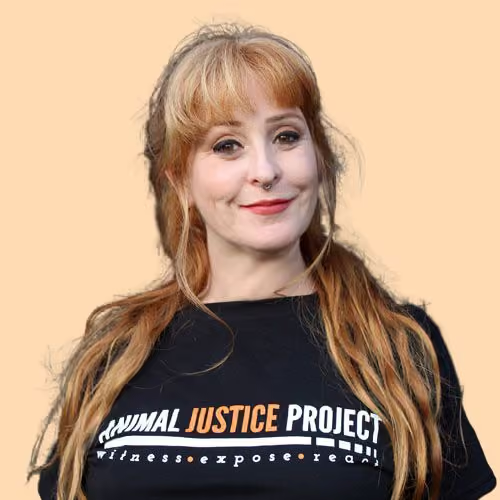
“When shoppers see the words ‘outdoor bred’ alongside the RSPCA Assured logo, they picture pigs living outside in fields. The reality is that most of these animals spend the vast majority of their lives indoors in intensive conditions. This isn’t just about one farm - it’s about an industry that relies on comforting language to mask an uncomfortable truth. Consumers deserve honesty, and animals deserve far better.” Claire Palmer, Founder, Animal Justice Project
Inside the RSPCA Assured pig farm investigation
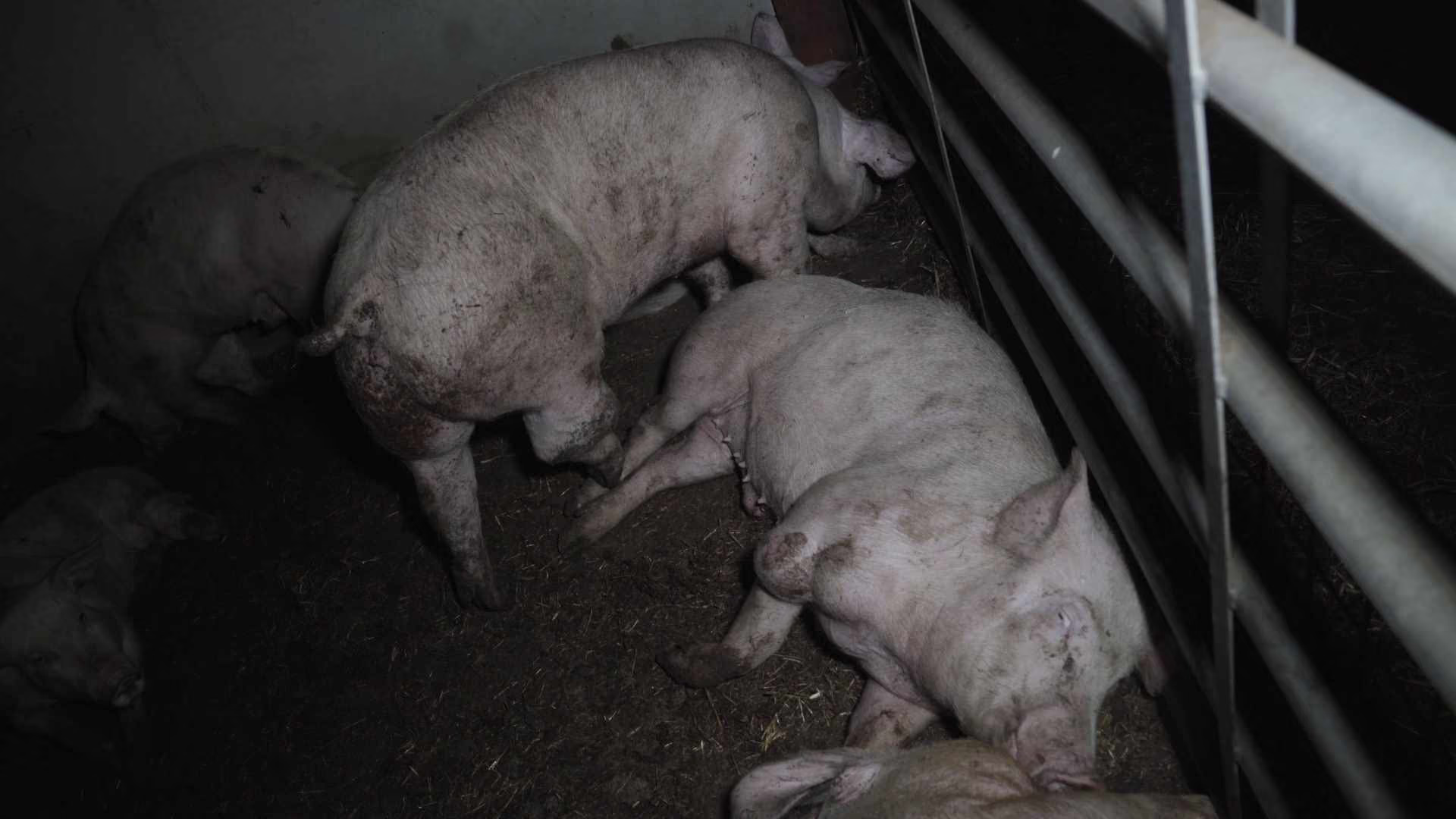
Undercover footage filmed at Bage Court Farm in Herefordshire, a farm working with Stockcroft Pigs, one of the UK's biggest "outdoor-bred" producers, showed pigs with large, painful swellings on their joints, struggling to walk or even stand up. One pig was filmed over 38 days, getting visibly worse throughout, with no treatment given at any point.
Pig vet Dr Alice Brough reviewed the footage and was clear about what she saw. "These pigs show unmistakable signs of tail biting, with infection spreading from untreated wounds into their joints and causing severe abscesses," she said. "This level of pain is untreatable, and these animals should have been euthanised long before now."
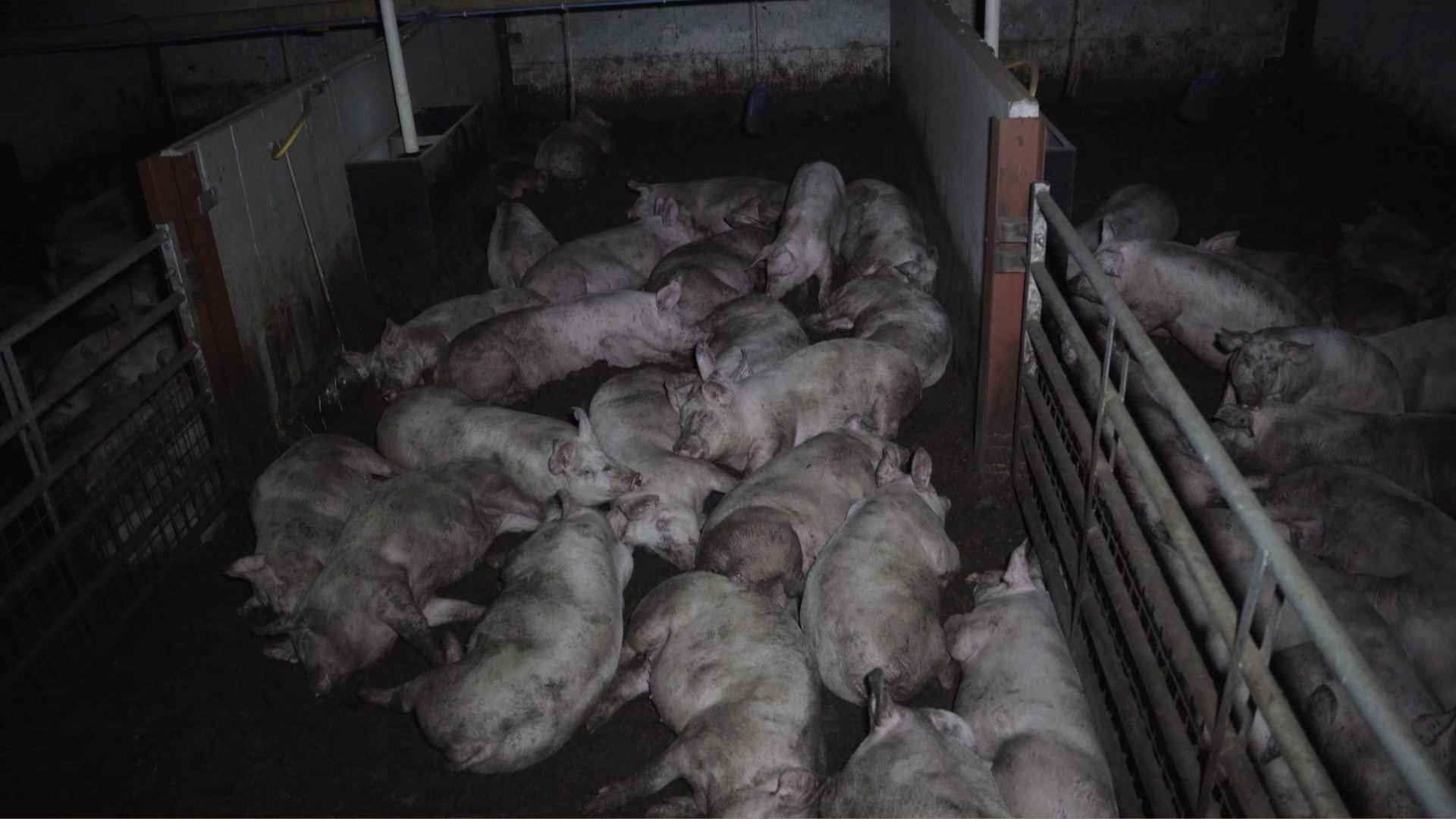
By law, pigs must be given something to keep them occupied in their pens. On this farm, up to 40 pigs shared a single plastic bottle hung on a piece of string.
The RSPCA Assured scheme has more than 700 welfare standards that farms must follow. After The Independent shared the footage with RSPCA Assured, the charity issued the farm a formal warning, but Animal Justice Project says this points to a problem far bigger than one farm.
BBC Springwatch presenter Iolo Williams said: "The term 'outdoor-bred' suggests a life spent outside, yet these pigs are indoors for around 80 per cent of their lives. That disconnect between language and reality is something consumers deserve to understand."
How meat and dairy brands use packaging to mislead shoppers
Stockcroft is not a one-off. Across meat and dairy, there's a long history of brands using feel-good names, pretty countryside images, and certification badges to sell a version of farming that doesn't match what's actually happening. Campaigners call it humane-washing, and Animal Justice Project say it's "rife" across the food industry, "not only fooling the public but failing over a billion innocent beings who are killed for food in the UK every year."
The Happy Egg Company uses images of hens roaming freely on green farms. But in 2021, PETA released footage from three of its RSPCA Assured supplier farms showing thousands of chickens packed into barns, with hens found bleeding, dead, or decomposing.
The Laughing Cow, that grinning logo on your child's lunchbox, suggests happy, healthy animals. A 2019 investigation by Animal Equality into a US farm supplying one of its dairy companies found newborn calves left overnight in freezing temperatures, their hooves splitting from the cold.
St Helen's Farm, the UK's biggest goat milk brand, features a cheerful goat on its packaging. An investigation by Surge found those goats living their whole lives indoors, handled roughly, and injured through careless hoof trimming.
Red Tractor, the UK's biggest farm assurance scheme, has used cheerful cartoon adverts to suggest a gentle, wholesome version of British farming. Multiple investigations into Red Tractor-certified farms have found the opposite.
The ASPCA found that 86% of grocery shoppers look for animal welfare claims when buying meat, eggs, and dairy, and are willing to pay more for them. The food industry knows this. It's why welfare labels have become such a valuable marketing tool, whether or not the farms behind them deserve them.
Why animal welfare labels can't be trusted
This isn't just about a handful of bad farms. The problem runs deeper than that.
Research published in the Journal of Applied Philosophy found that "happy" animal branding misleads shoppers "by action or by omission" about the real harm the industry causes to animals, the environment, and human health. These kinds of images and labels are everywhere, and they're rarely challenged.
In the US, the USDA updated its food labelling rules in 2024 after years of producers using terms like "grass-fed," "free-range," and "humanely raised" with no real proof to back them up. The ASPCA has pointed out that "free-range may only mean that some animals had minimal access to a small outdoor run and otherwise live indoors, crowded in barren sheds." Foodfacts.org has also looked closely at what "grass-fed" really means, and the answer, increasingly, is not much.
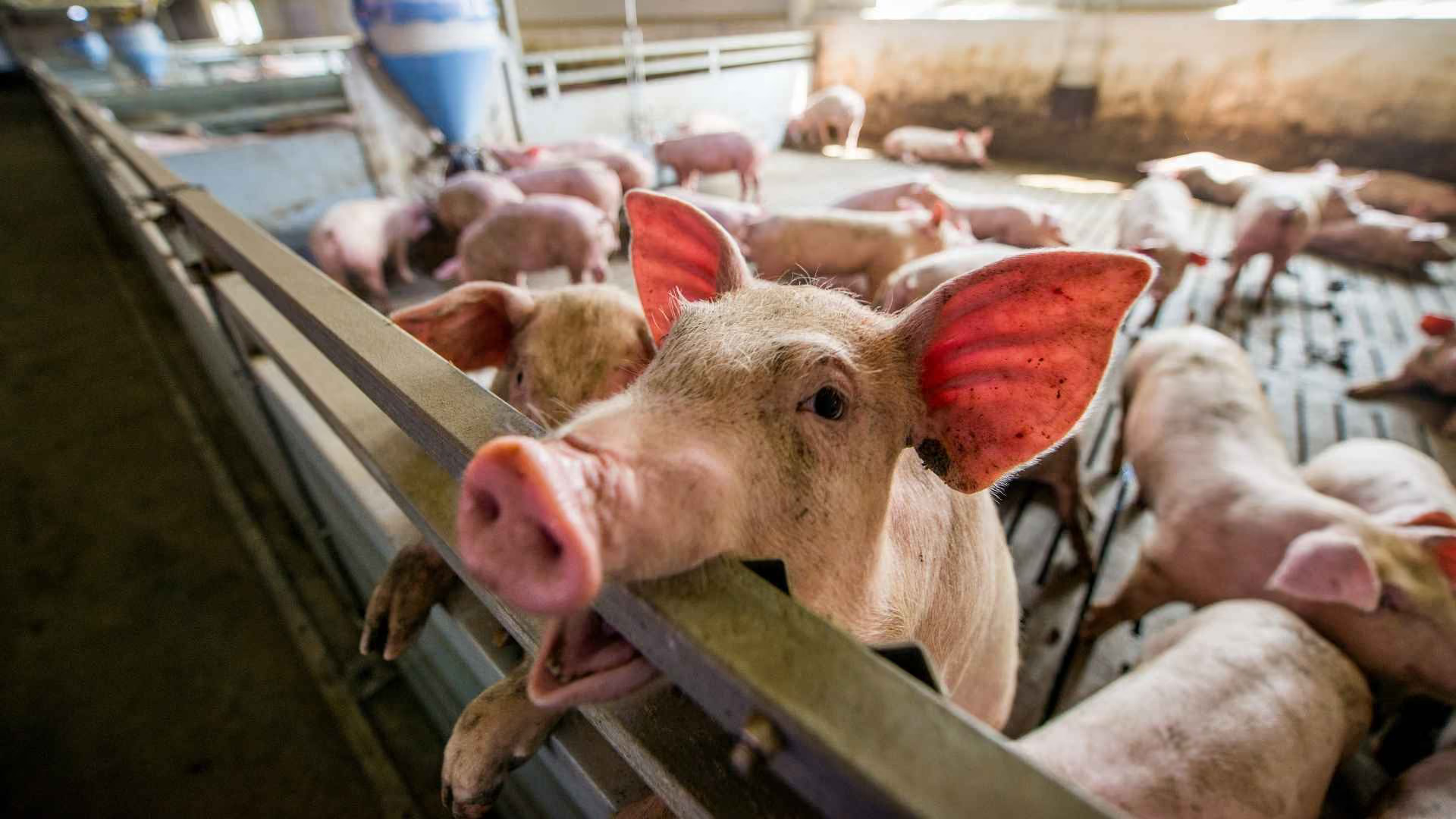
Research from Bryant Research found that welfare labels with no proper independent checks "give no assurance of the actual welfare conditions farmed animals experience and are essentially nothing more than humane-washing." A separate survey found that 83% of shoppers said they'd switch to a brand that could genuinely guarantee better animal welfare, while 85% thought the government should do more to make labels clearer and more honest.
Shoppers want the truth. They're just not getting it.
What needs to change with food welfare labelling in the UK
Animal Justice Project is calling for Stockcroft's RSPCA Assured certification to be paused while the case is investigated, and for the government to review welfare labelling, particularly vague terms like "outdoor-bred," "high-welfare," and "free-range." The UK government's latest animal welfare plan does acknowledge the problem, with ministers promising to "continue exploring how improved food labelling could improve animal welfare."
"Continue exploring" is cold comfort when animals are suffering in certified farm sheds right now.
For shoppers, the honest takeaway is this: a welfare label on the front of a packet is not a guarantee. It's a starting point, and all too often, a marketing decision. The factory farming system behind most of the meat and dairy on UK supermarket shelves looks nothing like the countryside scenes printed on the packaging. Until labels are properly standardised, independently checked, and genuinely enforced, the gap between the picture on the packet and the truth inside the shed will stay wide open, and animals will keep paying for it.

Independent fact-checking, funded by readers like you.
Misinformation is a growing threat to our health and planet. At foodfacts.org, we're dedicated to exposing the truth behind misleading food narratives. But we can't do it without your support.
Sources
- Animal Equality (18 July 2019). Animal Equality investigation reveals shocking scenes of neglect to calves at US dairy farm
- Animal Justice Project (2026). RSPCA Assured suffering at 'outdoor bred' pig farm.
- Animal Justice Project (2023). Misleading animal product marketing.
- Animal Justice Project (2024). The deception of RSPCA Assured.
- Animal Justice Project (n.d.). A RED TRACTOR ASSURED NIGHTMARE
- ASPCA (22 September 2022). Labels like "Organic" are misleading consumers and hurting animals.
- BBC (27 July 2020). Investigation into animal abuse on goat farm
- Bryant Research (8 July 2024). UK consumers seek transparent animal product labels.
- Faunalytics (20 August 2023). Consumers are misled by animal welfare labels.
- Foodfacts.org (22 January 2025). A closer look at factory farming: why it matters.
- Foodfacts.org (10 July 2025). What does 'free range' really mean? The facts behind the label.
- Foodfacts.org (19 June 2025). What does 'grass-fed' really mean? The meaning behind the label.
- Green Queen (1 September 2024). USDA targets greenwashing with misleading 'climate-friendly' guideline. greenqueen.com.hk
- Marciel, R., & Magaña, P. (2024). (Not So) Happy Cows: An Autonomy-Based Argument for Regulating Animal Industry Misleading Commercial Speech. Journal of Applied Philosophy, 41(3), 498-515. https://doi.org/10.1111/japp.12702
- Parallel Parliament (16 December 2025). Animal Products: Labelling
- PETA (n.d.) Chickens Left to Rot on Happy Egg Co. Supplier Farms
- The Independent (18 February 2026). 'Outdoor-bred' RSPCA Assured pigs found 'suffering and lame' in farm barns.



foodfacts.org is an independent non-profit fact-checking platform dedicated to exposing misinformation in the food industry. We provide transparent, science-based insights on nutrition, health, and environmental impacts, empowering consumers to make informed choices for a healthier society and planet.






.svg)


.svg)

