
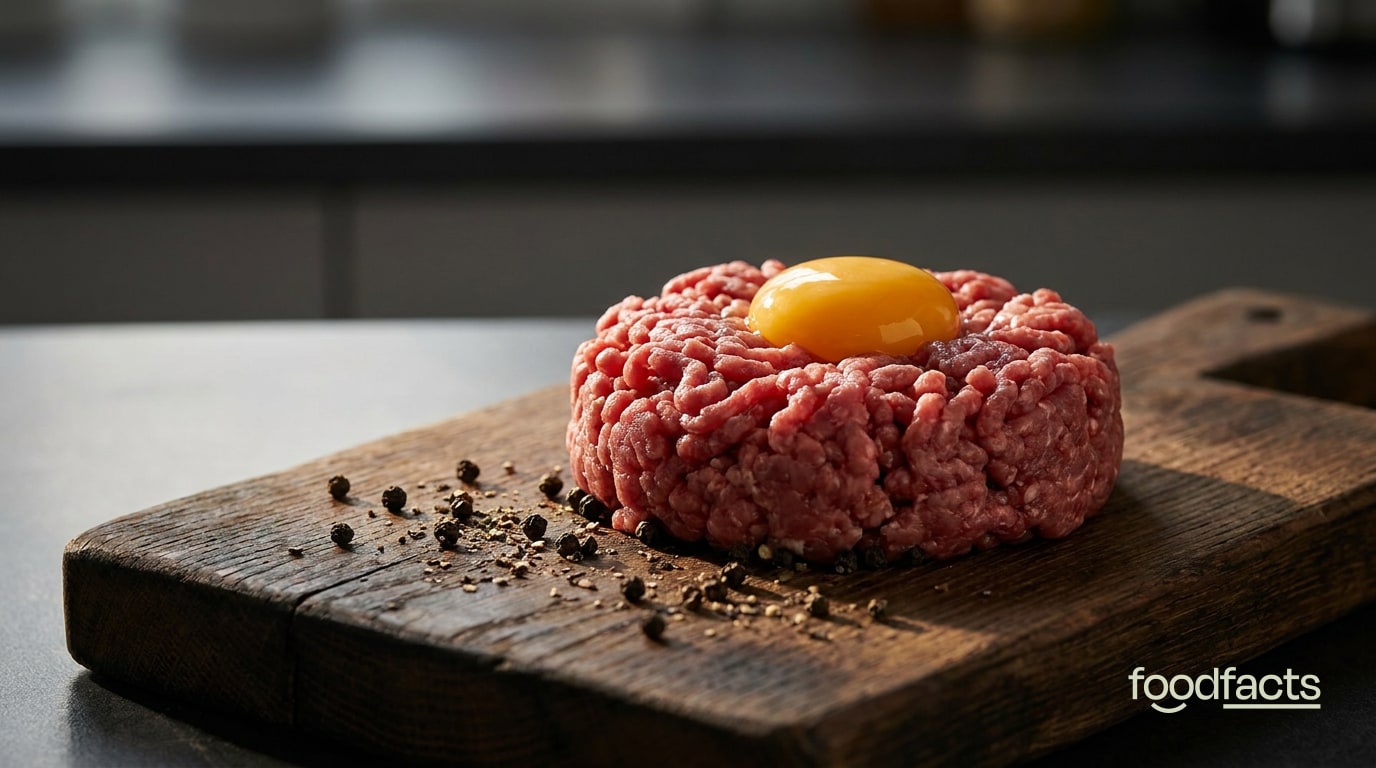




Why the raw meat craze is dangerous — and why influencers won't say it


On June 10th, influencer Eddie Abbew posted a video on Instagram, in which he claims that “there is nothing wrong with eating raw meat.” He suggests it is designed for human consumption in its raw state. Below, we fact-check these claims against the scientific evidence on raw meat consumption and the health effects of cooking meat.
Full Claim: “If you think about it logically, the only things that human beings can eat without having to cook the **** out of is meat, and fruit [...] but there’s nothing wrong with eating raw meat. There are so many cultures that actually eat raw meat. A bit of salt, there’s nothing wrong with it.”



Eating raw meat carries well-established health risks from harmful bacteria and parasites that cooking can eliminate. Some populations are particularly vulnerable to those risks, including young children, the elderly, pregnant women and those with a weakened immune system. Foodborne illnesses represent a significant health burden and can easily be avoided by following food safety practices.
Bold claims and shocking videos tend to do well on social media because they drive engagement. By eliciting emotional reactions, they also attract more comments - positive or negative. This also means they are more likely to reach wider audiences. When following the shared advice can lead to serious health complications, it needs to be challenged.


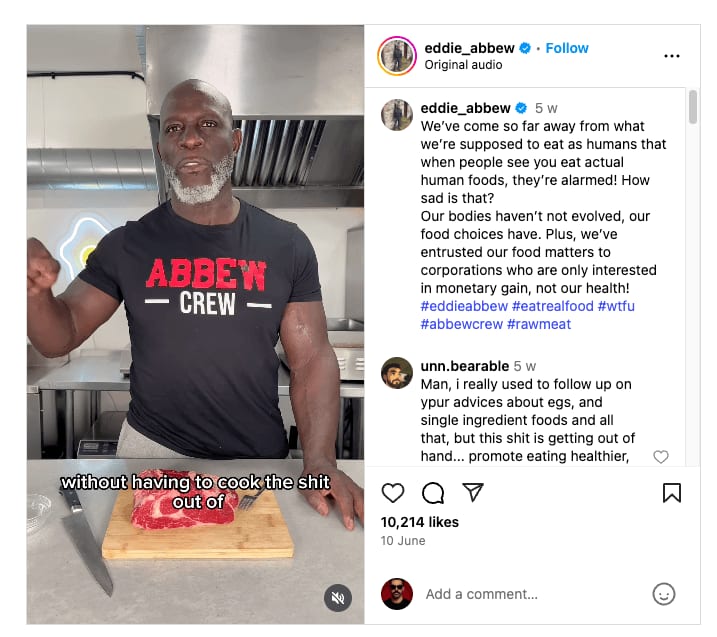
Eddie Abbew begins his video by arguing that, from a logical standpoint, the only foods humans can safely consume without excessive cooking are meat and fruit. He then takes a bite of raw meat and confidently states, “there’s nothing wrong with eating raw meat.” On the surface, this might seem like a personal dietary choice. But framed as a demonstration of safety, and broadcast to a wide social media audience, this claim is misleading and potentially dangerous.
The evidence on the risks associated with consuming raw meat is extensive, and most people are probably familiar with those risks. So before reviewing this evidence in detail, let’s take a close look at the underlying assumptions that tie this argument together.
In this video, raw meat appears to be the epitome of what Eddie Abbew calls “real” food, food that he claims is designed for human consumption, in contrast with any form of processed products, which he regularly criticises. Within this perspective, the polar opposite would probably be ultra-processed, plant-based meat. Interestingly, in a later video posted just a few days later, Eddie Abbew warns his audience about the dangers of Quorn products, citing the tragic story of a young boy who died after suffering from a severe allergic reaction — which is an immune response, not the same as an infection caused by bacteria in food. The implication is clear: natural, unprocessed food like raw meat is safe; foods made in a factory are not.
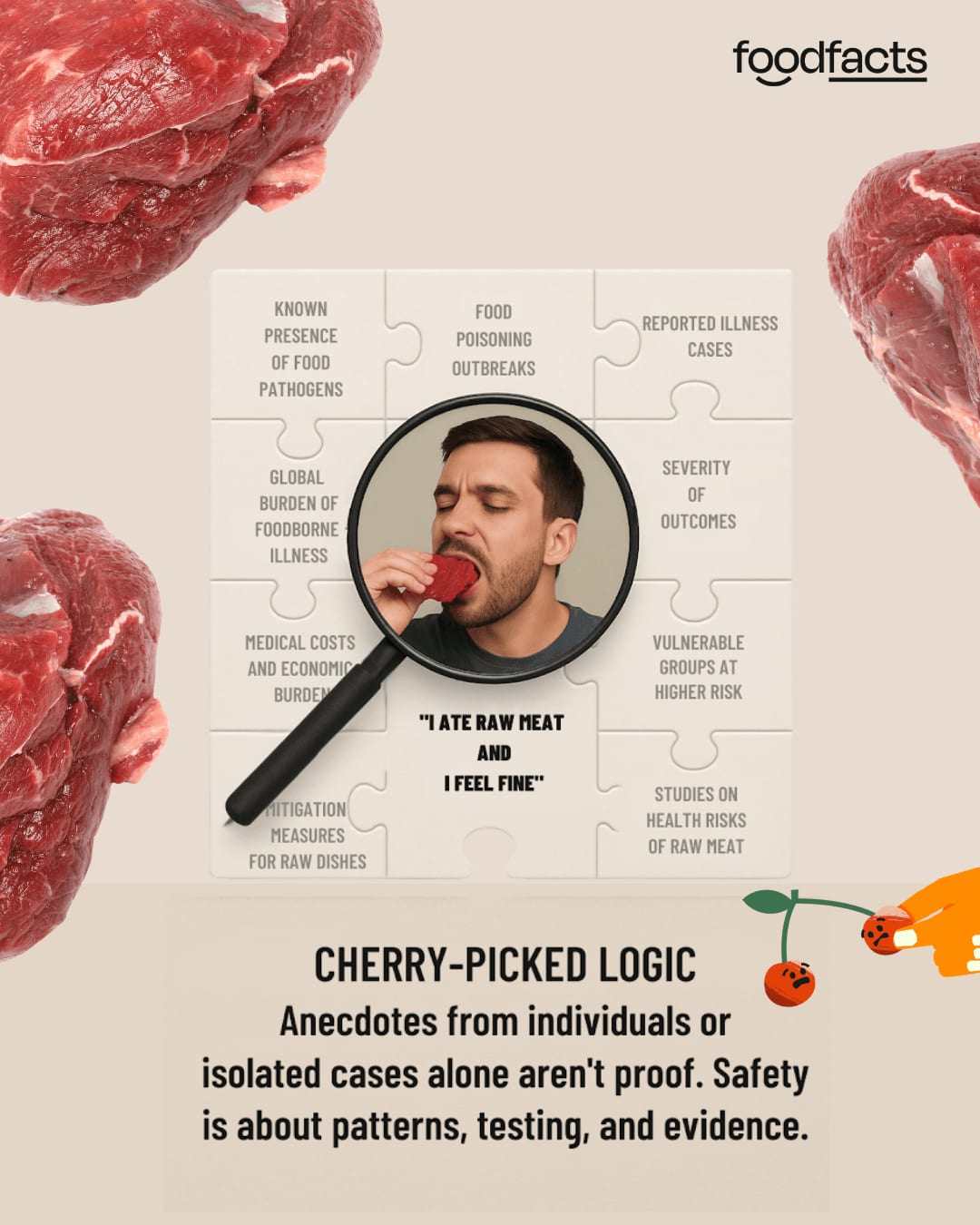
But this logic doesn’t hold. If it did, then bringing up the case of one person having died after consuming raw meat would be enough to argue that equally, raw meat isn’t safe. However, from a scientific, logical perspective, this would not be enough: how a single person reacts to a food, whether negatively or not at all, is ONE single piece of a much larger jigsaw puzzle. It matters, but on its own, it cannot tell us whether that food is safe for the broader population.
What can? Scientific evidence looking at patterns, testing, and data.
Decades of research show that raw meat is a common source of pathogens like Salmonella, E. coli, and Listeria, all of which are killed during cooking. These bacteria are responsible for many cases of foodborne illness each year, some of which lead to hospitalisation or death.
This doesn’t mean eating raw meat always causes illness, just as not wearing a seatbelt doesn’t always lead to injury. But the risk is there, and it should not be ignored. Following that logic, we should also come to the conclusion that wearing a seatbelt is not necessary, which would be considered dangerous advice. In both cases, the risks are real and well-documented, and so is the effectiveness of solutions. Cooking is one of the simplest and most effective tools we have to eliminate the risks of developing foodborne illnesses when we eat meat.
❌ Claim: “There’s nothing wrong with eating raw meat.”
Fact-Check: ✅ Raw meat consumption carries well-established health risks, including exposure to Salmonella, E. coli, Listeria monocytogenes, and parasites like Taenia saginata (source, source). These pathogens can lead to severe illness, hospitalisation, or even death, especially in vulnerable groups like children, pregnant women, the elderly, and people with a weakened immune system (source). This information is left out from Eddie Abbew’s video in which he states that meat is one of the only foods humans can safely eat without excessive cooking.
Reports from multiple countries, including the U.S., Ethiopia, Lebanon, and Japan, consistently link raw meat consumption with foodborne illness and support strict safety guidelines and enhanced public education (source, source). For example, a Salmonella outbreak which occurred in Wisconsin in 1994 was traced back to the consumption of raw ground beef. Some patients reported that eating raw ground beef over the winter holidays was a practice brought from their European ancestors (source), highlighting the importance of continuing to raise awareness of raw meat risks, especially when linked to cultural practices.
Indeed foodborne illnesses impose a significant burden (source, source), estimated to cause over 400,000 deaths each year worldwide, 30% of which occurring among children under 5. However, research shows that food safety education, from proper cooking to avoiding cross-contamination, can greatly reduce those risks. This guide offers clear information on this topic.
✅ Improper cooking is directly linked to outbreaks and hospitalisations
Historical outbreak investigations have shown undercooked meat to be a leading cause of foodborne illness. For instance, E. coli outbreaks have led to numerous hospitalisations and can have serious complications especially among vulnerable populations. These are most often linked to undercooked raw meat, especially beef (source).
What about steak tartare?
Many cultures around the world serve traditional dishes made with raw or lightly cured meat: from steak tartare in France, to carpaccio in Italy, to dishes like kibbeh nayyeh in the Middle East, and raw liver or sashimi-style preparations in parts of Asia. Because these foods are part of established culinary traditions, it’s understandable to wonder: If restaurants serve them, surely they must be safe?
However, while these dishes are often prepared with special care, strict hygiene, and high-quality cuts chosen specifically for raw consumption, eating raw meat still carries real risks, including exposure to harmful bacteria and parasites. That is why food safety guidelines typically recommend consuming them only from reputable sources that follow rigorous handling and preparation standards, and generally advise against them, even in countries where raw meat dishes are more popular.
A review of the evidence conducted by Public Health Ontario in 2018 concluded that “[f]or meat intended to be consumed raw, production practices as well as preparation methods may reduce but not eliminate the risk of disease. Warnings about the risks associated with raw meat consumption can help inform decision-making by consumers” (source).
Final Take Away
At the end of the day, food choices are personal. Eddie Abbew is free to eat raw meat, seek out information on how to minimise the risks for himself, and share his opinions on the subject. But when suggesting to a wide audience that consuming raw meat is safe, the message becomes more than just a personal choice: it exposes viewers to serious public health risks.
Most people generally know that eating raw meat carries risks. But when a trusted wellness influencer eats it on camera with no immediate consequences, it can create doubt about the accuracy of food safety guidelines. It’s important to remember that illness isn’t inevitable. However, isolated videos showing someone eating raw meat without getting sick can distort risk perception and downplay the bigger picture: just in the UK, millions of people suffer foodborne illnesses every year; that’s thousands every single day (source).
It’s not just about saying “raw meat is okay”, it’s about encouraging distrust in food safety guidelines built on decades of research and real-world outbreaks. It’s about undermining trust in health authorities whose job it is to keep the public safe.
We have contacted Eddie Abbew and are awaiting a response.
Disclaimer
This fact-check is intended to provide information based on available scientific evidence. It should not be considered as medical advice. For personalised health guidance, consult with a qualified healthcare professional.
Independent fact-checking, funded by readers like you.
Misinformation is a growing threat to our health and planet. At foodfacts.org, we're dedicated to exposing the truth behind misleading food narratives. But we can't do it without your support.
Sources
Ballout, R. et al. (2023). “Raw Meat Consumption and Food Safety Challenges: A Survey of Knowledge, Attitudes, and Practices of Consumers in Lebanon.”
Heredia, N. & Garcia, S. (2018). “Animals as sources of food-borne pathogens: A review.”
Foodsafety.gov (2023). “People at Risk of Food Poisoning.”
Roels, T.H. (1997). “Incomplete sanitation of a meat grinder and ingestion of raw ground beef: contributing factors to a large outbreak of Salmonella Typhimurium infection.”
CDC (1995). “Outbreak of Salmonella Serotype Typhimurium Infection Associated with Eating Raw Ground Beef -- Wisconsin, 1994.”
WHO. “Estimating the burden of foodborne diseases.”
Nyachuba, D.G. (2010). “Foodborne illness: is it on the rise?”
NHS (2024). “Meat in your diet.”
Institute of Medicine (US) Committee on the Review of the USDA E. coli O157:H7 Farm-to-Table Process Risk Assessment (2002).
Ministère de l’Agriculture et de la Souveraineté Alimentaire (2021). “Manger cru : quels sont les risques et comment les éviter ?”
Public Health Ontario (2018). “EVIDENCE BRIEF Can You Prepare Raw Meat Dishes Safely?”
Food Standards Agency. “Foodborne Pathogens.”


foodfacts.org is an independent non-profit fact-checking platform dedicated to exposing misinformation in the food industry. We provide transparent, science-based insights on nutrition, health, and environmental impacts, empowering consumers to make informed choices for a healthier society and planet.








.svg)


.svg)

