
Fact-Checking:
Eddie Abbew
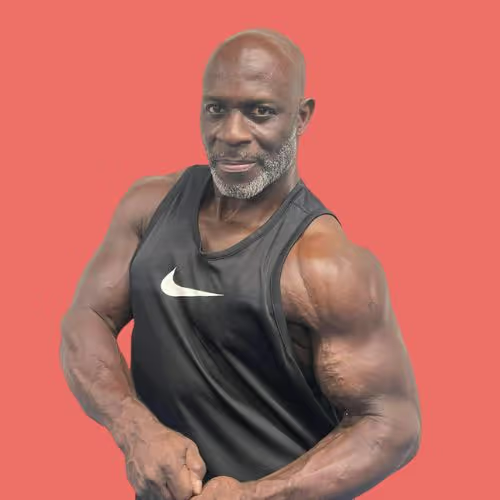
Eddie Abbew is a British, retired registered nurse and former bodybuilder champion with a following of over 4 million across TikTok, Instagram, and YouTube, as of the 5th of January 2026.


Profession: Online influencer, gym owner, retired nurse, former bodybuilding champion
Credentials: RN (registered nurse, retired); no nutrition or dietetics credentials
Tagline: "Eat real food" and carnivore diet advocate
Eddie Abbew is a British, retired registered nurse and former bodybuilder champion with a following of over 4 million across TikTok, Instagram, and YouTube, as of the 5th of January 2026.
F - Financial incentive
Are there visible revenue streams associated with the content?
Abbew’s brand appears to involve a commercial strategy: growing an audience and selling paid products linked to his messaging (source). His Abbew Crew community on Skool shows 22.4k members and a $129 ‘Join’ price at time of viewing; the same page also references a one‑time fee of $197, and other price points appear in third‑party reviews—so gross intake could plausibly reach the millions (before fees, refunds, taxes, and costs).
He also sells ebooks (Fat Loss Paradox, Muscle Building Guide), and his content links to multiple meal‑prep cookbooks authored by family members featuring “Eddie‑approved” meals and recipes.
A - Authority signalling
How do they get perceived as sources of nutritional information?
Abbew presents himself as an ‘outsider who knows better’. His backstory—ex‑bodybuilding champion and former psychiatric nurse—helps to signal credibility in broader health discussions, including nutrition, while distancing himself from mainstream medicine and health systems.
He often frames the NHS as ineffective or misguided, and has described sickness as a “business”: this goes beyond criticism of the modern, Western food environment, and suggests that official advice cannot be trusted. This “I see through the lies” framing can amplify distrust of professionals and institutions. He has also openly encouraged his audience to “listen to most of the advice that’s given by the NHS and do the complete opposite,” reinforcing an “us versus them” dynamic.
C - Claims
What is the core messaging, and what is left out?
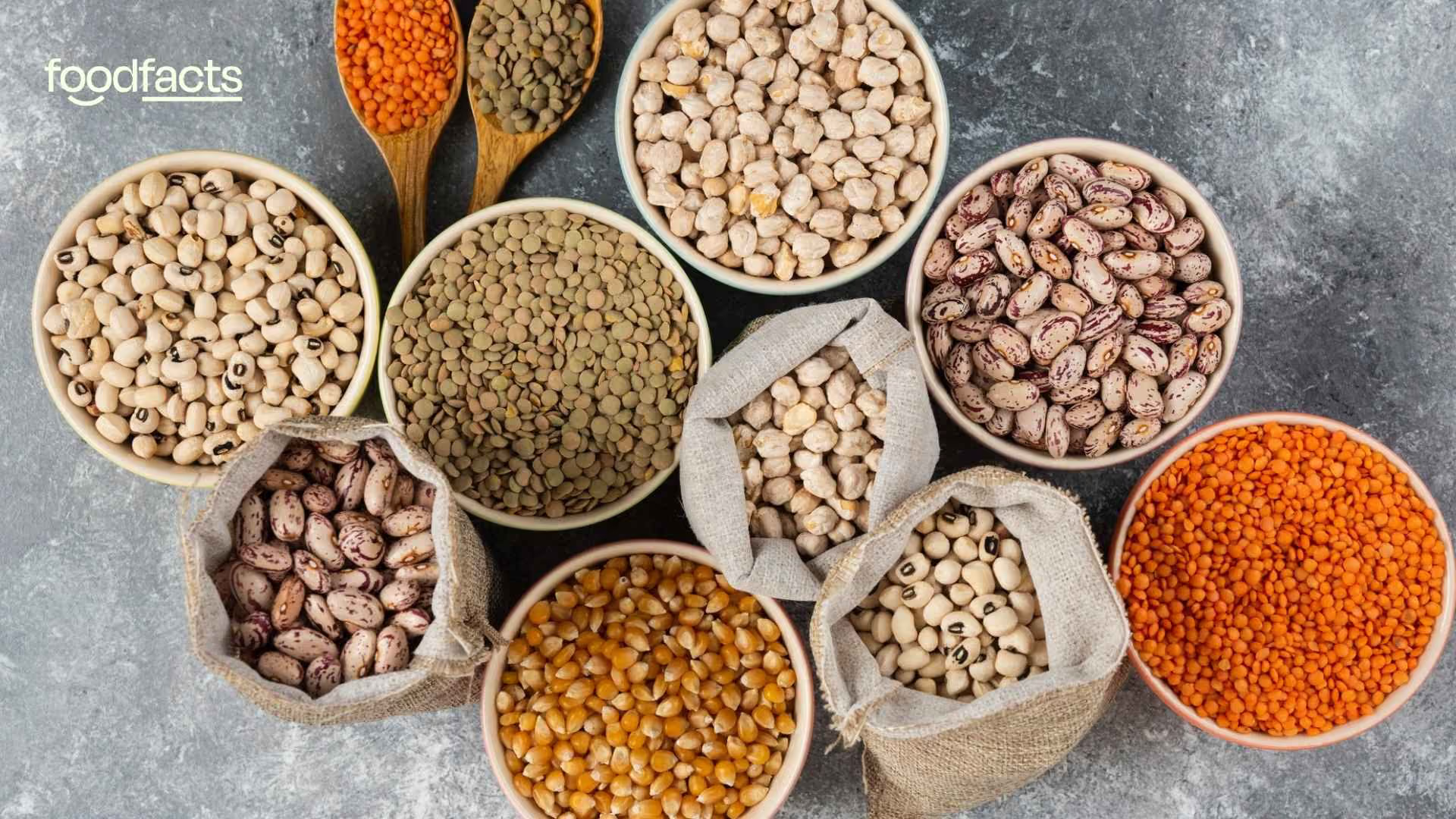
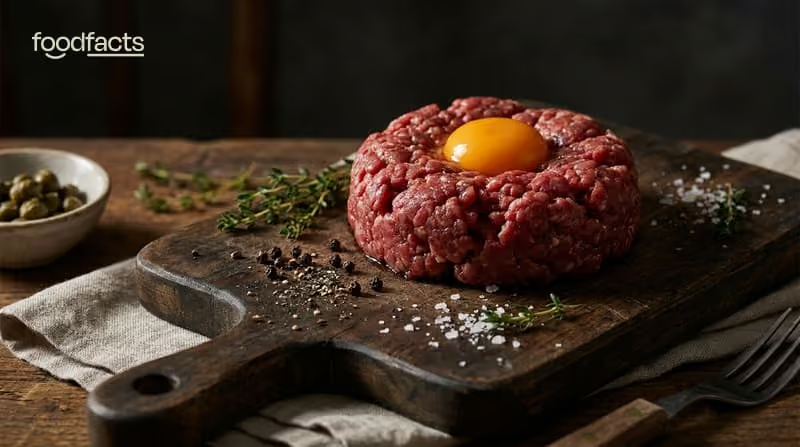
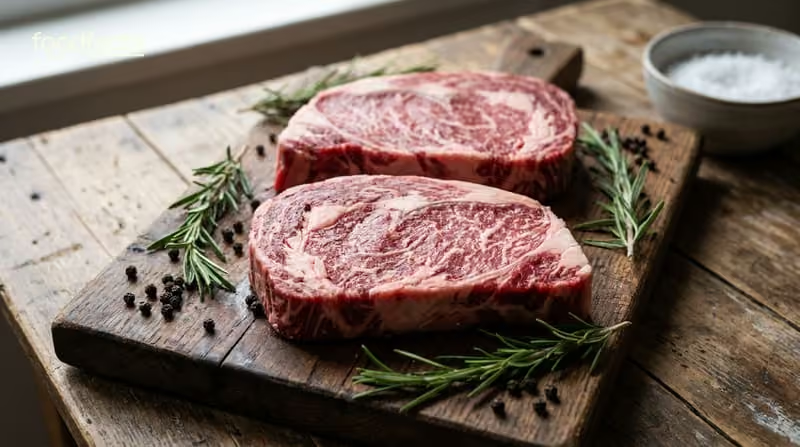
The core idea - Abbew’s diet advice is built on a simple message: eat “real food.” However, his definition of what counts as real food is highly restrictive, essentially consisting of animal products, especially red meat (including raw red meat), eggs, and animal fats. So it’s not just ultra-processed foods that are to be avoided, but entire food groups that are perceived as ruled out.
From idea to certainty - This is framed less as one option and more as the correct way to eat.
What is left out - His content tends to foreground personal experience and client stories, with few explicit references to the broader research on long‑term risks linked to very high intakes of foods rich in saturated fat, or to diets that severely limit fibre.
He also promotes the idea that lowering insulin (by avoiding carbohydrates) is foundational for fat loss; however, controlled studies designed to test this prediction have not consistently shown greater fat loss on low‑carbohydrate diets when calories and protein are matched.
The core limitation of an anecdote-led narrative is that it cannot establish why outcomes occurred or whether they generalise: weight loss on a carnivore-style diet could reflect reduced ultra‑processed foods, an overall calorie reduction, or broader lifestyle changes. Anecdotes also tend to be selectively presented: positive testimonials are foregrounded, while negative experiences or downsides are rarely discussed. This selective framing reinforces a one‑size‑fits‑all message without showing the full picture.
Take-away: An effective pattern—start from a truthful concern (ultra‑processed foods, aggressive marketing) and expand it into sweeping claims that leave little room for nuance and the evidence supporting dietary diversity.
T - Tone
How is the information packaged, and what makes it appealing?
Abbew’s confrontational slogans—such as “Wake the f** up”—reinforce an “us vs them” dynamic and convert frustration into perceived empowerment. A key pattern here is absolute language (“this is food, this is not food”; implied “always/never” rules), which discourages nuance and can make disagreement feel like ignorance rather than legitimate scientific uncertainty or individual difference.
He offers little balance and rarely acknowledges individual variation, affordability, access, or cultural context.
Take-away: With absolute narratives, challenges rarely change the conclusion—new information is fitted into the story rather than prompting the story to change.
Some reactions from health professionals
Abbew’s focus on cooking meals from whole foods and reducing intake of ultra-processed foods is consistent with public health guidance. However, Abbew’s framing of health professionals as uninterested in nutrition does not reflect what routine clinical advice actually looks like, and might encourage distrust in experts.
In this video, Dr McGowan addresses specific concerns about Abbew’s claims on cholesterol. And here, Dr Idz challenges Abbew’s take on fruit consumption and its health impacts.
Beyond isolated claims, it’s the absolute narrative they’re tied to that may have wider consequences —by encouraging distrust in evidence‑based care and health professionals, and by fostering rigid or potentially unhealthy attitudes towards food.
Disclaimer
FoodFACT profiles summarise public-facing claims and marketing alongside our analysis. Quotes, prices, and membership figures are taken from linked sources as viewed at the time and may change. This content is for information only and is not medical advice. See something wrong or outdated? Let us know and we’ll update.





.svg)
