




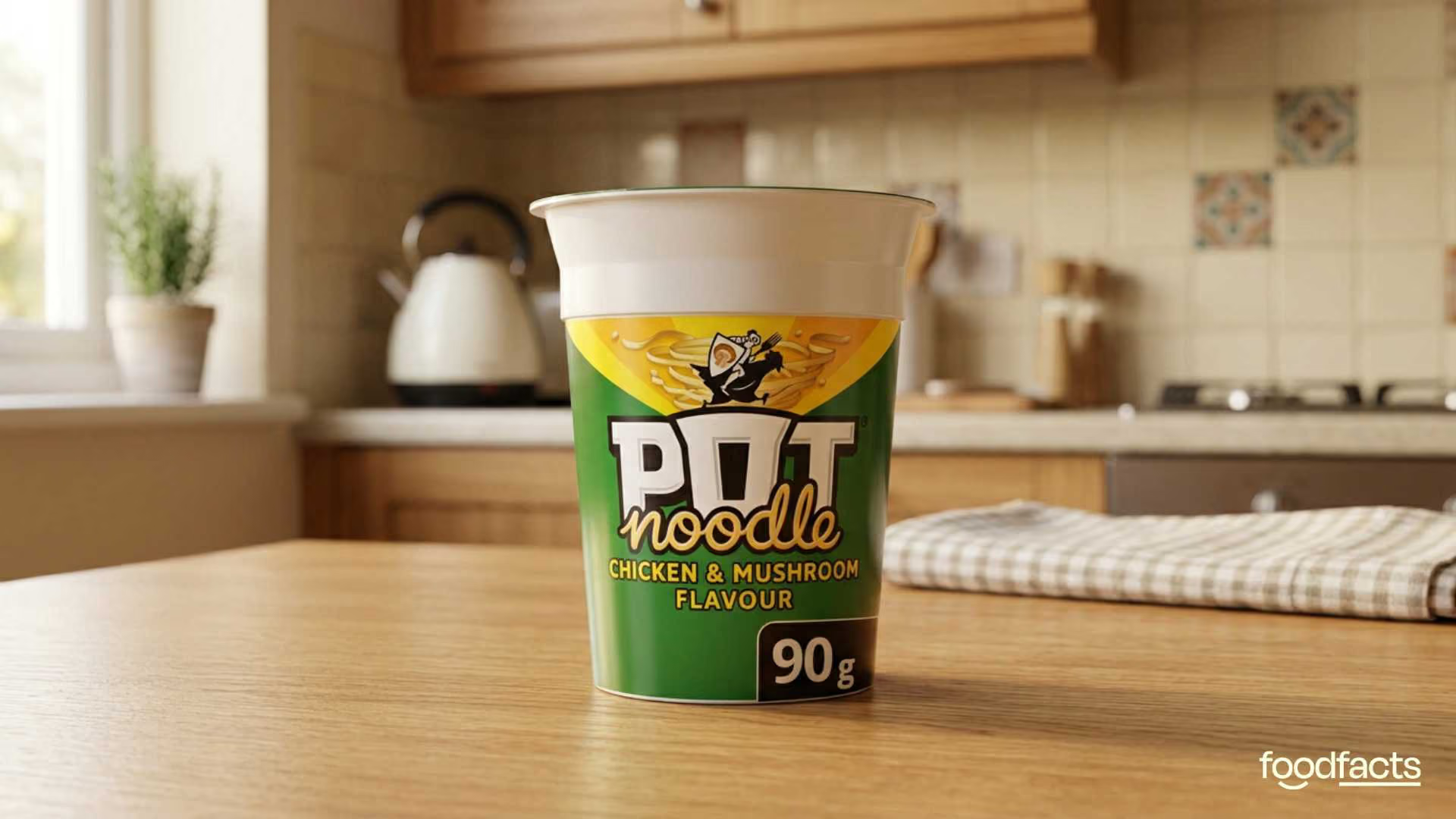
Brussels could force Chicken & Mushroom Pot Noodle to change its name




There are stupid arguments, and then there are Brussels arguments.
This one started as legislation about strengthening farmers in the food supply chain.
It now looks as though it could end with food companies arguing over whether a pot of instant noodles is still allowed to say “chicken” on the lid.
That is not a joke.
A leaked Council note from 11 February 2026 shows negotiators working with a proposal that would reserve a long list of terms for meat products, including “chicken”, “beef”, “pork”, “bacon”, “breast”, “thigh” and “drumstick”.
The same document says the change would apply from three years after entry into force.
Then, after the 5 March trilogue, the European Alliance for Plant-based Foods (EAPF) said a deal had been reached restricting certain names for plant-based products.
According to that statement, words such as “burger”, “sausage” and “schnitzel” survive, but animal names like “chicken”, “beef” and “pork”, as well as cut names like “breast”, “thigh” and “drumstick”, are in the firing line.
So no, the EU has not banned Pot Noodle.
But it may be edging towards something nearly as daft: banning words ordinary people use to work out what a product is supposed to taste like.
And that is where this stops being a niche fight about veggie burgers and starts getting silly fast.
In the same statement, EAPF warned that the scope of the law could hit flavourings too, saying the use of “chicken” and “bacon” flavourings in mainstream products including noodles, crisps, sauces and soups would no longer be permitted.
That is where everyday supermarket brands enter the story.
Chicken & Mushroom Pot Noodle. Bacon fries. Chicken noodles. Bacon-flavoured crisps. Suddenly this is not some abstract Brussels paper chase.
And let’s be honest about what consumers are doing here.
Nobody picks up Chicken & Mushroom Pot Noodle because they think they have found a farm shop in a cup.
They read “chicken” as flavour. The same way they read “smoky bacon” as flavour. The same way they manage, somehow, to navigate the rest of the supermarket without collapsing in confusion.
That is why this whole debarcle feels so detached from real life.
If shoppers can understand a vegan sausage roll, a veggie burger or a meat-free schnitzel, then the claim that they need rescuing from the word “chicken” on a noodle pot starts to look very flimsy indeed.
The compromise itself makes the contradiction obvious, because some familiar words stay while others are treated as too dangerous to print.
There is also the small matter of cost.
EAPF says the agreement could force businesses to rename products, redesign packaging, overhaul menus, update inventory systems and deal with legal uncertainty across different languages and across all 27 member states.
That is a lot of admin, a lot of expense and a lot of avoidable mess for a policy sold as consumer protection.
It is also a strange destination for legislation supposedly aimed at helping farmers.
The Council note identifies the wider file as a regulation to strengthen farmers’ position in the food supply chain, while EAPF says this naming battle will not increase farmer income, improve market access or solve the deeper structural problems facing European agriculture.
So once again, a political system that says it is fixing the food chain risks spending its energy policing adjectives on snack packaging.
At foodfacts.org, we have covered this pattern before. Our piece on the Daily Mail’s plant milk IQ scare looked at how a misleading frame can steer readers towards the wrong conclusion, while our feature on Greggs’ vegan sausage roll showed just how much labels shape what people choose. Our article on best-before dates and food labels makes a similar point from another angle: when labels get muddled, consumers do not become better informed; they become less certain.
That is the real problem here.
Good food labels should make shopping easier. They should help people understand what they are buying, how to use it and what to expect.
If Brussels ends up making packets less clear, less familiar and more bureaucratic, then this is not smart regulation. It is a triumph of policymaking over common sense.
If Chicken & Mushroom Pot Noodle ends up having to scrub ‘chicken’ from the lid, it won’t be because shoppers were confused. It’ll be because Europe’s politicians decided controlling that word on a noodle pot mattered more than fixing the food system behind it.

Independent fact-checking, funded by readers like you.
Misinformation is a growing threat to our health and planet. At foodfacts.org, we're dedicated to exposing the truth behind misleading food narratives. But we can't do it without your support.
Refeences and further reading
Council of the European Union (11 February 2026). Preparation of the trilogue.
European Alliance for Plant-based Foods (5 March 2026). Veggie burger survives EU fight, but plant-based steaks will have to be renamed.
FoodFacts.org (2 December 2024). Are ‘best before’ dates necessary? Understanding food labels and reducing waste.
FoodFacts.org (5 December 2025). Why more meat-eaters are quietly choosing the vegan sausage roll at Greggs.
FoodFacts.org (13 January 2026). Do plant milks really harm our IQ?



foodfacts.org is an independent non-profit fact-checking platform dedicated to exposing misinformation in the food industry. We provide transparent, science-based insights on nutrition, health, and environmental impacts, empowering consumers to make informed choices for a healthier society and planet.






.svg)


.svg)

