
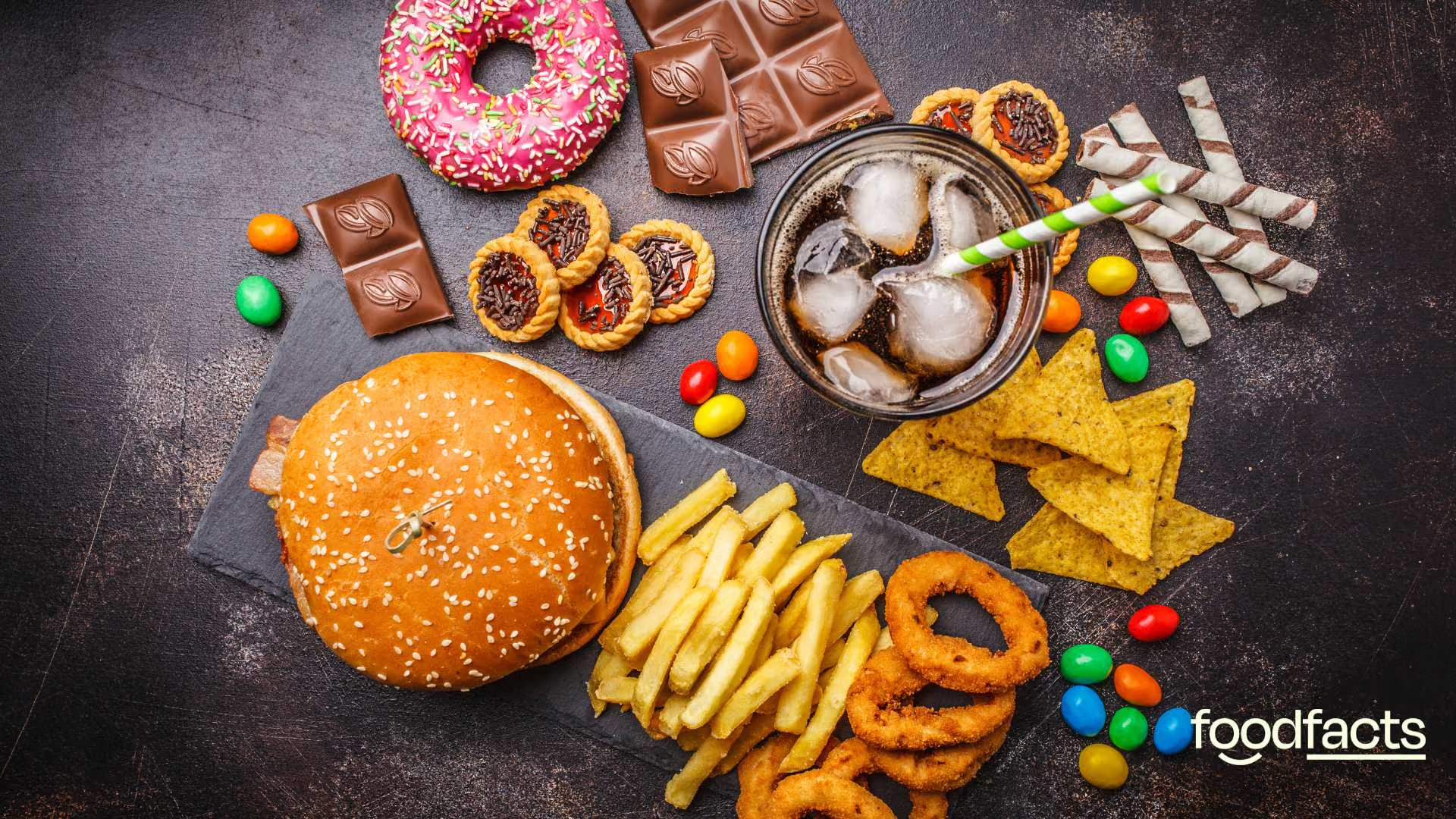




Britain's diet crisis: why whole foods must be the priority in food policy




Britain consumes more ultra-processed foods than any other country in Europe, and children’s diets are particularly imbalanced. Our new report, titled The Whole Truth, calls for a fundamental shift in how we approach this issue, suggesting that government food policy should be centred around the promotion of whole foods, as a means to addressing excess intake of ultra-processed products.
The statistics paint a troubling picture. British children aged two to five get nearly two-thirds of their daily energy intake from ultra-processed foods, a proportion that rises as they grow older. Not only are these children consuming a nutritionally poor diet, their ability to enjoy and appreciate healthy foods is being disrupted and undermined. Many children are growing up without experiencing the tastes, textures, and smells of fresh produce. They may never know the feel of real foods in their fingers, the taste of bitter greens or the crunch of a carrot between their teeth.
Britain’s children deserve better. It’s time to re-position whole foods at the centre of government food policy.
What the evidence shows about processing and health
To understand this challenge, we need to look at how foods are classified. The NOVA classification system, developed by researchers at the University of São Paulo in 2009, groups foods into four categories based on the extent and purpose of processing. Group 1 consists of minimally processed or unprocessed foods like whole fruits and vegetables, fresh meats, and fish. Group 4, at the opposite end, includes ultra-processed foods manufactured using industrial processes and additives not typically found in home kitchens.
Ultra-processed foods are characterised by the absence or fracturing of whole foods. Substances extracted from whole foods are modified and assembled using industrial techniques and additives that enhance palatability. While these products can be tasty and convenient, research indicates their excessive consumption is harmful to health.
Ultra-processed diets are consistently associated with a range of adverse health outcomes, including increased risk of cardiovascular disease, type 2 diabetes, and certain cancers. Scientists are still studying the mechanisms, hoping to understand the causal drivers. It appears that some ultra-processed foods interfere with hunger signalling and possess properties that drive over-consumption of calories. In any context in which they are eaten, ultra-processed foods can displace whole and minimally processed foods from the diet.
And we know that minimally processed diets are better for our health. While parts of the ‘ultra-processed’ evidence base remain contested, one clear conclusion can be drawn from the science conducted to date: that balanced diets rich in whole foods support good health.

How the UK compares globally
Britain's ultra-processed diet stands out on the global stage. At 56% of daily energy intake, the UK ranks as the second-biggest consumer of ultra-processed foods globally, just 2% behind the United States and 36% higher than Italy. Across Europe, British children consume the highest levels of ultra-processed foods.
For a stark picture of how junk food dominates UK children’s screens, see Bite Back’s Junk Food TV Ban, which tracks the relentless marketing of ultra-processed products to young people.
This consumption pattern is deeply unequal. Ultra-processed product consumption is higher in less affluent groups across Britain, while consumption of whole foods like fruits and vegetables is lower. Health outcomes such as obesity follow a distinct social gradient, with 29.2% of year 6 children from the most deprived areas living with obesity compared to 13.0% in the least deprived areas.
Action on ultra-processing is therefore a matter of social justice. .
The government policy gap
Despite the scientific evidence affirming the benefits of minimally processed diets, UK Government dietary guidelines have not kept pace with international best practice. The Eatwell Guide, which communicates government dietary advice, implicitly encourages consumption of whole foods through recommendations like eating at least five portions of fruit and vegetables daily, but includes no explicit advice around processing. .
This stands in contrast to guidance from the World Health Organization, which recommends that healthy and sustainable diets "are based on a great variety of unprocessed or minimally processed foods, balanced across food groups, while restricting highly processed food and drink products".
A growing number of countries have begun promoting non-ultra-processed diets in their official food policies. Brazil's dietary guidelines state: "Make minimally processed foods the basis of your diet," while New Zealand recommends "eating a diet with more whole, low or minimally processed foods". In 2025, Brazil announced that 85% of the annual federal budget for school meals must be allocated to raw or minimally processed ingredients and freshly prepared meals, rising to 90% in 2026.
These guidelines emphasise that diets should also be plant-rich and diverse. This stands in contrast to the United States, where the new dietary guidelines promote whole foods, but with a concerning over-emphasis on foods of animal origin (perhaps betraying the influence of the meat and dairy industries).The UK Government has fallen behind, failing to explicitly promote whole foods, and some policies even perversely encourage an ultra-processed diet. A 2023 Soil Association investigation found that ultra-processed cakes, puddings, crisps, biscuits, artificially sweetened beverages, and energy drinks had been awarded the NHS 'Good Choice' logo through the Food Scanner App. The Nutrient Profile Model similarly takes no account of additives, sweeteners or processing.
What needs to change
In 2024, the House of Lords Committee on Food, Diet and Obesity took evidence from experts across science, academia, civil society, and industry, examining the role of ultra-processed and nutrient-poor foods in shaping health outcomes. The Committee noted that "the rapidly growing epidemiological evidence showing a correlation between consumption of ultra-processed foods defined using the NOVA classification and poor health outcomes is alarming".
In response, they called on the Government to commit to "tackling the over-consumption of such less healthy foods, and increasing consumption of healthier, largely unprocessed and minimally processed foods, ensuring a healthy and affordable diet for all".
This is the right approach. While structural changes will ultimately be required to address the over prevalence of ultra-processed products, there are more modest and immediate solutions already on the table which could help shift the dial on Britain’s diet. These are not solutions which seek to radically reconfigure the food system, but smaller actions that can make a real near-term difference, making it easier for everyone – especially infants and children, and those in vulnerable or disadvantaged communities – to consume more whole and minimally processed foods
The report outlines eight priority policy solutions:
Extend the Healthy Start Scheme: Currently, the Healthy Start scheme provides weekly payments for food to pregnant people and families with children under four who are living in poverty. But eligibility criteria are restrictive. Extending eligibility to all children living in families receiving Universal Credit, raising the age threshold to five years, and further increasing payment values would support many more families at risk of food insecurity to access whole and minimally processed foods.
Expand eligibility for Free School Meals: The UK Government recently committed to making Free School Meals available to all children whose families receive Universal Credit, enabling roughly a million more children living in poverty to access a daily meal. While this is welcome, they need to go further. Recent analyses have found that Universal Free School Meals can level inequalities, raise attainment, and re-balance diets away from ultra-processed products, widening access to whole and minimally processed foods. A universal approach should be adopted.
Mandate a 'whole school approach': This means placing good food at the heart of the school day, embedding learning about food across the curriculum, inspiring pupils to handle and eat fresh whole foods, and learning how they are grown. The Soil Association's Food for Life programme demonstrates this approach in action, supporting children to cook and grow, and to visit farms. Independent evaluation shows that if every school followed Food for Life's approach, a million more children would be eating their five-a-day.
Scale community food solutions: In the context of rising food insecurity, food hubs such as food pantries, community fridges, kitchens and cafés, community-supported agriculture schemes, and social supermarkets have proliferated. These can make fresh and whole foods available to those who could not otherwise access them. The government should invest in local food strategies and infrastructure, learning from the Sustainable Food Places network.
Introduce mandatory business reporting: Requiring all large businesses to report on the sale of whole foods, and animal versus plant proteins, as well as the volume and value of minimally processed versus ultra-processed food sales, would increase transparency and help drive progress towards healthier food availability.
Build on the success of the Soft Drinks Industry Levy: The Soft Drinks Industry Levy successfully led to significant sugar reduction across soft drinks purchased by all socio-economic groups. The government should introduce a new levy on unhealthy ultra-processed foods - the levy should incentivise product reformulation while simultaneously generating revenue for healthy eating initiatives targeted at disadvantaged communities and children.
Champion British horticulture: A cross-departmental strategy supporting the production and consumption of British-grown, agroecological fruit, vegetables, and pulses is needed. This should include expanding the School Fruit and Veg scheme and mandating procurement policies that incentivise the preparation of fresh and minimally processed foods in public settings. More veg on public plates would be a win for public and planetary health.
Update dietary guidelines: As a priority, UK Government dietary guidelines should explicitly recommend consuming whole foods and a minimally processed diet, with an emphasis on plant foods sourced from nature-friendly farming systems, while cautioning against excessive consumption of ultra-processed products.
Stories of success
In making these recommendations, the report draws on the precedent set by communities and grassroots initiatives around the country. The caterers preparing meals from scratch in school kitchens. The community food hubs supporting local access to fresh produce. The businesses employing digital technologies to bring whole foods to market, and the farmers innovating on the land.
It also takes inspiration from the ethnically diverse and vibrant food cultures alive in Britain, which already champion fresh and healthy foods. Grassroots inspiration is available in abundance.
East Ayrshire Council in Scotland, to give one example, is serving over 5,000 meals each day that are certified to gold Food for Life Served Here scheme standards, with roughly two-thirds being free school meals. This means they’re serving organic and higher welfare ingredients, and freshly prepared meals made from minimally processed ingredients, and in areas of high deprivation.
Food Works Sheffield, to give another example, is working with the Sustainable Food Places network and upcycling quality surplus and locally grown ingredients into meals made available on a "pay what you can afford" basis in local food hubs. Grassroots action - here and in many other places - is unlocking progress, inspiring change, and creating a healthier future for local communities.

Moving forward
If Britain’s diet is excessively ultra-processed, this is not the result of poor individual choices, a lack of information, or a failure of will. We are fed by, and live within, an ultra-processed food system, one oriented towards the mass manufacture of branded and marketable goods that deliver shareholder returns. The system excels at generating profit for a handful of corporate actors, creating the conditions for an ultra-processed diet, and at an overall cost to public and planetary health.
Addressing the ultra-processed food challenge requires that the system is ‘re-wired’ to prioritise healthy foods, with a renewed emphasis on social equity and ecological wellbeing. This will require action to curb the excessive market power and lobbying influence of dominant food corporations, and action to address conflicts of interest at the interface of science and policy. Flows of finance will need to be re-directed so that farmers and citizens are granted a fairer deal, and the values of the agroecology movement will need to be institutionalised and embedded in policy frameworks.
While structural changes will ultimately be required, the policy solutions outlined in this report represent near-term actions that can begin to rebalance Britain's diet - actions that the government can act on now, making it easier for everyone to consume more whole and minimally processed foods.
As the House of Lords Committee concluded, the Government should commit to "tackling the over-consumption of less healthy foods, and increasing consumption of healthier, largely unprocessed and minimally processed foods, ensuring a healthy and affordable diet for all".
The scientific rationale is clear. The public appetite for change exists. The grassroots solutions demonstrate what is possible. What remains is for the government to act.

Independent fact-checking, funded by readers like you.
Misinformation is a growing threat to our health and planet. At foodfacts.org, we're dedicated to exposing the truth behind misleading food narratives. But we can't do it without your support.
Sources + Further Reading
- Agricology (30 July 2023). Organic versus non-organic: Meat.
- BMJ (2024). Ultra-processed food exposure and adverse health outcomes: umbrella review of epidemiological meta-analyses.
- British Journal of Nutrition (2014). Higher antioxidant and lower cadmium concentrations and lower incidence of pesticide residues in organically grown crops: a systematic literature review and meta-analyses.
- British Journal of Nutrition (2016). Composition differences between organic and conventional meat: a systematic literature review and meta-analysis.
- FAO and WHO (2019). Sustainable healthy diets – Guiding principles.
- Food Foundation (May 2024). Kids Food Guarantee Update: Packed Lunches.
- FoodFacts.org (18 November 2025). Ultra-processed foods, plant-based meat and your health.
- FoodFacts.org (22 October 2025). Ultra-processed foods: unpacking the myths and the real threats to health.
- FoodFacts.org. (UPF) Ultra Processed Foods glossary definition.
- Food Research Action Center (14 January 2025). Benefits of School Lunch.
- Georgetown University (2015). Dietary Guidelines for the Brazilian Population.
- House of Lords Committee on Food, Diet and Obesity (October 2024). Recipe for Health: A plan to fix our broken food system.
- Imperial College London / LACA (20 July 2022). Study suggests ultra-processed foods make up majority of calories in school meals.
- Institute for Government. Explainer: The Soft Drinks Industry Levy (sugar tax).
- Obesity Health Alliance (24 October 2024). The OHA Welcomes the House of Lords Report: Recipe for Health.
- Public Health Nutrition (2018). Household availability of ultra-processed foods and obesity in nineteen European countries.
- Soil Association (2023). Taking the Biscuit – How the UK government is promoting ultra-processed junk food to families.
- Soil Association (2024). Food for Life evaluation reports and impact assessment.
- Soil Association (2024). The Whole Truth: Positioning whole foods at the centre of government food strategy.
- Soil Association / Sustain (2024). Sustainable Food Places network.
- UC Davis (22 January 2016). Organic and Sustainable Foods Have More Polyphenolics Linked to Health Benefits.
- UK Government. The Eatwell Guide: dietary recommendations for the UK population.
- UK Government. Healthy Start scheme eligibility and benefits.
- Wikipedia (23 September 2023). Nova classification.



foodfacts.org is an independent non-profit fact-checking platform dedicated to exposing misinformation in the food industry. We provide transparent, science-based insights on nutrition, health, and environmental impacts, empowering consumers to make informed choices for a healthier society and planet.






.svg)


.svg)

