
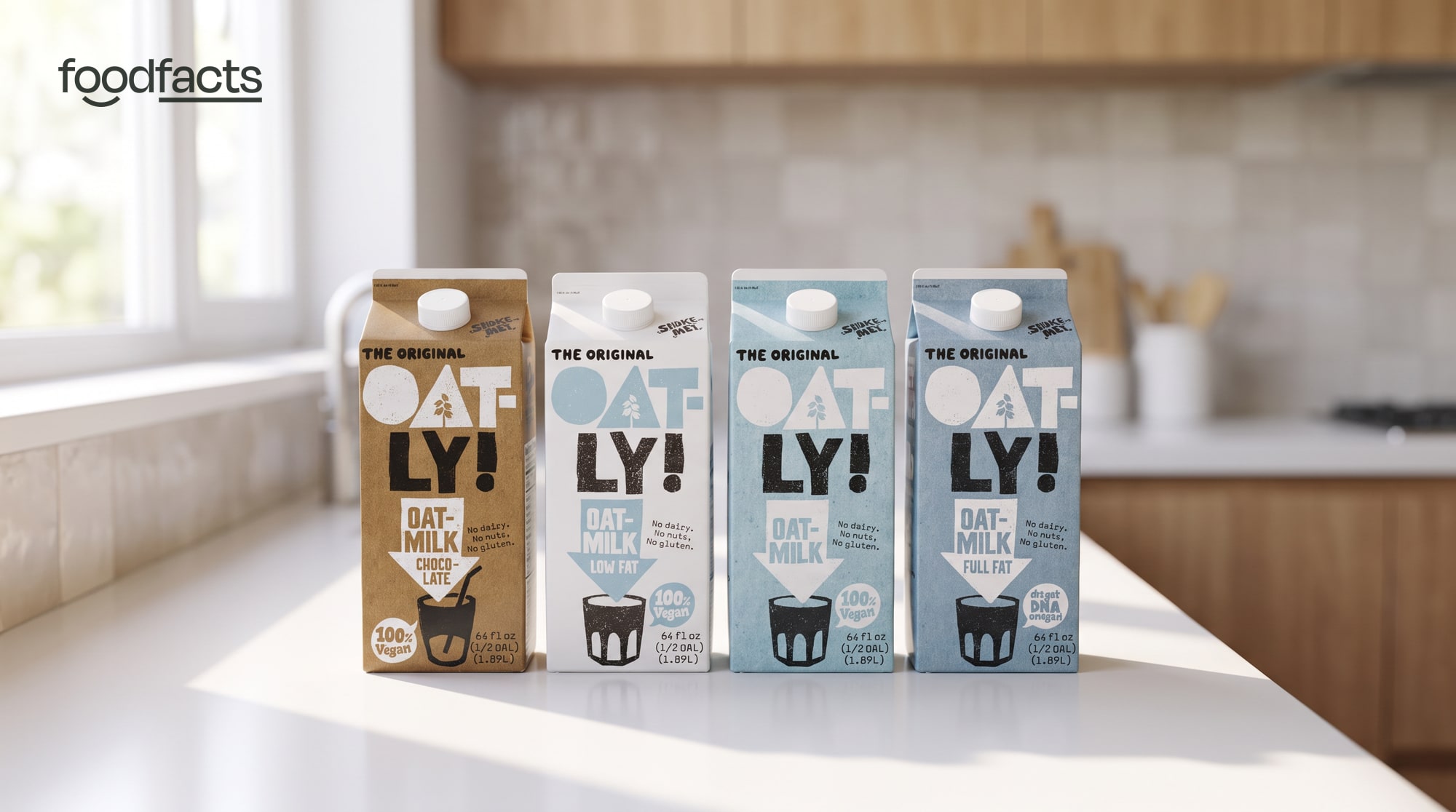




Oatly ingredients are not a reason to panic


A dietitian examines Oatly's ingredient list, explains what rapeseed oil, phosphates and added vitamins do, and tackles the fear around "too many ingredients".



A short ingredient list can look reassuring. A long one can make people suspicious. Social media has turned that instinct into a rule: if you cannot recognise every word on a label, the food must be unhealthy.
Chemophobia has become increasingly common with the rise of nutrition misinformation online. It is an irrational fear of, or prejudice against, chemicals and chemistry, often assuming that man-made or synthetic substances are inherently harmful while natural ones are completely safe. This is where we run into the nature fallacy: the false belief that something is safe, pure or healthy simply because it is natural. That belief makes it easier to demonise processed or artificial ingredients, while ignoring the actual chemistry of how they behave in the human body.
That rule does not hold up.
I recently responded to a video suggesting that Oatly had replaced its "original" drink with a simpler product because the original's ingredients were somehow unacceptable. The video framed this as a profit-driven cover-up. It was neither.
Oatly launched its US Super Basic oatmilk in January 2024. It contains water, oats, sea salt and citrus fibre. It was presented as a simpler option inspired by people making plant milks at home, not as a recall or a confession that its existing drink was unsafe. Coverage of the launch described it as a four-ingredient product, while its Original oatmilk had a more extensive ingredient list and added fortification.
The two products serve different purposes. One is stripped back. The other is formulated to work reliably in drinks, provide particular nutrients and deliver a different taste and texture. You can prefer either one. The mistake is treating that preference as a verdict on safety.
What the original ingredients do
Ingredients vary between countries and product formats, so always check the carton you are buying. In the original version discussed in the video, the main ingredients after the oat base include rapeseed oil, dipotassium phosphate, calcium compounds, salt and added vitamins.
Rapeseed oil is added partly for texture and mouthfeel. It is low in saturated fat and contains unsaturated fats, including alpha-linolenic acid, an omega-3 fat. That does not turn an oat drink into a miracle food, but it also does not make the oil a red flag. Oatly says it chose rapeseed oil for its low saturated-fat content and unsaturated-fat profile.
Dipotassium phosphate is where much of the online panic tends to land. It is a potassium phosphate used to manage acidity and help keep the drink stable when it is poured into something acidic or hot, such as coffee. Oatly says the ingredient helps prevent curdling in coffee.
Phosphates are regulated food additives, not evidence of contamination or deception. That said, it is sensible not to oversimplify: the European Food Safety Authority's phosphate assessment considers phosphate from the whole diet, including naturally occurring and added sources, and sets an acceptable daily intake. For most people, one oat drink is not a reason for alarm. People with kidney disease, or another clinical reason to manage phosphate intake, should follow the advice of their healthcare team.
Calcium carbonate and tricalcium phosphate are mineral sources used to fortify foods with calcium. Fortification matters because plant drinks do not naturally match dairy milk's nutrient profile. The NHS includes fortified unsweetened soya, pea and oat drinks among vegan sources of calcium, and advises people following a vegan diet to consider nutrients that can be harder to obtain, including vitamin B12, iodine, vitamin D and calcium.
The added riboflavin, vitamin D and vitamin B12 are there for the same reason. They are not a sign that the product is fake. They are nutrients added to improve the drink's nutritional usefulness.
Processing is not a health verdict
Food marketing has trained us to see "natural" as automatically good and "processed" as automatically bad. Neither label tells you enough.
Processing is a broad term. It can mean washing, freezing, pasteurising, milling, fermenting, fortifying or combining ingredients to make a product safe, stable and practical to use. The more useful questions are: what is in the food? How often do I eat it? What role does it play in my overall diet? Does it help me meet nutrients I might otherwise miss?
This matters in conversations about plant milks. Some people need a dairy-free option because of allergy, intolerance, ethical beliefs or environmental concerns. Others simply prefer the taste in coffee or cereal. foodfacts.org's review of whether cow's milk is really "the healthiest option" notes that concerns about plant milks being ultra-processed often lean on an appeal-to-nature argument, rather than an assessment of their nutritional role.
That does not mean every plant milk is nutritionally identical. Some are low in protein. Some are sweetened. Some are not fortified. The carton deserves a look, especially if it is being used regularly as a milk replacement. But a longer ingredient list does not tell you, on its own, whether a product is good or bad.
Choose based on your needs
If you like Super Basic Oatly because it is simpler or cheaper, that is a perfectly reasonable choice. If you prefer Original because it tastes creamier in coffee, or because it contains added calcium and vitamins, that is reasonable too.
When choosing a plant milk, I would focus less on whether its label looks "clean" and more on what you actually need from it. Check whether it is fortified with calcium, vitamin B12, vitamin D and iodine, particularly if it is replacing dairy in your diet. Consider unsweetened varieties if reducing free sugars is important to you. And if you drink it in coffee, buy the one that works in your coffee.
Fear is not a nutrition strategy. Neither is trusting a viral video simply because it makes an ingredient list sound frightening.
For more on why the label "ultra-processed" cannot, on its own, tell you whether a food supports health, read foodfacts.org's guide to plant-based foods and environmental claims. It explains why processing, nutrition and environmental impact need to be assessed separately.
Editorial note: this article is based on Abbey Roberts' Instagram video response to misinformation about Oatly ingredients. It has been edited for length, clarity and sourcing, and was reviewed and approved by Abbey Roberts before publication.
Sources
- European Food Safety Authority (11 June 2019). Re-evaluation of phosphoric acid, phosphates, di-, tri- and polyphosphates as food additives. EFSA Journal.
- foodfacts.org (11 December 2024). Are plant-based foods worse for the environment than meat?
- foodfacts.org (24 February 2025). Is cow's milk really the healthiest option? The evidence.
- National Health Service (22 February 2022). The vegan diet. NHS.
- Oatly (4 January 2024). Oatly's update on its signature oatmilk.

Independent fact-checking, funded by readers like you.
Misinformation is a growing threat to our health and planet. At foodfacts.org, we're dedicated to exposing the truth behind misleading food narratives. But we can't do it without your support.



foodfacts.org is an independent non-profit fact-checking platform dedicated to exposing misinformation in the food industry. We provide transparent, science-based insights on nutrition, health, and environmental impacts, empowering consumers to make informed choices for a healthier society and planet.






.svg)


.svg)

