
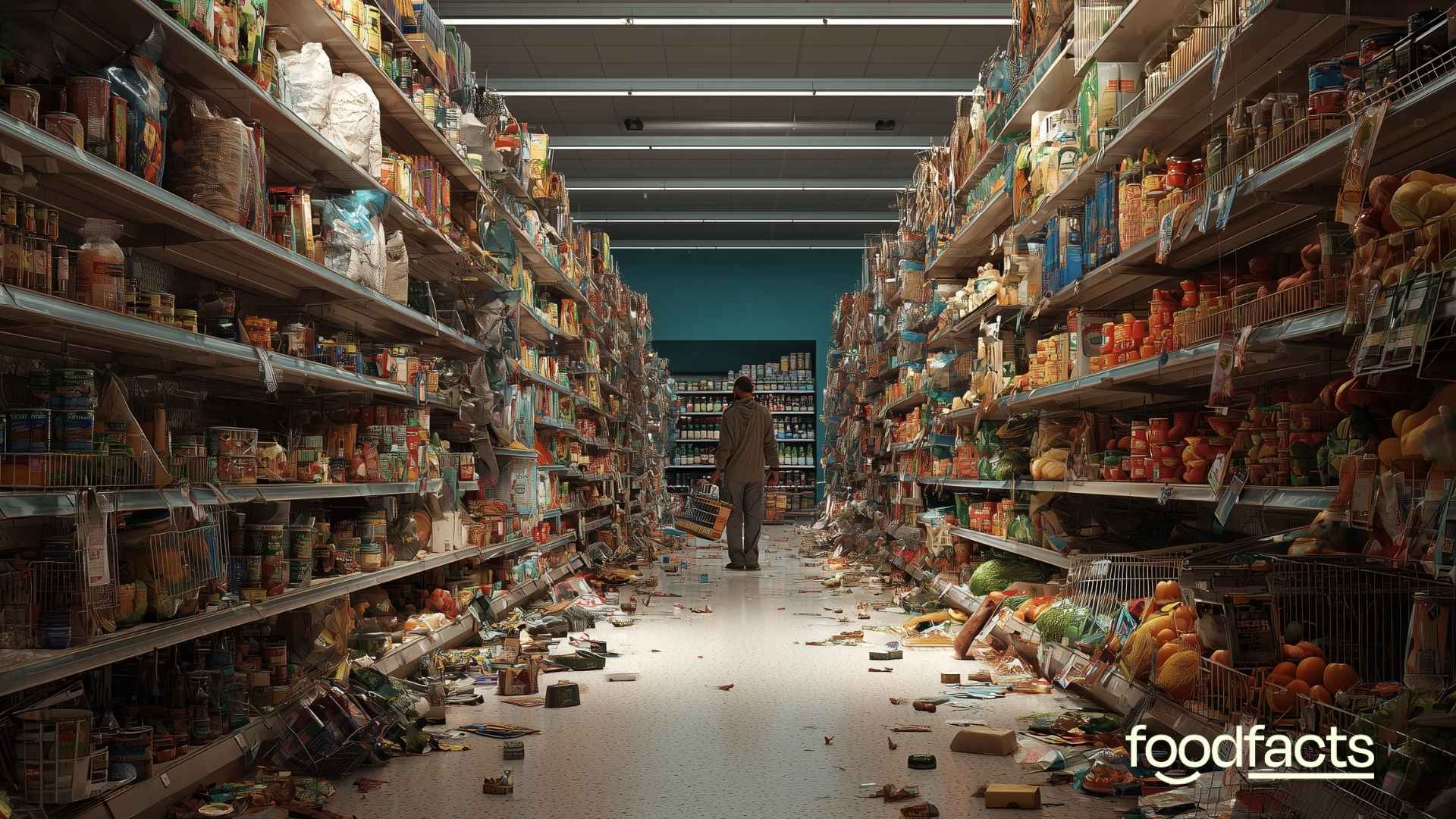




Will reducing livestock really cause food shortages? Here's what the science says


In recent remarks across his social media platforms, Gareth Wyn Jones, a Welsh hill farmer, argues that global efforts to achieve net-zero by reducing livestock numbers will lead to widespread food shortages and an unhealthy population. While his concerns deserve consideration, the conversation around food security and climate action presents a different view.
Claim 1: “This is not just a problem in the UK, it’s a global problem, every country is pushing down the livestock numbers to create a so-called net zero…we might get to net zero, but I’ll tell you something, there’ll be a lot of hungry people and there’ll be a lot of people that are going to be a lot poorer because of the food they’re eating…”
Claim 2: “These creatures are part of the solution, not the problem, these aren’t causing any climate catastrophe…”



Despite fears that cutting livestock numbers could trigger global hunger, research consistently shows that shifting towards plant-rich diets and reducing livestock production is not only critical for climate stability but will not inherently cause food shortages. On the contrary, such changes could significantly improve global food security, human health, and sustainability.
Understanding the real impact of livestock farming on food supply and climate change is essential. Misinformation that downplays livestock’s environmental impacts and fear mongers about food shortages can hinder meaningful progress towards net-zero. To tackle climate change effectively, we need accurate discussions about the impacts of our dietary habits and agricultural systems. This isn't about eliminating animal products entirely, but rather making meaningful shifts toward diets richer in plants to protect our planet and ensure abundant, nutritious food for everyone, not reduce availability.


The narrative around food shortages linked to net-zero targets is common but can easily be misguided without more context. Here's why reducing livestock is both necessary for climate action and compatible with achieving global food security.
Claim 1: Reducing livestock numbers will cause food shortages and harm human health.
Fact-check: Jones argues that reducing livestock to meet net-zero climate goals will lead to widespread food shortages and poorer health. But what does the data say about these issues?
Plant-rich diets are less resource intensive
On the surface, it seems logical: fewer animals might mean less food, right? But reality is far more nuanced. Livestock farming is resource-intensive, requiring large amounts of land, water, and feed. Currently, less than half of global cereal production directly feeds people, with 41% used solely as animal feed. In the UK, approximately 50% of cereals are fed to livestock, while in the U.S. the disparity is even more pronounced—with only about 10% of cereals directly consumed by humans. Studies repeatedly demonstrate that reallocating even modest amounts of land used for livestock production to crop production directly for humans can feed significantly more people.
For instance, producing plant-based foods like grains, legumes, and vegetables requires substantially less land—approximately 10 to 20 times less per calorie—compared to beef and dairy products. In practical terms, the same amount of farmland can feed significantly more people if dedicated to plant-rich diets than animal-based ones.

The greatest threat to food security may be climate change itself
Staple crops such as wheat, maize, and rice are increasingly vulnerable to climate impacts. Extreme weather events, intensified by climate change, continue to threaten yields worldwide, with projections suggesting a 50% likelihood of a global food disruption event within the next three decades. Not to mention that higher CO₂ levels also reduce nutritional quality in staple grains, exacerbating malnutrition risks globally.
And although voices on social media may say otherwise, transitioning to plant-rich diets does not mean completely abandoning animal agriculture. The emphasis is on reducing excessive dependence on livestock to free up resources for diversified food production and ecosystem restoration.
Lastly, the argument that less meat would mean less healthy populations isn’t supported by scientific evidence. The EAT-Lancet Commission and the Food and Agriculture Organization (FAO) both highlight that balanced diets featuring more plant-based foods contribute significantly to reducing chronic diseases, including heart disease, diabetes, and obesity, thus enhancing public health overall.
The calories that are lost by feeding crops to animals, instead of using them directly as human food, could theoretically feed an extra 3.5 to 4 billion people (Ray et al., 2022; Cassidy et al., 2013). The focus indeed should be on rich privileged countries shifting more plant based, but even less resourced countries, like some in Africa, are not benefiting from KFC and other major meat chains expanding there. This often comes at the detriment of culturally relevant traditional plant based foods.

Claim 2: Livestock are not contributing to climate change.
Fact-check: Jones passionately argues that cows are not the problem, dismissing livestock's climate impact. However, this position doesn’t align with the scientific consensus.
Plant-rich diets could drastically reduce food-related emissions
Globally, livestock production emits 7.1 gigatons of CO₂ per year, which accounts for about 14.5% of human-induced greenhouse gas emissions. If that seems like a lot, it is.
For a comprehensive view of food related environmental impacts, a 2018 meta-analysis discussed what would happen if we stopped animal-sourced food production and consumption. This hypothetical scenario showed the potential to reduce agricultural land use by 76%, creating the opportunity to sequester 8 gigatons of CO₂ on pastureland and croplands that would have been used for animal agriculture.
The data shows great potential in shifting plant-based: the huge amount of CO₂ from livestock emissions could be avoided, and an additional huge amount of CO₂ could be sequestered in vegetation and soils through rewilding.
Having the entire world go plant-based is an extreme example, but large reductions in land use would be possible even without a global plant-based diet. A focus on cutting out beef and dairy would lead to big reductions in agricultural emissions.
This is the case because cattle emit substantial methane—a potent greenhouse gas roughly 28 times stronger than carbon dioxide over a 100-year period. Producing just 1 kg of beef protein releases roughly 300 kg of greenhouse gases—a remarkably inefficient and climate-costly exchange (source). Furthermore, livestock-driven land-use change, including deforestation, significantly exacerbates climate impacts. Approximately 80% of deforestation globally is directly linked to agriculture, especially the expansion of pastures for cattle grazing.
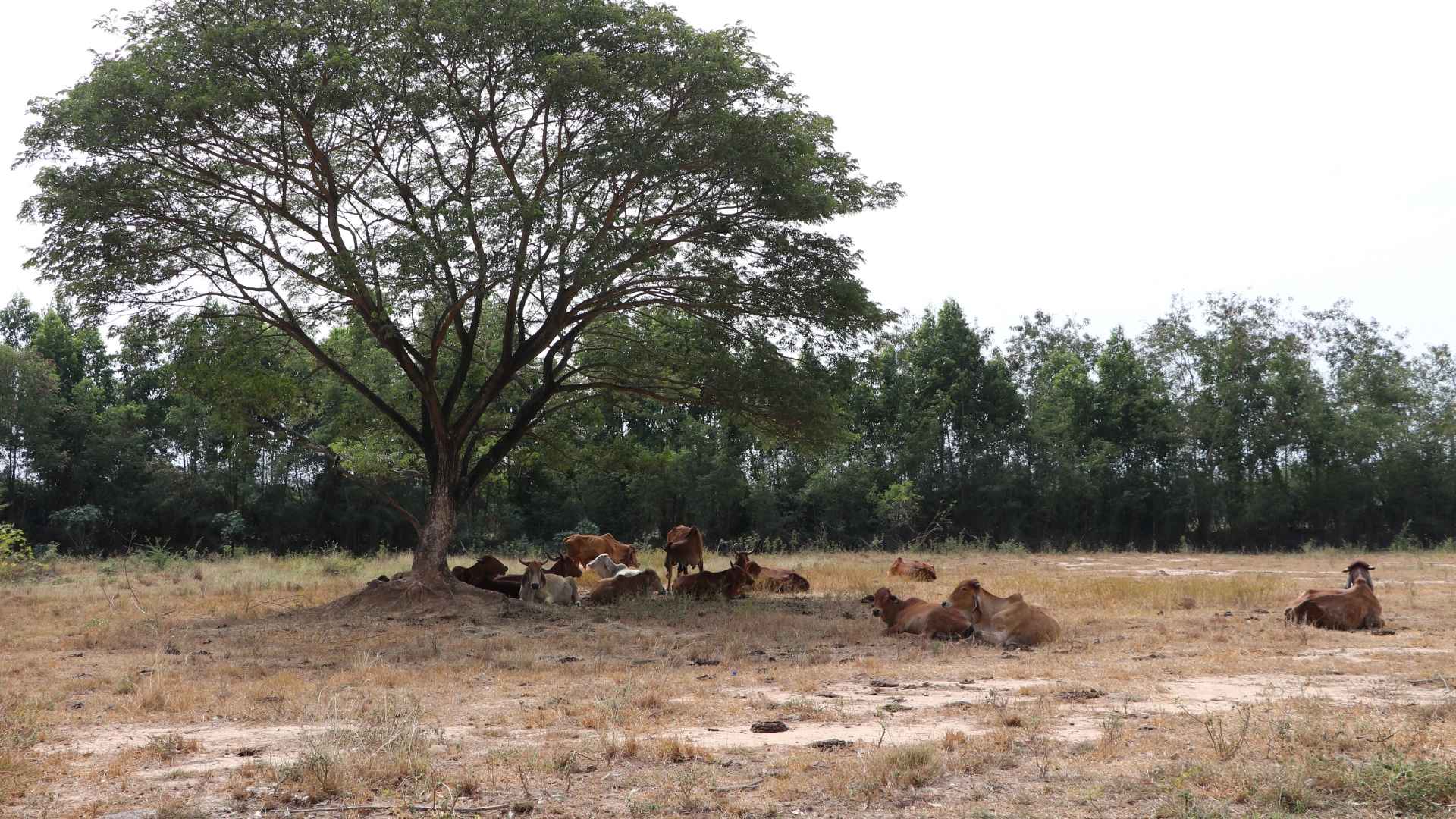
Decisions around land use and diet change are context dependent.
What we eat directly impacts how land is used, so it’s important to consider trade-offs between livestock production methods when making diet decisions. Industrial livestock systems often raise ethical concerns around animal welfare, but are more efficient due to faster animal growth, higher yields, and concentrated feeding (source). Regenerative, pasture-based systems like Jones’ provide better animal welfare and may support soil health, but require significantly more land and often emit more greenhouse gases since animals take longer to mature.
It’s all about context—shifting toward plant-based diets can help reduce emissions in high-income countries where meat consumption is excessive and alternatives are readily available. However, this approach is not always feasible in low-income regions where animal-based foods are critical for nutrition and livelihoods—largely due to impacts of colonialism that perpetuate an unjust global food distribution system. Land use should also be context-driven, factoring in both carbon storage potential and food production needs. In regions where pastureland yields low livestock productivity, rewilding is an efficient alternative for carbon sequestration (source).
And while its advocates argue regenerative grazing can mitigate livestock emissions, research shows its potential is limited and supporting evidence is scarce. At best, it's complementary—not a complete solution. Regenerative grazing systems alone, without a reduction in animal-sourced foods that free up land, are insufficient to tackle climate goals fully.
Grazing animals use 37% of Earth’s ice-free land but provide only 5% of global protein (IPCC), while beef emits 20x more GHGs and uses 20x more land per gram of protein than plant sources like beans (Ranganathan et al., 2016). Even if regenerative grazing worked perfectly, it would take 61–225 years to offset livestock emissions (Wang et al., 2023). Instead, shifting plant-based and rewilding that land could remove 8 Gt CO₂ per year and feed billions more (Poore & Nemecek, 2018; Hayek et al., 2021).
The solution is clear. But industry myths and pastoral cultural holds prevent positive shifts.
Cultivating Common Ground
Farmers are not the problem — they’re vital partners in reaching net-zero. Good policy should support them financially and practically to diversify their farms, restore biodiversity, and produce more nutritious, sustainable food. Unfortunately, setbacks like the recent halt of the UK’s Sustainable Farming Incentive (SFI) make this transition harder for farmers and slow climate action.
Meanwhile, big agricultural corporations spend heavily on lobbying, pushing policies that favour industrial systems over small-scale farmers. This leaves local farmers vulnerable to climate threats and economic challenges. To succeed, small farmers need a seat at the table to shape smart, context-driven solutions.
Strong food policies should help farmers continue feeding their communities while moving towards sustainable sources of protein. This does not mean replacing animal products with ultra-processed foods. Thoughtful planning and structural changes are needed to succeed in shifting toward plant-rich diets. It will take significant efforts to make nutritious foods accessible for everyone. Investments in plant-based protein, agritech, and more efficient practices can help do that while boosting farmers’ incomes and positioning them as leaders in the shift to net-zero.
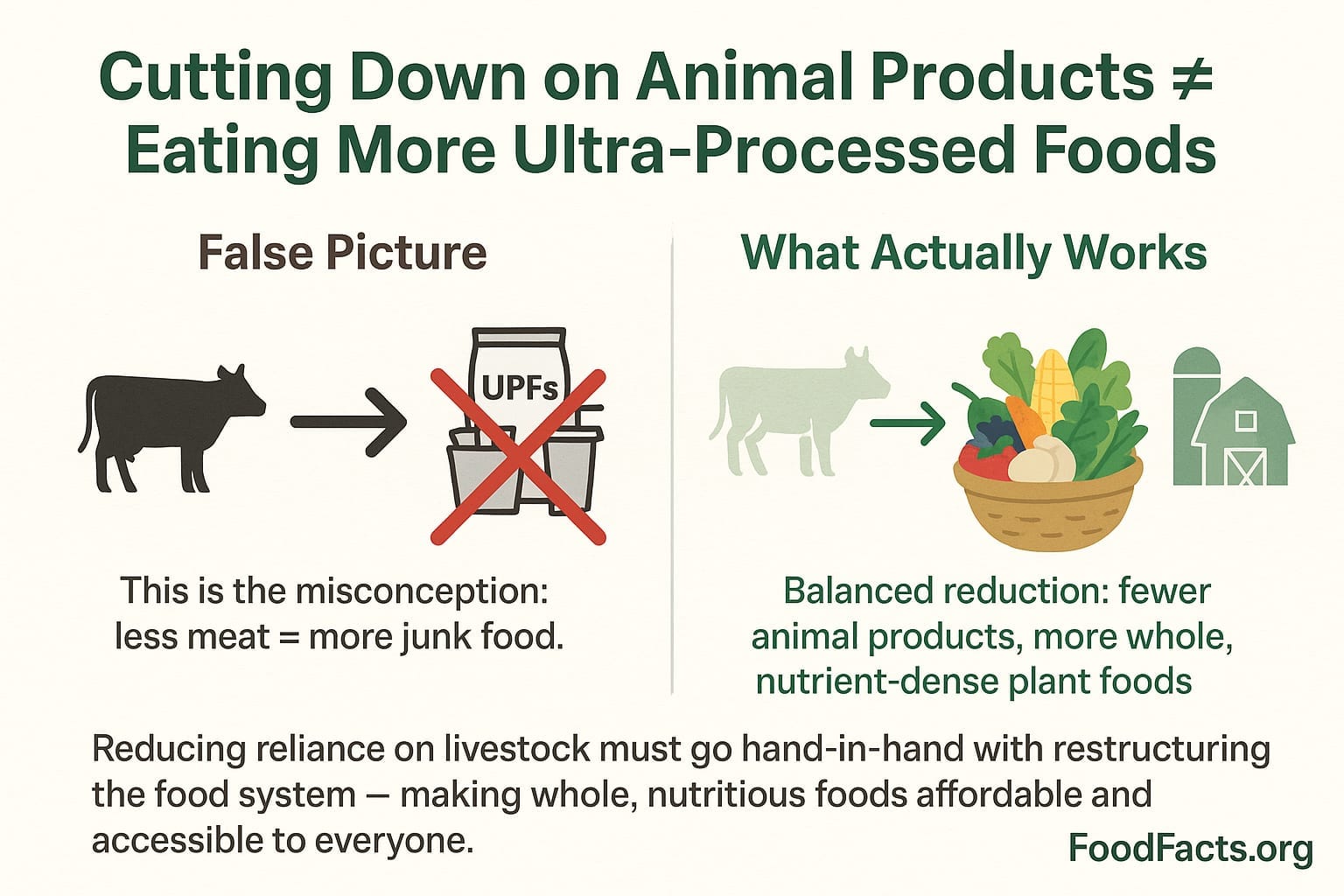
Diet is personal and cultural, which makes these conversations sensitive. But despite polarised debates, common ground exists: environmentalists, farmers, and consumers all want healthy food, thriving farms, and a livable climate. By reducing animal product consumption — not eliminating it — we can protect food security, biodiversity, and farmers’ livelihoods together.
So, will reducing livestock cause food shortages? The science says no, and done wisely, it might help prevent them.
We have contacted Gareth Wyn Jones and are awaiting a response.
Independent fact-checking, funded by readers like you.
Misinformation is a growing threat to our health and planet. At foodfacts.org, we're dedicated to exposing the truth behind misleading food narratives. But we can't do it without your support.
Sources
Ritchie, H. (2021). “If the world adopted a plant-based diet, we would reduce global agricultural land use from 4 to 1 billion hectares.”
Ritchie, H., et al. (2023). “Data Page: Share of cereals allocated to animal feed.”
Masters, J. (2024). “What are the odds that extreme weather will lead to a global food shock?”
Sun, Z., et al. (2022). “Dietary change in high-income nations alone can lead to substantial double climate dividend.”
Gonzalez Fischer, C., et al. (2016). “Plates, pyramids, planet Developments in national healthy and sustainable dietary guidelines: a state of play assessment”
Gerber, P.J., et al. (2013). “Tackling climate change through livestock – A global assessment of emissions and mitigation opportunities.”
Poore, J., et al. (2018). “Reducing food’s environmental impacts through producers and consumers.”
Ritchie, H. (2021). “Emissions from food alone could use up all of our budget for 1.5°C or 2°C – but we have a range of opportunities to avoid this.”
Ritchie, H. (2021). “Drivers of Deforestation.”
Waite, R., et al. (2024). “Toward “Better” Meat? Aligning meat sourcing strategies with corporate climate and sustainability goals.”
Searchinger, T.D., et al.(2018). “Assessing the efficiency of changes in land use for mitigating climate change”
Tara Garnett et al., (2017). “Grazed and confused? Ruminating on cattle, grazing systems, methane, nitrous oxide, the soil carbon sequestration question – and what it all means for greenhouse gas emissions.”


foodfacts.org is an independent non-profit fact-checking platform dedicated to exposing misinformation in the food industry. We provide transparent, science-based insights on nutrition, health, and environmental impacts, empowering consumers to make informed choices for a healthier society and planet.








.svg)


.svg)

