
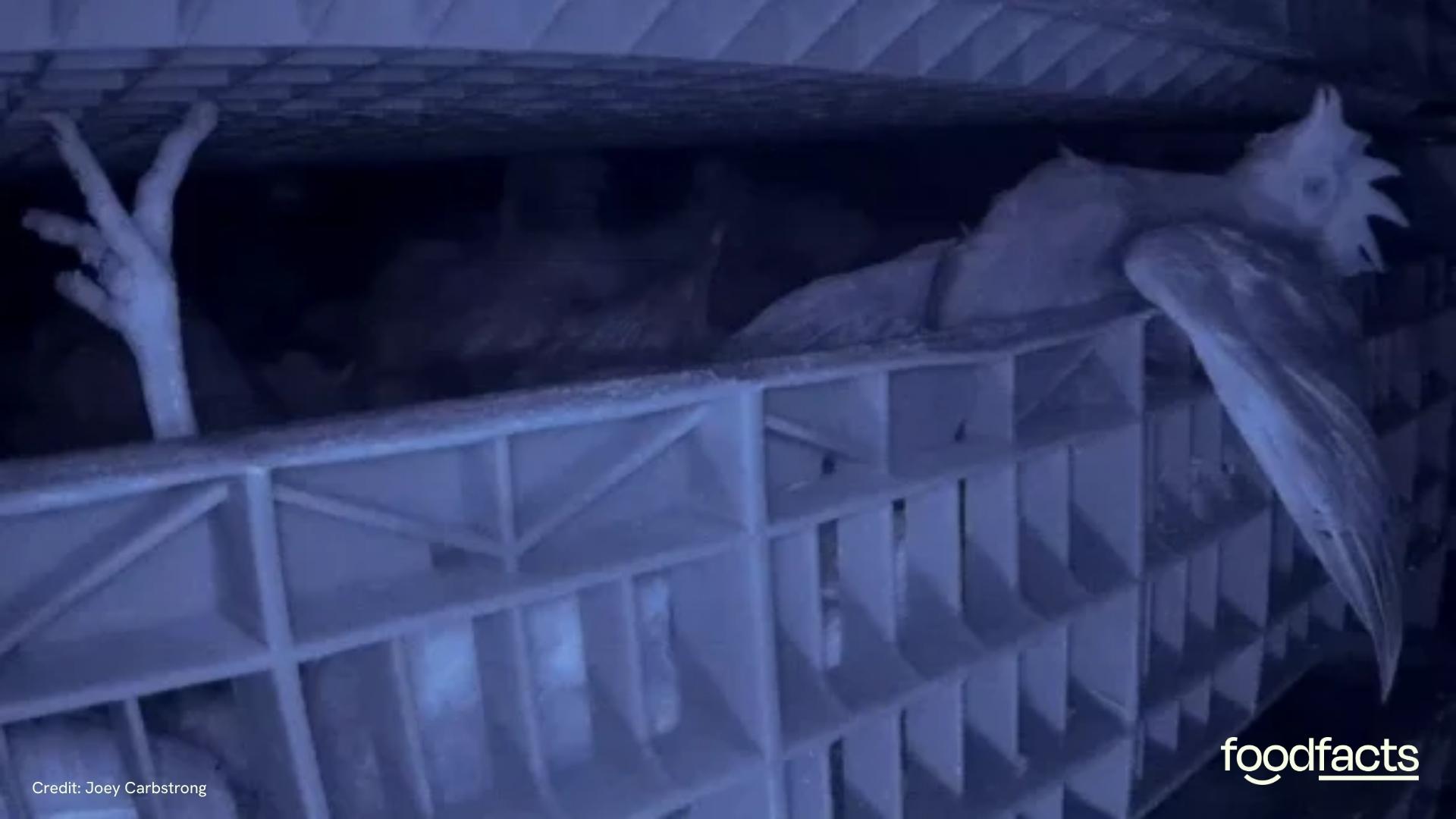




The slaughter method hiding behind your chicken's welfare logo




Ask most people how chickens are killed in the UK and you'll get one of two answers: a blank look, or a vague reference to electric shock. The reality for the vast majority of the more than 18 million chickens slaughtered every week in factory farms across England and Wales is a gas chamber. And it's being marketed as a welfare improvement.
Why Controlled Atmosphere Stunning isn't spoken about
Few consumers think about how the chicken on their plate was killed. When they do, and when campaigners or journalists do raise it, the conversation tends to land on electrical waterbath stunning; the image of birds hung upside down, heads dragged through electrified water. It's the method most people have seen referenced. It's also no longer the main method.
The FSA's 2024 Slaughter Sector Survey, conducted across all slaughterhouses in England and Wales during a single week in February 2024, reveals that 77% of meat chickens and 99% of spent laying hens are killed using gas stunning, formally known as controlled atmosphere stunning (CAS). Across all poultry species, CO2 in two phases accounts for 58% of stunning, with other gas mixtures, most probably including CO2, nitrogen and argon, accounting for a further 19%. Electrical waterbath stunning, the method most people associate with chicken slaughter, accounts for just 18% of meat chicken kills.
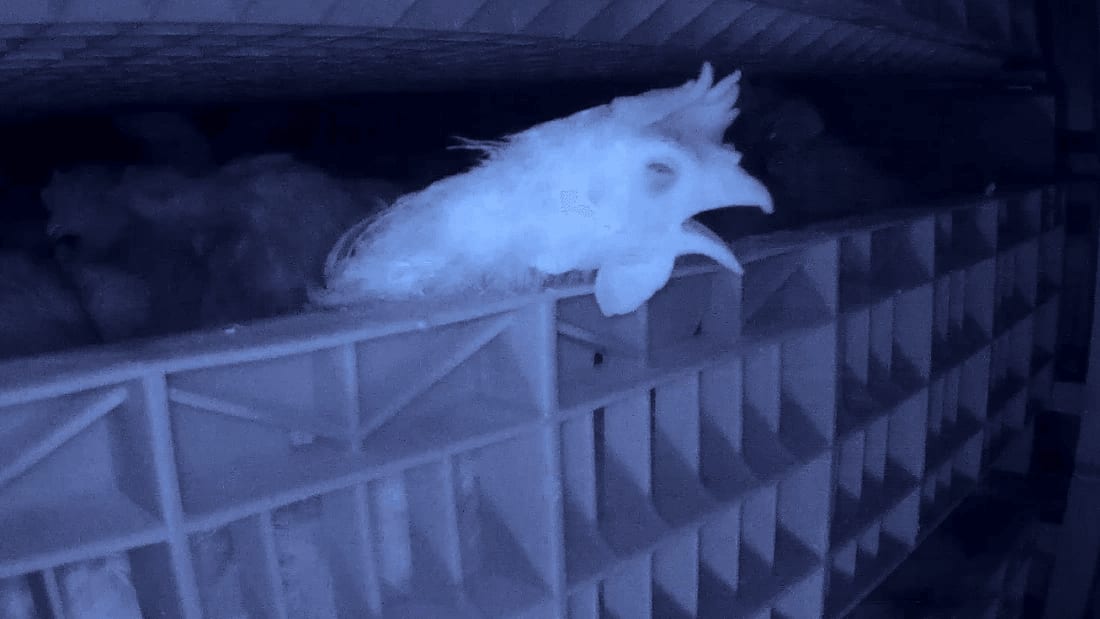
This isn't new. This isn't niche. This has quietly become the defining feature of how Britain kills the animals it eats.
The scale of controlled atmosphere stunning
Chickens are by far the most slaughtered land animal in the UK. That single survey week recorded the slaughter of 18,373,925 meat chickens and 493,761 spent laying hens across England and Wales alone, accounting for 94% of all animals killed in that period. That's over three million chickens every single day, the overwhelming majority of them dying in a gas tunnel.
Extrapolated to a full year, we're looking at approximately 800 million to 1 billion chickens passing through CAS systems in the UK annually.
CAS is being sold as humane
Here's the part that requires scrutiny. The shift from an electric waterbath to CO2 gassing has been actively framed by the industry and uncritically accepted by much of the media as a welfare improvement. Industry white papers describe CAS as offering ‘humane handling approved by several agencies’, pointing to reduced shackling stress and less physical handling of live birds. Several major fast-food chains have framed their switch to CAS suppliers as a consumer-facing welfare commitment.
The argument isn't entirely without basis. Live shackling, involving hanging conscious birds upside down by their legs before passing them through an electrical bath, is genuinely distressing, causes bone fractures, and exposes birds to significant pre-slaughter suffering.
Viva! has long documented its harms. So when the industry says CAS is better than an electric waterbath, it's making a narrow, carefully chosen comparison.
But "better than waterbath" is not the same as "humane". And the evidence on what birds experience inside a CO2 tunnel is deeply uncomfortable.
What actually happens inside the gas tunnel?
In commercial CAS operations, chickens remain in their transport crates as they travel on a conveyor belt through a sealed tunnel, typically divided into sections with progressively increasing CO2 concentrations. UK law requires exposure to be long enough to cause death, not merely unconsciousness.
The two-phase process works as follows:
- Phase one: Birds are exposed to less than 40% CO2 for initial sedation
- Phase two: Concentration rises to above 80% CO2 within 30 seconds, causing death
- Duration: Birds typically spend 90 to 120 seconds inside the tunnel
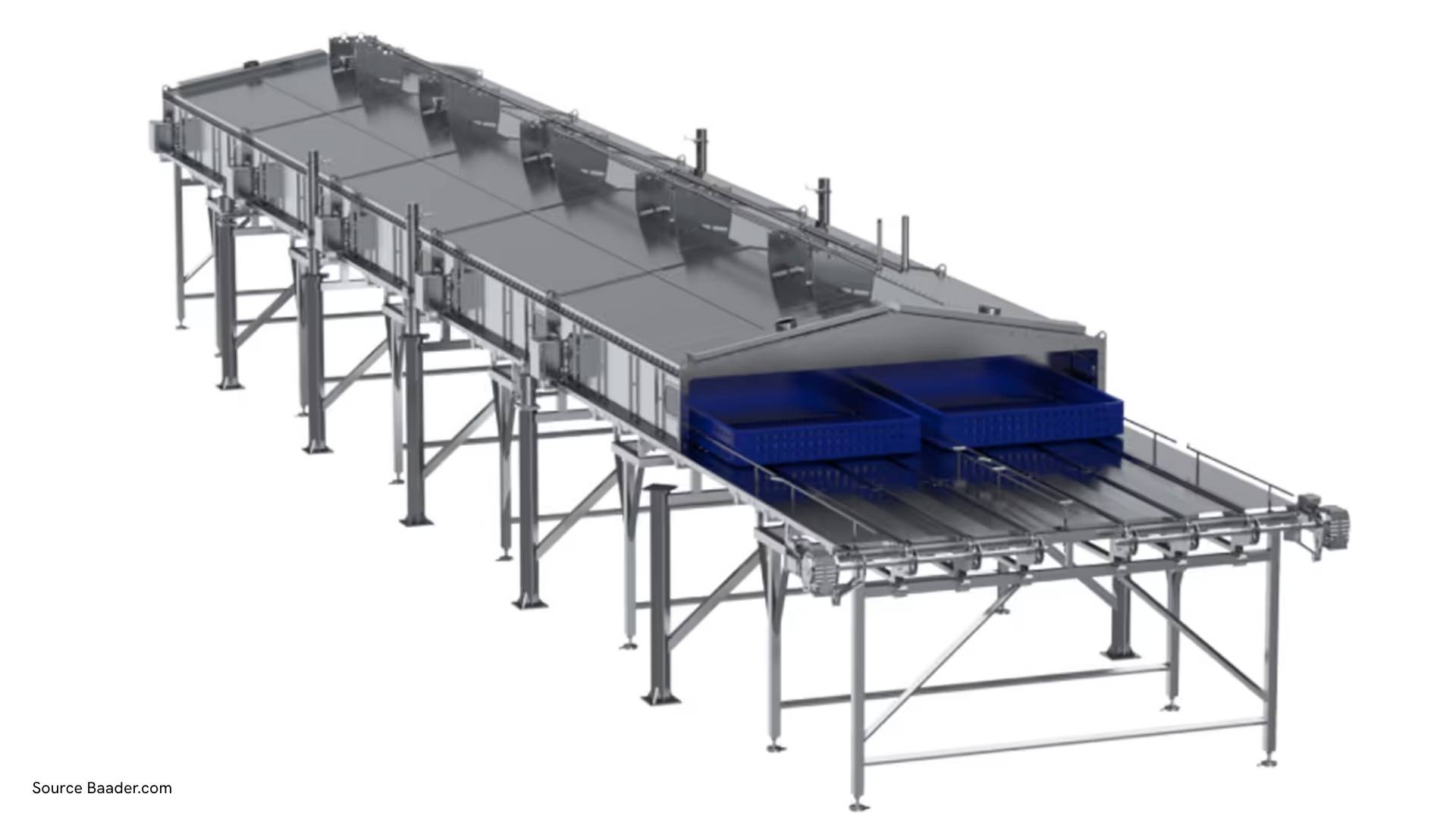
Brain activity studies indicate that birds lose brain function after approximately 60 seconds, meaning there is an estimated 35- to 50-second window during which birds are conscious but experiencing severe respiratory distress.
Co2 doesn't simply put animals to sleep. It dissolves into moisture in the eyes, throat and lungs, forming a mild carbonic acid. Birds who are still conscious when concentrations are rising will experience what amounts to a burning sensation in their airways. The EU's Scientific Panel on Animal Health and Welfare (EFSA) warned as early as 2004 that even 30% CO2 is "aversive, painful, and elicits hyperventilation and gasping before loss of consciousness". Research has shown birds entering higher-concentration phases in a state of acute panic, gasping, convulsing and attempting to escape.
A review by the EU Reference Centre for Animal Welfare (EURCAW-Poultry) confirmed that if the first phase is insufficient to induce full unconsciousness, birds will be conscious and experiencing aversion as CO2 concentrations increase. In large commercial operations processing thousands of birds per hour, monitoring whether each individual bird is unconscious isn't feasible.
Eletric waterbath isn't a pain-free alternative either
To be clear: electrical waterbath stunning, the method most people imagine, carries its own serious welfare problems. The Humane Slaughter Association itself states it is "not a preferred stunning method for poultry welfare," noting the inherent risks of inverting and shackling conscious birds. EFSA's 2012 scientific opinion on electrical requirements for waterbath equipment recommended that "unless the problems for all existing waterbath stunning methods can be resolved, other stunning methods should be used". In practice, electrical parameters are often set to protect meat quality rather than guarantee unconsciousness.
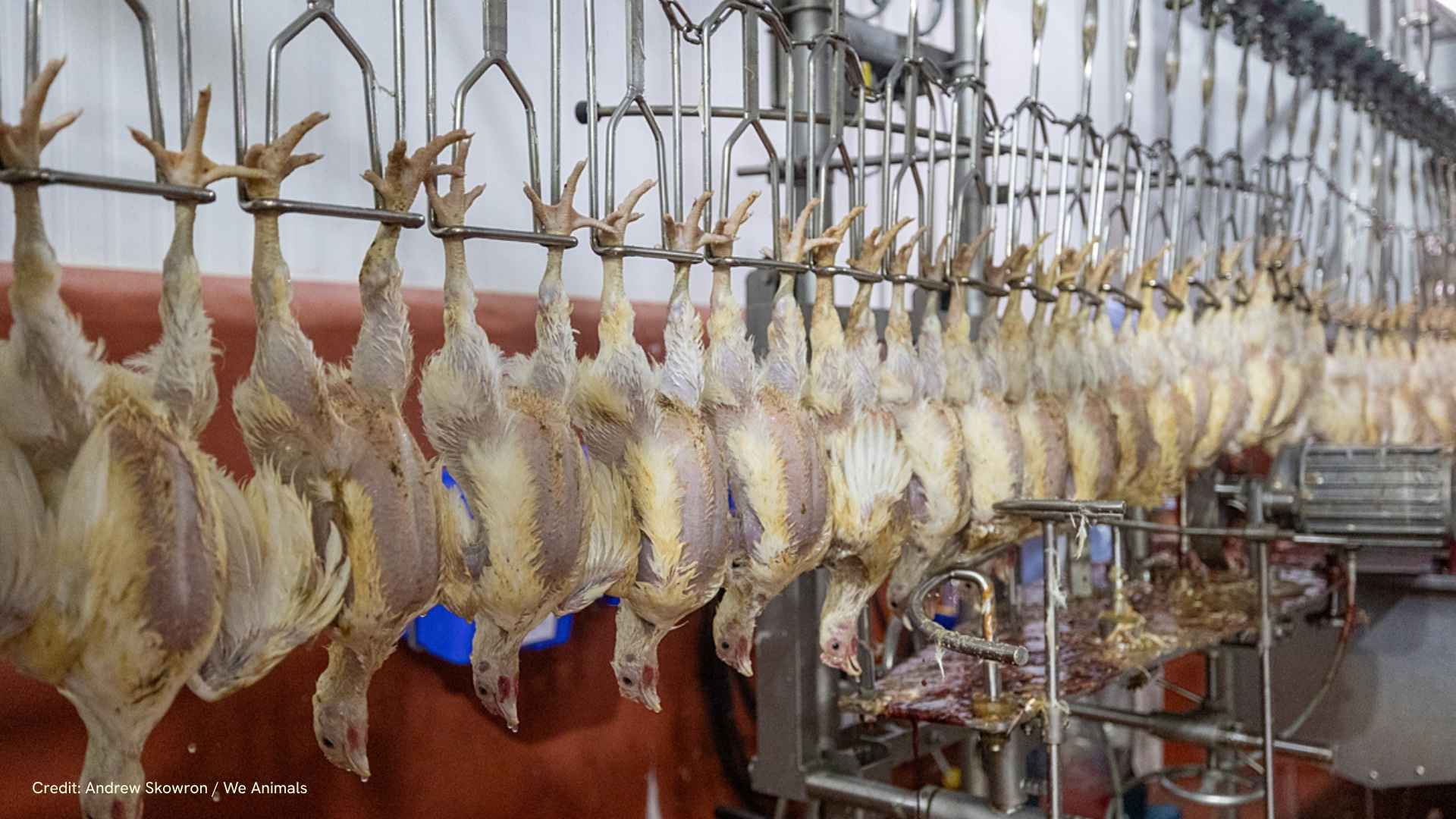
EFSA's 2020 scientific opinion on poultry welfare at slaughter concluded that neither CAS nor electrical waterbath can guarantee freedom from pain and distress in every case, and that consistent welfare implementation in fast-moving commercial settings remains a fundamental challenge. Neither method is ‘humane’ in any meaningful sense of the word. The industry's welfare framing of CAS rests on a comparison between two deeply flawed systems, and the less bad option is still being presented as good.
As foodfacts.org explored in an investigation into whether slaughter can ever be humane, these aren't fringe welfare concerns; they sit at the heart of what the food industry asks us to take on trust every time we buy meat.
The animal welfare assurance scheme problem
More than half of all poultry slaughterhouses (79%) in England and Wales reported membership of at least one third-party assurance scheme in 2024, with Red Tractor and the British Retail Consortium (BRC) being the most prominent. Consumers buying Red Tractor-labelled chicken may reasonably believe their purchase has been independently verified for welfare standards. None of the major retail assurance schemes prohibits CO2 gassing. A bird that spent its final minutes gasping in a rising concentration of carbonic acid can still carry a welfare assurance logo on its packaging.
This matters because, as a foodfacts article on what ‘free range’ really means highlights, the labels consumers see rarely tell them how animals lived, and they say almost nothing about how they died.
Are there better alternatives to CAS?
Yes. Inert-gas CAS systems using nitrogen or argon to induce anoxia, oxygen deprivation, are considered significantly more welfare-friendly by EFSA, as birds lose consciousness without the aversive experience of rising CO2 levels. Research published in peer-reviewed journals has shown dramatic reductions in distress behaviours and improved meat quality outcomes under inert gas systems. These methods are more expensive to implement and operate, and without regulatory pressure, most operators have little commercial incentive to adopt them.
Viva! is clear about what they believe is the only real solution: going plant-based. No stunning method, however refined, eliminates the suffering inherent in killing billions of animals for food. Choosing plant-based products removes the consumer entirely from that chain. The RSPCA has pushed for higher welfare standards in gas stunning, and while incremental regulatory improvements matter, they don't change the fundamental reality: the only guaranteed way to ensure no chicken suffers in a gas tunnel on your behalf is to not buy the product that puts it there.
The conversation we're not having
The data is unambiguous. More than three-quarters of the chickens killed in this country die in a CO2 gas tunnel. Most people don't know this. Those who have engaged with the issue tend to think electrical stunning is the norm. And the industry that profits from gassing 800 million-plus birds a year is spending considerable effort convincing the public, and the retailers those consumers trust, that this is the humane choice.
It isn't humane. It's efficient. Those are very different things.

Independent fact-checking, funded by readers like you.
Misinformation is a growing threat to our health and planet. At foodfacts.org, we're dedicated to exposing the truth behind misleading food narratives. But we can't do it without your support.
Sources
- Viva! (n.d.). Chicken Gassing in the UK
- foodfacts.org (23 January 2025). What is factory farming? A closer look at why it matters and what can change
- DEFRA (November 2024). Results of the 2024 FSA Slaughter Sector Survey in England and Wales.
- Viva! (n.d.) Cracked
- "Opinion of the Scientific Panel on Animal Health and Welfare (AHAW) on a Request from the Commission Related to Welfare Aspects of the Main Systems of Stunning and Killing the Main Commercial Species of Animals." EFSA Journal, vol. 2, no. 7, 2004, p. 45, https://doi.org/10.2903/j.efsa.2004.45. Accessed 19 Mar. 2026.
- Humane Aire (January 2023). Controlled atmosphere stunning: white paper. HumaneAire.com. https://humaneaire.com/wp-content/uploads/2023/01/Humane-Aire-White-Paper.pdf
- Viva! (n.d.) How Broiler Chickens Are Farmed and Killed
- EURCAW-Poultry (2021). Controlled atmosphere stunning (CAS): a review. EU Reference Centre for Animal Welfare — Poultry.
- Humane Slaughter Association (April 2016). Electrical waterbath stunning of poultry. HSA.org.uk. https://www.hsa.org.uk/downloads/hsagn7waterbathpoultryapril2016pdfoptimiser.pdf
- foodfacts.org (6 June 2025). Can slaughter ever be humane? A closer look at the industry standard
- Red Tractor (n.d.) Homepage
- foodfacts.org (10 July 2025). What does 'free range' really mean? The facts behind the label
- RSPCA (n.d.). Carbon dioxide in the stunning of pigs



foodfacts.org is an independent non-profit fact-checking platform dedicated to exposing misinformation in the food industry. We provide transparent, science-based insights on nutrition, health, and environmental impacts, empowering consumers to make informed choices for a healthier society and planet.






.svg)


.svg)

