

Fact-Checking:
Jessie Inchauspé (“Glucose Goddess”)


Credentials
- BSc degree in Mathematics at King’s College London in 2012
- MSc Biochemistry at Georgetown University in 2015
Background
Inchauspé has been involved in some research. For example, she co-authored a paper on how paternal high-fat diets influence breast cancer risk in rats.
After studying, Inchauspé worked in the tech health industry. In 2015, she joined genetics company 23andMe as a product manager. It was at 23andMe that she first experimented with wearing a continuous glucose monitor (CGM) as part of an internal pilot study. Although not diabetic herself, Inchauspé observed a correlation, in her own case, between blood sugar spikes and mood. Motivated by these insights, Inchauspé set out to share what she learned about blood sugar regulation with a broader audience.
Rise of the “Glucose Goddess”
In 2015, Jessie Inchauspé set up the Instagram account @glucosegoddess. She posts graphs from her CGM readings to show how different foods and habits affect her blood glucose levels, alongside other videos, such as her diet ‘hacks’. Her posts – for example, comparing blood sugar “spikes” from eating foods in different orders – quickly gained traction.
As of 2025, her Instagram following is 5.5 million. Inchauspé also has a YouTube channel (“Glucose Revolution”) with over 1.5 million subscribers, where she shares similar advice.
Inchauspé’s “Glucose Goddess” has made numerous media appearances to promote her ideas, including interviews on Good Morning America in the U.S. and the popular French TV program Quotidien. In early 2025, she began hosting a Channel 4 television docu-series in the UK titled Eat Smart: Secrets of the Glucose Goddess, in which she guides participants through her blood-sugar balancing methods, to support them with a range of health conditions.
Key Health and Nutrition Claims
Jessie Inchauspé is best known for her claim that controlling blood glucose “spikes” – rapid rises in blood sugar after meals – is the key to improving a wide range of health outcomes, for everyone, not just people with diabetes. On her website, she claims that balancing your glucose levels can help with “cravings, constant hunger, fatigue, brain fog, hormonal and fertility issues, skin conditions, wrinkles, poor sleep, menopause symptoms, mental health symptoms, [and the] immune system”.
Despite the large following she has accumulated, Inchauspé has come under backlash from many health professionals for the lack of evidence supporting some of her claims.
A note on blood sugar spikes and health
It’s well-established that chronically elevated blood glucose (as in uncontrolled diabetes) can cause health issues over time, including inflammation, oxidative stress, and vascular damage. However, current evidence suggests that for a generally healthy person, post-meal glucose spikes within normal ranges are not a major risk factor for poor health. A rise in blood glucose within the normal range is a natural response to eating. Not every spike needs to be avoided, which is the impression some could get from Inchauspé’s videos.
This is important to keep in mind when looking at Inchauspé’s claims that all centre around controlling glucose spikes.
Glucose Goddess Hacks
Central to her health claims are a set of simple “glucose hacks” that she says will flatten glucose curves and thus lead to better health. Her most well-known hacks include:
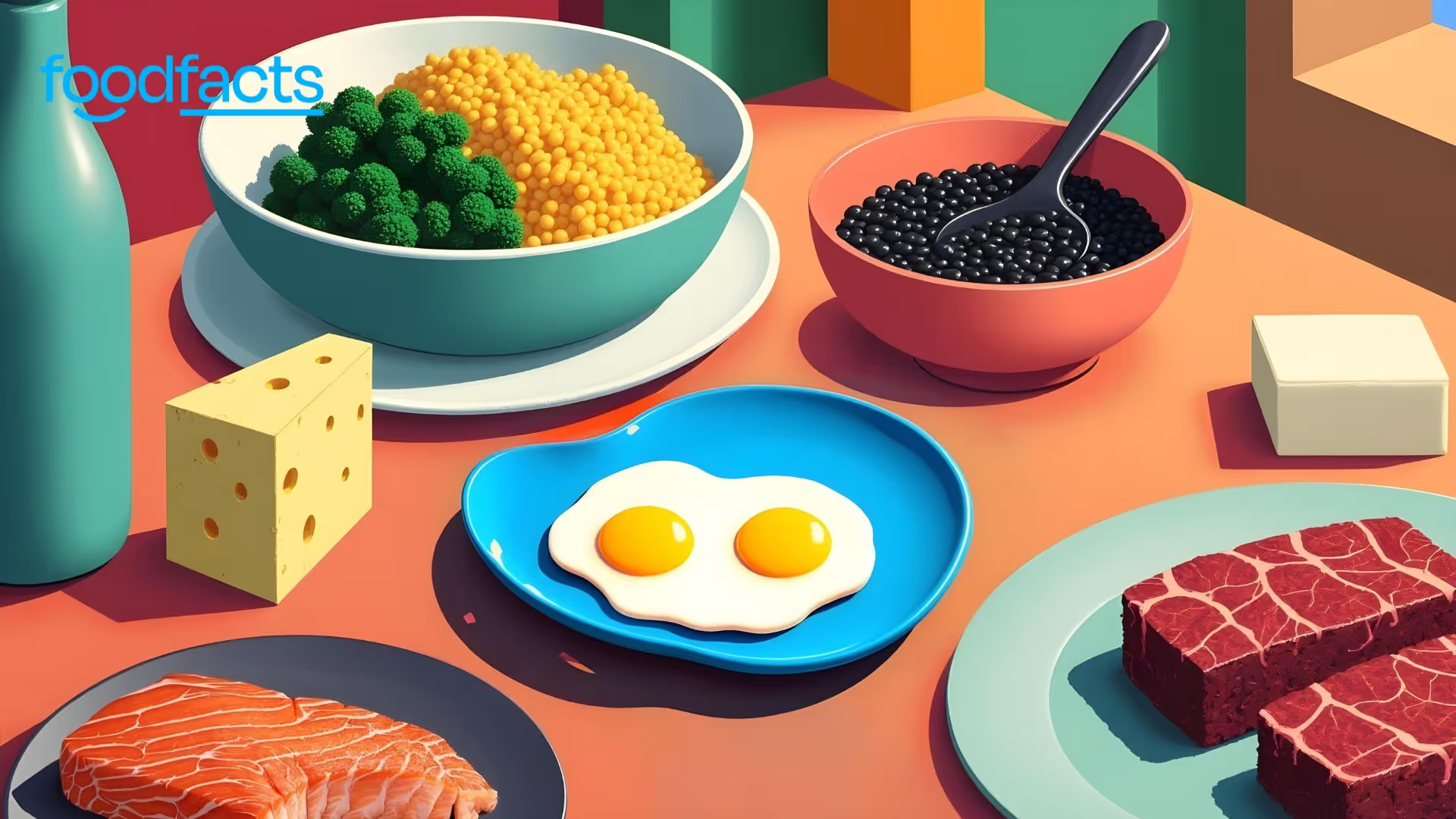
- Eat Foods in the Right Order: Inchauspé advises eating fibre-rich foods first, then proteins and fats, and consuming starches and sugars last. She cites that the same meal can cause a significantly smaller glucose spike if non-carbohydrates are eaten before carbs. However, while it can be a meaningful way to manage blood glucose for those with type 2 diabetes, dietitians advise that not everyone needs to follow this hack to have good health.
- “Put Clothes on Your Carbs” (No Naked Carbs): Inchauspé encourages eating any carbohydrates with protein, fat, or fibre. This, too, slows glucose spikes. Nutrition experts note that this principle is not revolutionary – dietitians and nutritionists have already been recommending balancing meals with protein and healthy fats.
- Have a Savory Breakfast: Another of Inchauspé’s claims is that starting the day with a breakfast built around protein, with “nothing sweet except whole fruit”. Some of this advice aligns with general dietary guidance to favour protein and complex carbs at breakfast for sustained energy, but Inchauspé has also taken some claims beyond the evidence. For example, she frequently encourages people to avoid oatmeal due to sugar spikes, which contradicts a large body of scientific evidence on the health benefits of oats.
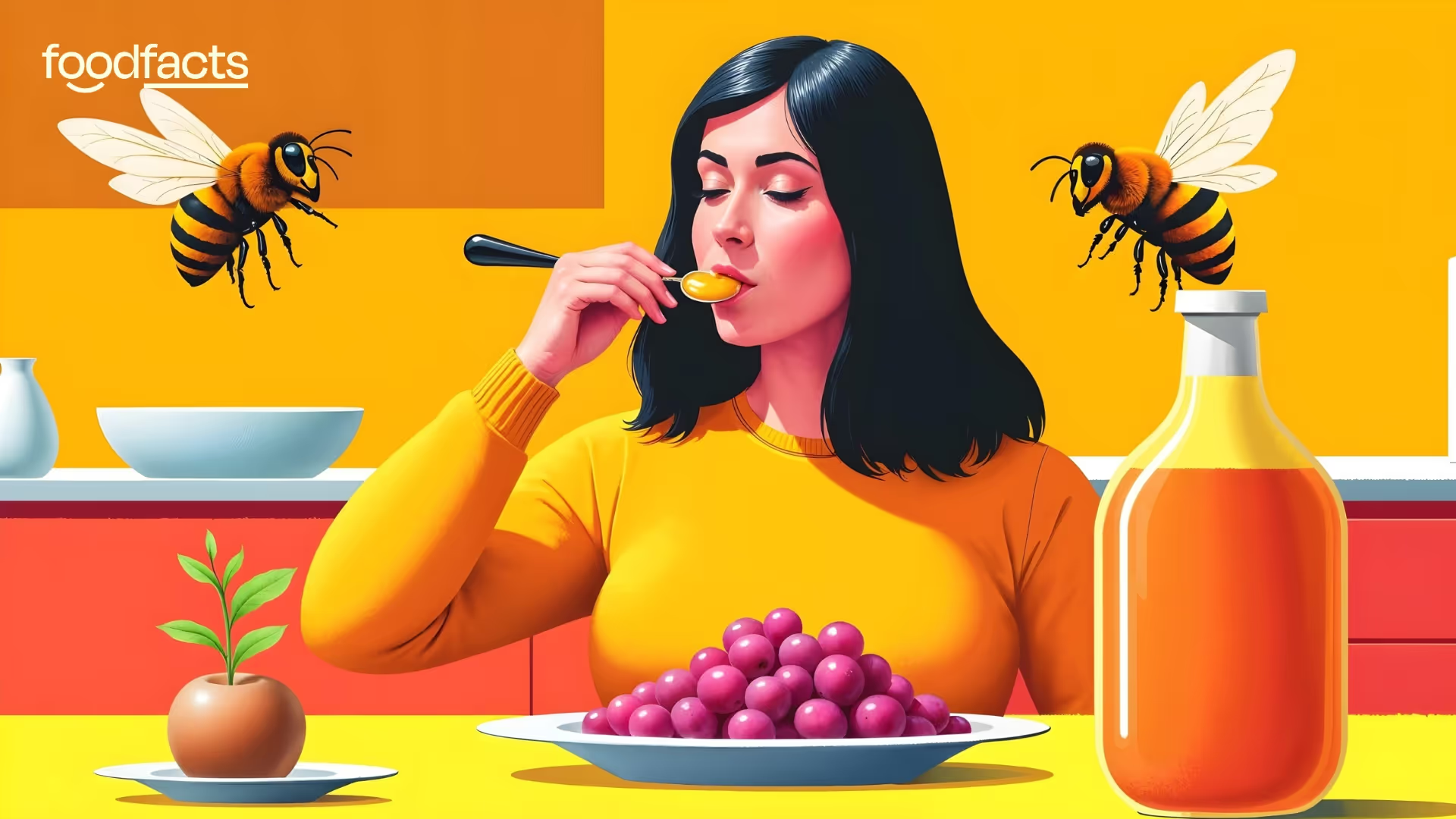
- Use Vinegar to Curb Spikes: Inchauspé recommends consuming a tablespoon of vinegar diluted in water right before a carb-heavy meal to reduce the glucose spike by up to 30%. While a few studies support the claim, they are tiny, with fewer than 15 participants, and conducted under specific circumstances, such as exclusively looking at the effects in people with type 2 diabetes. This makes it hard to say whether the same impact would be seen in the general population after any high-carb meal.
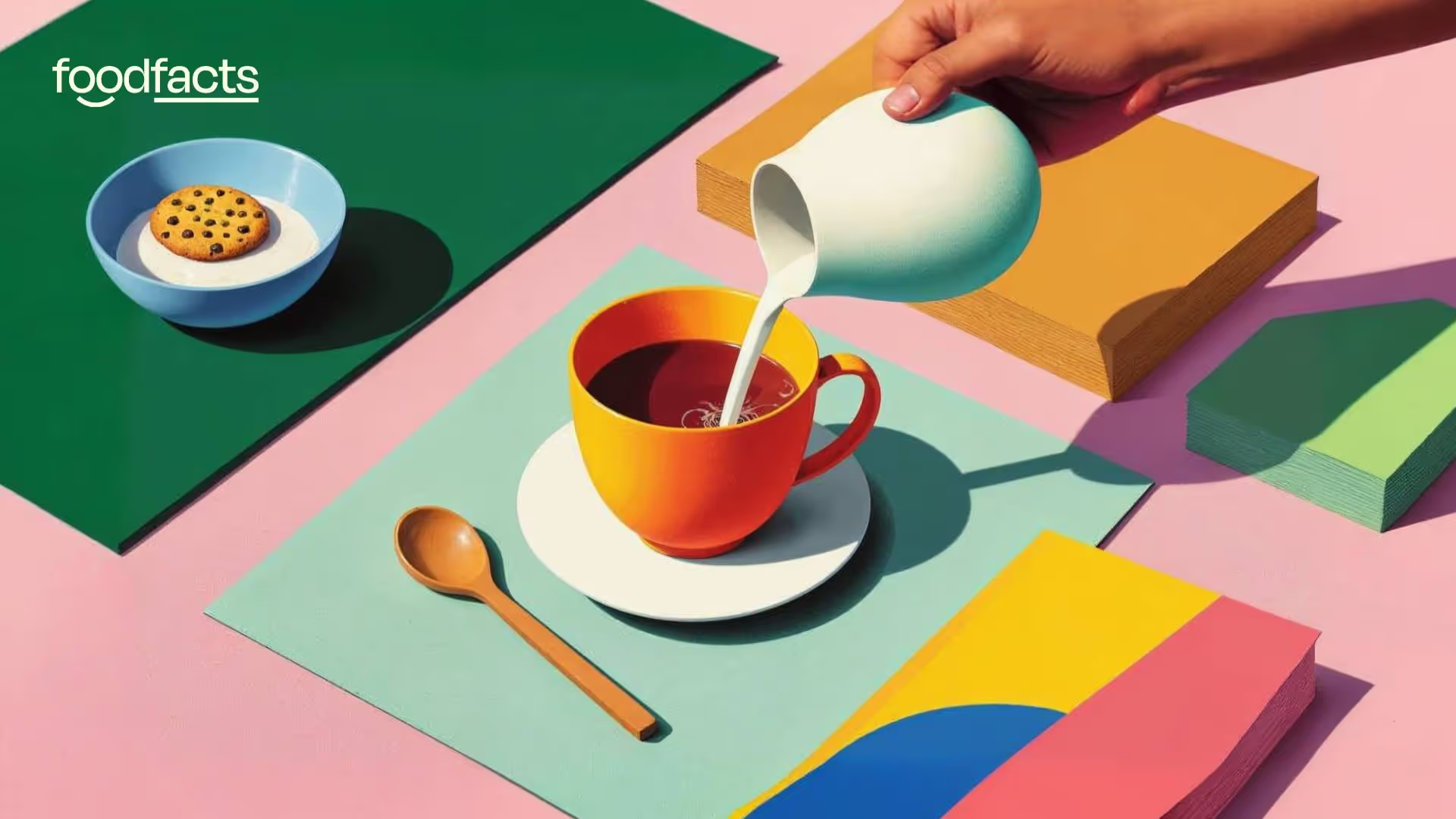
- Choose Dessert over Sweet Foods: Inchauspé advises that if you’re going to eat something sweet, it’s better to have it after a meal (as dessert) rather than as a standalone snack on an empty stomach. The rationale is that when sugar is eaten right after protein, fat, and fibre, the glucose rise will be tempered compared to eating the same cookie or fruit by itself. It’s similar to Inchauspé’s other advice to eat meals in the “right” order.
Inchauspé claims that by incorporating these habits, individuals can stabilise their blood sugar and “feel better immediately”, with improvements in energy, reduced hunger and cravings, better mood, and weight management. She often links glucose spikes to diverse health issues – from acne and ageing to fatigue and hormonal imbalance – suggesting that flattening the glucose curve is a universal key to wellness. This is also the premise of her recent Channel 4 programme Eat Smart: Secrets of the Glucose Goddess.
Despite the message clearly resonating with many of her followers, these anecdotes do not provide evidence to support her advice. Many of Inchauspé’s claims have drawn scepticism from health professionals.
Books and Published Advice
Inchauspé has authored two books that encapsulate her glucose-centric health philosophy:
- Glucose Revolution: The Life-Changing Power of Balancing Your Blood Sugar (2022). In Glucose Revolution, she introduces the science of blood sugar spikes and outlines her core “glucose hacks.” The book’s premise is that stabilising blood glucose is beneficial for everyone. Each chapter presents a hack (such as eating food in a certain order, adding vinegar, or eating a savoury breakfast) with explanations and anecdotes. Inchauspé defines about ten key hacks in total, backing them up with a mix of personal experimentation, scientific studies (often small or preliminary), and graphical illustrations of glucose data. Glucose Revolution positions blood-sugar management as the missing piece in many diets and invites readers to try gentle tweaks rather than drastic restrictions.
- The Glucose Goddess Method (2023). Inchauspé’s second book is a practical follow-up to the Glucose Revolution. It focuses on implementing four of her most essential hacks consistently. The book includes 100 recipes and meal ideas to help readers “flatten their glucose curves”. Inchauspé also describes a large self-run experiment with 2,500 people who tried these hacks for a month and, according to her, saw improvements in various health metrics.
Business Ventures and Products
Inchauspé sells a nutritional supplement called “Anti-Spike Formula.” The product is designed to be taken with meals to “reduce blood sugar spikes by up to 40%”. According to Inchauspé, the supplement’s ingredients were chosen based on “gold-standard clinical trials backing their efficacy and safety”.
A standard two-capsule serving contains:
- white mulberry leaf extract (250 mg, sold under the name Reducose),
- lemon extract (250 mg, as Eriomin),
- cinnamon bark extract (85 mg),
- and an antioxidant blend of vegetable powders (100 mg)
While these ingredients have some scientific backing individually—mulberry leaf extract has shown a modest glucose-lowering effect in studies—the supplement itself has not been tested in clinical trials.
Because of this, the product has drawn scepticism. Critics noted that no rigorous independent clinical trials have been published on the supplement itself and that its promised “40%” reduction in spikes comes from extrapolating results of its active ingredients in isolation. Some dietitians argued that selling a pill to “stop spikes” plays into fear-based marketing (creating a problem – glucose spikes – and then selling a solution).
Reception by Health Professionals and Scientists
Public reception of Jessie Inchauspé’s work has been mixed. While many people may have embraced her hacks, health professionals and scientists have cautioned about her hacks, particularly over her focus on glucose spikes.
Some nutrition experts appreciate that Inchauspé’s tips can encourage healthier eating habits in an accessible way. They note that her core recommendations, such as eating more fibre and protein and cutting back on refined sugars, align with standard nutritional advice.
Some experts worry that Inchauspé over-simplifies complex metabolic science and may mislead the public by framing anecdotal results as universal truths. Despite her biochemistry background, she is not a medical doctor, dietitian, or certified nutritionist, and she does not conduct clinical research herself.
Nicola Guess, a Registered Dietitian and nutrition scientist at the University of Oxford, has argued that influencers like the Glucose Goddess “look at glucose as though it’s the root cause, and if you fix your glucose, you fix whatever problem you have”. In reality, health issues like obesity, acne, or fatigue often have multiple causes, and blood sugar is just one factor. By zeroing in on glucose for everything, Inchauspé may be overselling what stabilising it can do.
Professor François Jornayvaz, an endocrinologist and head of a diabetes unit at Geneva University Hospitals, was even more blunt. “She hides behind a pseudoscientific appearance to advocate a method which, in my opinion, doesn’t work and is based on very little evidence,” he told a Swiss newspaper. “The scientific studies she cites are highly anecdotal, if not outright false, or not applicable to what she proposes”. This criticism suggests that Inchauspé cherry-picks research (or draws on studies in diabetics or small samples) that may not validly extend to the general healthy population.
An open letter signed by nutrition professionals, addressing Channel 4 about her TV programme, noted that presenting a social media figure as a leading authority “without appropriate scrutiny is problematic,” especially when her qualifications do not cover clinical nutrition counselling.
Health professionals have also pushed back on some of Inchauspé’s more ambitious or specific health claims. For instance, on her Channel 4 show, she suggested that “glucose hacks” could resolve issues like nodular acne. This is an oversimplification since acne is multifactorial and not simply cured by diet tweaks. While diet (including sugar intake) can influence skin to a degree, presenting a single solution risks misinforming patients who might need medical treatment. Similarly, Inchauspé has implied her methods can improve mental health (recall her personal story of mood and glucose). Psychologists have pointed out that serious conditions like depression or anxiety cannot be fixed merely by flattening glucose curves – and implying otherwise might discourage people from seeking appropriate care.
In summary, some of Inchauspé’s advice, such as eating balanced meals and limiting sugar, is based on evidence. However, the central idea that all people should limit glucose spikes to improve their health stretches beyond the evidence. Plus, many of her claims, including her supplement, are not based on strong evidence.
Sources:
- Paternal programming of breast cancer risk in daughters in a rat model: opposing effects of animal- and plant-based high-fat diets
- Jessie I. - Glucose Goddess | LinkedIn
- Glucose Revolution - YouTube
- Women’s Health Magazine – “Jessie Inchauspé On Surviving The Harrowing Accident That Set Her Life On A New Course” (Mar. 22, 2023) (How Biochemist Jessie Inchauspé Changed Her Life—And Her Health)
- 'Glucose Goddess' talks how to curb blood sugar spikes - Good Morning America
- Eating your food in the "right" order - by Dr Nicola Guess
- Wikipedia – “Jessie Inchauspé” (Background, Education, Career) (Jessie Inchauspé - Wikipedia) (Jessie Inchauspé - Wikipedia) (Jessie Inchauspé - Wikipedia)
- Marie Claire UK – “Do the Glucose Goddess hacks work? 3 top experts explain” (Jan. 14, 2025) (Do The Glucose Goddess Hacks Work? 3 Top Experts Explain | Marie Claire UK)
- Wall Street Journal – “Is Glucose the New Gluten? Inside the Blood-Sugar Health Craze” (Sara A. O’Brien, 2025) (Jessie Inchauspé - Wikipedia) (Is Glucose the New Gluten? Inside the Blood-Sugar Health Craze - WSJ)
- France Info – “Le glucose est-il le pire ennemi du corps humain, comme l’explique une célèbre influenceuse ?” (Oct. 12, 2024) (Jessie Inchauspé - Wikipedia)
- The Washington Post – “How the Glucose Goddess sweet-talked her way into the American diet” (Ilana Kaplan, Aug. 7, 2024) (Jessie Inchauspé - Wikipedia)
- CEDMO/AFP – “Health and fitness influencers mislead on glucose ‘spikes’” (Apr. 2023) (Health and fitness influencers mislead on glucose 'spikes' - CEDMO) (Health and fitness influencers mislead on glucose 'spikes' - CEDMO)
- Guardian – “Is it true that… apple cider vinegar can stop blood sugar spikes?” (Mar. 17, 2025) (Is it true that … apple cider vinegar can stop blood sugar spikes? | Life and style | The Guardian)
- Open Letter to Channel 4 by health professionals (Feb. 22, 2025) (Open Letter to Channel 4 Regarding Misinformation in Eat Smart: Secrets of the Glucose Goddess - Freedom Food Alliance | Food System Change, Insights & Thought Leadership) (Open Letter to Channel 4 Regarding Misinformation in Eat Smart: Secrets of the Glucose Goddess - Freedom Food Alliance | Food System Change, Insights & Thought Leadership)
- Publishers Weekly – Book Review of Glucose Revolution (Feb. 2, 2022) (Jessie Inchauspé - Wikipedia)
- Business Insider – (Erin Brodwin, Apr. 30, 2018) on 23andMe (mentions Inchauspé’s role) (23andMe Launches Depression and ADHD 'Condition Pages' That Worry Experts - Business Insider).



.svg)
